
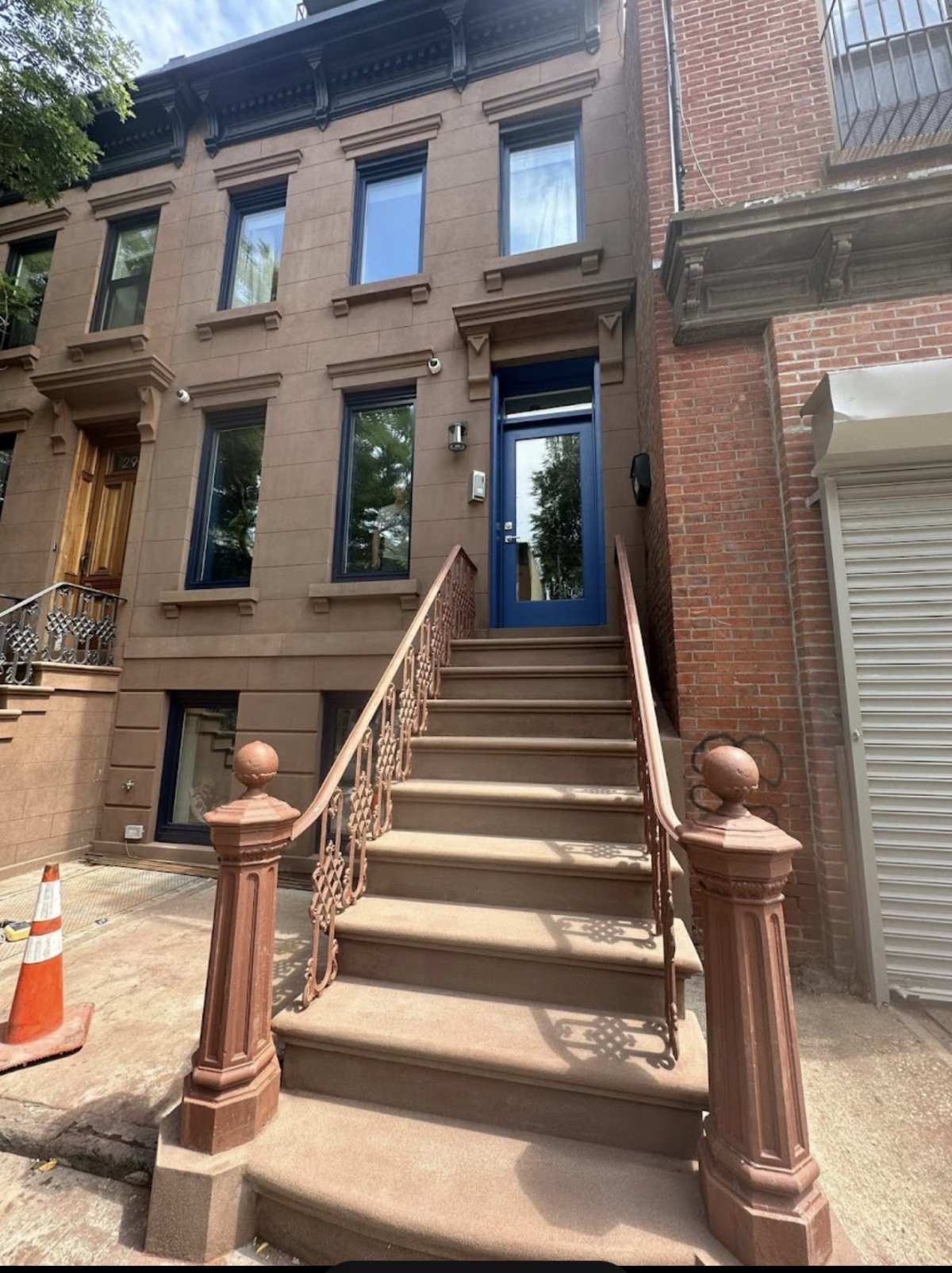
A single hairline crack in your brownstone facade isn’t just a cosmetic flaw; it’s a structural warning sign that can lead to significant fines from the Landmarks Preservation Commission. You likely bought your home for its 19th-century character, yet maintaining that legacy requires more than a simple patch job. When you’re dealing with facade spalling or a crumbling stoop, the stakes for historic brownstone restoration in Brooklyn Heights are incredibly high. You need a solution that respects the neighborhood’s strict landmark standards while ensuring your property remains resilient against the freeze-thaw cycles of New York winters.
We understand that navigating the intersection of architectural history and city regulations is a complex task. This guide helps you master the technical, legal, and aesthetic requirements to restore your home to its original glory. We will examine the 2026 LPC permit process, explain the necessity of historically accurate materials, and provide a clear framework for selecting a specialist who won’t compromise your building’s integrity. By following this structured approach, you can secure a fully compliant facade that increases your property value and stands for another century.
Key Takeaways
- Understand the critical differences between preservation and repair to maintain the architectural significance of your 19th-century home.
- Master the technical phases of masonry work, from removing deteriorated layers to applying a durable slurry coat for lasting structural integrity.
- Simplify the LPC permit process by using historic tax photos to document and justify your restoration plans to the commission.
- Find a qualified specialist for historic brownstone restoration brooklyn heights by verifying their specific experience with local landmarked blocks.
- Achieve a landmark-compliant facade that balances traditional aesthetics with the resilience needed to withstand New York winters.
Table of Contents
-
The Architecture of Brooklyn Heights: Why Historic Restoration Matters
-
The Technical Process of Historic Facade and Stoop Restoration
-
Progressive Contracting: Expert Restoration for Historic Heights Homes
The Architecture of Brooklyn Heights: Why Historic Restoration Matters
Brooklyn Heights holds a unique place in New York City history as the city’s first landmarked neighborhood. Its streets serve as a living museum of 19th-century architecture. When you own a property here, you aren’t just a homeowner; you’re a steward of a historic legacy. This responsibility makes the Brooklyn Heights Historic District maintenance a matter of both civic pride and financial wisdom. Understanding the nuances of historic brownstone restoration in Brooklyn Heights is the first step toward protecting your investment.
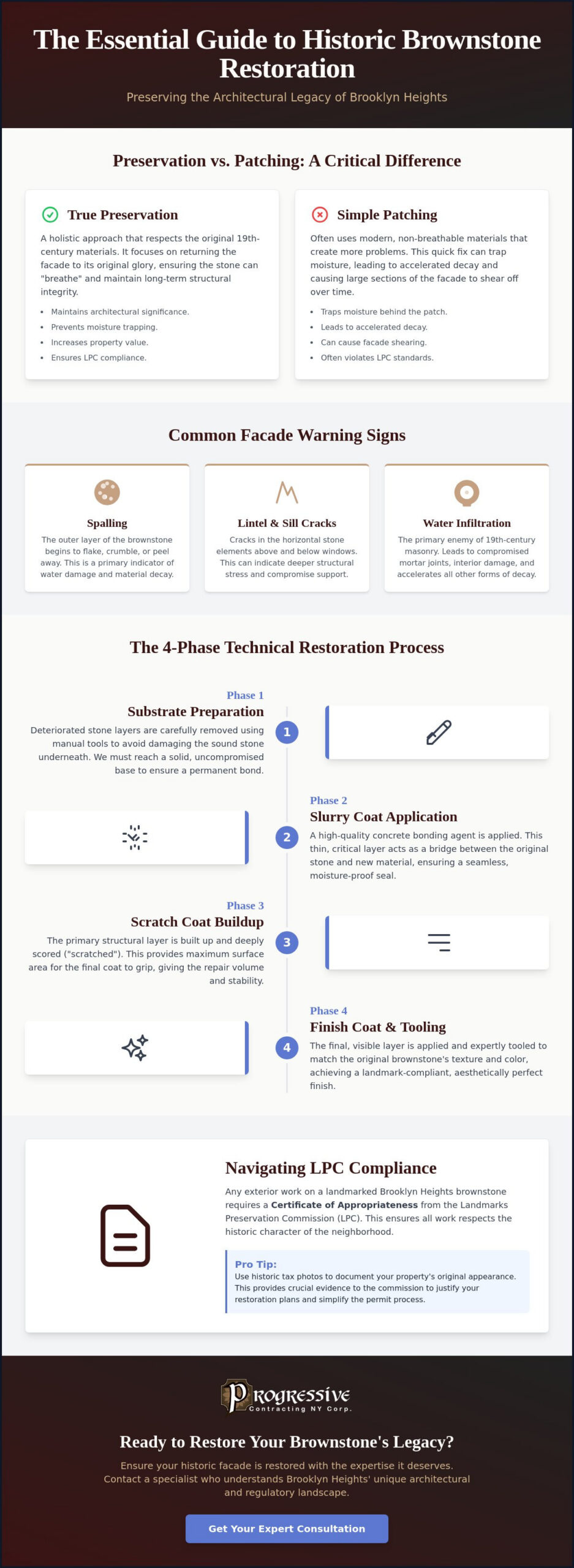
It’s vital to distinguish between basic repairs and a true restoration. While a renovation might involve modernizing the interior, a historic restoration focuses on returning the facade to its original 19th-century glory. Simple patching often creates more problems than it solves. Traditional brownstone is a layered, sedimentary rock. When you use modern, non-breathable patches, moisture gets trapped behind the new material. This leads to accelerated decay and can eventually cause large sections of the facade to shear off. Professional brownstone restoration ensures the stone can breathe while maintaining structural integrity.
To better understand how a meticulous restoration transforms a property, watch this home tour:
Brooklyn Heights Historic District Boundaries
The 1965 landmark designation covers a specific area known for its architectural diversity. You’ll find Gothic Revival homes with pointed arches alongside the symmetrical elegance of Greek Revival facades. The Italianate style, characterized by ornate cornices and heavy window hoods, is also prevalent. Because the neighborhood is a protected district, any exterior work visible from the street requires a Certificate of Appropriateness from the Landmarks Preservation Commission (LPC). This oversight ensures that the visual character of the neighborhood remains intact, making the choice of a specialist in historic brownstone restoration in Brooklyn Heights essential for any facade project.
Common Signs of Facade Deterioration
Proper maintenance begins with identifying early warning signs. Spalling is one of the most common issues. This occurs when the outer layer of the stone begins to flake or crumble away, often due to water damage or improper previous repairs. Cracks in the lintels and sills are also critical. These horizontal elements support the weight above windows and doors; cracks here often indicate deeper structural stress. Water infiltration remains the primary enemy of 19th-century masonry. You don’t want to ignore these signs, as left unaddressed, they can compromise the mortar joints and lead to significant interior damage.
The Technical Process of Historic Facade and Stoop Restoration
Successful historic brownstone restoration in Brooklyn Heights requires a methodical, multi-layered approach that respects the physical properties of 19th-century materials. The process begins with Phase 1: Substrate Preparation. Our team carefully removes deteriorated stone layers using manual tools to avoid vibrating the sound stone underneath. We must reach a solid, uncompromised substrate before any new material is applied. This prevents the "hollow" sound often found in inferior repairs where new patches fail to bond with the original stone.
Phase 2 involves the Slurry Coat. This step utilizes a high-quality concrete bonding agent combined with a thin layer of cementitious material. This layer acts as the primary bridge between the old stone and the new restoration layers. It ensures that moisture cannot penetrate the seam between the old and new materials. In Phase 3: The Scratch Coat, we build the primary structure. This layer is deeply scored or "scratched" to provide maximum surface area for the final coat to grip. It provides the bulk of the repair’s volume and structural stability.
Finally, Phase 4 is the Finish Coat. This is where craftsmanship meets chemistry. We match the pigment and aggregate texture to the surrounding masonry, ensuring the repair is invisible to the naked eye. If you’ve noticed crumbling on your stairs or facade, it’s time to consult a Brownstone specialist who understands these technical nuances. For those ready to begin a project, working with an experienced team like Progressive Contracting ensures your restoration meets both aesthetic and structural goals.
Rammstein Stoop Restoration: A Specialized Approach
A Rammstein stoop restoration is far more involved than a standard concrete repair. This traditional method focuses on reconstructing the internal core of the stairs and landings using high-strength materials designed for NYC’s harsh climate. We pay meticulous attention to the historic handrails, posts, and decorative sidewalls that define the neighborhood’s streetscape. Modern safety standards require these elements to handle specific load-bearing capacities, so we integrate subtle structural reinforcements that remain hidden behind the period-accurate finish. This ensures your stoop is both safe and historically authentic.
Brick Pointing and Mortar Matching
Using the wrong mortar mix is a common mistake that leads to irreversible damage. Modern Portland cement is often too hard for 19th-century bricks; it prevents the masonry from expanding and contracting naturally. This causes the bricks to crack or "spall" over time. We utilize natural lime-based mortars that mirror the flexibility and breathability of the original construction. This technical precision aligns with the NYC Landmarks Preservation Commission guidelines, which prioritize the use of historically compatible materials. Achieving a seamless blend between new pointing and old masonry requires a deep understanding of local sand types and mineral pigments.
Navigating LPC Compliance for Brooklyn Heights Brownstones
The legal framework governing any historic brownstone restoration in Brooklyn Heights is rigorous. Since the neighborhood was established as the city’s first historic district, the Landmarks Preservation Commission (LPC) has maintained strict oversight of all exterior alterations. This authority is rooted in the Brooklyn Heights Historic District Designation Report, which details the architectural standards for every block. Homeowners often find the bureaucracy overwhelming, but a seasoned contractor manages these filings to ensure the project stays on schedule. You must obtain LPC approval before filing for permits with the Department of Buildings (DOB).
One of the most effective tools for a successful application is the use of historic tax photos from the 1940s and 1980s. These images provide undeniable evidence of a building’s original state. If a previous owner removed decorative lintels or altered the stoop’s profile, these photos justify your plan to restore those specific elements. Without this historical documentation, the commission may deny requests for certain aesthetic changes. Failing to secure permits before starting work is a costly mistake. Unpermitted exterior work can lead to daily financial penalties and a requirement to restore the building to its previous condition at your own expense.
Certificate of Appropriateness vs. Permit for Minor Work
The type of permit you need depends on the scope of your project. A Permit for Minor Work (PMW) is typically issued for "in-kind" repairs that don’t change the building’s appearance, such as repointing or minor facade cleaning. In 2026, staff-level approvals for these minor projects generally take from a few weeks to two months. However, if your historic brownstone restoration in Brooklyn Heights involves changing the color of the stone or altering the stoop, you will need a Certificate of Appropriateness (CoA). This process often requires a public hearing and can take 3 to 6 months for routine cases. Landmark compliance typically adds 15% to 25% to a total project budget due to the requirement for specialized materials and historically accurate finishes.
Working with Architectural Drawings
The LPC requires precise documentation before they will issue a permit. This includes detailed elevations and sections that show exactly how new masonry will meet existing structures. It’s not just about the stone; the commission also regulates ironwork, gates, and window guards. These elements must meet specific district standards for material and design. A Brownstone specialist works with architects to ensure every drawing reflects the "before" and "after" states accurately. This meticulous documentation protects the homeowner during the final inspection, ensuring that the finished work matches the approved plans and avoids any post-construction violations.
Evaluating a Brooklyn Heights Brownstone Contractor
Selecting the right partner for historic brownstone restoration in Brooklyn Heights is a decision that impacts your property’s value for decades. You aren’t just hiring a mason; you’re choosing a guide who understands the specific architectural "dialect" of this neighborhood. While many contractors claim expertise in Brooklyn, a specialist from Park Slope or Bed-Stuy may not be familiar with the unique stone compositions or the heightened scrutiny of the Brooklyn Heights LPC staff. You need a partner with a proven track record on these specific landmarked blocks to ensure a smooth project lifecycle.
Transparency in the bidding process is a non-negotiable requirement. A professional Brownstone Contractor uses a problem-process-result framework. They identify the specific cause of facade decay, explain the technical steps for remediation, and define the expected outcome. This clarity avoids the "low-ball" estimate that leads to expensive change orders later. Contractors recommend budgeting a contingency of at least 15% to 20% for historic home renovations to cover unforeseen structural issues. Always verify that your team carries comprehensive liability insurance and specialized licenses for exterior masonry work in New York City.
If you’re looking for a partner who combines technical precision with local landmark expertise, contact Progressive Contracting to discuss your project requirements.
The Masonry Portfolio Check
When reviewing a contractor’s portfolio, look beyond the simple "before" and "after" photos. Examine the texture consistency of the finish coat. The stone should look like natural sedimentary rock, not a smooth, painted surface. Look for edge precision on lintels and sills; sharp, clean lines are the hallmark of a master craftsman. A successful contractor for historic brownstone restoration in Brooklyn Heights should also demonstrate a working relationship with the LPC. Ask if they’ve had recent projects approved at the staff level, as this indicates they understand the commission’s current aesthetic expectations and material requirements.
Questions to Ask Before Signing a Contract
A reliable guide expects tough questions. Start by asking how they handle unforeseen structural issues discovered behind the facade. In older buildings, you might find that remediation for balloon framing is necessary, which can cost between $30,000 and $100,000. Your contractor should have a clear plan for these contingencies. Next, ask about their color-matching process. Do they provide multiple on-site samples for your approval under different lighting conditions? Finally, confirm their warranty policy. A quality restoration should include a specific guarantee against spalling and water infiltration, providing you with long-term peace of mind.
Progressive Contracting: Expert Restoration for Historic Heights Homes
Progressive Contracting brings over a decade of specialized experience to every masonry project in Brooklyn and Manhattan. We understand that historic brownstone restoration in Brooklyn Heights requires more than just technical skill; it demands a deep respect for the architectural fabric of the neighborhood. Our approach combines traditional 19th-century craftsmanship with modern materials designed for superior durability. This ensures that your home’s facade remains structurally sound while looking exactly as it did when it was first constructed. We focus on being a stabilizing force for homeowners navigating the complexities of historic preservation.
Our expertise extends beyond the stone itself. We assist property owners with NYC sidewalk violation removal and general concrete compliance to ensure the entire exterior meets city standards. Maintaining the perimeter of your property is just as important as the stoop itself for overall property value and safety. We provide a steady hand through the entire process, starting from the first site visit and moving through to the final LPC-approved result. Our team manages the logistics so you don’t have to worry about the bureaucracy.
Our Specialized Exterior Solutions
We offer a comprehensive suite of services tailored specifically for landmarked properties. This includes full brownstone facade renovation and resurfacing, where we utilize the multi-layer technique to ensure breathability and structural strength. For iconic entrances, our Rammstein stoop restoration rebuilds your stairs to handle modern foot traffic without losing their period-accurate charm. We also specialize in precision brick pointing, using lime-based mortars that prevent long-term damage to historic masonry. Learn more about our brownstone repair services to see how we handle these delicate projects with the attention to detail they deserve.
Commitment to Transparency and Reliability
We believe that clear communication is the foundation of a successful restoration. Our team provides a logical progression of project phases so you always know exactly where the work stands. We don’t use high-pressure sales tactics or hyperbolic marketing. Instead, we offer a matter-of-fact evaluation of your property’s needs and a structured path toward a permanent solution. We position ourselves as a dependable partner for landmarked property owners, taking the stress out of complex LPC filings and technical masonry work. Our goal is to provide peace of mind through accountability and high-level craftsmanship. If you’re ready to restore your home’s 19th-century glory, we’re here to guide you.
Request a free estimate for your Brooklyn Heights restoration today to begin your property’s transformation.
Securing the Future of Your 19th-Century Facade
Restoring a landmarked home is a technical and regulatory challenge that requires a disciplined approach. You now have the framework to manage a successful historic brownstone restoration in Brooklyn Heights, from understanding the multi-layered masonry process to navigating the LPC permit tiers. By prioritizing historically compatible materials and documenting your building’s original state, you ensure your property remains a resilient piece of New York history. Choosing a contractor with local expertise is the final step in protecting your investment against the elements.
Our dedicated historic facade renovation team for Brooklyn and Manhattan is ready to assist with your project. We offer specialized Rammstein stoop restoration and provide expertise in NYC sidewalk violation removal to ensure your entire property remains compliant and safe. A well-maintained facade is a legacy that lasts for generations. Schedule your Brooklyn Heights brownstone consultation with Progressive Contracting to begin your restoration with a partner you can trust. Your home deserves the highest level of craftsmanship and care.
Frequently Asked Questions
How much does historic brownstone restoration cost in Brooklyn Heights?
Project costs vary based on the extent of stone decay and the level of landmark compliance required for your specific property. Factors such as the number of stories, the condition of the underlying substrate, and the complexity of decorative elements like lintels and cornices all influence the final budget. Landmarked districts typically require a higher investment than non-regulated areas because you must use historically accurate materials and specialized labor to meet city standards.
How long does a typical facade renovation project take?
A comprehensive restoration project generally spans 12 to 24 months when you include the necessary pre-construction and permitting phases. This timeline accounts for the meticulous masonry work and the mandatory Landmarks Preservation Commission (LPC) review process. While the actual physical construction on the facade may take several months, you must factor in the time required for permit approvals and sourcing custom materials to ensure a historically accurate result.
Do I need an architect for a brownstone facade repair?
You typically need an architect for any project that requires a Certificate of Appropriateness from the LPC. Architects provide the detailed elevations, sections, and technical specifications required for these permit applications. While minor "in-kind" repairs might only require a staff-level permit, any work that alters the building’s appearance or involves structural changes requires professional drawings to ensure the project meets strict historic district standards.
Can I change the color of my brownstone during restoration?
You can propose a color change, but it must be approved by the LPC and remain historically appropriate for your building’s architectural style. The commission generally requires that the final finish coat matches the original stone color or aligns with the established historical palette of the neighborhood. A specialist in historic brownstone restoration in Brooklyn Heights will provide physical stone samples for the commission to review and approve before the final application begins.
What happens if I perform work without an LPC permit in Brooklyn Heights?
Performing exterior work without a permit leads to a Notice of Violation and significant daily financial penalties from the city. The LPC has the authority to issue a stop-work order and can require you to restore the building to its previous condition at your own expense. These violations also create a legal cloud on your property title, which can complicate future sales or refinancing efforts until the issue is fully resolved.
How often should I perform maintenance on my brownstone facade?
You should inspect your facade annually and plan for minor maintenance every 5 to 10 years. Annual checks help you identify early signs of spalling or mortar failure before they evolve into major structural issues. New York’s harsh winters are particularly hard on 19th-century stone. Addressing small cracks or water infiltration points early will extend the lifespan of your restoration and help you avoid the need for a full-scale renovation later.
What is the difference between a brownstone specialist and a general masonry contractor?
A brownstone specialist understands the specific chemistry and layering techniques required to restore sedimentary rock without causing long-term damage. General masonry contractors often use modern Portland cement, which is too hard and non-breathable for historic stone, leading to trapped moisture and accelerated decay. A specialist focuses on the traditional "slurry, scratch, and finish" coat process and has the specific experience needed to navigate the unique regulatory landscape of landmarked neighborhoods.
How do I remove a sidewalk violation while restoring my brownstone?
Removing a sidewalk violation involves filing for a permit with the Department of Transportation (DOT) and performing repairs that meet specific city codes. We often coordinate this work alongside a historic brownstone restoration in Brooklyn Heights to streamline the mobilization of equipment and labor. Once the new concrete or stone is installed, a city inspector must verify the repair to officially dismiss the violation and clear your property record of any penalties.