
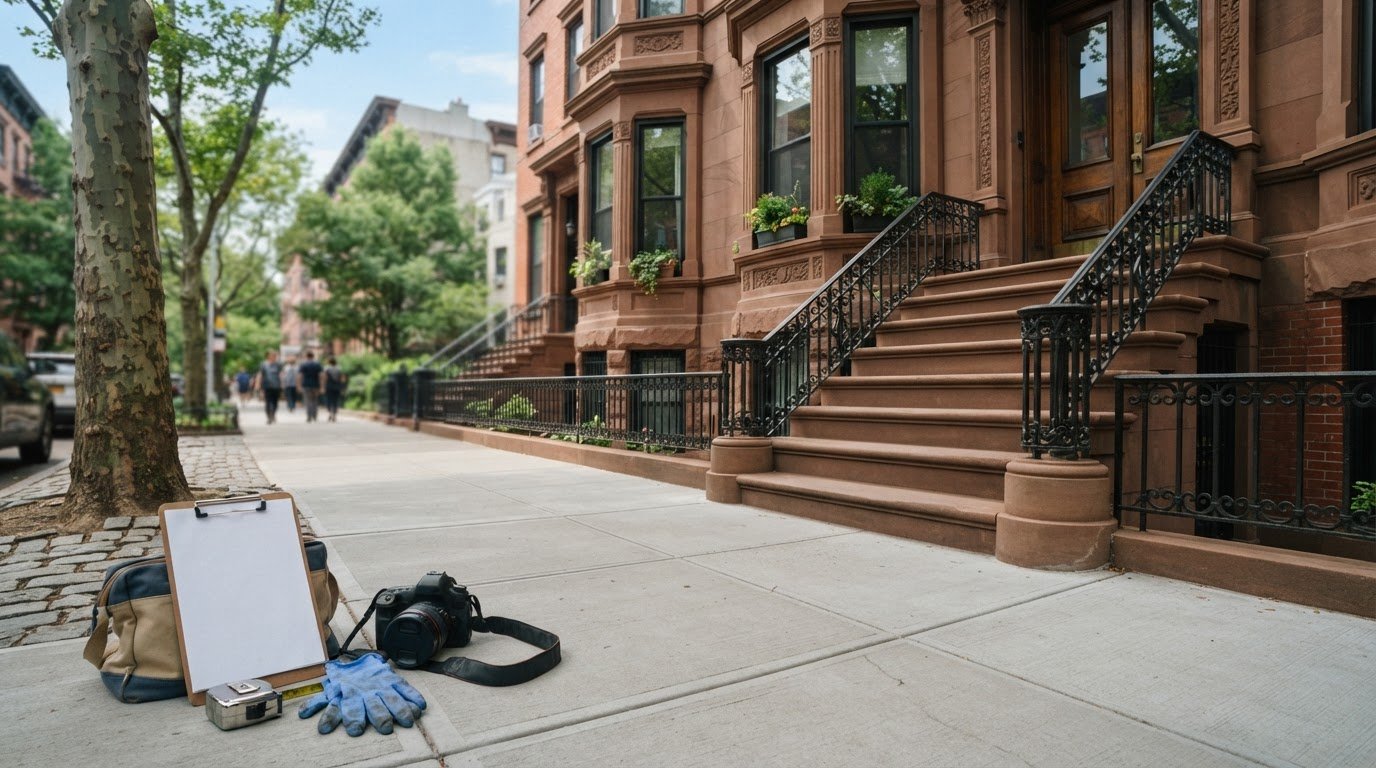
What if the sidewalk looks fixed, but the condition that triggered the notice is still there? A quick patch may leave the underlying defect unresolved, making it harder to know whether the repair is complete or what records to keep. Knowing how to avoid a second sidewalk violation notice starts with reviewing the cited condition and repair scope before work begins, not just covering visible damage.
A useful process is to match the notice to the exact sidewalk area, document the condition, and compare the finished work with the original citation. This guide explains what to review before repair, which records to keep, and how to follow up. Progressive Contracting NY Corp provides sidewalk repair and sidewalk violation removal in NYC, including Brooklyn and Manhattan. The company serves property owners in neighborhoods such as Bedford-Stuyvesant and Park Slope, as well as the Bronx and Queens. License number 2097623-DCA. Call 347-341-3808 or 718-350-7388, or email ProgressiveContractingNY@yahoo.com.
Why NYC sidewalk repairs can still lead to a second violation notice
A completed repair does not always mean the cited condition has been resolved. A repeat notice may indicate that a defect remained, returned, or developed nearby. Start with the notice: identify the location, the condition described, and any response instructions. The New York City Department of Transportation oversees city transportation, including sidewalks. Compare the notice details with the actual area before planning repairs.
Walk the cited stretch and compare what you see with the description. Note cracks, uneven sidewalk flags, pooling water, or nearby tree roots. These observations do not establish what caused the defect, but they can help define the area that needs attention. Record where damage appears, including whether it extends beyond the specific spot named in the notice. A clear scope is more useful than a quick patch confined to the most obvious mark.
How to identify the cause behind the sidewalk notice
Distinguish the visible defect from possible contributing factors. A lifted flag is an observable condition; nearby roots could contribute to movement, but their presence alone does not prove the cause. Water pooling is also worth recording, though it does not explain by itself why pavement shifted. If a repair addresses only the surface symptom, related damage or movement may remain. When a notice recurs, reassess the cited area and repair scope rather than simply repeating the same patch.
This review is an important part of how to avoid a second sidewalk violation notice. Progressive Contracting of NY provides sidewalk repair and sidewalk violation removal in NYC. For help with a cited sidewalk condition in Brooklyn, Manhattan, the Bronx, Queens, Bedford-Stuyvesant, or Park Slope, call 347-341-3808 or 718-350-7388, or email ProgressiveContractingNY@yahoo.com. License number 2097623-DCA.
How to prevent a second sidewalk violation notice: a post-repair checklist
After the work, compare the finished repair with the notice, document the result, organize the project records, and follow the closeout instructions for your case. Check that the completed work covers the cited location and condition, not just a nearby section. For current instructions and status information, use the official NYC government page. Do not assume the violation is closed because the repair looks complete.
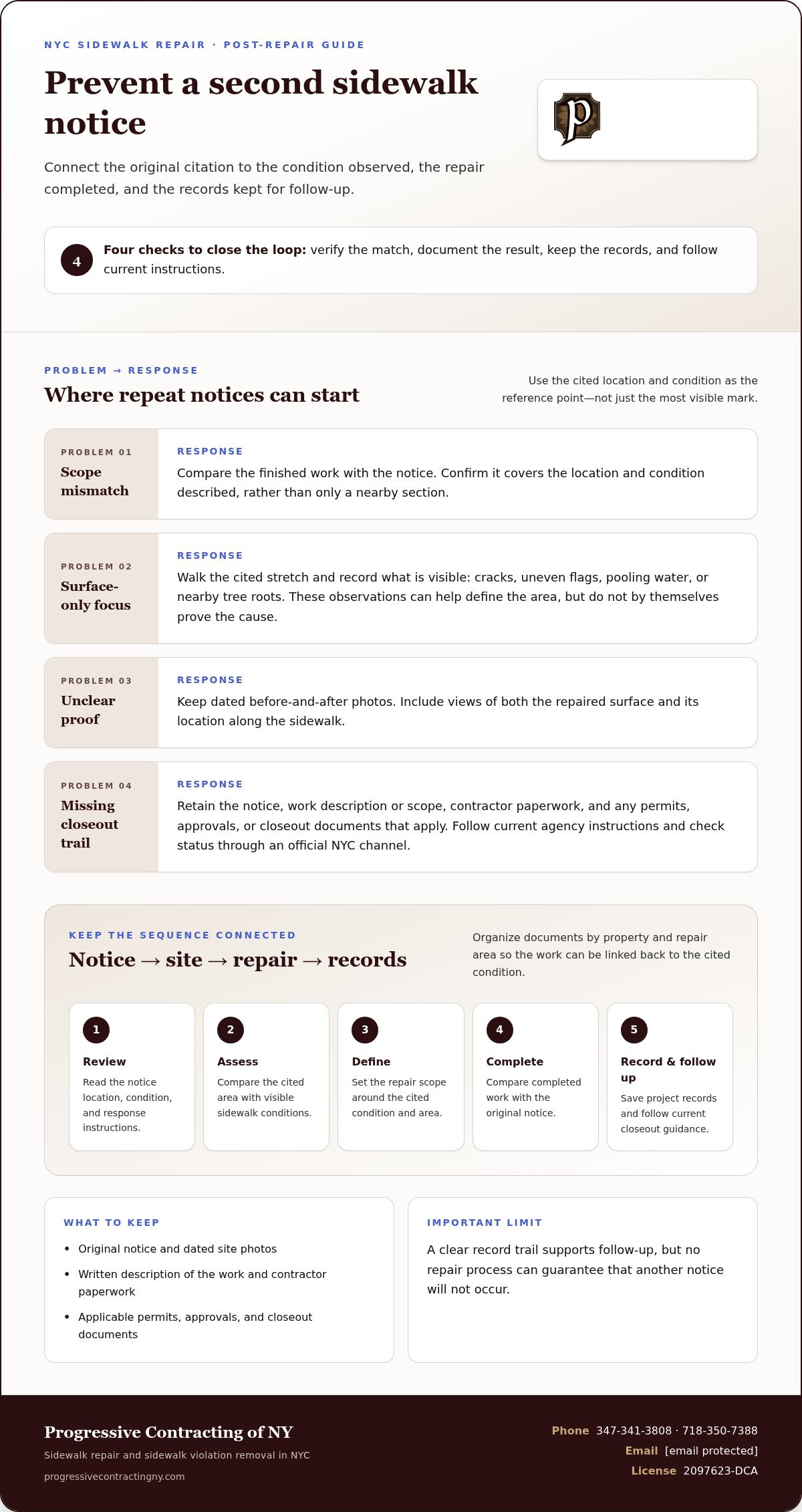
- Match the work to the notice: Confirm that the repaired area corresponds to the location and condition described.
- Photograph the result: Keep dated before-and-after photos. Include views that show both the repaired surface and its location along the sidewalk.
- Retain project records: Save the notice, repair scope or description, contractor paperwork, and any permits, approvals, or closeout documents that apply.
- Follow through: Review current agency instructions for next steps and check the violation status through an official NYC channel.
What records should NYC property owners keep after sidewalk repair?
Keep the original notice with dated site photos, a written description of the work, and project paperwork. Organize documents by property and repair area so you can quickly connect the completed work to the cited condition. Permit and closeout records depend on the project and current agency instructions, so retain the documents that apply. For related planning context, see this guide to NYC sidewalk violation removal costs.
A clear record trail supports follow-up, but it cannot guarantee that another notice will not be issued. Progressive Contracting of NY provides sidewalk repair and violation removal for NYC property owners. Call 347-341-3808 or 718-350-7388, or email ProgressiveContractingNY@yahoo.com. License number 2097623-DCA.
When a NYC sidewalk contractor can help prevent repeat violations
A sidewalk contractor can connect the notice to the physical condition at the property. Reviewing the cited area and visible damage helps define a repair scope around the actual issue instead of focusing only on the most obvious crack or raised section. This can help address the condition described in the notice, although no repair process can guarantee that another notice will not occur.
Sidewalk movement may be associated with nearby tree roots or drainage conditions. These are possible contributors, not automatic conclusions. An on-site assessment can clarify what is visible and help shape the repair scope. Because sidewalk work alone may not control every contributing factor, keep a clear record of the observed condition and work planned.
What to expect from a sidewalk repair and violation removal process
A practical process follows a clear sequence: review the notice and pinpoint the cited location, assess the site, define the repair scope, complete the work, and organize project documentation. This keeps the repair connected to the original issue and gives you records for follow-up. Learn more about sidewalk repair and violation services.
For property owners learning how to avoid a second sidewalk violation notice, the key is connecting the notice, observed condition, work performed, and closeout records. Progressive Contracting of NY provides sidewalk repair and sidewalk violation removal in NYC, including Brooklyn, Manhattan, the Bronx, and Queens. To discuss a cited area or repair in Bedford-Stuyvesant, Park Slope, or elsewhere in these boroughs, call 347-341-3808 or 718-350-7388, or email ProgressiveContractingNY@yahoo.com. License number 2097623-DCA.
Make the next sidewalk repair a clear, documented process
To reduce the chance of another notice, match the repair to the condition and location named in the citation, keep dated photos and project records, and follow the current closeout instructions. Reviewing visible damage and possible contributing factors can help shape a scope that addresses more than a surface symptom. These steps explain how to avoid a second sidewalk violation notice, but they cannot guarantee that another notice will not occur.
Progressive Contracting of NY provides sidewalk repair and sidewalk violation removal in NYC. For help with a sidewalk repair in Brooklyn, Manhattan, the Bronx, Queens, Bedford-Stuyvesant, or Park Slope, contact the team at 347-341-3808 or 718-350-7388, or email ProgressiveContractingNY@yahoo.com. License number 2097623-DCA.
When the cited condition has been addressed and the follow-through documented, you have a clearer record for any later questions about the repair.
Frequently Asked Questions
Can I receive a second sidewalk violation notice after making repairs?
Yes. A second notice can follow if the cited condition was not fully corrected, damage recurs, or a nearby defect is later identified. Compare the new notice with the original location and description, then review the repair scope and photos. To understand how to avoid a second sidewalk violation notice, reassess both the work and the site conditions. No repair can guarantee that future notices will not occur.
How can I check whether my NYC sidewalk violation has been cleared?
Check the violation status using NYC DOT’s online resources or the NYC Open Data Portal, then follow current closeout instructions. Completing the physical repair alone may not update the record. A dismissal inspection may need to be requested after the work for official removal. Keep the notice details handy so you can identify the correct property and violation.
What should I document after sidewalk violation repair?
Keep the original notice and repair scope, dated photos showing the sidewalk before and after work, a written description of completed repairs, and contractor paperwork. Save any permits, approvals, inspection records, or closeout documents that apply to the project. These records connect the completed work to the cited location and support follow-up if the violation status remains unclear.
Can tree roots cause another sidewalk violation after repair?
Tree roots can contribute to sidewalk movement, but their presence alone does not establish the cause of a defect or mean another notice will follow. An on-site assessment can help identify visible root-related conditions and inform the repair scope. For sidewalks in Brooklyn, Manhattan, the Bronx, Queens, Bedford-Stuyvesant, or Park Slope, compare any new movement with the original repair area and records.