
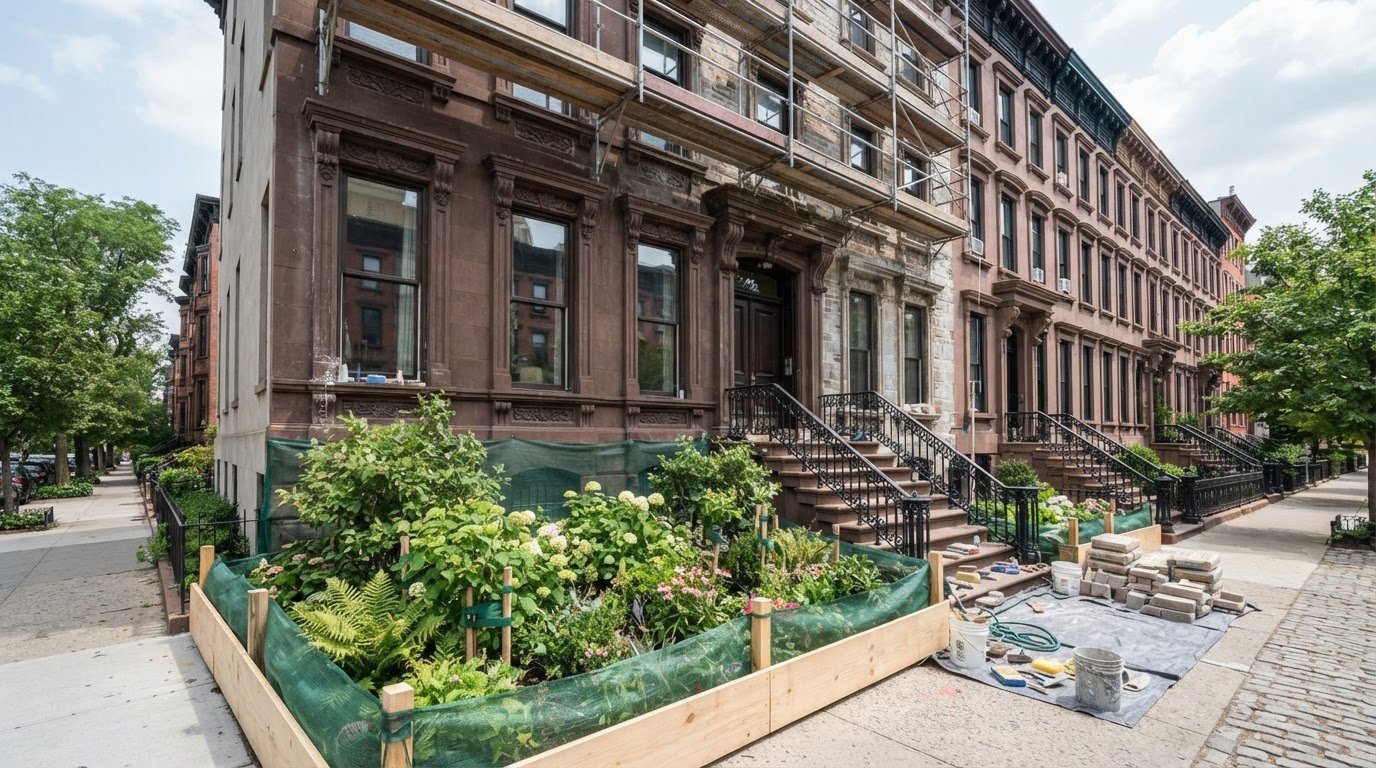
The most vulnerable part of a facade restoration project may be the garden bed tucked directly against the building. Dust, falling debris, and limited work space can put plants at risk if the area isn’t planned before masonry work begins. If you’re wondering how to protect plants during facade restoration, include them in the work-zone plan from the start.
Whether to move, cover, or prune plants depends on their location and the access the crew needs. Before work begins, identify which plants are closest to the repair area, where workers will pass, and where tools or materials may be placed. This guide explains how to prepare beds, reduce avoidable exposure to dust and debris, and coordinate practical protection measures with the restoration team. Progressive Contracting NY Corp specializes in brownstone facade renovation and historic restoration in Brooklyn and Manhattan, including neighborhoods such as Park Slope and Bedford-Stuyvesant. For contact, call 347-341-3808 or 718-350-7388, or email ProgressiveContractingNY@yahoo.com. License number 2097623-DCA.
How Facade Restoration Can Put Nearby Plants at Risk
Masonry work can expose nearby plants to dust, falling fragments, and foot traffic. Dust from surface preparation or brick pointing may settle on leaves and soil. Workers carrying tools and materials can brush against stems or step into planting beds, while stored supplies and equipment may take up space plants need for light, airflow, and routine watering.
Some risks cause immediate physical damage, such as broken branches, crushed foliage, or disturbed soil. Others build over time. A temporary obstruction can reduce light or airflow, and a blocked path can make it harder to reach a hose or watering can. The risks depend on where plants sit, which restoration methods the facade requires, and how much room the crew needs to work safely. Building restoration involves work on existing structures and materials, so planning around the surrounding space matters too.
Which plants and garden areas need the closest attention?
Start with beds directly below the section being repaired, where dust or fragments may land. Climbing plants attached to masonry may be close to the work surface, and shrubs may extend into the crew’s access route. Container plants are easier to relocate, but can still be knocked over or left without enough light if equipment or materials block their usual spot. Compact lots in Brooklyn and Manhattan often leave little space between garden beds and brownstone walls. During brownstone facade restoration, mapping those tight areas helps clarify where barriers and access routes should go.
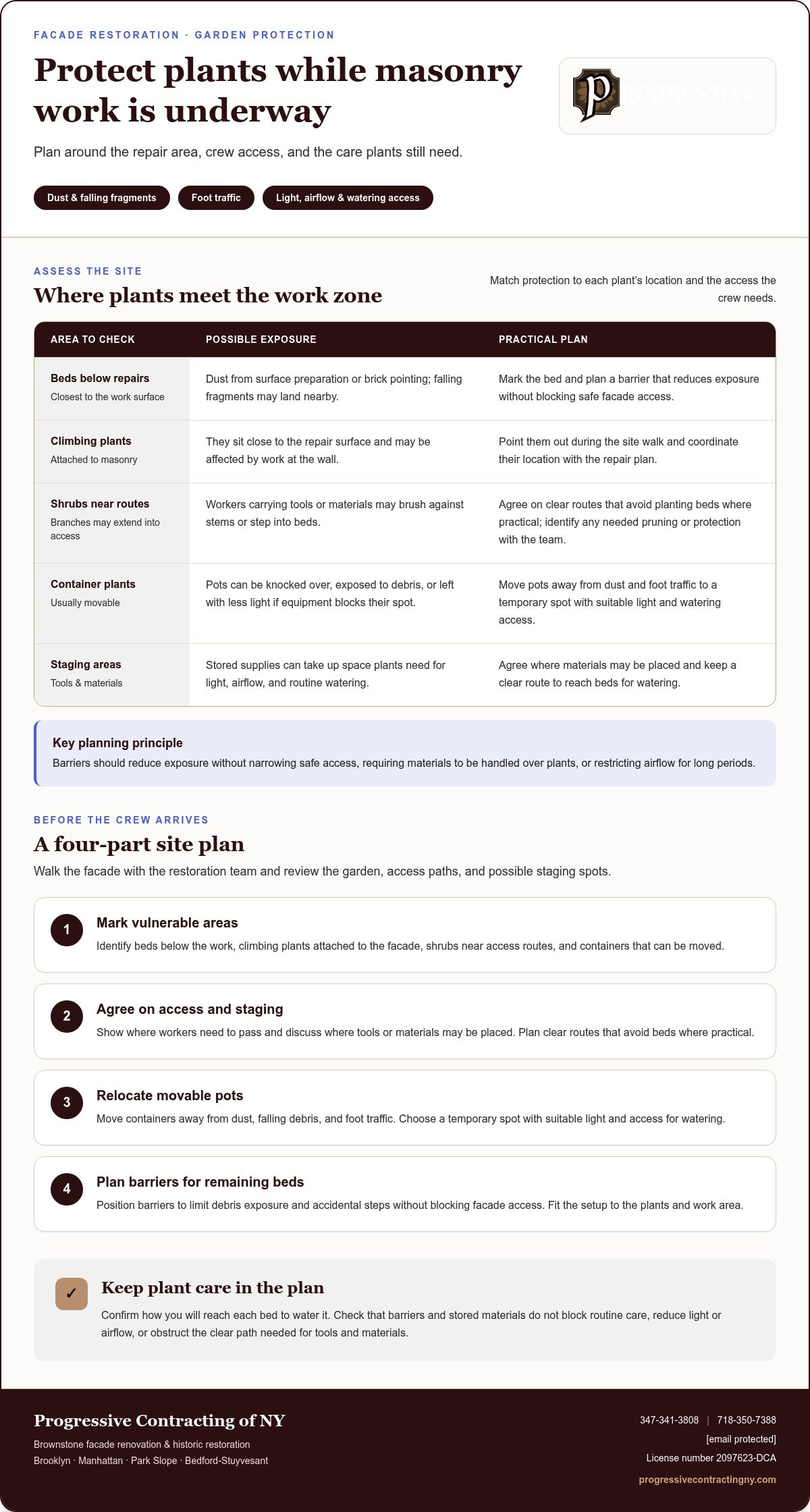
Dust, falling fragments, foot traffic, and stored materials can damage plants directly or interfere with their light, airflow, and watering access. Identify the most likely exposures before deciding how to protect plants during facade restoration.
How to Prepare and Protect Plants Before Facade Work Begins
A clear plan can protect garden beds without blocking the access needed for careful masonry work. Before the crew arrives, walk the facade with them and note where plants sit in relation to the repair area, entry paths, and possible material staging spots. This makes it easier to decide what to move, where a barrier may help, and how to keep routine plant care possible.
- Mark vulnerable areas. Identify beds below the work, climbing plants attached to the facade, shrubs near access routes, and containers that can be moved.
- Agree on access and staging areas. Show where workers need to pass and discuss where tools or materials may be placed. Plan clear routes that avoid planting beds where practical.
- Relocate movable pots. Move containers away from dust, falling debris, and foot traffic. Choose a temporary spot with suitable light and access for watering.
- Plan barriers for remaining beds. Position barriers to reduce exposure to debris and accidental steps without blocking access to the facade. Match the setup to the plants and work area rather than assuming one cover will suit every situation.
What should homeowners coordinate before the restoration starts?
Before work begins, mark vulnerable beds and access routes, then review them with the restoration team. A barrier should reduce exposure without narrowing safe access to the facade or requiring workers to handle materials over plants. Plan how you’ll reach each bed to water it, and avoid arrangements that trap heat or restrict airflow for long periods. Check that the plan still leaves a clear path for tools and materials.
For masonry issues such as spalling near a garden bed, brownstone facade restoration requires coordinating repairs with the surrounding space. A site-specific plan helps protect plants while keeping the work zone functional.
Protecting Plants Around NYC Brownstone Facade Restoration
Brownstone work often takes place close to the spaces residents use every day: the front stoop, a narrow side yard, or a street-facing planting bed. A practical plan considers these areas alongside the masonry. The crew needs clear, safe access to the facade, while plants need space to avoid disturbance and receive routine care. The goal is to coordinate the work zone around the building and its immediate surroundings, not to block the work.
Planning a restoration while keeping the work area practical
Before work begins, show the restoration team where beds, containers, and climbing plants sit in relation to the stoop and repair areas. Point out narrow passages and explain which routes you use to reach plants for watering. This gives the team a clear picture of the site when planning access to masonry surfaces. On a tight lot, a barrier placed too close to the facade may interfere with repairs. Positioned carefully, it can help shield nearby planting while keeping the work area clear.
When work involves deteriorated mortar, brick pointing and facade restoration require access to the joints being repaired. Include plant locations in that plan, especially where beds sit beneath the work or a side path is the only route to the wall. Coordinating early helps keep protection measures compatible with the repair sequence and available space.
Progressive Contracting of NY handles brownstone facade renovation and historic restoration in Brooklyn and Manhattan, including Park Slope and Bedford-Stuyvesant. The company also serves property owners across New York City boroughs, including Queens and the Bronx. To discuss masonry work and site access, call 347-341-3808 or 718-350-7388, or email ProgressiveContractingNY@yahoo.com. License number 2097623-DCA.
Plan Your Restoration with Confidence
Before facade work starts, make plant protection part of the project conversation. Sharing your concerns early helps the restoration plan account for garden areas while preserving the access needed to work on the masonry. A clear plan should identify what needs to move, where barriers may go, and how plants will remain accessible for routine care.
If you’re deciding how to protect plants during facade restoration, Progressive Contracting of NY provides brownstone facade renovation and historic restoration in Brooklyn and Manhattan. Discuss the building’s layout, the plants near the work, and the access the masonry repairs require.
With thoughtful coordination, you can prepare for the restoration while giving both the building and the garden the attention they deserve.
Frequently Asked Questions
Can temporary covers protect plants from facade restoration dust?
A cover may reduce direct dust exposure, but it isn’t a complete or universal solution. For a Brooklyn or Manhattan brownstone, consider where dust-producing work will happen and whether the cover affects access to the wall. Choose an arrangement that can be adjusted, and check that it does not limit the plant’s light or airflow.
Should I prune plants before facade restoration begins?
Not automatically. Pruning may be unnecessary and could harm a plant if done without considering its growth and condition. During planning, point out branches or climbing growth that could obstruct masonry access, such as vines near a repair area. Decide whether trimming is needed based on the specific plant and work, rather than cutting everything back in advance.
How long can plants remain covered during facade work?
There’s no fixed period that works for every plant or cover. Sunlight, airflow, weather, and the cover itself all affect how a plant responds. Don’t assume a cover can stay in place for the entire project. Arrange regular checks, including after changes in work activity, and keep those checks outside the active work area.
What should I do if restoration debris lands on my plants?
Wait until the area is safe and active work has stopped before approaching the plants. Then remove loose debris gently, taking care not to pull leaves or crush stems. If you notice damage, observe how the plant responds instead of applying an unverified treatment. If debris keeps reaching the same bed, review the barrier position with the restoration team.