
What if a single missing clause in your renovation agreement could lead to thousands of dollars in city fines? For many homeowners in Brooklyn and Manhattan, the process of restoring a brownstone facade is fraught with anxiety over poor mortar matching and contractors who disappear after the first payment. Understanding exactly what to look for in a masonry contract is the only way to ensure your historic property is protected and your investment remains sound. At Progressive Contracting NY Corp, we believe that transparency is the foundation of craftsmanship. You can reach our team directly at 347-341-3808 or 718-350-7388 to discuss your specific facade or stoop needs.
We promise to help you master the essentials of a professional masonry agreement to guarantee quality and clear timelines. This guide previews how to verify NYC LPC compliance, set payment milestones, and ensure the final work meets DOT standards for sidewalk safety. For direct inquiries or to submit project plans for review, email us at ProgressiveContractingNY@yahoo.com. Let’s ensure your 2026 project is handled with the precision and accountability your home deserves.
Administrative Essentials: Licensing, Insurance, and NYC Compliance
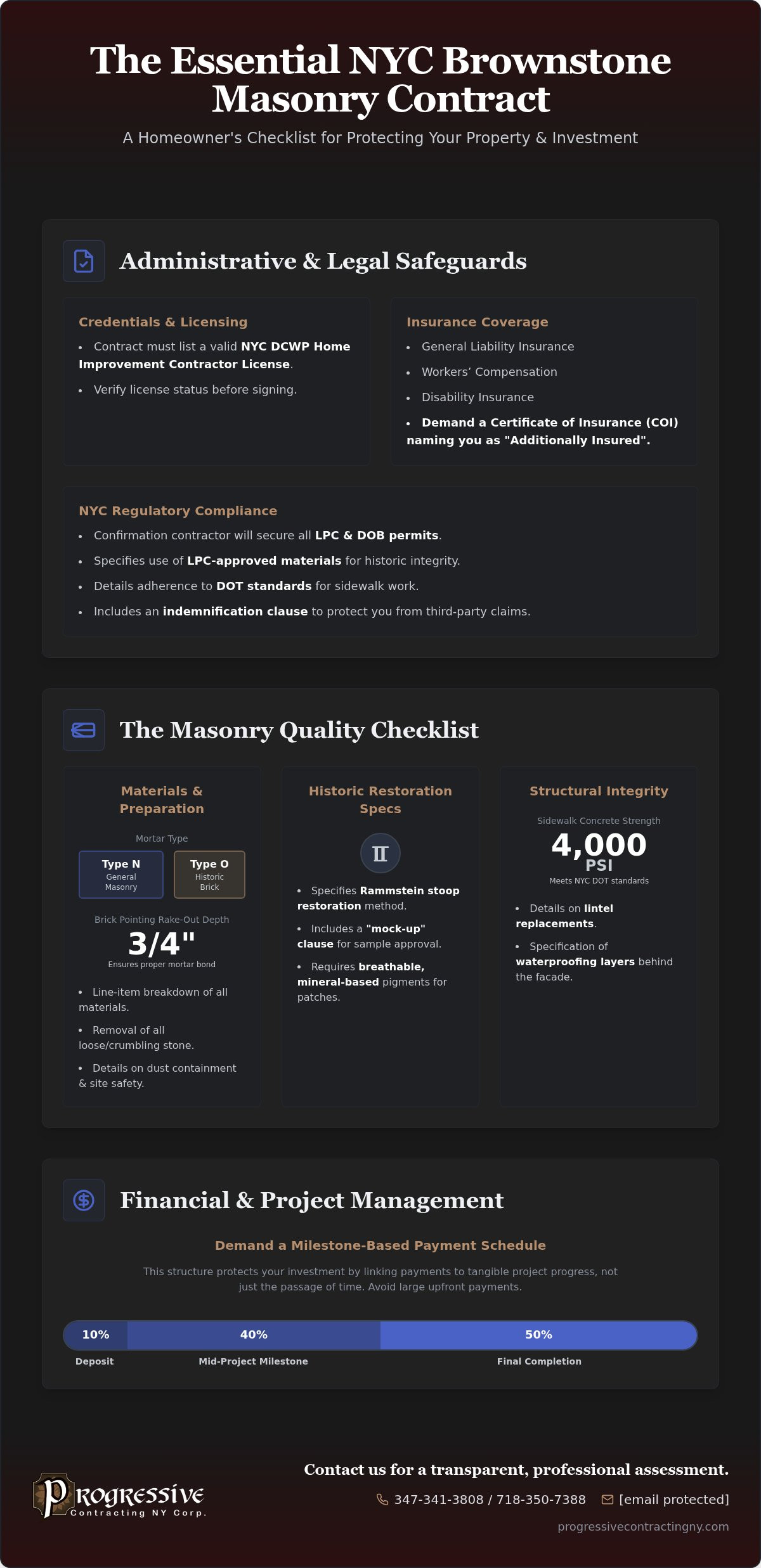
When hiring a brownstone specialist, the paperwork is as vital as the mortar. Knowing what to look for in a masonry contract starts with verifying the contractor’s credentials before any work begins. A professional agreement must list a valid NYC Department of Consumer and Worker Protection (DCWP) Home Improvement Contractor license. This number proves the business is registered to operate legally within the five boroughs. If a contractor cannot produce this, they shouldn’t be on your property. Check the license first; it protects your investment.
Insurance is your second line of defense. Your contract should explicitly state that the company carries the following coverages:
- General Liability: Covers property damage and non-worker injuries.
- Workers’ Compensation: Essential for covering medical costs if a mason is hurt on-site.
- Disability Insurance: A state requirement that protects workers and homeowners alike.
These policies protect you if your property sustains damage during a facade renovation. You can verify our current coverage by calling 347-341-3808 or 718-350-7388. We maintain full transparency with our documentation to ensure your peace of mind throughout the project lifecycle.
NYC Regulatory Requirements for Masonry
Historic neighborhoods like Park Slope and Bedstuy require meticulous adherence to Landmarks Preservation Commission (LPC) standards. Your contract must confirm that the contractor will secure all necessary NYC Department of Buildings (DOB) or LPC permits. It should also specify the use of LPC-approved materials to maintain the historic integrity of your brownstone. If your project involves the public walkway, verify the contractor’s experience with sidewalk violation removal nyc to ensure the work satisfies DOT requirements and clears any existing liens. Failure to follow these rules can lead to heavy fines and stop-work orders.
Liability and Insurance Protections
Demand a Certificate of Insurance (COI) that names you as “Additionally Insured” for the project’s duration. This simple step ensures their policy covers you directly. Include an indemnification clause in the contract as well. This legal language protects you from third-party injury claims that might arise during complex facade work. For questions about these clauses or to see a sample of our professional agreements, email us at ProgressiveContractingNY@yahoo.com or visit brownstonerepair.net. We prioritize clear communication to keep your restoration on track and legally sound.
Technical Scope of Work: The Masonry Quality Checklist
A vague scope of work leads to project disputes and structural failures. When evaluating what to look for in a masonry contract, demand a line-item breakdown of all materials. This includes specific mortar types. We typically recommend Type N for general masonry or Type O for historic restorations to prevent damage to softer, aged bricks. Your contract should explicitly state a rake-out depth of 3/4 inch for brick pointing nyc. This depth ensures the new mortar bonds properly rather than just sitting on the surface.
Surface preparation is another critical detail that requires documentation. For brownstone spalling repair, the mason must remove all loose, crumbling stone until they reach a sound substrate. Site protection is equally important in dense NYC neighborhoods. Your agreement should detail dust containment and scaffolding safety measures. These steps protect your neighbors and your own windows from debris. If you’re unsure about the technical specifications for your facade, consult with our restoration specialists at Progressive Contracting NY Corp by emailing ProgressiveContractingNY@yahoo.com.
Historic Restoration Specifications
Historic properties require specialized techniques to maintain their value. For stoops, specify a Rammstein stoop restoration method to match the original brownstone texture. Include a “mock-up” clause in your checklist. This allows you to approve a small sample of the repair or pointing before the team proceeds with the entire facade. Ensure all patches use breathable, mineral-based pigments. These materials allow moisture to escape, which prevents the stone from crumbling again in a few years.
Structural vs. Decorative Masonry Details
Don’t overlook the structural foundation of the work. For sidewalk repairs, the contract should specify a concrete strength of 4,000 PSI to meet NYC DOT standards. Detail any lintel replacements or waterproofing layers installed behind the facade. Identifying what to look for in a masonry contract regarding these structural details ensures your renovation lasts for decades. If you need a technical review of your current project plans, reach us at 347-341-3808 or 718-350-7388. Progressive Contracting NY Corp provides the precision and transparency required for complex NYC masonry projects.
Financial Transparency and Project Management Terms
Financial transparency is the cornerstone of a professional partnership. When finalizing what to look for in a masonry contract, prioritize a milestone-based payment schedule. We suggest a structure such as a 10% initial deposit, 40% upon reaching a defined mid-point, and the final 50% only after a successful final inspection. This approach maintains momentum and protects your capital. A “Notice of Completion” should trigger a final walkthrough where you verify that every detail meets the agreed-upon standards before the last payment is released.
Timelines in New York City are often subject to unpredictable weather, but your contract should still provide a clear framework. It must include a projected start date and an estimated completion date. While rain or extreme cold can shift the schedule, a disciplined expert provides regular updates to keep the project moving. For major restorations, require a workmanship warranty of at least 1 to 5 years. This ensures that any issues arising from the application process are addressed without additional costs. Progressive Contracting NY Corp provides this level of accountability to distinguish our services from temporary providers.
Warranties and Post-Project Support
It’s vital to distinguish between material warranties provided by manufacturers and workmanship warranties provided by your contractor. A material warranty covers defects in the mortar or stone itself, while the workmanship warranty covers the installation quality. Additionally, include a cleanup clause in the agreement. This requires the removal of all masonry debris and scaffolding within 48 hours of project completion. A clean, safe site is a non-negotiable requirement for any professional restoration.
Communication and Contact Protocols
Establish a single point of contact for daily updates. This prevents confusion and ensures the person in charge remains accountable for the crew’s progress. For direct inquiries or to review a specific contract for brownstone repair, contact Progressive Contracting NY Corp at 347-341-3808 or 718-350-7388. You can also email documents for review to ProgressiveContractingNY@yahoo.com. We provide accurate quotes and technical guidance to ensure your project stays on budget and meets the high standards your property deserves.
Secure Your Property with a Technical Masonry Agreement
A successful masonry project depends on the clarity of your initial agreement. By prioritizing legal compliance, technical precision, and structured payment milestones, you protect both your property and your finances. Understanding what to look for in a masonry contract ensures that your historic brownstone receives the expert care it requires without hidden costs or legal complications. Our team specializes in Brooklyn and Manhattan brownstones. We offer expert NYC sidewalk violation removal to keep your property in good standing with the DOT. You can reach us directly at 347-341-3808 or 718-350-7388 to discuss your restoration needs. For a technical document review or a formal quote, please email ProgressiveContractingNY@yahoo.com. We believe that clear communication and professional standards are the only way to achieve a flawless restoration. Taking these steps today provides the peace of mind that your home’s facade is in the hands of disciplined experts.
Contact Progressive Contracting of NY today
We look forward to helping you preserve the structural integrity and historic beauty of your home for years to come.
Frequently Asked Questions
What is the most important thing to look for in a masonry contract?
The most important element is a precise technical scope of work paired with a valid NYC DCWP license number. A vague agreement often leads to disputes over mortar matching or structural depth. When evaluating what to look for in a masonry contract, ensure it lists exact materials and specific restoration methods. For verification or a detailed review of your project plans, call 347-341-3808 or email ProgressiveContractingNY@yahoo.com.
Should a masonry contract include permit fees?
A professional agreement must explicitly state whether the contractor or the homeowner is responsible for permit fees and filing. In New York City, work on landmarked facades or sidewalk repairs requires specific DOB, LPC, or DOT permits. We recommend that the contractor handles the filing process to ensure all technical drawings meet city standards. This clarity avoids confusion and protects you from stop-work orders during your renovation.
How long should a masonry warranty last for a brownstone facade?
A workmanship warranty for a brownstone facade renovation typically lasts between 1 and 5 years. This timeframe allows the new masonry to experience several freeze-thaw cycles, which reveals the quality of the bond and the mortar match. Ensure your contract distinguishes between this workmanship guarantee and any manufacturer warranties on materials. If you have questions about our specific warranty terms, reach us at 718-350-7388 for a direct consultation.
What happens if a masonry contractor finds more damage during the project?
If additional structural issues like hidden water damage are discovered, the contractor must issue a formal change order. This document describes the new findings, the required repair method, and any adjustments to the cost or timeline. Never allow verbal agreements for extra work. A written change order maintains financial transparency and ensures the new scope meets the same quality standards as the original contract.