A useful facade inspection report gives a co-op board a starting point for a repair plan, not just a list of observations. Turning findings into a defined scope can be challenging, especially when water infiltration or masonry deterioration affects what the building needs. The board also needs a practical way to compare priorities and explain decisions to shareholders.
This guide explains how to approach facade repair for co-op buildings in NYC: organize inspection findings, identify issues that need prompt professional evaluation, and build a clear next-step plan with your property manager. You’ll learn how to use a consistent record to shape repair priorities and annual budget discussions. Progressive Contracting NY Corp provides brownstone facade renovation, historic restoration, brick pointing, and masonry repair in Brooklyn and Manhattan, including Bedford-Stuyvesant and Park Slope, as well as the Bronx and Queens. The company’s contact details are included below.
Table of Contents
Facade Repair for NYC Co-op Buildings: Turn Inspection Findings into Priorities
Inspection observations are easier to act on when the board and property manager can review them in one shared record. For facade repair for co-op buildings in NYC, keep the report, photographs, and recommendations together, with enough detail to compare locations and plan follow-up. A facade is the building’s exterior face, but each observation still needs to be assessed in the context of the material and its condition.
Separate what is visible from what has been concluded. A photograph of worn brownstone, deteriorated brick or mortar, staining, or a possible water-infiltration concern can help direct professional attention. Appearance alone, however, does not establish the cause or the repair required. For background on a visible brownstone condition, see this guide to brownstone spalling repair.
Which facade findings should the board document first?
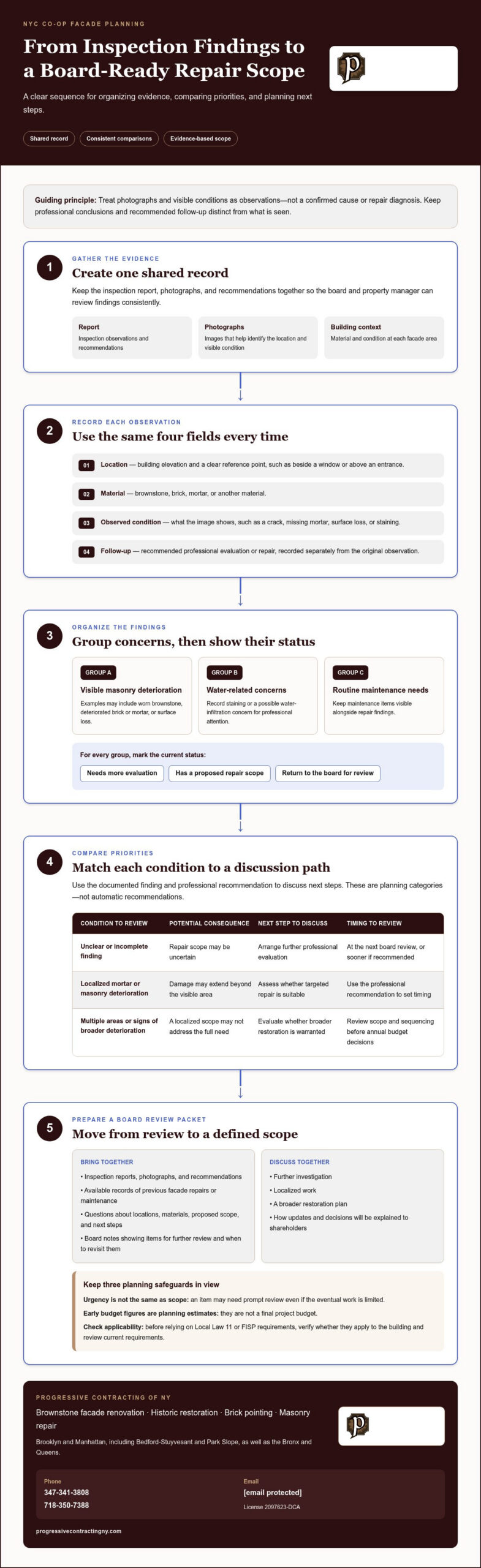
Use the same fields for each observation so board members can compare items consistently:
- Location: Identify the building elevation and a clear reference point, such as the area beside a window or above an entrance.
- Material: Note whether the visible surface is brownstone, brick, mortar, or another material.
- Observed condition: Describe what the photograph shows, such as a crack, missing mortar, surface loss, or staining.
- Follow-up: Record any recommended professional evaluation or repair, keeping it distinct from the original observation.
Group the entries into visible masonry deterioration, water-related concerns, and routine maintenance needs. Then note which items need more evaluation, which have a proposed repair scope, and which should return to the board for review. This gives the board a basis for discussing urgency and budget without treating every observation as a confirmed defect. Before relying on Local Law 11 or FISP requirements, verify whether they apply to the building and review the current requirements. A clear record also helps explain priorities to shareholders and track decisions as the plan develops.
Compare Facade Repair Priorities Before Setting the Co-op Annual Budget
A board can compare facade needs without treating one estimate as the entire plan. Use documented observations and professional recommendations to rank items for discussion, then determine whether the next step is further evaluation, localized repair, or broader restoration. These are planning categories, not automatic recommendations. The appropriate scope depends on the building’s materials and observed conditions.
| Condition to review |
Potential consequence |
Recommended next step |
Timing to review |
| Unclear or incomplete finding |
The repair scope may be uncertain |
Arrange further professional evaluation |
At the next board review, or sooner if recommended |
| Localized mortar or masonry deterioration |
Damage may extend beyond the visible area |
Assess whether targeted repair is suitable |
Use the professional recommendation to set timing |
| Multiple areas or signs of broader deterioration |
A localized scope may not address the full need |
Evaluate whether broader restoration is warranted |
Review scope and sequencing before annual budget decisions |
How can a board weigh urgent repairs against planned restoration?
Compare each finding by location, visible condition, potential consequence, and professional recommendation. Keep urgency separate from scope: an item may need prompt review even if the eventual work is limited. Prudent planning for facade projects also means documenting why the board ranked one item ahead of another.
Deteriorated mortar joints may call for brick pointing in NYC, while damaged brownstone may require a different repair approach. Concealed conditions, including water infiltration, can affect the work as assessment progresses. Treat early budget figures as planning estimates rather than a final project budget. Progressive Contracting of NY provides masonry restoration and brownstone repair for buildings in Brooklyn and Manhattan. Its exterior masonry work is also relevant to co-op properties in neighborhoods such as Bedford-Stuyvesant and Park Slope.
NYC Co-op Facade Repair: From Review to Scope
A board-ready plan moves from records to decisions in a clear sequence: review inspection findings, define the questions that need professional discussion, compare priorities, and plan how updates will reach shareholders. This gives the board and property manager a shared reference as they develop a scope and consider the work in the annual budget. For facade repair for co-op buildings in NYC, keep open questions visible rather than treating early observations as a final diagnosis.
What should the board prepare before moving a repair plan forward?
Bring the key materials into one review packet so the board, property manager, and masonry contractor can work from the same information:
- Inspection reports, photographs, and recommendations.
- Available records of previous facade repairs or maintenance.
- Questions about locations, materials, proposed scope, and next steps.
- Board notes showing which items need further review and when to revisit them.
With that packet, the board can discuss whether a finding calls for more investigation, localized work, or a broader restoration plan. A masonry contractor can tailor brownstone facade renovation or brick repair to the building’s materials and observed conditions. For background when findings involve crumbling masonry, read this guide to brownstone facade deterioration repair.
Progressive Contracting of NY works on brownstone restoration, brick pointing, and masonry repair. The company serves property owners across Brooklyn and Manhattan, including Bedford-Stuyvesant and Park Slope, and in the Bronx and Queens.
Move Your Co-op’s Facade Plan Forward
Sound facade repair for co-op buildings in NYC starts with a clear record of inspection findings, a careful comparison of priorities, and a scope grounded in the building’s observed conditions. Organizing those steps helps the board explain decisions, plan annual spending, and account for changes if concealed conditions affect the work.
Progressive Contracting of NY specializes in brownstone facade renovation, historic restoration, and brick pointing. The company provides exterior masonry services in Brooklyn and Manhattan, including Bedford-Stuyvesant and Park Slope, as well as the Bronx and Queens. To discuss your co-op’s facade repair needs, call 347-341-3808 or 718-350-7388, or email ProgressiveContractingNY@yahoo.com. License number 2097623-DCA.
A well-documented plan gives the board a practical path from findings to informed decisions. Start with the building’s specific needs and move forward one clear step at a time.
Frequently Asked Questions
Does every NYC co-op need a facade inspection?
Not necessarily. Inspection applicability depends on the building and current requirements. The board should verify with the NYC Department of Buildings or qualified professionals whether Local Law 11 or the Facade Inspection Safety Program applies to its property and what requirements currently govern it. Don’t assume another building’s inspection schedule or obligations apply to your co-op.
How can a co-op board budget for facade repairs when hidden damage may exist?
Build the plan in phases: define the known work, document assumptions and open questions, then revisit the scope as new conditions are observed. For facade repair for co-op buildings in NYC, keep investigation, localized repairs, and broader restoration distinct in board discussions. Update priorities and budget planning when assessments reveal conditions that weren’t visible earlier, rather than treating an early scope as final.
What facade problems should a co-op board address first?
Start with professional assessment of observed conditions, then use building-specific findings and recommendations to set the order of work. Visible masonry deterioration, water-related observations, and maintenance needs may call for different follow-up. Photographs and location notes help the board compare items, but appearance alone does not establish a diagnosis or determine urgency. Base timing on the professional review and its findings.
Can brownstone and brick facade repairs be planned in the same project?
Yes. Brownstone and brick work can be coordinated within one project, while repair methods and scope should reflect each material and the building’s observed conditions. Progressive Contracting of NY provides brownstone facade renovation, historic restoration, and brick pointing in Brooklyn and Manhattan, including Bedford-Stuyvesant and Park Slope. Call 347-341-3808 or 718-350-7388, or email ProgressiveContractingNY@yahoo.com. License number 2097623-DCA.