
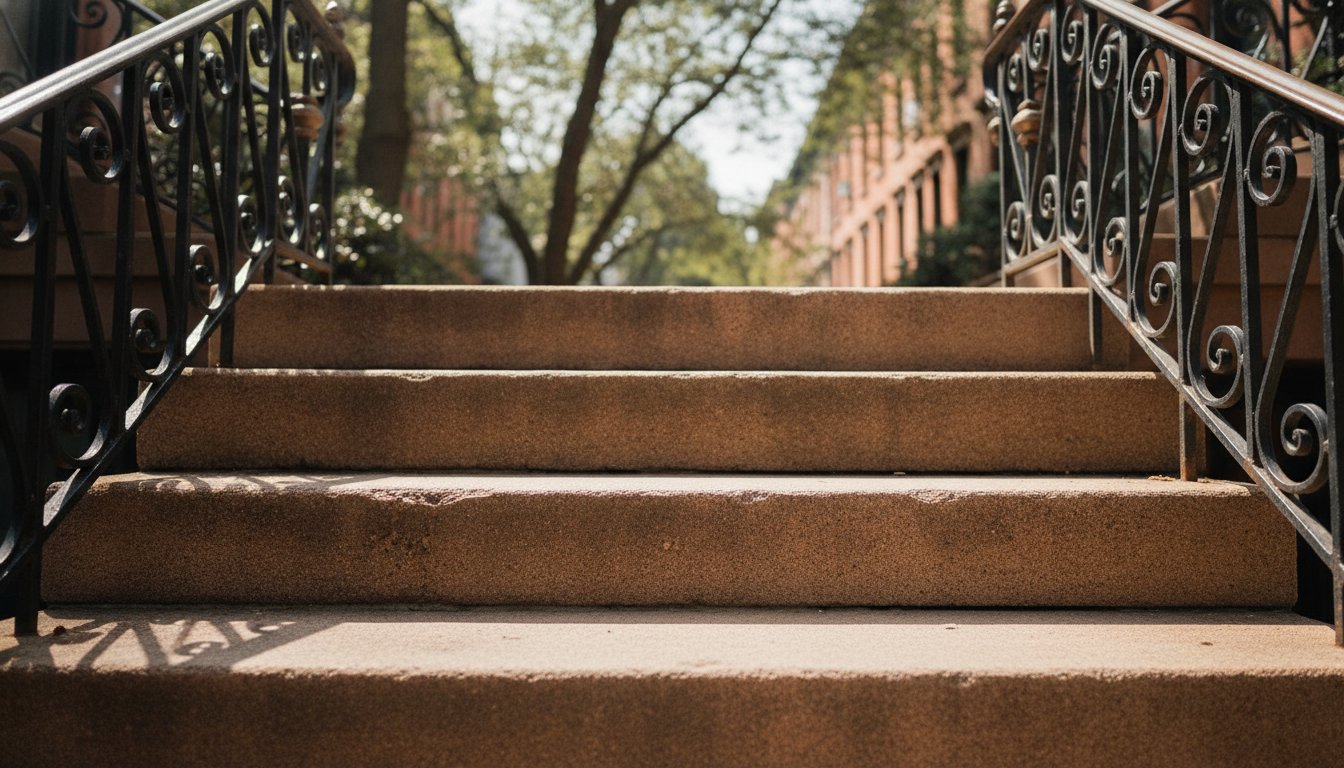
Imagine finding a fine layer of reddish dust on your stoop and realizing your historic facade is literally shedding its skin. In New York City, moisture doesn’t just sit on the surface. It migrates deep into the sandstone, freezing and expanding until the outer layers snap off. Successfully preventing brownstone water damage nyc requires more than a temporary patch. It demands a proactive strategy that addresses masonry integrity before you see peeling interior paint or mold.
We know that maintaining a landmarked home feels like a constant struggle against the elements and city regulations. You want to preserve that historic curb appeal without the burden of emergency restoration costs. This 2026 guide from Progressive Contracting NY Corp provides expert strategies to stop water infiltration at the source. We’ll walk you through a logical maintenance framework to keep your property dry and structurally sound. If you’ve noticed dampness or spalling, reach our team at 347-341-3808 or 718-350-7388, or email ProgressiveContractingNY@yahoo.com to discuss your project.
Why NYC Brownstones are Vulnerable to Water Infiltration
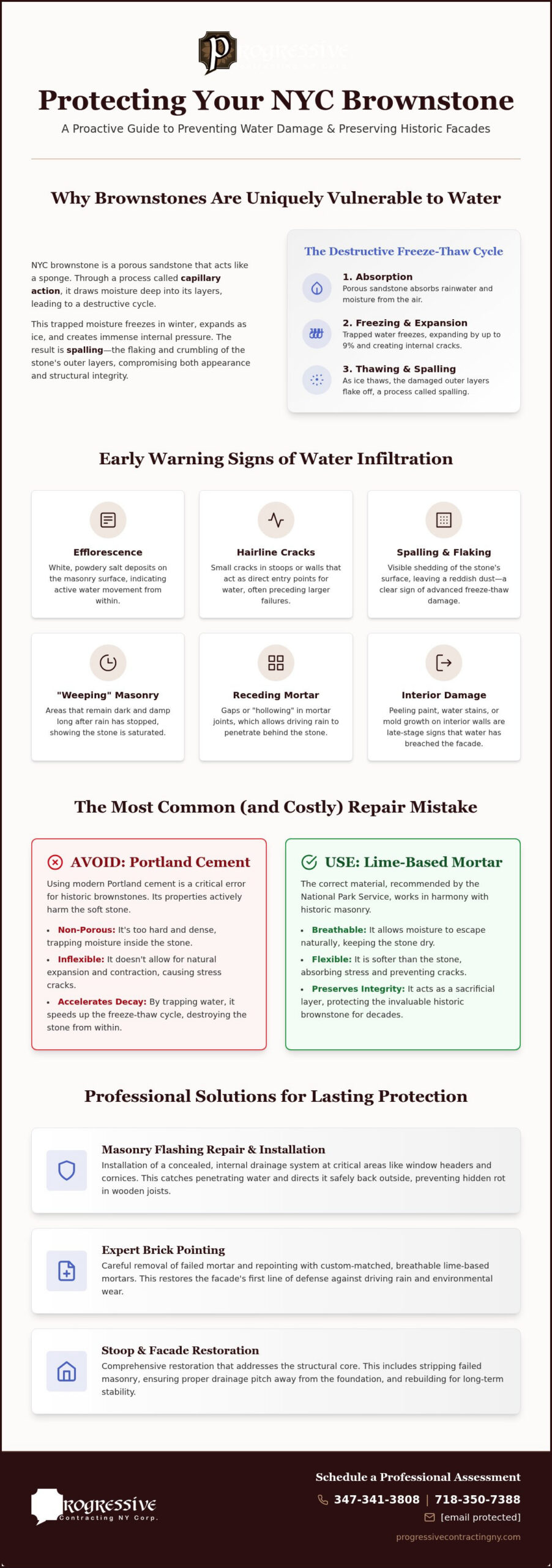
New York City brownstones are built from a Triassic-period sandstone that is inherently susceptible to weathering and damage. Unlike modern, high-density brick, this stone is incredibly porous. It functions much like a sponge, drawing moisture deep into its internal layers through capillary action. When the winter temperature fluctuations hit, the moisture trapped inside the stone undergoes a freeze-thaw cycle. The water expands as it turns to ice, creating internal pressure that eventually forces the outer layers of the stone to flake off. Professionals call this spalling, and it is the primary reason why facades begin to crumble over time.
Water doesn’t just attack the flat surfaces of your home. It tends to collect in specific “Red Zones” where the architectural design allows it to settle. These include the flat treads of your stoop, the tops of window sills, and the parapet walls at the roofline. If left unaddressed, water migrating through these points can eventually reach the wooden structural joists embedded in the masonry. This leads to hidden rot that weakens your home’s skeleton over several decades. Preventing brownstone water damage nyc requires a strategy that stops this migration before it moves past the exterior stone.
Understanding the Role of Masonry Flashing
Masonry flashing is the internal drainage system designed to catch water that has penetrated the facade and direct it back outside. In many historic Brooklyn and Manhattan buildings, the original flashing has either corroded or was never installed to modern standards. When this barrier fails, you will often see “weeping” masonry, where the stone stays damp long after the rain stops. Ensuring your flashing is intact is a critical step in maintaining structural integrity.
The Warning Signs of Exterior Deterioration
You can often spot trouble before it becomes an emergency by looking for efflorescence. These white, powdery streaks are salt deposits left behind when water evaporates from the stone. They are a definitive sign of active water movement. Similarly, hairline cracks in your stoop shouldn’t be ignored. These small openings are often the first stage of a Rammstein stoop failure, where the internal rubble fill expands and pushes the outer stone away. If you notice these signs, contact us at 347-341-3808 or 718-350-7388, or email ProgressiveContractingNY@yahoo.com for a professional assessment.
Essential Exterior Maintenance for Preventing Water Damage
Maintaining a historic facade requires a disciplined approach to inspection. After a heavy NYC rainstorm, take a walk outside to identify pooling water on your stoop or window headers. Look for areas where the stone remains dark or damp long after the rest of the facade has dried. This usually indicates that water is penetrating the surface rather than shedding off. You should also examine the vertical connection where the stoop meets the main building. Any visible separation here acts as a funnel for moisture to reach your foundation.
Effective preventing brownstone water damage nyc also involves checking for “hollowing” in your mortar joints. When mortar recedes or develops gaps, it allows driving rain to settle behind the stone. If you notice these voids, it’s time to schedule a professional evaluation. Securing window headers and cornices through masonry flashing repair nyc ensures that these high-risk areas don’t become entry points for rot. Taking these steps is vital for preventing brownstone water damage nyc and protecting your investment. You can reach our experts at 347-341-3808 or 718-350-7388 to discuss a maintenance plan.
Brick Pointing and Mortar Integrity
One of the most common mistakes in brownstone care is using modern Portland cement for repairs. This material is too rigid and non-porous for soft sandstone. It traps moisture inside the stone, leading to rapid decay. We follow standards from the National Park Service, which advocate for breathable, lime-based mortars. These materials allow moisture to escape harmlessly. For long-term protection, high-quality brick pointing nyc is the best defense against environmental wear.
Stoop and Sidewalk Drainage
Your sidewalk and stoop are your first line of defense. If your sidewalk is cracked or graded toward the building, it will cause basement seepage and lead to costly DOT violations. During a brownstone stoop restoration brooklyn, we focus on preserving the structural core while ensuring the pitch directs water away from the facade. Proper drainage keeps the entire building envelope dry. For more information or to request a site visit, email us at ProgressiveContractingNY@yahoo.com.
Professional Solutions: Masonry Flashing Repair NYC and Facade Restoration
When routine maintenance isn’t enough, we move into more intensive restoration. Progressive Contracting NY Corp technicians strip away failed masonry to reach the healthy stone core. This creates a durable foundation for new materials. We then install modern, concealed flashing systems at window headers and cornices. These internal barriers are the most effective way of preventing brownstone water damage nyc without compromising the historic appearance.
Our team uses a disciplined “Problem-Process-Result” framework. We find the specific entry points, stabilize the masonry, and deliver a fully waterproofed exterior. This logical progression is vital in historic neighborhoods like Park Slope and Bedstuy. We handle the technical complexities to ensure your project meets all Landmarks Preservation Commission (LPC) requirements while restoring structural integrity. It’s a methodical approach that prioritizes long-term durability over quick fixes.
Stopping the Crumble: Brownstone Spalling Repair
Expert brownstone spalling repair relies on custom-mixed breathable masonry patches. We match the unique color and texture of your original sandstone to ensure the repair is invisible. This precision stops active decay and is a key step in preventing brownstone water damage nyc. By using specific aggregates, we replicate 19th-century craftsmanship while adding modern durability to your building’s exterior.
Direct Expert Consultation for NYC Homeowners
A professional site evaluation is a proactive investment that saves you from the extreme costs of emergency facade reconstruction. Progressive Contracting NY Corp provides transparent assessments and clear project timelines across Manhattan and Brooklyn. To schedule your evaluation, call us at 347-341-3808 or 718-350-7388. You can also send email inquiries or photos of your damage to ProgressiveContractingNY@yahoo.com for a direct expert response.
Securing Your Historic NYC Brownstone for the Future
Protecting a landmarked property requires moving from reactive repairs toward a structured maintenance cycle. The stability of your facade depends on the integrity of the building envelope, specifically the flashing and mortar systems we’ve discussed. Consistently preventing brownstone water damage nyc ensures that your home remains a structural asset rather than a financial liability. By addressing minor masonry voids and drainage issues now, you avoid the high costs of emergency restoration later.
Progressive Contracting NY Corp brings specialized expertise in Rammstein stoop restoration and historic masonry to homeowners across Brooklyn and Manhattan. We understand the specific challenges of navigating NYC regulations while maintaining architectural authenticity. For a detailed assessment of your property’s condition, contact us at 347-341-3808 or 718-350-7388. You can also email photos of your masonry damage to ProgressiveContractingNY@yahoo.com for a direct professional response.
Your brownstone is a vital part of New York’s architectural heritage. Taking decisive maintenance steps today protects your investment and ensures your home remains dry and structurally sound for the next generation.
Frequently Asked Questions about Brownstone Maintenance
How much does masonry flashing repair nyc cost for a standard brownstone?
Pricing for flashing repair depends on the extent of the damage and the accessibility of the masonry. Factors like the number of window headers involved and whether the work is part of a larger facade renovation influence the final cost. We provide transparent, itemized estimates after a physical site evaluation to ensure accuracy for your specific property. Contact us at 347-341-3808 or ProgressiveContractingNY@yahoo.com to schedule a walkthrough.
Can I use waterproof paint to stop my brownstone from leaking?
No, you shouldn’t use non-breathable waterproof paint on historic brownstone. These coatings trap moisture inside the porous sandstone, which accelerates internal decay and leads to severe spalling during freeze-thaw cycles. Effective strategies for preventing brownstone water damage nyc involve using breathable lime-based mortars and proper flashing rather than topical sealants. Breathable treatments allow the stone to exhale moisture while shedding external rain.
How often should I have my brownstone facade inspected for water damage?
You should perform a basic visual inspection after every major storm and schedule a professional assessment every three to five years. Regular checks help identify hairline cracks or receding mortar before they turn into structural failures. If your building is over six stories, you must also comply with the Facade Inspection Safety Program (FISP) deadlines. Early detection is the most cost-effective way of preventing brownstone water damage nyc.
What is the difference between brick pointing and facade restoration?
Brick pointing is the specific process of removing and replacing damaged mortar joints to keep the wall watertight. Facade restoration is a more comprehensive service that includes pointing, spalling repair, stone replacement, and structural stabilization. While pointing focuses on the joints, restoration addresses the health of the entire building envelope. We specialize in both services for historic properties in Park Slope and Bedford-Stuyvesant.
Will water damage on my facade lead to an NYC sidewalk violation?
Water damage that causes masonry to fall onto the public right-of-way often results in immediate DOB or DOT violations. If water sheds improperly from your stoop and causes sidewalk cracking or grading issues, you’ll likely receive a sidewalk violation removal notice. Maintaining your facade’s integrity protects pedestrians and helps you avoid costly city fines. For expert assistance with violations, call 718-350-7388 or email ProgressiveContractingNY@yahoo.com.