

A vertical lift of just half an inch along your walkway is enough to spark an NYC DOT violation. Handling sidewalk repair for tree root damage near Prospect Park often feels like a trap. You want to eliminate dangerous tripping hazards and protect yourself against civil liability, but cutting or shaving protected street tree roots can trigger severe fines from NYC Parks.
In this guide, you’ll learn how to resolve tree root sidewalk damage near Prospect Park safely while satisfying NYC DOT and Parks Department rules. We examine the required tree work permits, non-destructive root-bridging techniques, and violation dismissals. For reliable masonry execution, Progressive Contracting NY Corp (license 2097623-DCA, reachable at 347-341-3808, 718-350-7388, or ProgressiveContractingNY@yahoo.com) helps property owners handle inspections, city approvals, and durable concrete pouring.
Understanding NYC Tree Root Rules and Sidewalk Liability Near Prospect Park
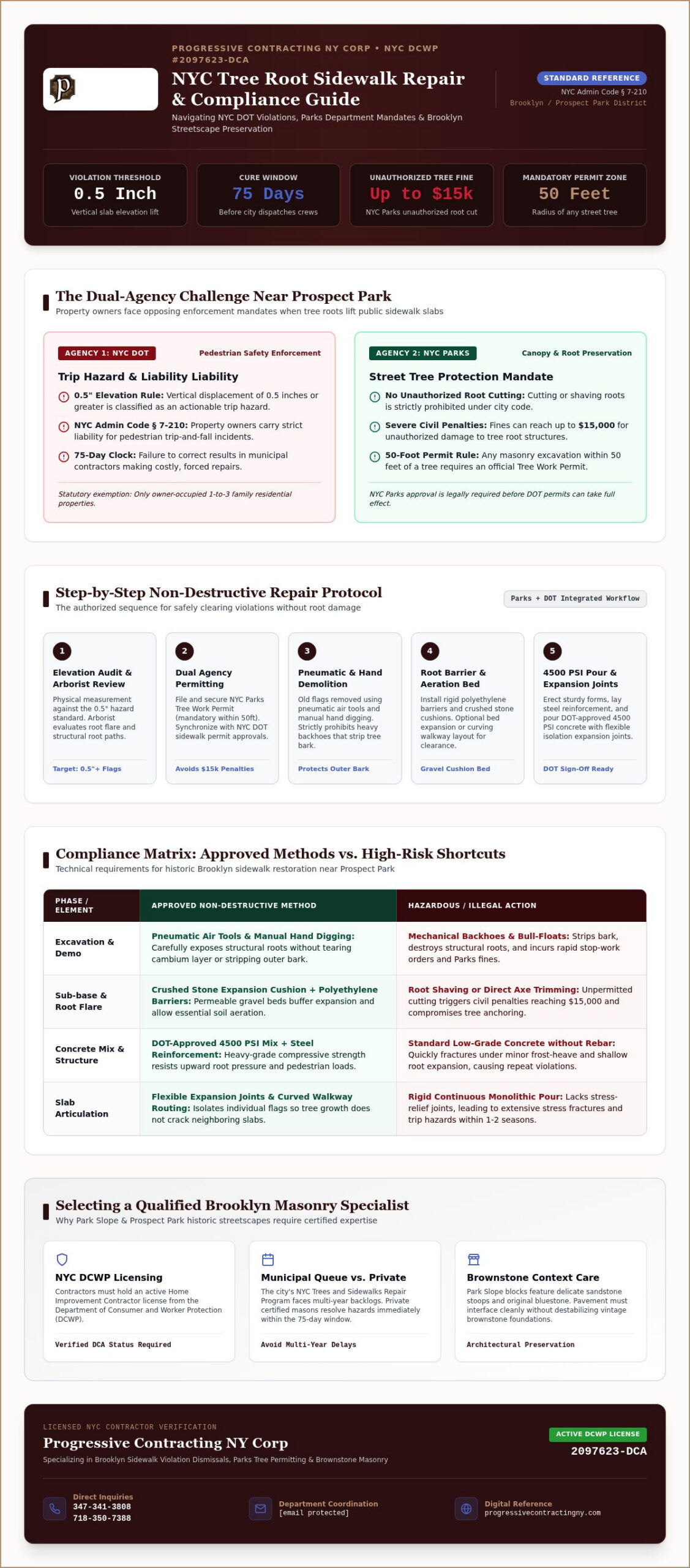
Brooklyn brownstone blocks feature some of the borough’s grandest street trees. Massive root systems often spread beneath paved walkways, lifting bluestone and concrete flags well past acceptable safety thresholds. When you face sidewalk repair for tree root damage near Prospect Park, you encounter two competing municipal realities. Property owners must keep pedestrian paths level, yet NYC Parks strictly protects every street tree root. Cutting or shaving roots without authorization violates city code and brings civil penalties reaching $15,000.
Navigating Dual-Agency Oversight: NYC DOT and the Department of Parks
Under NYC Administrative Code § 7-210, property owners carry strict liability for pedestrian trip-and-fall injuries on abutting walkways. The statutory exemption covers only owner-occupied, one-to-three-family residential properties. When aggressive roots from mature tree canopies bordering Prospect Park in Brooklyn lift adjoining flags by 0.5 inches or more, the NYC DOT issues a formal violation notice. Property owners have 75 days to complete compliant repairs before the city dispatches its own contractors.
Resolving these flags requires coordination across multiple city agencies. You can’t simply hire someone to break concrete and slice through roots. Any masonry excavation within 50 feet of a street tree demands an official Tree Work Permit from NYC Parks before DOT permits take effect. Reviewing the overall cost of sidewalk violation removal NYC shows that careful permitting avoids compounding municipal fines. A seasoned masonry specialist bridges these agency mandates, safeguarding both public pedestrian safety and the historic urban canopy.
How to Repair Tree Root Sidewalk Damage Step by Step
Proper execution begins with a detailed physical inspection. Property owners must measure slab displacement against NYC DOT sidewalk maintenance regulations, which classify any vertical elevation difference of 0.5 inches or greater as an actionable trip hazard. Before breaking broken flags, contractors evaluate the root flare and secure an NYC Parks Tree Work Permit. Consulting a certified arborist ensures the excavation plan protects vital structural roots while keeping the project compliant with city standards.
Execution Protocol: From Root Aeration to 4500 PSI Concrete Pouring
Crews begin demolition using pneumatic air tools and manual hand digging. Heavy mechanical backhoes easily strip protective bark, so workers expose structural roots with meticulous care. Once the root system is cleared, masons install rigid polyethylene root barriers alongside crushed stone expansion cushions. These permeable gravel beds buffer ongoing root growth and allow essential soil aeration without uplifting flags. When lot layout allows, creating a curved walkway or expanding the curbside tree bed provides vital trunk clearance.
Masons then construct sturdy forms, lay steel reinforcement, and pour DOT-approved 4500 PSI concrete. Placing flexible expansion joints between adjoining slabs isolates natural root expansion and prevents stress fractures over time. For lasting structural results, partnering with an experienced concrete contractor ensures every slab cures evenly and passes final city sign-offs. Completing sidewalk repair for tree root damage near Prospect Park through these disciplined steps shields property owners from liability while safeguarding Brooklyn’s magnificent street trees.
Selecting a Qualified Masonry Contractor for Historic Brooklyn Sidewalks
Vetting masonry credentials protects property owners from substandard repairs and costly municipal delays. In New York City, any contractor working on residential sidewalks must carry an active Home Improvement Contractor license from the Department of Consumer and Worker Protection (DCWP) alongside comprehensive commercial liability coverage. While reviewing the NYC Trees and Sidewalks Repair Program guidelines reveals years-long municipal waitlists, a private specialist resolves hazardous flags immediately. Your chosen contractor must oversee the full workflow, from initial Parks Department permit filings to final DOT dismissal inspections.
Why Park Slope and Prospect Park Properties Require Specialized Restoration
Historic blocks bordering the park feature vintage architectural details, from carved stoops to original bluestone pavers. Standard concrete crews often lack the finesse needed around fragile sandstone foundations. Integrating streetscape masonry with specialized brownstone restoration ensures that new pavement complements existing structural character without harming mature root systems.
Entrusting your sidewalk repair for tree root damage near Prospect Park to a seasoned local partner ensures swift violation sign-offs and lasting safety. Progressive Contracting NY Corp provides over a decade of Brooklyn masonry experience, holding NYC DCWP license number 2097623-DCA. To schedule an evaluation and manage city filings, call 347-341-3808 or 718-350-7388, or send project details to ProgressiveContractingNY@yahoo.com.
Secure Your Walkway and Eliminate NYC Violations
Safeguarding your Brooklyn property against premises liability requires proactive masonry care that honors municipal tree mandates. Successfully managing sidewalk repair for tree root damage near Prospect Park depends on securing proper Parks Department permits, utilizing non-destructive root buffering, and pouring durable, code-compliant concrete. Progressive Contracting NY Corp brings over a decade of proven masonry, concrete, and brownstone restoration experience in Brooklyn, fully licensed with NYC Consumer and Worker Protection under license number 2097623-DCA.
Resolving uneven flags protects pedestrian safety while keeping your property free from title liens and costly fines. For direct support, call 347-341-3808 or 718-350-7388, or email ProgressiveContractingNY@yahoo.com to secure dependable walkways built to last.
Frequently Asked Questions
Can I cut tree roots myself to level my Brooklyn sidewalk?
No. Cutting, shaving, or pruning street tree roots is illegal in New York City. All street trees fall under the jurisdiction of NYC Parks. Damaging root systems destabilizes the tree, creating severe hazards and exposing property owners to fines up to $15,000. Code-compliant repairs rely on hand excavation, root barriers, and gravel leveling beds rather than cutting.
How does an NYC DOT sidewalk violation get dismissed after repairs?
Following sidewalk repair for tree root damage near Prospect Park, you or your licensed contractor must submit a formal dismissal inspection request to the NYC DOT. A city inspector examines the walkway to ensure all vertical displacements under 0.5 inches have been eliminated. Once verified, the DOT issues an official dismissal notice that clears the violation from your property title.
What permits are required for sidewalk repairs near street trees in NYC?
You must obtain an NYC Parks Tree Work Permit before starting any excavation within 50 feet of a street tree. Additionally, you need an NYC DOT Sidewalk Construction Permit to pour concrete or reset pavers. If your building sits within a designated historic district around the park, you must also secure Landmarks Preservation Commission approval before pulling municipal construction permits.
Can historic bluestone flags be reinstalled over growing tree roots?
Yes. Masons regularly salvage and reset historic bluestone flags above existing root flares. Crews hand-excavate the bed without damaging root bark, add a cushioning layer of crushed aggregate, and reinstall the stone flags to a flush grade. This specialized approach delivers durable sidewalk repair for tree root damage near Prospect Park while preserving historic Brooklyn streetscape aesthetics.