
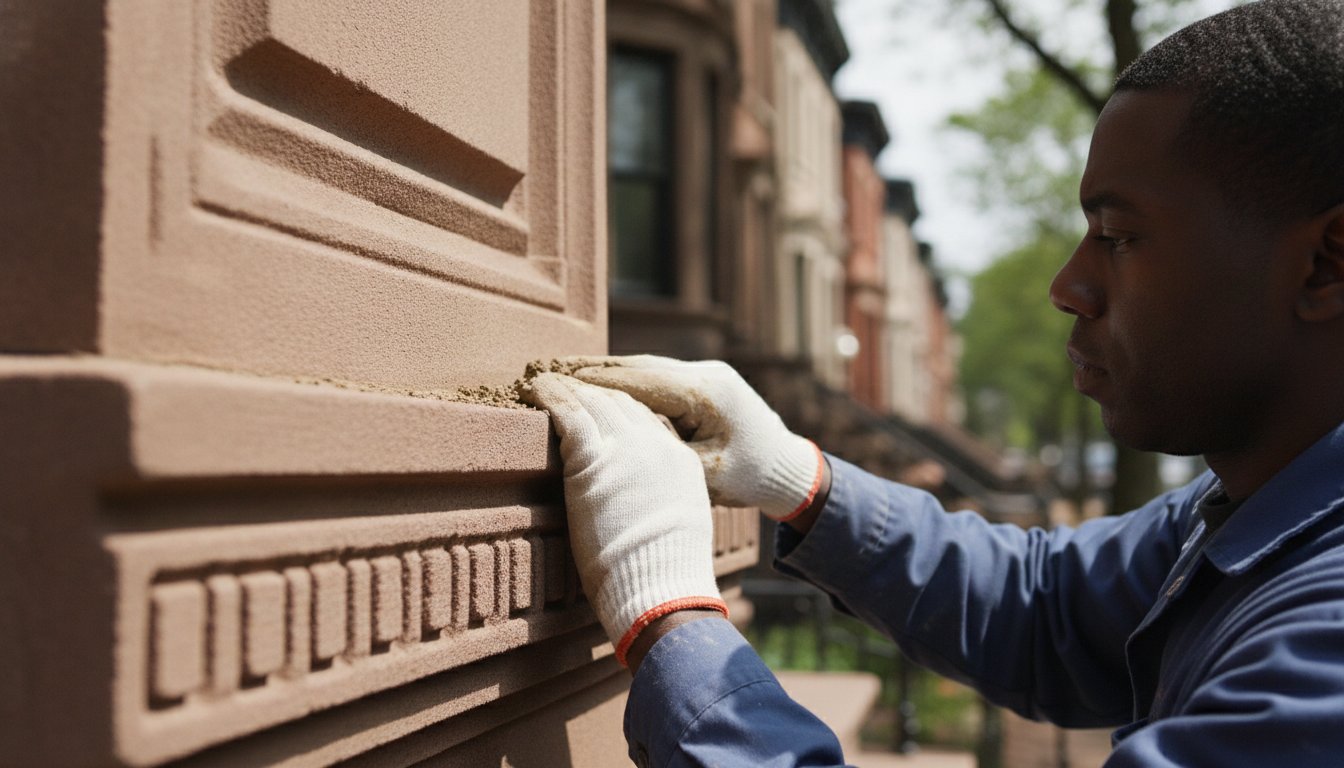
A single crack in your Bed-Stuy brownstone facade is more than a cosmetic flaw; it’s a direct invitation for the NYC Landmarks Preservation Commission to issue a costly violation. You likely recognize that owning a piece of Brooklyn history comes with the heavy responsibility of maintaining its 19th-century soul while meeting modern safety standards. It’s stressful to watch your stoop crumble or your lintels spall, especially when you’re unsure which brownstone contractor bedstuy can handle the delicate balance of historic accuracy and structural durability.
We understand that you need a partner who respects original craftsmanship, especially as the LPC intensifies oversight with thousands of permit applications already filed for 2026. This article provides the clarity you need to restore your home’s historic facade and stoop with neighborhood-specific expertise that ensures full compliance with NYC building codes. We’ll explore the technical realities of masonry repair, the latest landmark regulations, and the exact process required to protect your investment. By focusing on precision and transparency, you can secure your home’s structural integrity and its place in the neighborhood’s historic landscape.
Key Takeaways
- Learn to distinguish the Neo-Grec and Romanesque Revival styles unique to Bed-Stuy and why they require specific restoration techniques compared to other Brooklyn neighborhoods.
- Identify the early warning signs of “sugar-coating” and spalling to prevent minor facade erosion from turning into a major structural failure or safety hazard.
- Understand why hiring an experienced brownstone contractor bedstuy is essential for navigating the NYC Landmarks Preservation Commission (LPC) permit process and avoiding costly violations.
- Discover the specific licensing and specialized masonry insurance requirements necessary to protect your property and ensure your restoration meets the latest NYC building codes.
- Master a structured approach to restoring your stoop and facade that balances 19th-century aesthetic integrity with long-term structural durability.
The Architectural Heritage of Bedford-Stuyvesant Brownstones
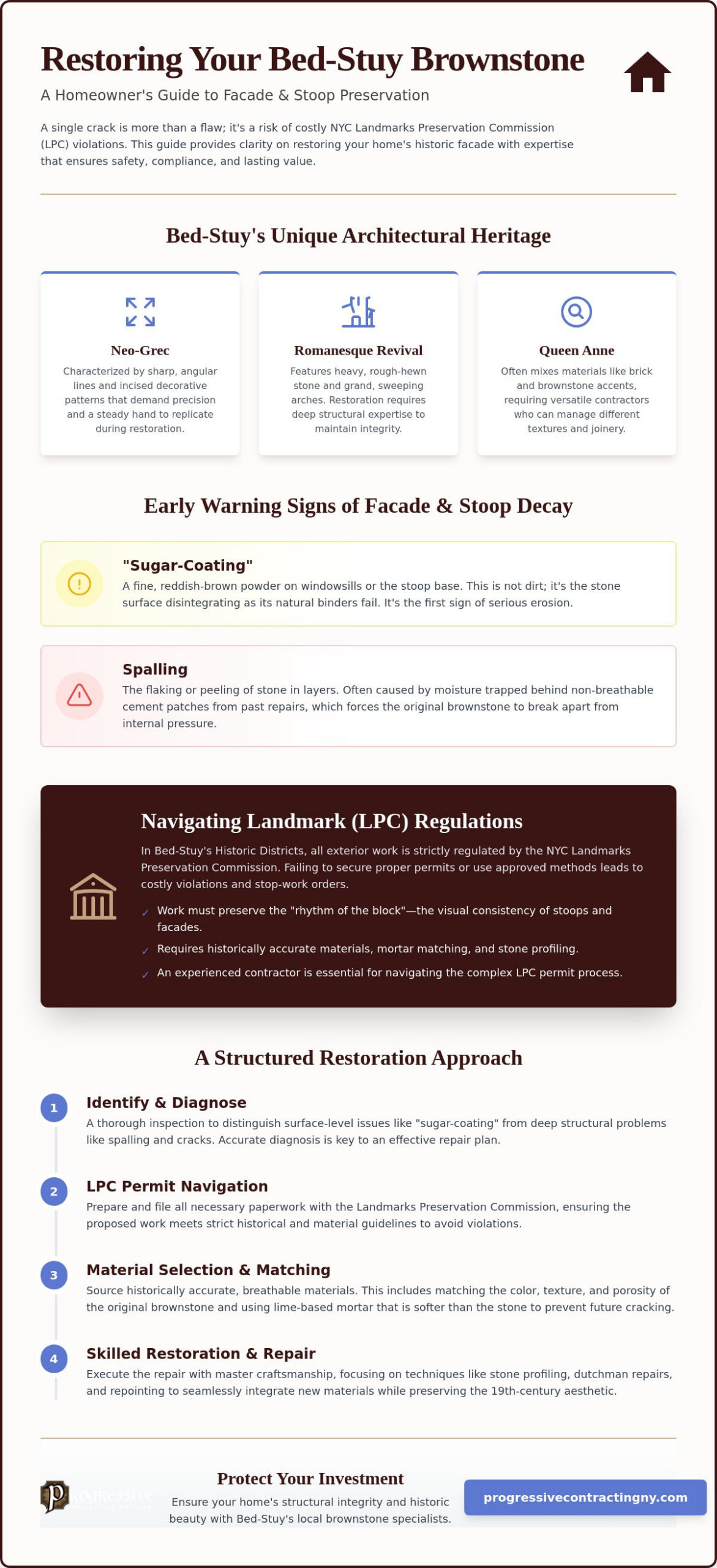
Bedford-Stuyvesant holds one of the most concentrated collections of Victorian architecture in the United States. The Architectural Heritage of Bedford-Stuyvesant is defined by a rigorous blend of Neo-Grec, Romanesque Revival, and Queen Anne styles. Each style presents unique masonry challenges. Neo-Grec facades feature sharp, angular lines and incised patterns that require a steady hand to replicate. Romanesque Revival buildings rely on heavy, rough-hewn stone and sweeping arches that demand structural precision. Queen Anne designs often mix materials, combining brick with brownstone accents in ways that require a versatile brownstone contractor bedstuy to manage effectively.
Restoration in Bed-Stuy differs from Park Slope or Brooklyn Heights due to the specific density and the quality of the original sandstone used. During the late 1800s, builders sourced brownstone from various quarries. The stone in this neighborhood often exhibits specific weathering patterns based on local wind tunnels and urban heat islands. High-quality sandstone was the backbone of NYC construction, but it’s porous. In Bed-Stuy, the close proximity of buildings means moisture can become trapped between facades, accelerating the “sugar-coat” effect where the stone surface begins to turn to powder.
Bed-Stuy’s Historic Districts and Masonry Requirements
The Stuyvesant Heights and Bedford Historic Districts are protected by strict Landmarks Preservation Commission (LPC) guidelines. These rules ensure that any exterior work preserves the “rhythm” of the block. This rhythm is the visual consistency created when dozens of stoops and facades align perfectly. A qualified brownstone contractor bedstuy understands that masonry isn’t just about fixing a single house. It’s about maintaining the visual continuity of the entire streetscape. Proper mortar matching and stone profiling are required to meet these standards.
The Value of Preservation in Today’s Market
As of 2026, professional facade restoration significantly impacts property values. Buyers in the current market prioritize restored over modernized exteriors. While modernization might involve covering stone with paint or mismatched cement, true restoration returns the facade to its original 19th-century profile. This is especially true for the iconic Bed-Stuy stoop. These stoops are social hubs and cultural landmarks. Using historically accurate materials for a Rammstein stoop restoration ensures the home remains a stable, high-value asset for decades. It’s a disciplined investment in the home’s structural integrity and aesthetic appeal.
Identifying Common Facade and Stoop Issues in Bed-Stuy
Water infiltration remains the primary threat to the historic masonry of Bedford-Stuyvesant. Because brownstone is a porous sandstone, it naturally absorbs moisture from the humid New York air and driving rain. When this water enters the stone’s capillaries, it expands and contracts during the city’s frequent freeze-thaw cycles. Over time, this internal stress weakens the stone’s molecular bond, leading to visible decay that compromises both safety and curb appeal. Identifying these issues early is the first step toward a successful restoration that satisfies the requirements for Navigating Landmark Regulations.
One of the most subtle signs of trouble is the “sugar-coat” effect. You might notice a fine, reddish-brown powder accumulating on your windowsills or at the base of your stoop. This isn’t just dirt; it’s the actual surface of your home disintegrating. When the natural binding agents in the stone fail, the facade begins to shed its outer layer. If left unaddressed, this surface erosion eventually deepens into structural cracks, particularly around high-stress areas like window lintels and door frames.
The Science of Brownstone Spalling
Spalling is the exfoliation of stone layers due to internal pressure. This often occurs when previous “patch jobs” used non-breathable, cement-based materials. These rigid patches trap moisture behind the surface, forcing the original stone to pop or flake off in large sections. Using the wrong mortar type on historic sandstone is a common mistake; if the mortar is harder than the stone itself, the stone will crack under thermal expansion. A specialized brownstone contractor bedstuy will use vapor-permeable lime-based mortars that allow the building to breathe, preventing future spalling.
Stoop Deterioration and Rammstein Restoration
Stoops in Bed-Stuy face unique structural challenges because they are independent of the main building’s foundation. You might see cracks forming at the joints where the stoop meets the facade, or notice the treads beginning to tilt. These aren’t just aesthetic problems; they indicate that the internal rubble core of the stoop is shifting. While a surface coat might hide the damage temporarily, a full Rammstein stoop restoration addresses the underlying masonry. This process involves stripping back failed layers and rebuilding the profile with reinforced materials, ensuring your stoop remains a stable and iconic part of the neighborhood landscape for another century.
Navigating Landmark Regulations in Bed-Stuy Historic Districts
Owning a home in a designated historic district like Stuyvesant Heights or the Bedford Historic District requires a disciplined approach to maintenance. The NYC Landmarks Preservation Commission (LPC) maintains strict oversight to ensure every repair respects the original 19th-century aesthetic. Working with an LPC-familiar brownstone contractor bedstuy is non-negotiable because the commission requires specific technical documentation that standard general contractors cannot provide. Performing exterior work without a permit can lead to immediate stop-work orders and significant daily fines that often exceed the cost of the restoration itself. These fines can complicate future property sales and lead to long-term legal hurdles with the city.
Consistency is the priority for landmark inspectors. When we restore cornices or window lintels, we don’t just patch the holes. We replicate the original profiles to maintain the architectural integrity of the entire row. If a lintel is repaired with a mismatched color or a profile that doesn’t follow the original Neo-Grec or Romanesque lines, it creates a visual disruption that the LPC will likely reject. Inspectors look for sharp edges and historically accurate depths. This level of precision requires a deep understanding of the local masonry history and a commitment to high-level craftsmanship.
The LPC Permit Process for Bed-Stuy Homeowners
The approval process follows a logical sequence to protect the neighborhood’s architectural integrity. First, we determine if the project requires a Permit for Minor Work (PMW) for surface repairs or a Certificate of Appropriateness (CofA) for more extensive structural changes. Second, we provide stone samples and color-matched mockups. Inspectors evaluate these cement mixes under natural light to ensure they match the surrounding stone’s texture and hue. Finally, the process concludes with site inspections and final sign-offs to confirm the work matches the approved permits. This structured path provides peace of mind and legal protection for your investment.
Avoiding Sidewalk Violations in Historic Zones
Property owners often face a conflict between NYC DOT safety standards and LPC aesthetic rules. A sidewalk violation for a cracked stone or concrete slab must be resolved using materials that satisfy both agencies. In historic zones, standard gray concrete often isn’t allowed. We specialize in tinted concrete and bluestone repairs that remove the violation while maintaining the historic character of the block. This integrated approach allows us to remove a sidewalk violation in Brooklyn fast while ensuring your property remains fully compliant with both DOT safety codes and landmark aesthetic requirements.
Choosing the Right Brownstone Contractor for Your Bed-Stuy Property
Selecting a brownstone contractor bedstuy requires a disciplined evaluation of technical credentials and local history. You aren’t just hiring a mason; you’re choosing a steward for a 19th-century structure. Start by requesting a portfolio that specifically features completed projects within the Stuyvesant Heights or Bedford Historic Districts. Seeing a contractor’s work on a neighboring block provides the best evidence of their ability to match the specific aesthetic of the street. It’s also vital to verify their NYC DOB contractor registration and specialized masonry insurance. Many general liability policies don’t cover the specific risks associated with historic facade restoration, leaving you vulnerable if an accident occurs during the project.
Transparency is the foundation of a successful partnership. A reliable contractor provides a clear, sequential plan that explains how they will address spalling and structural issues. They should also explain their mockup process in detail. This involves creating a small sample of the tinted cement mix on your actual facade. It allows you to see how the color and texture will look once cured under New York’s natural light. Without this step, you risk a mismatched facade that could trigger an LPC violation. Ensure your contract includes a detailed breakdown of materials and labor. This prevents the “hidden change order” trap that often plagues complex restoration projects.
Critical Questions for Your Masonry Contractor
Before signing a contract, ask these direct questions to gauge expertise. “Do you have experience working specifically in the Stuyvesant Heights historic district?” Local familiarity means they know the specific stone types used by 19th-century builders in this area. “What type of mortar mix do you use for historic brick pointing?” They should specify a lime-based, vapor-permeable mix rather than standard Portland cement. “Can you handle the entire LPC filing process on my behalf?” A full-service partner manages the paperwork, mockups, and inspections, providing you with peace of mind from start to finish.
Red Flags in Brownstone Restoration
Watch for contractors who suggest using “standard” gray cement on historic brownstone. This material is too rigid and will cause the original stone to crack. Another red flag is the lack of a detailed written contract regarding stone layering and sealing. You need to know exactly how many layers of material they apply and how they intend to waterproof the finished surface. Be wary of vague timelines that don’t account for weather conditions. Masonry work is weather-sensitive; a professional schedule must account for temperature requirements to ensure the mortar and stone bond correctly. For a deeper understanding of the technical standards involved, our brownstone specialist brooklyn facade and stoop restoration guide covers the science of mortar mixes, curing timelines, and landmark compliance in detail.
If you’re ready to protect your home’s legacy, contact our team for a professional brownstone contractor bedstuy consultation today.
Progressive Contracting: Bed-Stuy’s Local Brownstone Specialists
Progressive Contracting of NY brings over ten years of specialized experience to every restoration project. We’ve spent a decade restoring historic facades across Brooklyn, developing a deep understanding of the masonry challenges unique to this borough. As a dedicated brownstone contractor bedstuy, we prioritize structural integrity and financial transparency. We don’t just apply surface treatments; we rebuild the stone’s profile using traditional methods that respect original 19th-century craftsmanship. Our local knowledge ensures that project management remains smooth, particularly when dealing with the specific requirements of the Stuyvesant Heights and Bedford historic districts.
Our workflow is highly logical and organized. We begin with a thorough assessment of the stone’s condition, followed by the creation of color-matched mockups for your approval. This predictable process reinforces our commitment to stability and reliability. We understand that your home is a major financial asset, so we treat every lintel, cornice, and joint with meticulous attention to detail. Our team acts as a steady hand throughout the project, providing clear communication and a disciplined approach to historic masonry.
Our Specialized Exterior Services
We provide a focused range of services designed to maintain the building envelope and enhance curb appeal. Our team handles the following with professional precision:
- Comprehensive brownstone facade renovation: We perform historic resurfacing that restores the original texture and color of your home while meeting LPC standards.
- Expert brick pointing: We use specialized mortars to ensure the longevity and breathability of your townhome’s masonry.
- Sidewalk repair and DOT violation removal: We manage the entire process for sidewalk violation removal, using materials that satisfy both DOT safety and LPC aesthetic rules.
Our expertise in Rammstein stoop restoration and spalling repair allows us to address the most common failures in Bed-Stuy properties. We follow a sequential process that starts with removing deteriorated layers and ends with a durable, weather-resistant finish that prevents future water infiltration.
Start Your Bed-Stuy Restoration Project Today
Early intervention is the most effective way to prevent minor spalling from becoming a structural emergency. Delaying repairs often leads to deeper water infiltration and significantly higher costs over time. We provide peace of mind by acting as a stabilizing force in complex restoration projects, ensuring every detail meets both your aesthetic standards and NYC building codes. Our focus remains on precision, punctuality, and clear communication throughout the project’s lifecycle. Contact Progressive Contracting of NY for a free brownstone restoration estimate to secure the future of your historic home and maintain its place in the neighborhood’s architectural legacy.
Securing Your Bed-Stuy Legacy
Preserving a 19th-century facade requires more than just cosmetic fixes. You now understand that addressing early signs of stone decay, like spalling and sugar-coating, is vital for long-term structural health. Navigating the NYC Landmarks Preservation Commission rules ensures your home remains compliant and maintains its market value. Choosing an experienced brownstone contractor bedstuy is the most important step in this process. A partner who understands the neighborhood’s specific Neo-Grec and Romanesque Revival styles can prevent costly mistakes and legal hurdles.
Progressive Contracting brings a decade of local Brooklyn masonry experience to every project. We specialize in Rammstein stoop restoration and are proven experts in NYC sidewalk violation removal. Our methodical approach provides the transparency and precision your historic property deserves. We’re ready to help you restore your home’s curb appeal while ensuring full compliance with modern building codes. Get a Free Estimate for Your Bed-Stuy Brownstone Restoration today. Your home is a piece of New York history, and we’re here to help you protect it.
Frequently Asked Questions
How much does it cost to restore a brownstone facade in Bed-Stuy?
The cost of restoration depends on the current condition of the masonry and the total square footage of the facade. Factors such as the depth of spalling, the complexity of Neo-Grec or Romanesque details, and the height of the building all influence the final scope. We recommend a site-specific assessment to determine the precise materials and labor required to ensure a durable, landmark-compliant result.
Do I need a permit for brownstone repair if I’m in a historic district?
Yes, most exterior work on properties within Bed-Stuy’s historic districts requires a permit from the NYC Landmarks Preservation Commission (LPC). This includes repairs to the facade, stoop, and window lintels. A qualified brownstone contractor bedstuy manages the filing of the Permit for Minor Work or Certificate of Appropriateness. This process ensures your project avoids costly stop-work orders and city violations.
What is brownstone spalling and can it be fixed without replacing the whole facade?
Spalling is the flaking or peeling of the stone’s surface, and it can often be repaired without a full facade replacement. We remove the deteriorated layers until we reach solid, healthy stone. Then, we rebuild the profile using specialized, vapor-permeable restoration mortars. This targeted approach restores the building’s structural integrity and prevents moisture from causing further decay in the masonry core.
How long does a typical stoop restoration project take in Brooklyn?
A comprehensive stoop restoration project generally takes between two to four weeks. This timeline varies based on the weather and the extent of the structural work needed for the internal rubble core. We follow a logical sequence of stripping, rebuilding, and curing to ensure the finished stoop is both aesthetically accurate and structurally sound for long-term use.
Can you match the original color of my 100-year-old brownstone?
We use custom-tinted cement mixes to achieve a precise color match for historic sandstone. Our process involves creating multiple on-site mockups to evaluate how the pigments react with local light and the surrounding stone. This methodical attention to detail ensures the new material blends seamlessly with the original 19th-century facade, satisfying both your aesthetic standards and landmark inspectors.
What is the difference between brick pointing and repointing?
Pointing is the initial process of finishing mortar joints during construction, while repointing is the repair of failing joints in an existing wall. For historic Bed-Stuy townhomes, repointing involves carefully removing old mortar and replacing it with a lime-based mix. This specific mortar type allows the masonry to breathe, which prevents moisture from becoming trapped and causing the bricks to crack or decay.
How do I remove an NYC DOT sidewalk violation on my Bed-Stuy property?
To remove a sidewalk violation, you must repair the flagged sections according to NYC DOT specifications and then request a dismissal inspection. We handle the specialized concrete or bluestone work required for historic zones, ensuring the repair meets both safety and landmark aesthetic rules. Once the work is complete, we assist with the paperwork to officially clear the violation from your property record.
Is it possible to do brownstone repairs in the winter?
Major masonry repairs are generally not recommended during the winter because restoration mortars require specific temperatures to cure correctly. If the temperature drops below freezing, the bond between the new material and the original facade can fail. We schedule most brownstone contractor bedstuy projects during the spring and summer to ensure the best possible durability and structural performance for your home.