
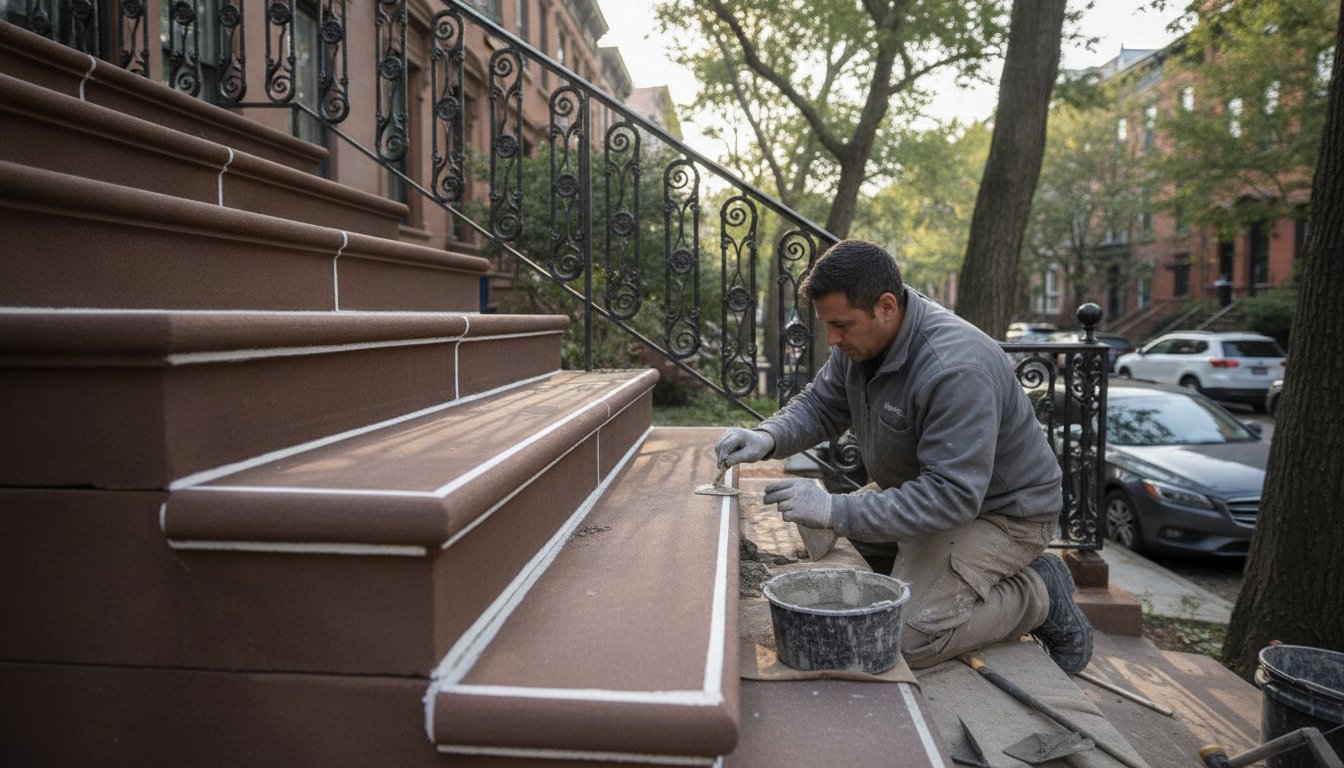
Did you know that a standard masonry patch job on your front steps could lead to a costly Notice of Violation from the Landmarks Preservation Commission? In a historic district like ours, a crumbling entrance is more than just a safety hazard; it is a complex regulatory challenge. If you’ve noticed spalling stone or cracking treads, you’re likely worried about finding a contractor who actually understands historic mortar and “in-kind” replacement. We know you want your home to maintain its original 19th-century character while ensuring the structure is safe for your family. Finding the right partner for stoop repair cobble hill brooklyn means balancing local craftsmanship with strict legal compliance.
You deserve a restoration process that is transparent and predictable. This article explains how to restore your historic stoop to its original glory while meeting NYC Landmark regulations with confidence. We’ll cover the technical requirements of historic restoration and the specific steps for securing a Permit for Minor Work or a Certificate of No Effect. You will learn how to achieve a seamless finish that survives harsh New York winters and passes every inspection without a hitch.
Key Takeaways
- Learn why stripping away damaged brownstone layers is essential for rebuilding structural integrity rather than just patching the surface.
- Discover why the Rammstein method is the preferred technical approach for high-quality stoop repair cobble hill brooklyn to ensure a precise 19th-century finish.
- Understand how to navigate the Landmarks Preservation Commission permit process to avoid costly fines and the forced removal of non-compliant work.
- Identify the specific maintenance steps, such as avoiding rock salt, that protect your restored masonry from New York City’s harsh freeze-thaw cycles.
- Find out how to evaluate a masonry contractor based on their portfolio of landmark-approved projects within historic Brooklyn districts.
Understanding Stoop Restoration in Cobble Hill’s Landmark District
Stoop restoration is a methodical process of stripping away damaged layers to rebuild the structural and aesthetic integrity of your home’s entrance. It’s not a simple cosmetic patch. In the Cobble Hill Historic District, this work requires an understanding of the specific architectural standards for 19th-century brownstone and sandstone facades. Because this neighborhood is landmarked, every repair must respect the original craftsmanship that defines these streets.
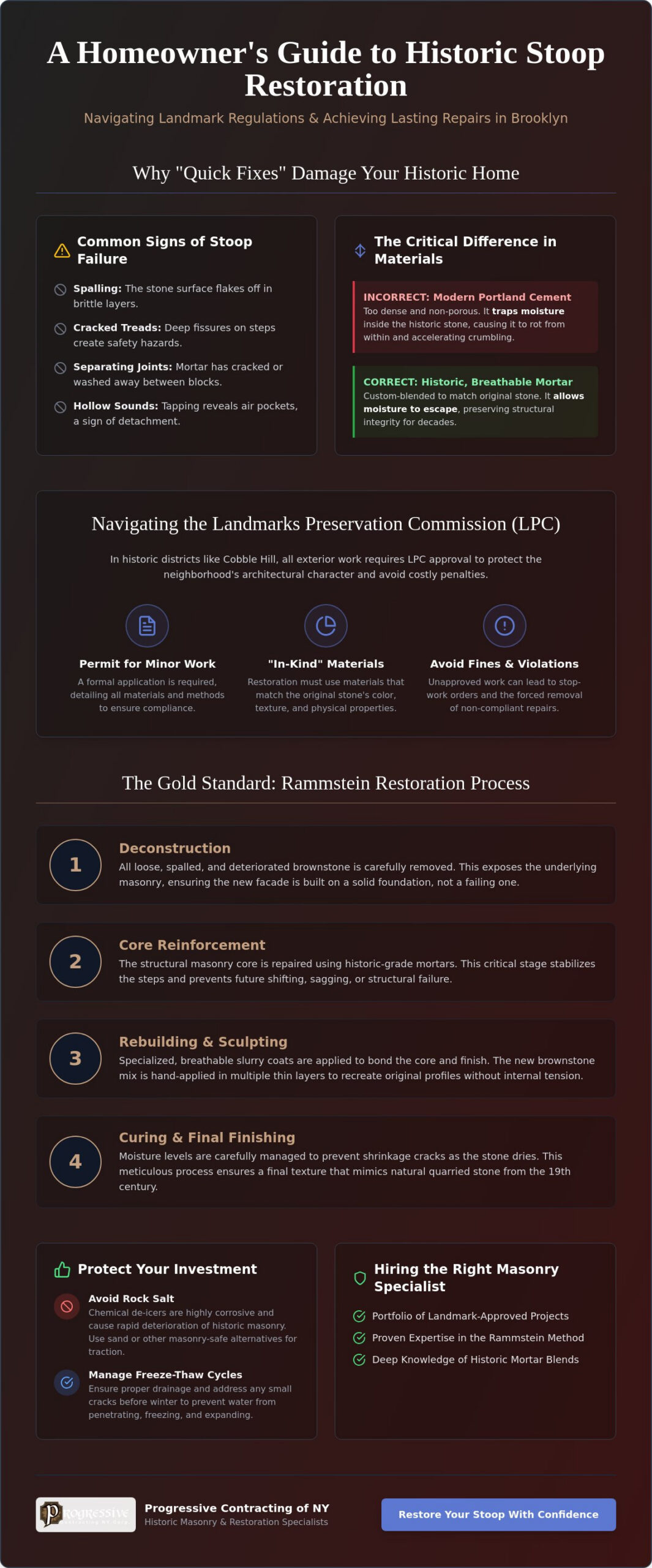
Generic masonry “quick fixes” often do more harm than good. Many contractors use modern Portland cement because it’s cheap and sets quickly. However, Portland cement is too dense and non-porous for historic stone. It traps moisture inside the original masonry, which accelerates crumbling and causes the stone to rot from the inside out. You can identify a failing stoop by several common signs:
- Spalling: The surface of the stone flakes off in thin, brittle layers.
- Cracked Treads: Deep fissures appear where people step, creating a safety hazard.
- Separating Joints: The mortar between the stone blocks has washed away or cracked.
- Hollow Sounds: Tapping the stone reveals air pockets where the facade has detached from the core.
The Role of the Landmarks Preservation Commission (LPC)
Homeowners must secure LPC approval before starting any exterior work to avoid heavy fines or stop-work orders. The commission protects the district’s visual history by reviewing all proposed materials and methods. In 2026, the permit process for historic stoops requires a formal application for a Permit for Minor Work to ensure that the restoration uses “in-kind” materials that match the original stone’s physical properties.
Preserving the Historic Brownstone Aesthetic
Meticulous color-matching is the hallmark of professional stoop repair cobble hill brooklyn. If the new material is even a shade off, it disrupts the visual continuity of the entire block. We use custom-blended cementitious mixes that mimic the breathability and texture of natural stone. This high level of precision in brownstone restoration doesn’t just improve curb appeal; it directly protects the long-term property value of your Brooklyn home.
The Rammstein Stoop Restoration Process: A Step-by-Step Guide
A high-quality stoop repair cobble hill brooklyn requires a methodical approach that goes far beyond surface-level aesthetics. We utilize the Rammstein stoop restoration method, which is widely recognized as the gold standard for preserving historic Brooklyn properties. This process ensures that the new facade is not only beautiful but also chemically and physically compatible with the original structure. It’s a technical restoration designed to last for decades.
Our restoration follows three disciplined phases:
- Phase 1: Deconstruction. We carefully remove all loose, spalled, and deteriorated brownstone layers. This exposes the underlying masonry and ensures we aren’t building on a failing foundation.
- Phase 3: Core Reinforcement. We repair the structural masonry core using historic-grade mortars. This stage stabilizes the steps and prevents future shifting or sagging.
- Phase 4: Slurry Application. We apply specialized, breathable slurry coats. These layers create a permanent bond between the old core and the new brownstone finish.
Rebuilding the Profile and Detail
Restoring a stoop is an act of masonry sculpture. Our craftsmen recreate the original profiles, including the specific edges and curves of the treads and risers, entirely by hand. We apply the brownstone mix in multiple thin layers. This technique is vital because it prevents the internal tension that leads to future cracking. If you want to see how this precision looks on local properties, you can explore our portfolio of Rammstein stoop restoration projects.
Curing and Final Finishing
The curing process is the most overlooked step in masonry. We manage moisture levels carefully to prevent “surface mapping” or shrinkage cracks that occur when stone dries too quickly. We don’t rush the process. The final result is a texture that mimics natural quarried stone. This meticulous attention to detail ensures your stoop looks original to the 19th century while providing the structural integrity needed to survive NYC winters.
Navigating Permits and Choosing a Masonry Contractor in Brooklyn
Selecting a contractor for stoop repair cobble hill brooklyn involves more than comparing prices. Because Cobble Hill is a designated historic district, you must hire a specialist who understands the legal requirements of the Landmarks Preservation Commission (LPC). A general contractor might offer a quick fix, but a historic restoration expert provides a thorough vetting of materials and methods to ensure your home remains compliant with city regulations.
The “LPC Violation” trap is a real threat for homeowners. If you perform exterior masonry work without a permit, or use non-compliant materials like modern Portland cement, the city can issue heavy fines. In many cases, owners are forced to remove the new repairs and start over using approved techniques. Beyond the legal risks, prioritize financial transparency. A reliable quote should include a clear path for addressing hidden structural surprises that often appear once the old stone is stripped away. If you are planning a more extensive project, review our complete guide to brownstone facade renovation in Brooklyn for a full breakdown of the process.
Essential Questions for Your Contractor
Before signing a contract, ask specific technical questions to gauge their expertise. Do they have a portfolio of landmark-approved projects in the neighborhood? Ask about their specific experience with brownstone spalling repair and the types of historic mortar they use. A qualified professional will also confirm they handle the entire permit filing process, whether it requires a “Permit for Minor Work” or a more complex “Certificate of Appropriateness.”
Insurance and Licensing for NYC Masonry
Verify that your contractor carries proper liability and workers’ compensation insurance specifically for high-density Brooklyn neighborhoods. While being “licensed and insured” is the bare minimum, historic restoration work requires a higher level of accountability. Proper coverage protects you from the financial risks of property damage or site accidents during the project. If you are ready to begin your project with a team that respects the heritage of your home, contact us today for a detailed consultation.
Long-Term Maintenance: Protecting Your Stoop After Restoration
Completing a high-quality stoop repair cobble hill brooklyn is a significant investment in your property’s longevity. To protect this work, you must understand the environmental stressors unique to New York City. Our local climate features aggressive freeze-thaw cycles where moisture enters the stone, freezes, and expands. This internal pressure is the primary cause of stone delamination and surface spalling if the masonry isn’t properly maintained.
Avoid using rock salt or harsh chemical de-icers on your brownstone steps during winter. These substances create chemical reactions that break down the binders in the stone and accelerate erosion. We recommend using sand or stone grit for traction instead. These natural alternatives provide safety without compromising the chemical stability of the restored masonry.
Conduct seasonal inspections every spring and fall to check for hairline cracks. Catching these small openings early prevents water from reaching the structural core. You should also ensure the brick pointing on adjacent walls remains intact. If the mortar on the main facade fails, water can seep behind the stoop structure and cause the new stone to detach from the building. Maintaining the surrounding masonry is just as vital as caring for the steps themselves.
Cleaning and Surface Protection
Keep your stoop clean using low-pressure water and soft-bristled brushes. Never use a high-pressure power washer on historic stone. The intense force can strip away the protective surface finish and open up the pores of the masonry to moisture. If the stone begins to look dull after several seasons, a professional refresh coat can restore the water-shedding properties and maintain the stone’s original luster.
The Logical Next Step for Your Home
View your stoop restoration as one component of a larger exterior health plan for your building. A well-maintained entrance protects the structural integrity of the entire facade. Taking a proactive approach to maintenance ensures your home remains a standout feature of the neighborhood for decades. If you have concerns about the current state of your masonry, contact Progressive Contracting NY Corp for a specialized Cobble Hill stoop assessment.
Protect Your Property’s Architectural Heritage
A successful restoration project combines traditional craftsmanship with a clear understanding of modern city regulations. You now know that using the Rammstein method ensures structural durability while preserving the aesthetic character of the 19th century. We’ve also discussed how navigating the LPC permit process and committing to seasonal maintenance protects your investment from the harsh New York environment. These steps turn a crumbling safety hazard into a lasting architectural asset for your family.
Our team brings decades of experience to every project in Brooklyn and Manhattan historic districts. We specialize in Rammstein stoop restoration and ensure full NYC Landmark (LPC) compliance for every client. If you’re ready to begin your stoop repair cobble hill brooklyn, we provide the steady guidance and technical expertise you need for a predictable renovation. Get a Professional Stoop Restoration Estimate to start your project with confidence.
Your brownstone is a significant piece of New York history. We’re here to help you preserve it for the next generation with transparency and precision.
Frequently Asked Questions
How much does stoop repair cost in Cobble Hill, Brooklyn?
Costs vary based on the extent of the damage and the specific architectural details of your home. A surface refresh on a structurally sound stoop is less involved than a full-scale restoration that includes rebuilding treads, risers, and integrating ironwork. You should also account for the budget increase typical for projects in landmark districts due to the requirement for historically accurate materials and permit filing fees. We provide detailed estimates for stoop repair cobble hill brooklyn after a thorough on-site inspection.
How long does a typical Rammstein stoop restoration take to complete?
A standard Rammstein stoop restoration typically requires two to four weeks of active work. This timeline ensures our craftsmen have enough time to strip away failing layers and allow each new slurry coat to cure properly. While simple patches might seem faster, the methodical layering process is what provides the structural integrity needed to survive decades of New York winters. We prioritize thoroughness over speed to ensure a permanent bond that stands up to the elements.
Do I really need an LPC permit for minor stoop cracks in a landmark district?
You definitely need an LPC permit for any exterior masonry work in a landmark district, regardless of the size of the crack. The commission oversees all visible changes to ensure the neighborhood’s historic character remains intact. Most small repairs fall under a Permit for Minor Work, which is a straightforward process that prevents the risk of receiving a costly Notice of Violation. We handle the permit filing process to ensure your project stays fully compliant with local regulations.
Can you repair a stoop in the winter, or should I wait for spring?
You should generally wait for spring or summer to begin stoop repair cobble hill brooklyn. Most historic-grade mortars and brownstone mixes require temperatures to stay consistently above 40 degrees Fahrenheit to cure and bond correctly. Attempting a full restoration during a freeze-thaw cycle can lead to immediate material failure and surface mapping, which compromises the longevity of the work. Planning your project for the warmer months ensures the best possible results for your masonry.
What is the difference between brownstone restoration and just painting the stoop?
Restoration rebuilds the stone’s physical structure using breathable materials, while painting simply hides damage behind a plastic-like film. Painting is often destructive because it traps moisture inside the brownstone, which accelerates the decay of the original masonry. A proper restoration allows the building to “breathe,” ensuring that water can escape without causing the stone to flake or rot from the inside. This technical approach preserves both the beauty and the long-term value of your property.