
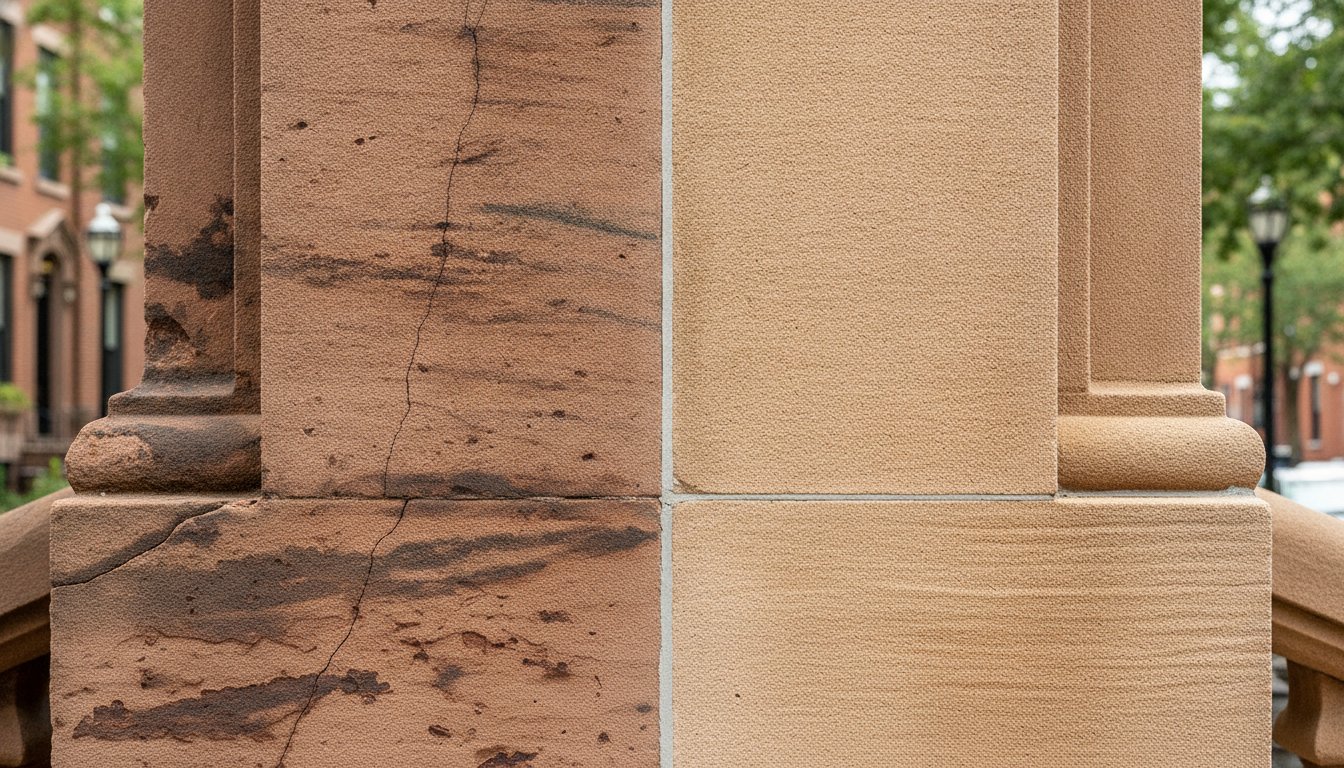
What if the porous sandstone that defines your home’s historic charm is actually its most vulnerable point of failure? Many owners realize they need brownstone water damage repair brooklyn only after they see visible spalling or crumbling masonry on the sidewalk. You likely feel a sense of urgency to fix the decay, yet you also worry that an improper repair might ruin the facade’s historic character or lead to structural issues. It’s a common anxiety in neighborhoods like Park Slope or Bed-Stuy, where preserving a landmark is just as important as keeping the interior dry.
This specialist’s guide shows you how to identify deep-seated moisture problems before they compromise your building’s integrity. You’ll learn how professional masonry techniques can restore your facade to its original glory while providing a waterproof seal that lasts. We’ll cover everything from diagnosing hairline cracks to the methodical process of stone restoration. This approach ensures your home stays protected, compliant, and valuable for decades to come.
Key Takeaways
- Understand how the porous nature of sandstone and New York’s freeze-thaw cycles turn minor surface cracks into significant structural spalling.
- Learn the professional diagnostic process for identifying “dead” stone and the specific masonry techniques required to reach a healthy, solid foundation for repair.
- Identify why specialized materials are essential for brownstone water damage repair brooklyn to ensure the stone can breathe while remaining waterproof.
- Discover why local expertise in Brooklyn neighborhoods like Park Slope and Bed-Stuy is vital for selecting a contractor who understands the unique environmental stresses on historic facades.
- Gain peace of mind by following a structured restoration path that preserves your home’s historic landmark status and increases its long-term market value.
Identifying Water Damage: Why Brooklyn Brownstones are Uniquely Vulnerable
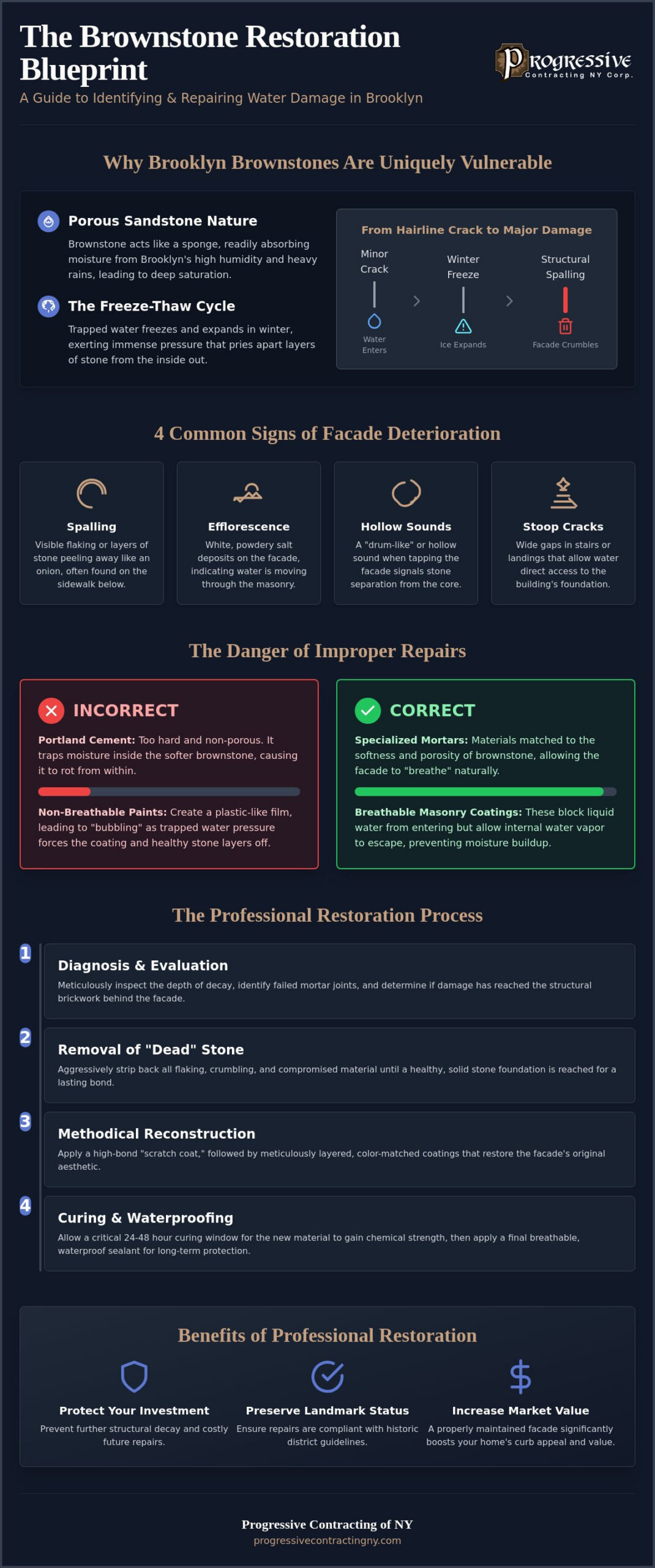
Brownstone is a porous sedimentary rock. It’s beautiful but acts much like a sponge. To understand the material better, it’s helpful to look at What is Brownstone and why its composition makes it so susceptible to the elements. In Brooklyn, high humidity and heavy rains saturate the stone. When winter arrives, the freeze-thaw cycle begins. Trapped water expands as it turns to ice; this force pushes the layers of the stone apart. This is why small hairline cracks quickly transform into major spalling.
Many homeowners face a frustrating “Whac-a-mold” effect. They fix an interior leak only to have another appear elsewhere a few months later. The reality is that interior water intrusion often starts with facade saturation. If the exterior isn’t properly maintained, the stone holds moisture that eventually migrates through the brick backup and into your living space. This persistent dampness compromises the structural integrity of the entire building envelope.
To better understand these unique restoration challenges, watch this helpful video:
Common Signs of Facade Deterioration
Detecting damage early saves thousands in long-term costs. Look for these red flags during your next inspection:
- Spalling: Visible flaking or layers of stone peeling away like an onion.
- Efflorescence: White, powdery salt deposits on the surface. These indicate water is moving through the masonry and leaving minerals behind.
- Hollow Sounds: When you tap the facade, a “drum-like” sound signals that the stone has separated from the structural core.
- Stoop Cracks: Wide gaps in the stairs or landing that allow water to reach the foundation.
The Danger of Improper Past Repairs
Not all masonry work is equal. Using Portland cement for brownstone water damage repair brooklyn is a common and costly mistake. Portland cement is too hard and non-porous. It traps moisture inside the softer brownstone, causing it to rot from the inside out. Similarly, non-breathable paints create a plastic-like film over the stone. This leads to “bubbling” where water pressure forces the coating off the surface, often taking healthy layers of stone with it. For lasting protection, visit Brownstone Repair to see how specialized, breathable materials preserve your home’s longevity.
The Professional Restoration Process: From Diagnosis to Waterproofing
Successful restoration begins with a meticulous diagnostic phase. We evaluate the depth of stone decay and identify exactly where the mortar joints have failed. Understanding the science of stone weathering is essential because it reveals how chemical and physical forces have compromised the substrate over time. We don’t just patch the surface; we determine if the damage is superficial or if it reaches the structural brickwork behind the facade.
The next step involves the aggressive removal of “dead” stone. This means stripping back layers of flaking material until we reach a healthy, solid foundation. Attempting brownstone water damage repair brooklyn without reaching this solid base is a waste of resources, as new material won’t bond to crumbling rock. Once the surface is prepared, we apply specialized, breathable masonry coatings. These materials block liquid water from entering while allowing internal vapor to escape, which is central to the brownstone repair services we provide to ensure your home remains dry.
Step-by-Step Facade Reconstruction
We apply a high-bond “scratch coat” to create a stable profile for the new stone layers. Our craftsmen then meticulously match the final layer’s pigment to your building’s original Brooklyn aesthetic, ensuring the repair is invisible to the untrained eye. The curing process is the critical 24-48 hour window where the mortar reaches its required chemical strength. This methodical layering prevents the delamination common in rushed, lower-quality jobs.
Stoop and Masonry Integration
Water damage rarely stays in one place. It often begins at the stoop, where cracked treads or open joints allow moisture to migrate directly into the main facade. A total waterproofing strategy must include historic stoop repair to seal these primary entry points. By addressing the building as a single unit, you stop the cycle of decay and protect your investment. If you’ve noticed cracks in your stairs or landing, it’s a wise decision to consult a Brownstone specialist before the damage spreads to your interior walls.
Selecting a Brooklyn Masonry Specialist for Lasting Protection
Selecting a specialist for brownstone water damage repair brooklyn requires more than just checking a general contractor’s license. Historic masonry is a distinct discipline that demands a deep understanding of 19th-century building materials. Many general contractors fail because they apply modern, rigid materials to soft, porous stone. In neighborhoods like Park Slope and Bed-Stuy, the local climate and building age create specific challenges that only a seasoned masonry specialist can navigate successfully.
A professional partner also brings essential knowledge of the NYC Landmarks Preservation Commission (LPC). If your home is located in a historic district, any exterior modification requires specific permits and adherence to strict aesthetic guidelines. We handle these requirements as a core part of our service, ensuring your restoration is both structurally sound and legally compliant. Financial transparency is equally vital; a reliable masonry contract should provide a fixed scope of work with no hidden fees, giving you peace of mind from the initial assessment to the final cleanup.
Vetting Your Masonry Contractor
Before signing a contract, ask specific questions about their mortar composition and stone-patching techniques. If a contractor suggests using standard Portland cement on historic brownstone, they’ll likely cause the stone to rot by trapping moisture inside. You should also verify recent local projects in Brooklyn or Manhattan to evaluate the quality of their stone matching. New patches should blend seamlessly with the original material, maintaining the building’s historic character and curb appeal.
The Long-Term Value of Expert Repair
Investing in expert restoration prevents the catastrophic failure that eventually leads to total facade replacement. While neglect can lead to massive financial burdens, proactive maintenance significantly extends the life of your home. Regular inspections and minor pointing work keep the building envelope sealed against moisture. This disciplined approach protects your property value and preserves Brooklyn’s architectural heritage for the next generation. To begin your restoration journey, Contact Progressive Contracting for a professional facade assessment today.
Protecting Your Brooklyn Heritage
Maintaining a historic property is a significant responsibility that requires a specialized approach to masonry. By understanding the porous nature of your facade and the critical need for breathable materials, you can prevent minor spalling from turning into a total facade failure. Effective brownstone water damage repair brooklyn relies on a disciplined diagnostic process and a deep respect for original 19th-century craftsmanship.
Whether you own a home in Park Slope or Bed-Stuy, our team brings extensive experience in historic restorations and NYC Landmark Preservation Commission compliance. We specialize in everything from complex facade reconstruction to Rammstein stoop restoration, ensuring every joint and stone profile is historically accurate and structurally sound. Taking action now secures your home’s longevity and protects its market value for the long term.
Don’t wait for visible decay to reach your interior walls. Schedule a Brownstone Facade Inspection with Progressive Contracting today to receive a transparent assessment of your building’s health. Your home is a vital piece of Brooklyn’s history; with the right care, it’ll stand strong for another century.
Frequently Asked Questions
How do I know if my brownstone has water damage or just natural aging?
You can distinguish water damage from natural aging by looking for active flaking, white mineral deposits, or deep cracks. While natural weathering causes gradual color changes, water intrusion leads to spalling where the stone peels away in layers. Tapping the facade can also reveal hollow spots where the stone has separated from the core. If you notice damp patches on interior walls, the exterior saturation has already compromised your building envelope.
Can I use a waterproof sealant on my historic brownstone facade?
No, you should never use standard non-breathable waterproof sealants on historic brownstone. These products create a plastic-like film that traps moisture inside the porous sandstone. Because the stone cannot breathe, internal water pressure builds up and causes the surface to rot or explode outward during freeze-thaw cycles. Professional brownstone water damage repair brooklyn involves using mineral-based, vapor-permeable coatings that block liquid water while allowing internal moisture to escape safely.
How long does a typical brownstone water damage repair project take in Brooklyn?
A typical restoration project can range from two weeks for minor repairs to over eight weeks for a full facade reconstruction. The timeline depends on the extent of the stone decay and the complexity of the architectural details. Weather conditions also play a role, as masonry work requires specific temperature ranges to cure properly. Additionally, projects in landmarked districts may require extra time for permit approvals from the NYC Landmarks Preservation Commission.
Why is my brownstone facade crumbling (spalling) even after it was recently painted?
Crumbling often occurs after painting because standard exterior paint acts as a vapor barrier. If moisture was already present in the stone or if the contractor didn’t remove all dead material before painting, the decay continues invisibly underneath the surface. The paint eventually bubbles and peels away, taking layers of stone with it. Effective brownstone water damage repair brooklyn requires stripping back to healthy stone and using breathable finishes rather than thick, elastic paints.