
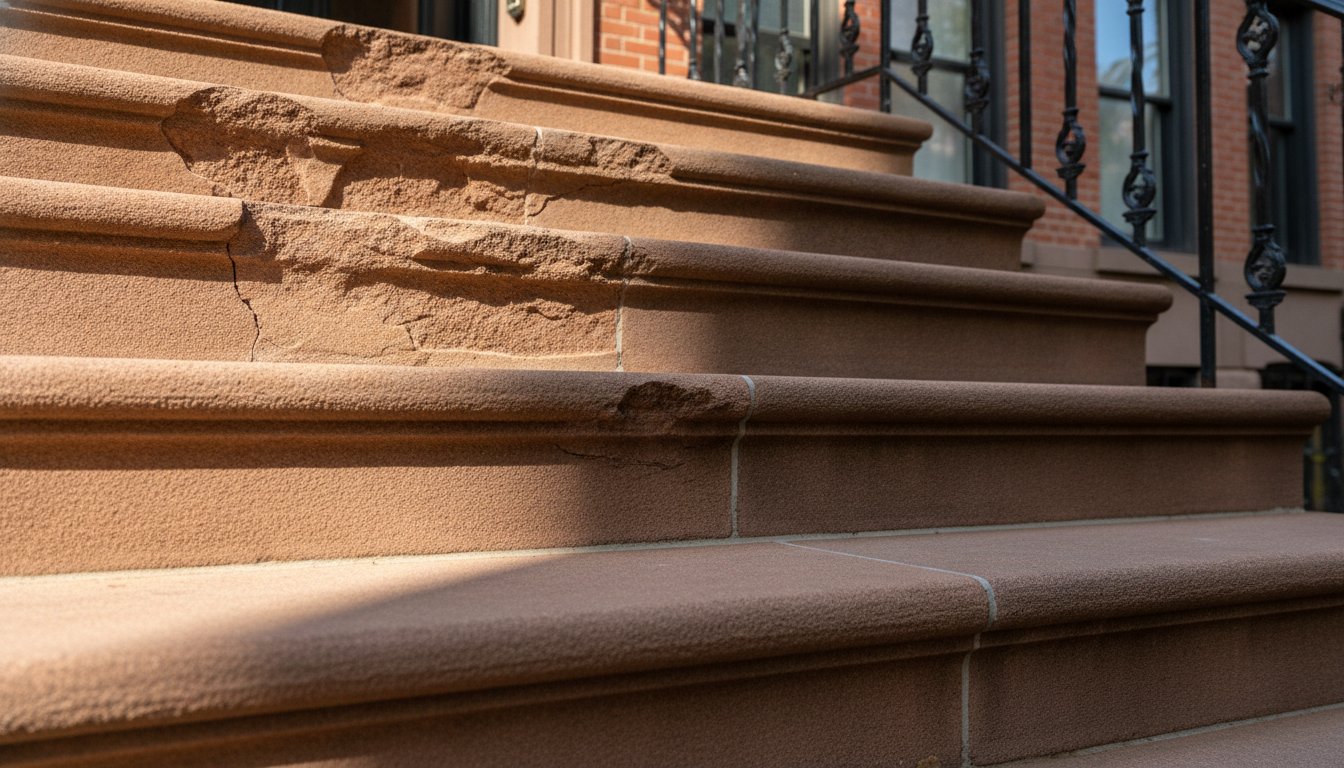
Most Manhattan homeowners treat crumbling stoops as a cosmetic annoyance, but that fine red dust tracking into your foyer is actually a warning sign of spalling. This is a structural failure where internal water pressure forces the stone to flake away from the inside out. When it comes to fixing crumbling brownstone steps manhattan winters often accelerate the decay, turning a minor aesthetic issue into a potential safety hazard for visitors.
It’s frustrating to sweep up sandy debris every day while worrying about the legal headache of Landmarks Preservation Commission (LPC) compliance. You deserve a stoop that reflects the 19th-century elegance of your neighborhood without the constant fear of tripping hazards. This guide will teach you how to identify deep structural damage, navigate the latest 2026 permit regulations, and select the best restoration method for your home. We’ll walk through the process of achieving a historically accurate finish that provides structural stability for the next 30 years.
Key Takeaways
- Conduct a simple “Hollow Test” to detect air pockets between the brown coat and the core; this identifies structural issues before they lead to total collapse.
- Compare the longevity of temporary surface patching against comprehensive resurfacing techniques that rebuild the stoop’s physical profile for long-term durability.
- Navigate the complexities of fixing crumbling brownstone steps manhattan landmarks require by understanding the specific “in-kind” material rules set by the LPC.
- Streamline your restoration timeline by learning which permit types are required for masonry work in historic neighborhoods like the Upper West Side and Harlem.
Table of Contents
Identifying the Severity of Crumbling Brownstone Steps
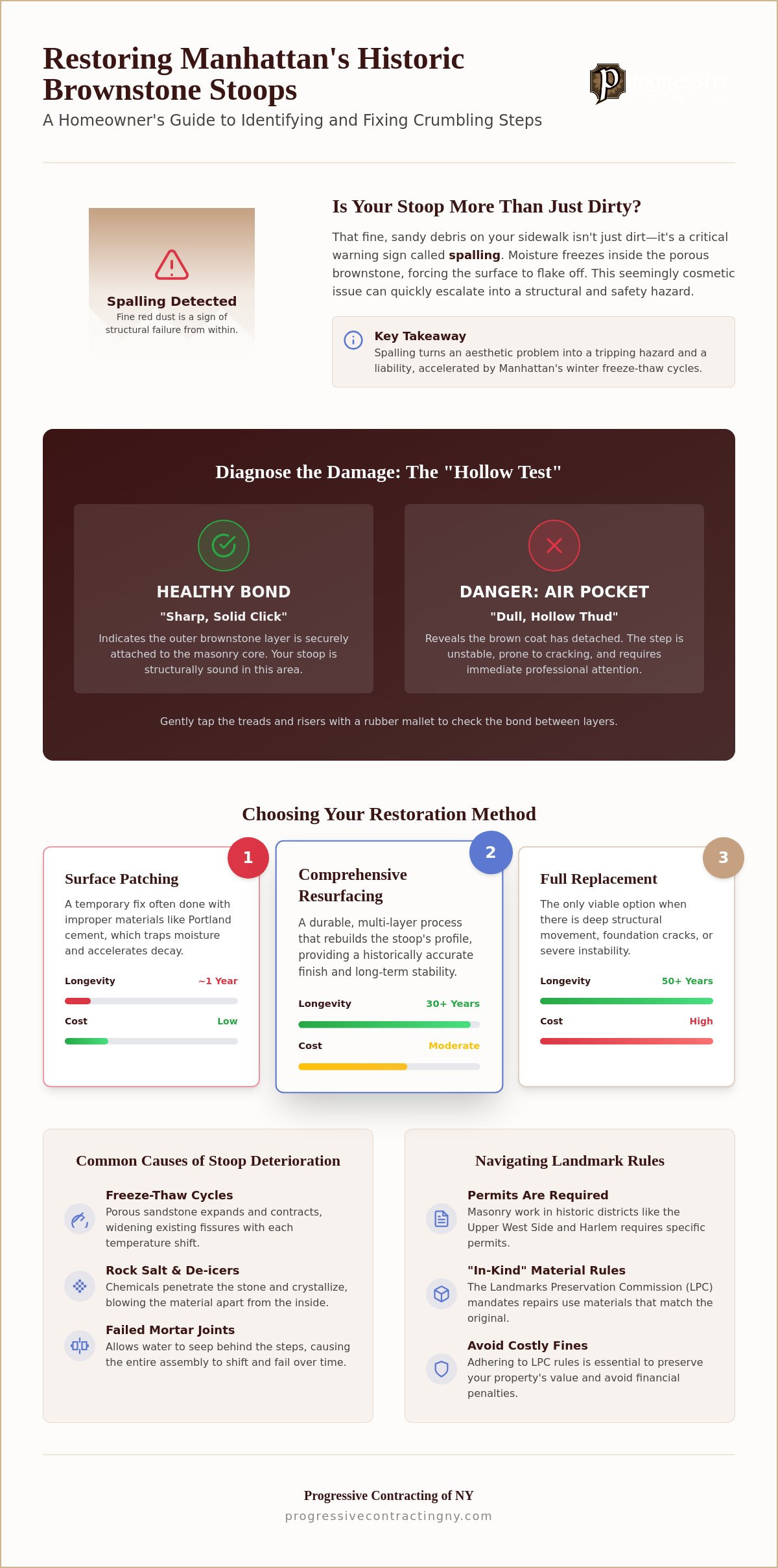
Identifying early signs of decay prevents a full staircase collapse. If you notice a fine, sandy texture accumulating on your sidewalk, your stoop is experiencing spalling. This occurs when moisture penetrates the stone’s layers and freezes, causing the surface to flake off. To understand the material’s vulnerability, it’s helpful to ask: What is brownstone? It’s a porous sandstone that absorbs water like a sponge, making it uniquely susceptible to internal pressure.
You can assess the bond between the outer layer and the core using the "Hollow Test." Gently tap the surface of the treads and risers with a rubber mallet or the back of a screwdriver. A sharp, solid "click" indicates a healthy bond, while a dull, thudding sound reveals an air pocket. These pockets mean the brown coat has detached from the masonry core, making the step unstable and prone to sudden cracking.
To better understand this concept, watch this helpful video:
Distinguishing between cosmetic and structural damage is vital for prioritizing repairs. While a hairline crack might seem minor, it often acts as a channel for deep-seated water infiltration. If you see loose treads or crumbling front edges, the situation has moved beyond aesthetics. These are clear safety triggers that pose a significant liability for visitors. Professional brownstone repair services address these risks by securing the treads before the damage reaches the structural brickwork. Fixing crumbling brownstone steps manhattan residents often face requires this proactive approach to avoid costly full replacements.
Common Causes of Manhattan Stoop Deterioration
The 2026 freeze-thaw cycles have been particularly aggressive on New York’s historic masonry. Porous sandstone expands and contracts with every temperature shift, widening existing fissures. Many homeowners inadvertently speed up this decay by using standard rock salt or chemical de-icers during winter. These substances penetrate the stone and crystallize, literally blowing the material apart from within. Additionally, failed mortar joints in the stoop’s sidewalls allow water to seep behind the steps, causing the entire assembly to shift and fail over time.
Restoration Methods: Patching, Resurfacing, or Replacement?
Homeowners often start with surface patching, but using Portland cement is a common mistake that leads to failure within one winter season. Portland cement is significantly harder than the natural sandstone core. This density mismatch causes the patch to pull away, trapping moisture behind the repair and accelerating the very spalling you intended to stop. For fixing crumbling brownstone steps manhattan contractors recommend a multi-layer resurfacing approach instead.
When the damage is purely cosmetic or involves surface flaking, comprehensive resurfacing restores the stoop’s original profile without the extreme expense of a full replacement. However, if structural movement or deep cracks in the foundation are present, a full step replacement becomes the only viable option. For the highest standard of restoration, we utilize the Rammstein stoop method. This premium technique focuses on structural reinforcement and meticulous color matching, ensuring the result is indistinguishable from original 19th-century masonry.
The Progressive Restoration Process
Progressive Contracting NY Corp follows a sequential workflow to ensure long-term durability. We first strip away all delaminated layers to expose the sound masonry core. After cleaning the substrate, we apply a scratch coat and specialized brownstone cement to establish a permanent bond. The brown coat application serves as the critical layer for architectural shaping and profile rebuilding. This methodical layering prevents air pockets and ensures the new surface can withstand the harsh New York climate.
Choosing the Right Solution for Your Budget
Targeted masonry repair preserves the historic value of your property while remaining more cost-effective than a total rebuild. Resurfacing provides a high ROI by extending the life of your stoop for another 30 years or more. Adhering to Manhattan Landmark Rules is essential for properties in historic districts to avoid costly fines. For more details on these specialized methods, consult our Brownstone Stoop Restoration Brooklyn Guide. If your steps show signs of advanced decay, consulting a specialist at Progressive Contracting NY Corp can help you choose the most durable restoration path.
Navigating Manhattan Landmark Rules and Hiring a Specialist
Navigating the Landmarks Preservation Commission (LPC) is a mandatory step for homeowners in historic districts like the Upper West Side and Harlem. When you are fixing crumbling brownstone steps manhattan regulations require "in-kind" replacement. This mandate ensures that any new material matches the original stone’s color, texture, and mineral composition. General masons often use standard grey mortar or incompatible pigments. These mistakes lead to visual mismatches and potential LPC violations that can freeze your project and result in costly fines.
To avoid delays, you must understand the LPC permit application process. Most stoop resurfacing projects qualify for a Permit for Minor Work (PMW), which applies to exterior alterations that do not require a Department of Buildings permit. If the work requires structural changes but does not affect protected architectural features, you might need a Certificate of No Effect (CNE). These permits can often be fast-tracked in 3 to 10 days if handled by an experienced specialist who knows how to submit the correct documentation and material samples.
Steps to NYC Compliance and Restoration
Follow this logical progression to ensure a smooth project lifecycle and avoid legal complications:
-
Step 1: Schedule a professional facade and stoop assessment to document the extent of the subsurface decay.
-
Step 2: Determine if your property requires an LPC Certificate of Appropriateness, a complex permit needed for about 5% of applications that involve significant architectural changes.
-
Step 3: Review the contractor’s portfolio of Manhattan landmark restorations to verify their ability to match 19th-century finishes.
Why Progressive Contracting NY Corp is Manhattan’s Choice
We understand the physical and regulatory reality of Manhattan masonry. Progressive Contracting NY Corp handles everything from brownstone restoration to sidewalk violation removal and DOT compliance. We prioritize financial transparency and structural integrity, ensuring your stoop remains stable for the next 30 years or more. If you’re ready to restore your home’s historic entrance without the headache of permit delays, contact Progressive Contracting NY Corp for a consultation. We provide the local expertise and steady communication required for complex landmark projects.
Protecting Your Manhattan Investment for the Future
Restoring a historic stoop is about more than just aesthetics; it’s about preserving the structural integrity of your home for the next generation. By moving beyond temporary patches and addressing the root causes of spalling, you ensure your entrance remains a safe, welcoming feature. Fixing crumbling brownstone steps manhattan requires a disciplined approach that respects both 19th-century craftsmanship and modern preservation standards. Whether you are navigating the nuances of the Upper West Side or restoring a facade in Harlem, the right restoration method provides peace of mind and long-term durability.
Progressive Contracting NY Corp stands as a dedicated partner for these complex projects. As specialized Rammstein stoop restoration experts with decades of experience in Manhattan Historic Districts, we provide the technical precision required for high-stakes masonry work. Our team also manages NYC Sidewalk Violation Removal to ensure your property remains fully compliant with city codes. Get a Free Quote for Your Manhattan Brownstone Repair today to secure your property’s value. Your historic stoop is a significant asset, and professional restoration is the most reliable way to protect it.
Frequently Asked Questions
How much does it cost to fix crumbling brownstone steps in Manhattan?
The total investment for fixing crumbling brownstone steps manhattan homeowners face depends on the staircase’s height and the depth of the stone’s decay. Factors like labor, which often accounts for more than half of the project cost in New York City, and the complexity of the architectural molding influence the final amount. We provide a detailed assessment to ensure financial transparency before any masonry work begins.
Do I need a permit from the Landmarks Preservation Commission to repair my stoop?
You generally need a permit if your property is within a Manhattan historic district or is a designated individual landmark. For minor work like resurfacing or in-kind repairs, you’ll apply for a Permit for Minor Work (PMW). This ensures the materials match the original stone’s color and texture. Our team handles the documentation to streamline this process and ensure compliance with all city regulations.
Can I use standard concrete to patch my brownstone steps?
You should never use standard concrete to patch your stoop because its high density creates a destructive barrier. Brownstone is a soft, breathable sandstone that expands and contracts with the weather. Standard concrete is too rigid; it traps moisture inside the stone and causes the original material to shatter during freeze-thaw cycles. We use specialized brownstone cement that mimics the stone’s natural properties to prevent further spalling.
How long does a professional brownstone stoop restoration typically last?
A comprehensive restoration using the Rammstein method or multi-layer resurfacing can last 30 years or more. This durability relies on reaching the sound masonry core and applying a high-quality scratch coat followed by the critical brown coat layer. To maintain this lifespan, it’s vital to avoid using rock salt or harsh chemical de-icers, which can degrade the finish and damage the stone’s structural integrity in just a few seasons.