
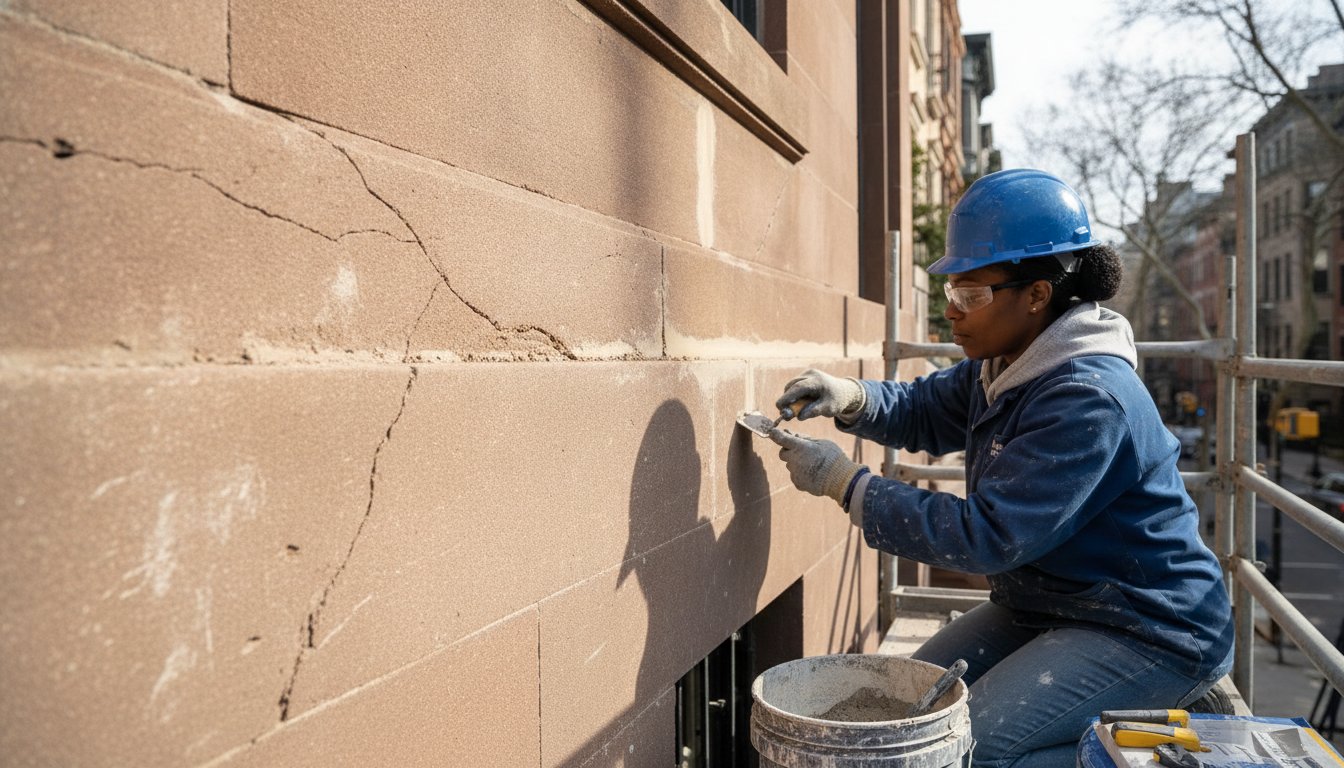
Is that hairline crack on your Upper West Side stoop just a minor blemish, or is it a sign that your building’s exterior is pulling away from the backup wall? In the high stakes environment of New York real estate, mistaking a surface issue for a foundational failure is a risk you shouldn’t take. Proper structural repair for brownstone facade manhattan properties requires more than a quick patch job. It demands a technical understanding of 19th-century masonry and the strict safety standards mandated by the city.
You likely feel the pressure of maintaining a landmarked property while facing the threat of LPC violations and the steep penalties introduced by Local Law 51. It’s common to feel uncertain about whether a proposed repair is a permanent fix or a temporary bandage. This guide will help you identify the specific signs of structural facade failure and explain the historically accurate techniques used to restore building integrity. We’ll walk through the essential steps to achieve a stable, safe facade that passes inspection and preserves your property’s value for the long term.
Key Takeaways
- Distinguish between minor surface flaking and deep-seated structural cracks that compromise the building’s masonry substrate.
- Discover how professional sounding techniques identify hidden hollow spots to ensure a lasting and stable repair.
- Learn how to execute structural repair for brownstone facade manhattan projects that meet 2026 safety standards while maintaining historic integrity.
- Find out how to vet specialists for technical expertise in 19th-century materials and clear financial transparency.
- Adopt a methodical framework to manage your restoration project with confidence, predictable costs, and a clear timeline.
Identifying Structural vs. Cosmetic Brownstone Failure
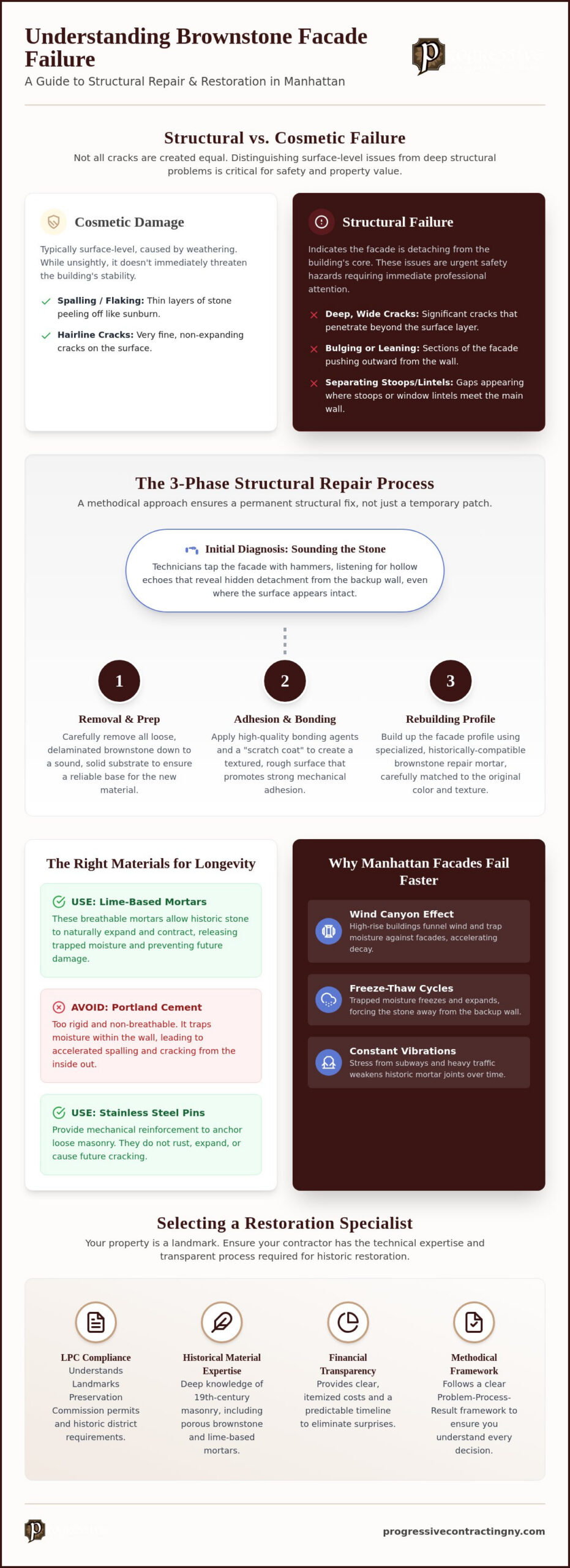
A brownstone facade is more than a decorative layer. It’s a complex system where the outer stone bonds to a backup wall of brick or rubble. While many contractors focus on resurfacing, true structural repair for brownstone facade manhattan properties addresses the load-bearing masonry and the substrate beneath. Cosmetic issues like spalling, where the stone flakes off in thin layers, often result from simple weathering. However, deep-seated cracking or bulging indicates that the stone has detached from the building’s core. These failures threaten the safety of the sidewalk and the stability of the entire wall.
To better understand the restoration process for these historic structures, watch this helpful video:
The Manhattan Environment: Why Facades Fail Faster
Manhattan’s unique urban density creates a harsh microclimate. High-rise buildings produce a canyon effect that funnels wind and traps moisture against your facade. This moisture freezes and expands, forcing the stone away from the backup wall. Constant vibrations from nearby subways and heavy traffic also stress historic mortar joints. To understand what brownstone is and why its geology makes it vulnerable to these forces, you must look at its porous nature. You can learn more about these vulnerabilities in our guide to What is a Brownstone?.
Landmarks Preservation Commission (LPC) Considerations
If your building is in a historic district, structural repair for brownstone facade manhattan projects isn’t just about safety; it’s a legal requirement. The LPC mandates specific permits for any intervention that alters the masonry’s profile. You can’t use standard hardware store cement for these repairs. We use historically compatible mixes that allow the building to breathe. Proper color-matching ensures that structural patches blend seamlessly with the original stone. Red flags like shifting window lintels or a stoop separating from the main wall require immediate attention to avoid costly LPC violations and fines.
The Structural Repair Process: From Stabilization to Finish
Successful structural repair for brownstone facade manhattan buildings begins with a rigorous diagnostic phase. We don’t just look for surface cracks; we “sound” the stone. This involves tapping the facade with specialized hammers to listen for hollow echoes. These sounds reveal areas where the brownstone has detached from the brick backup wall, even if the surface looks intact. Our team uses a problem-process-result framework to ensure you understand every technical decision, from the initial assessment to the final finish coat. This transparency helps eliminate the anxiety often associated with complex Manhattan restoration projects.
To anchor loose masonry, we install stainless steel pins. These pins provide mechanical reinforcement without the risk of rust, which can expand and cause further cracking. We also prioritize breathable, lime-based mortars. Unlike modern Portland cement, which is too rigid and traps moisture, lime-based mixes allow the historic stone to expand and contract naturally. This choice is critical for the long-term health of your property. Before starting any work, ensure you have the necessary Landmarks Preservation Commission (LPC) permits to avoid fines.
Step-by-Step Facade Stabilization
Phase 1 requires the careful removal of delaminated stone. We go back to a sound, solid substrate to ensure the new material has a reliable base. In Phase 2, we apply high-quality bonding agents and a “scratch coat” to create a textured surface for adhesion. Finally, in Phase 3, we build up the profile using specialized brownstone repair mortar that matches the original texture and color. This methodical approach ensures the repair is not just a patch, but a permanent structural fix.
Stoop and Lintel Integration
Don’t ignore a sinking stoop. Often, stoop instability signals wider structural issues within the facade’s foundation. You can read more about these specific challenges in our guide to Brownstone Stoop Restoration. Similarly, window lintels play a vital role in maintaining the structural integrity of your openings. If these horizontal supports fail, they can lead to masonry collapse above the window. If you’re concerned about the stability of your building, consulting a brownstone specialist can provide the peace of mind you need.
Selecting a Specialist for Structural Facade Restoration
Selecting the right partner for structural repair for brownstone facade manhattan properties is a decision that affects your building’s safety and your financial peace of mind. Many owners are tempted by low-cost bids that offer quick resurfacing. These “patch jobs” often mask deeper issues without addressing the root cause of the instability. When a facade is failing structurally, a cosmetic fix is a liability, not an improvement. You need a disciplined expert who prioritizes the building’s core over its surface appearance. Progressive Contracting provides the technical expertise and local experience required to navigate these high-stakes projects.
Vetting Your Masonry Contractor
Vetting your masonry contractor requires looking beyond a standard business license. You should ask specific questions about their experience with NYC building codes and Landmarks Preservation Commission (LPC) guidelines. A qualified specialist will be able to discuss the technical differences between various masonry deterioration problems and how they intend to solve them. Inquire about the exact lime-based mortar mixes they use and their specific pinning techniques for anchoring loose stone. Always request a portfolio that highlights structural stabilization rather than just aesthetic paint or stucco work.
The Long-Term Value of Structural Integrity
Investing in a sound facade prevents water infiltration that leads to interior rot and mold. In the 2026 Manhattan real estate market, a certified, structurally sound facade is a significant asset that protects your property’s valuation. Progressive Contracting acts as a steady, reliable guide through this process. We provide detailed project bidding and financial transparency so there are no surprises midway through the restoration. We focus on being a dependable partner rather than just a service provider. Visit Progressive Contracting for a facade assessment to ensure your home remains a safe and valuable landmark.
Securing the Future of Your Manhattan Landmark
Maintaining a brownstone requires a shift from superficial fixes to comprehensive structural awareness. You’ve learned how to spot the red flags of substrate failure and why Manhattan’s unique microclimate demands specialized materials like lime-based mortar and stainless steel pins. Choosing a partner with deep knowledge of NYC building codes and LPC guidelines ensures your restoration remains compliant and durable. Executing a proper structural repair for brownstone facade manhattan properties is about more than just aesthetics; it’s about stabilizing the building’s core against urban stressors.
Progressive Contracting brings decades of experience with NYC historic masonry to every project. We specialize in Rammstein stoop and facade restoration, utilizing expertise in LPC-compliant restoration techniques to deliver lasting results. Our team provides the transparency and technical precision needed to navigate complex landmark requirements with confidence. We focus on being a dependable partner who prioritizes the safety and value of your property throughout the entire project lifecycle.
Get a Professional Facade Assessment for Your Manhattan Property
Your building is a vital piece of New York’s architectural history. With a methodical approach and the right expertise, you can ensure it stays safe and beautiful for the next generation.
Frequently Asked Questions
How do I know if my brownstone facade needs structural repair or just cosmetic work?
You can identify structural failure by looking for deep cracks, bulging masonry, or shifting window lintels. Surface flaking, known as spalling, is often cosmetic, but hollow echoes during a professional sounding test indicate that the stone has detached from the backup wall. If the stoop is pulling away from the facade, you likely need structural repair for brownstone facade manhattan to restore the building’s safety and stop further movement.
Does the NYC Landmarks Preservation Commission (LPC) need to approve facade repairs?
Yes, the LPC must approve any exterior repairs if your property is located within a designated historic district. This regulatory oversight ensures that restoration work maintains the neighborhood’s architectural integrity. You’ll need to file for specific permits before the project starts to avoid stop-work orders or fines. We handle the technical details of color-matching and using breathable, lime-based mortars that comply with all commission standards for historic preservation.
What are the most common causes of facade crumbling in Manhattan brownstones?
Moisture and Manhattan’s dense urban environment are the main drivers of masonry failure. When water enters porous stone and freezes, it expands with enough force to separate the brownstone from its substrate. Vibrations from heavy traffic and subways also accelerate the deterioration of older mortar joints. These forces create the hollow spots and deep cracks that signal a need for structural repair for brownstone facade manhattan to prevent the stone from falling.
How long does a typical structural facade restoration take in NYC?
A structural restoration project typically takes between four and twelve weeks to complete. The exact duration depends on the extent of the masonry damage and the specific pinning techniques required for stabilization. Weather conditions and the time needed for permit approvals also play a role in the schedule. We provide a clear, sequential timeline during the bidding phase so you can plan for the project’s impact on your daily routine.