
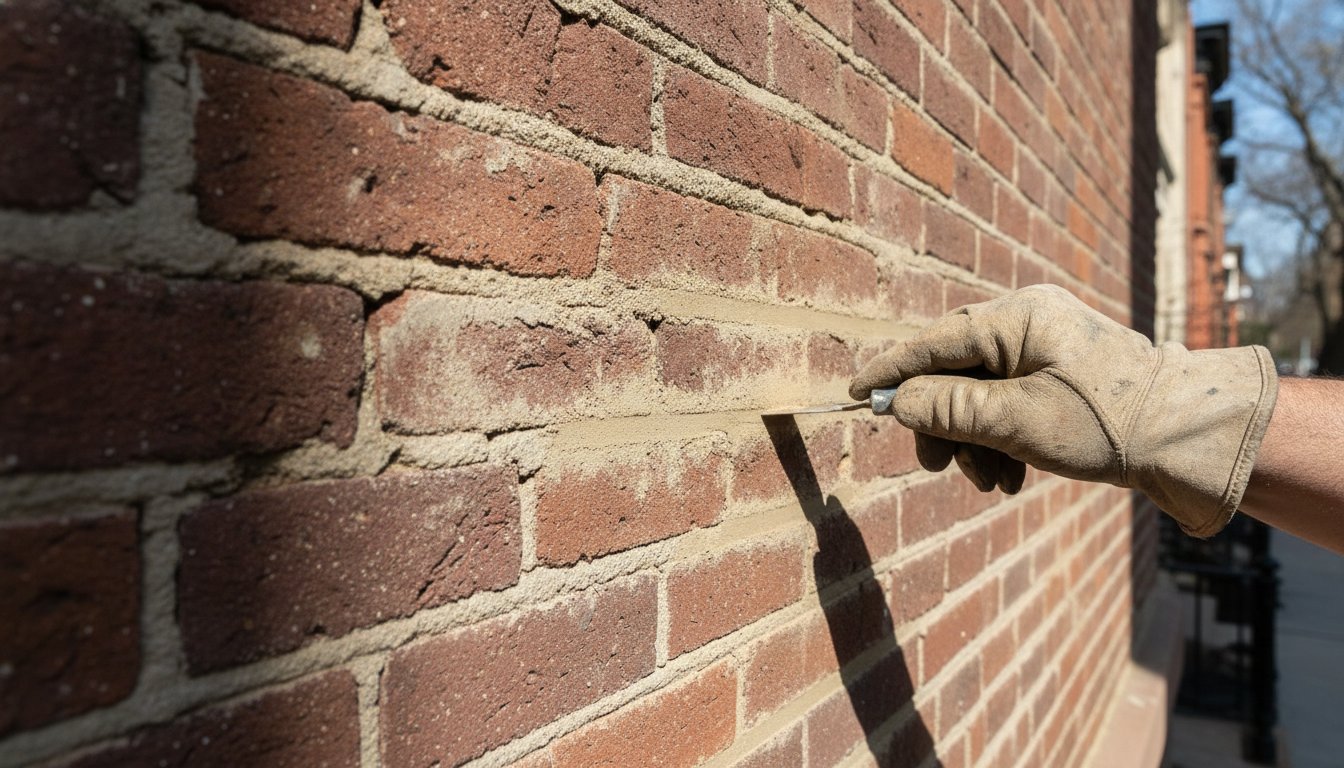
What if using the strongest material available is actually the quickest way to destroy your building’s facade? Many property owners assume that modern, high-strength cement is the ultimate choice for repairs, but for a pre-1930s building, it’s often the most dangerous. When choosing the right mortar for historic brickwork, the goal is to find a material that’s softer and more breathable than the bricks themselves. This sacrificial layer allows moisture to escape and protects your masonry from the flaking or spalling that ruins so many NYC facades.
We understand the stress of seeing your Brooklyn or Manhattan property show signs of crumbling joints. It’s common to fear hiring a contractor who might use the wrong materials and cause permanent damage. This guide will explain how to select the perfect mix, from Type O to Type K, to preserve your property’s value. At Progressive Contracting NY Corp, we specialize in these traditional methods to keep your home’s structural integrity intact. If you have questions about your facade, reach us at 347-341-3808 or 718-350-7388, or email ProgressiveContractingNY@yahoo.com to discuss your restoration project.
The Science of Compatibility: Why Modern Mortar Kills Historic Brick
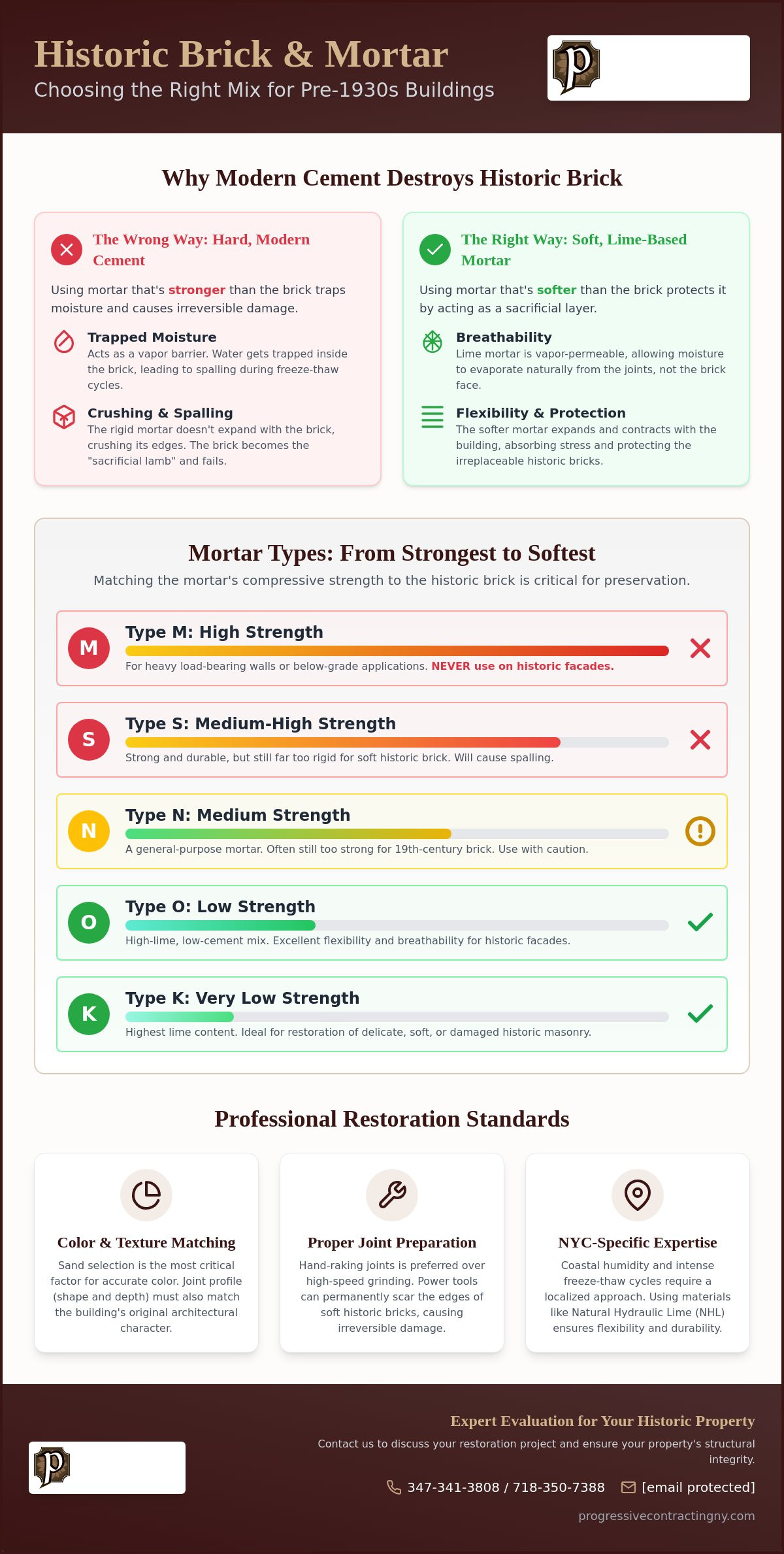
Historic bricks used in New York before 1930 were typically fired at lower temperatures, creating a masonry unit that is significantly softer and more porous than modern alternatives. When you’re choosing the right mortar for historic brickwork, the physical properties of the mortar must match the brick’s low compressive strength. In traditional masonry, the mortar joint is designed to be the “sacrificial lamb.” It’s meant to weather and erode over decades, protecting the more valuable and irreplaceable bricks from the stresses of moisture and movement. If the mortar is harder than the brick, the brick becomes the weakest point and will eventually fail.
Using Lime Mortar allows the building’s facade to remain vapor-permeable. Modern cement creates a dense barrier that traps moisture behind the surface of the brick. During New York’s freeze-thaw cycles, this trapped water expands, resulting in spalling, where the face of the brick literally flakes off. At Progressive Contracting NY Corp, we prioritize these traditional material standards to ensure that your restoration work doesn’t lead to long-term structural decay.
Understanding Mortar Types: M, S, N, O, and K
- Type N: This is a medium-strength mortar common in modern construction. While versatile, it’s often still too rigid for 19th-century clay bricks.
- Type O and K: These are high-lime mixes with very low compressive strength. They offer the extreme flexibility and “breathability” that historic Brooklyn and Manhattan facades require.
- Type M and S: These are high-strength mortars meant for load-bearing walls or concrete. They should never be used on historic facades, as they will cause the surrounding bricks to crush under thermal expansion.
The Problem with Portland Cement
Portland cement acts as a vapor barrier, which leads to sub-florescence, a condition where salt crystals build up inside the brick rather than on the surface. Because modern cement doesn’t expand at the same rate as old clay, the hard mortar joints will eventually crush the edges of the softer bricks during temperature shifts. If your mortar is intact but your bricks are crumbling, the wrong mix was likely used. For an expert evaluation, call us at 347-341-3808 or 718-350-7388. You can also contact Progressive Contracting NY Corp at ProgressiveContractingNY@yahoo.com to discuss your project.
Choosing the Right Mix for NYC Historic Districts
NYC presents a unique challenge for masonry restoration because of its coastal humidity and intense freeze-thaw cycles. Your building’s facade expands and contracts constantly throughout the year. If you use a rigid, modern mortar, it won’t move with the building, which leads to cracks and structural stress. This is why choosing the right mortar for historic brickwork in neighborhoods like Park Slope or Bed-Stuy requires a localized approach. We often utilize Natural Hydraulic Lime (NHL) because it sets effectively under moist conditions and provides the flexibility needed for the “common” bricks typically found in Brooklyn rowhouses. Local expertise is vital here; a contractor must distinguish between the hard-pressed face bricks of Manhattan and the softer fire-share bricks often used in the outer boroughs.
Lime-Based vs. Cement-Based Mortars
Lime mortar (Type L) is often called a “living” material because of its self-healing properties. When small hairline cracks form due to building settlement, the lime reacts with carbon dioxide in the air to reseal them over time. While cement-based mixes offer a faster drying time, they lack the permeability required for the long-term health of your facade. Choosing lime ensures longevity, especially when considering what is a brownstone and how its unique geology interacts with the environment. If you want to ensure your property is handled with this level of care, reach out to Progressive Contracting NY Corp for a professional assessment.
Color and Texture Matching
Achieving a seamless look involves more than just adding chemical pigments. In fact, sand selection is the most critical factor for color matching in Repointing Mortar Joints in Historic Masonry. We analyze the grain size and mineral content of the original sand to replicate the historic appearance accurately. Additionally, we focus on the joint profile, which is the specific shape and depth of the mortar, to maintain the building’s original “shadow line.” This level of detail preserves the architectural character of your property. Choosing the right mortar for historic brickwork isn’t just about aesthetics; it’s about structural survival. For a detailed consultation, call 347-341-3808 or 718-350-7388, or email us at ProgressiveContractingNY@yahoo.com.
The Restoration Process: Professional Brick Pointing Standards
The physical application of materials is just as vital as choosing the right mortar for historic brickwork. Even the most compatible lime mix will fail if the joints aren’t prepared with precision. At Progressive Contracting of NY, we prioritize hand-raking over high-speed grinding. Power tools often slip, widening the joints and permanently scarring the edges of soft, historic bricks. This damage is irreversible and can ruin the aesthetic value of a Manhattan or Brooklyn rowhouse. We use specialized hand tools to ensure the brick’s “skin” remains intact during the removal of old, crumbling mortar.
Preparation accounts for roughly 70% of a successful project. We clean each joint to a uniform depth, typically between 3/4 and 1 inch, to create a solid “key” for the new material. Once the joints are clean, the mortar is applied in thin layers called lifts. Because lime-rich mortars cure through carbon dioxide absorption rather than a chemical flash set, they require specific environmental conditions. They can’t be rushed. Rushing this process leads to shrinkage cracks and premature failure. For a professional facade assessment, you can reach our team at 347-341-3808 or 718-350-7388.
Vetting Your NYC Masonry Contractor
When you interview a contractor, ask specifically about their mixing process. A disciplined expert will custom-blend sand and lime to match your building’s original chemistry rather than using pre-bagged Type S cement. You should also verify their experience with specialized tasks like brownstone stoop restoration. A qualified mason understands the nuances of NYC landmark regulations and knows how to address sidewalk violations while maintaining historic integrity. Choosing the right mortar for historic brickwork is only effective if the person applying it respects traditional craftsmanship.
Next Steps for Your Property
We recommend starting with a small test patch. This allows you to verify the color match and hardness before we proceed with the entire facade. It’s the most reliable way to ensure the new work blends seamlessly with the existing masonry. You can see examples of our historic restoration work by visiting brownstonerepair.net. If you’re ready to protect your property’s structural integrity, email us at ProgressiveContractingNY@yahoo.com for a detailed project consultation.
Preserving Your Property’s Architectural Legacy
Your building’s facade is its first line of defense against the elements. Correcting past masonry errors or addressing current decay now prevents expensive structural failures in the future. By prioritizing breathability and material compatibility, you ensure your home remains a stable part of its neighborhood for decades to come. Choosing the right mortar for historic brickwork is the most critical decision you’ll make for the long-term health of your Brooklyn or Manhattan property. It’s about more than just aesthetics; it’s about structural survival.
Progressive Contracting of NY brings over a decade of experience to every project. We are specialists in historic landmark preservation and understand the specific needs of NYC’s unique architecture. Don’t let the wrong materials compromise your home’s integrity. Protect your historic investment and call Progressive Contracting of NY today at 347-341-3808 or 718-350-7388 for an expert masonry consultation. For direct email support, contact us at ProgressiveContractingNY@yahoo.com. We look forward to helping you restore and maintain your piece of New York history.
Frequently Asked Questions
Can I use Type N mortar for my historic Brooklyn home?
No, Type N mortar is usually too strong for historic Brooklyn homes built before 1930. While it is a standard choice for modern masonry, its high cement content creates a rigid joint that doesn’t allow soft, historic bricks to expand or contract. Using it often leads to the brick faces flaking off. We recommend a custom-blended lime mortar to ensure your facade remains healthy and intact.
What happens if the mortar is stronger than the brick?
When the mortar is stronger than the brick, the brick itself becomes the point of failure. In a properly restored wall, the mortar joint acts as the sacrificial element that absorbs stress and moisture. If the mortar is too hard, it traps water and resists movement. This forces the soft historic brick to absorb the pressure, which results in permanent cracking, spalling, and eventual structural deterioration.
How long does professional brick pointing last in NYC?
High-quality brick pointing typically lasts between 30 and 50 years when performed with the correct materials. The longevity depends heavily on choosing the right mortar for historic brickwork and ensuring the joints are raked to the proper depth. NYC’s freeze-thaw cycles are harsh. Using a flexible, lime-based mix is essential for maximizing the lifespan of your facade and avoiding premature repairs. Reach us at 347-341-3808 or 718-350-7388 for an assessment.
Is lime mortar better than cement for old buildings?
Yes, lime mortar is superior for old buildings because it is vapor-permeable and flexible. Historic masonry needs to breathe to allow moisture to escape the wall system. Modern Portland cement creates a waterproof seal that traps moisture inside, leading to rot and salt buildup. Lime mortar also offers self-healing properties that help manage small settlement cracks. If you have questions, email us at ProgressiveContractingNY@yahoo.com for expert guidance.