
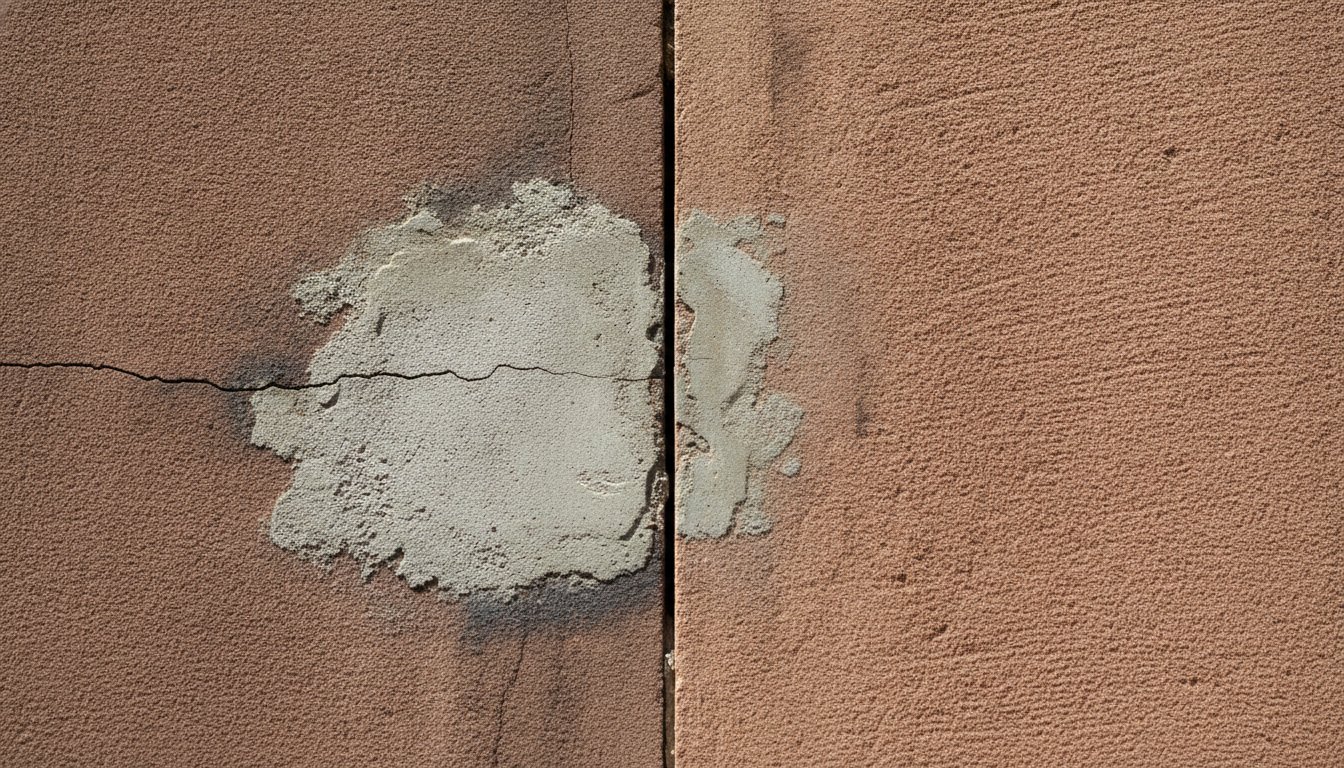
Is a twelve dollar container of ready-mix concrete the secret to saving your facade, or are you just sealing in a future disaster? Many NYC homeowners feel the urge to handle minor spalling themselves to avoid the perceived high costs of masonry work. It’s easy to worry about overpaying for repairs when you see a small crack, but the choice between a diy brownstone patch vs professional restoration involves more than just immediate savings. Using the wrong materials can trap moisture and accelerate decay, leading to expensive structural issues or Landmark Preservation Commission violations.
You deserve a facade that looks original and stays watertight for decades. This article explains how to distinguish between a harmless cosmetic touch-up and a project that requires a master of the craft. We will cover material breathability, the latest 2026 NYC sidewalk shed regulations, and how to avoid future violations. For a detailed assessment of your Brooklyn or Manhattan home, you can reach Progressive Contracting NY Corp at 347-341-3808 or 718-350-7388. You can also email us at ProgressiveContractingNY@yahoo.com to discuss your restoration needs. We provide the steady hand and technical precision required to preserve your historic investment.
The Reality of DIY Brownstone Patching: Pros, Cons, and Common Pitfalls
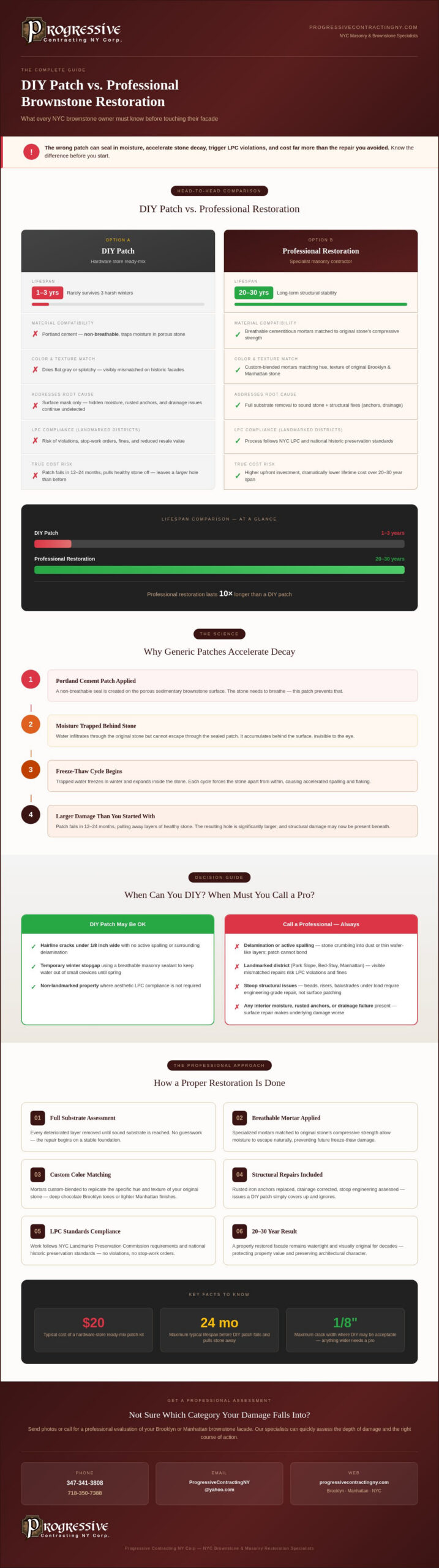
The appeal of a quick fix is understandable. Most hardware stores sell ready-mix concrete patches for under twenty dollars, promising a fast solution for crumbling facades. However, understanding what brownstone is reveals why these generic kits often fail. Natural brownstone is a porous sedimentary rock that needs to breathe. When you apply a standard Portland cement-based patch, you create a waterproof seal that traps moisture behind the stone. This trapped water freezes and expands; it causes the original stone to spall and flake off even faster than before.
Aesthetic failure is another major hurdle in the diy brownstone patch vs professional debate. Matching the deep, varied hues of historic New Jersey or Connecticut stone requires specialized pigments and a steady hand. Generic patches usually dry to a flat, gray, or splotchy finish that sticks out. Worse, these surface-level smears often hide deep structural cracks or water infiltration that continues to rot your home’s substrate from the inside out. A cosmetic mask won’t stop the underlying decay.
When a DIY Patch Might Work
DIY methods are best reserved for very minor, non-structural maintenance. If you notice hairline cracks less than 1/8 inch wide that don’t show signs of active spalling, a breathable masonry sealant might provide a temporary shield. Some owners also use these kits as a stopgap measure for weatherproofing during the peak of winter. This keeps water out of small crevices until a professional brownstone repair can be scheduled for the spring thaw.
The Hidden Costs of a Bad DIY Job
Improper bonding usually causes DIY patches to fail within 12 to 24 months. When the patch falls off, it frequently pulls away layers of healthy stone, leaving a larger hole than you started with. In historic districts like Park Slope or Bed-Stuy, visible, mismatched repairs can lead to LPC violations or lower your property’s resale value. If you’re unsure about the depth of your facade damage, call us at 347-341-3808 or 718-350-7388. You can also send photos to ProgressiveContractingNY@yahoo.com for a professional perspective on your restoration options.
Professional Brownstone Restoration: Why the Process Outperforms the Patch
Professional brownstone restoration is a methodical process that addresses the root cause of facade failure rather than just masking it. While a DIY fix simply covers the surface, our team begins by removing every layer of deteriorated stone until we reach a sound substrate. We then apply specialized, breathable cementitious mortars that allow moisture to escape. This approach follows the professional standards for historic restoration, ensuring the stone remains healthy for decades. By matching the mortar’s compressive strength to the original stone, we prevent the internal stress that causes cracking.
Color matching is where the diy brownstone patch vs professional gap becomes most visible. We don’t use generic pigments from a hardware store. We custom blend mortars to replicate the specific texture and hue of your original facade, whether it’s the deep chocolate of a Brooklyn rowhouse or the lighter tones found in Manhattan. Beyond aesthetics, we fix structural issues like rusted iron anchors or faulty drainage that a patch simply ignores. A professional brownstone restoration can last 20 to 30 years, whereas a quick DIY job rarely survives three harsh New York winters.
The Rammstein Stoop Restoration Difference
Stoops endure constant foot traffic and heavy weight loads, requiring different engineering than flat facade sections. A Rammstein stoop restoration involves precise work on treads, risers, and decorative balustrades to ensure structural stability. This level of detail is essential for maintaining the architectural character of homes in Bed-Stuy and Manhattan while ensuring the stairs remain safe for daily use.
Compliance and Historic Preservation
Working in a landmarked district means you must follow strict NYC Landmarks Preservation Commission (LPC) requirements. Failing to do so can result in costly “stop work” orders and fines. Our process at Progressive Contracting NY Corp ensures your facade renovation respects the geological and architectural history of the building. If you need guidance on your project, contact our team at 347-341-3808 or 718-350-7388. You can also email ProgressiveContractingNY@yahoo.com to discuss your home’s specific needs.
Decision Framework: When to Call a Professional Masonry Contractor
Recognizing the limit of a basic toolkit is essential for maintaining a historic property. If your facade is crumbling into dust or thin, wafer-like layers, you’re witnessing delamination. A DIY patch cannot bond to a surface that’s actively flaking away. In the diy brownstone patch vs professional comparison, professional intervention is the only way to stabilize the stone’s base before applying new material. We remove the unstable layers to ensure the restoration has a solid foundation.
Moisture issues also demand an expert eye. If you see white, powdery salt deposits known as efflorescence, water is moving through the stone. We address this by properly repointing mortar joints and ensuring the facade is watertight. Ignoring these signs leads to structural decay. Safety is another critical factor. Loose stone over a sidewalk poses a liability risk and can trigger NYC facade violations. Recent regulations, including Local Law 51 of 2025, impose new fines for building owners who don’t complete repairs in a timely manner. Professional contractors handle the permitting and compliance required to avoid these penalties.
Evaluating Your Brownstone’s Condition
Homeowners should perform a visual inspection twice a year. Use this checklist to identify potential trouble spots:
- Cracks: Any opening wider than 1/8 inch or cracks that appear to be deepening.
- Bulging: Sections of the stone that look like they’re pulling away from the building.
- Discoloration: Persistent dark patches that remain damp long after it rains.
- Missing Detail: Loss of definition on cornices, lintels, or decorative carvings.
Early intervention by a brownstone specialist prevents minor spalling from becoming a total facade failure. Taking action now saves thousands in structural reconstruction costs later. We focus on being a dependable partner to help you navigate these complex repairs.
Contacting Progressive Contracting NY Corp
We’re ready to help you protect your investment with professional craftsmanship and transparent communication. You can reach us for an estimate at 347-341-3808 or 718-350-7388. Our team is available via email at ProgressiveContractingNY@yahoo.com to discuss your facade, stoop, or brick pointing project. Visit learn more to view our portfolio of historic restorations across Brooklyn and Manhattan. Progressive Contracting NY Corp provides the steady hand and local expertise your home deserves.
Preserving Your NYC Legacy: Choose Lasting Restoration Over Quick Fixes
Choosing between a diy brownstone patch vs professional restoration is a decision that impacts the long-term survival of your home’s facade. While a quick patch might offer a momentary aesthetic fix, it cannot provide the structural integrity or material breathability essential for natural stone. Investing in a methodical restoration process prevents the need for much more invasive and expensive repairs in the future. By prioritizing craftsmanship over convenience, you ensure your property remains a stable and beautiful part of the New York landscape.
Progressive Contracting NY Corp is a family-owned business with deep local NYC expertise and a decade of experience in Rammstein stoop restoration. We focus on being a dependable partner for homeowners across Brooklyn and Manhattan historic districts, providing the steady hand needed for complex masonry projects. Protect your home’s legacy; call 347-341-3808 or 718-350-7388 for a professional brownstone restoration estimate today. You can also reach our team directly at ProgressiveContractingNY@yahoo.com to discuss your specific project needs. We look forward to helping you preserve the character and value of your historic investment.
Frequently Asked Questions
Can I use regular mortar to patch my brownstone facade?
No. You should never use standard Portland cement or regular mortar to patch a brownstone facade. These materials are much harder than the natural stone and lack the necessary breathability. When moisture gets trapped behind a non-porous patch, it freezes and expands; this causes the original stone to crumble even faster. Professional restoration requires a custom, lime-based cementitious mix that matches the stone’s physical properties. When evaluating a diy brownstone patch vs professional restoration, remember that incorrect materials are the leading cause of facade failure.
How much does a professional brownstone facade repair cost in NYC?
The cost of professional masonry work varies based on the scale of the project and your building’s specific needs. A targeted spot repair is a different investment than a comprehensive facade resurfacing or a full stoop restoration. Factors like scaffolding requirements, site accessibility, and landmark permit fees also influence the final budget. We provide transparent, detailed estimates for all our Brooklyn and Manhattan projects. Call us at 718-350-7388 for a personalized quote tailored to your home.
Will a DIY patch pass a Landmarks Preservation Commission (LPC) inspection?
It’s highly unlikely that a DIY patch will pass an LPC inspection. The commission requires strict adherence to historical material standards, specifically regarding color-matching and mortar composition. Most off-the-shelf kits don’t meet these requirements for protected districts like Park Slope or Bed-Stuy. In the diy brownstone patch vs professional debate, choosing an expert ensures all work meets LPC guidelines to avoid costly fines or “stop work” orders. We handle the paperwork and material samples required for city approval.
How can I tell if my brownstone damage is structural or just aesthetic?
Aesthetic damage usually looks like thin surface flaking or minor discoloration. Structural issues are more serious and include deep cracks wider than 1/8 inch, bulging sections of the stone, or loose lintels above windows. If you notice these signs, it’s vital to get an assessment immediately to prevent a collapse or safety hazard. You can email photos of your facade to ProgressiveContractingNY@yahoo.com for a professional review of your home’s condition. For immediate assistance, call us at 347-341-3808.