
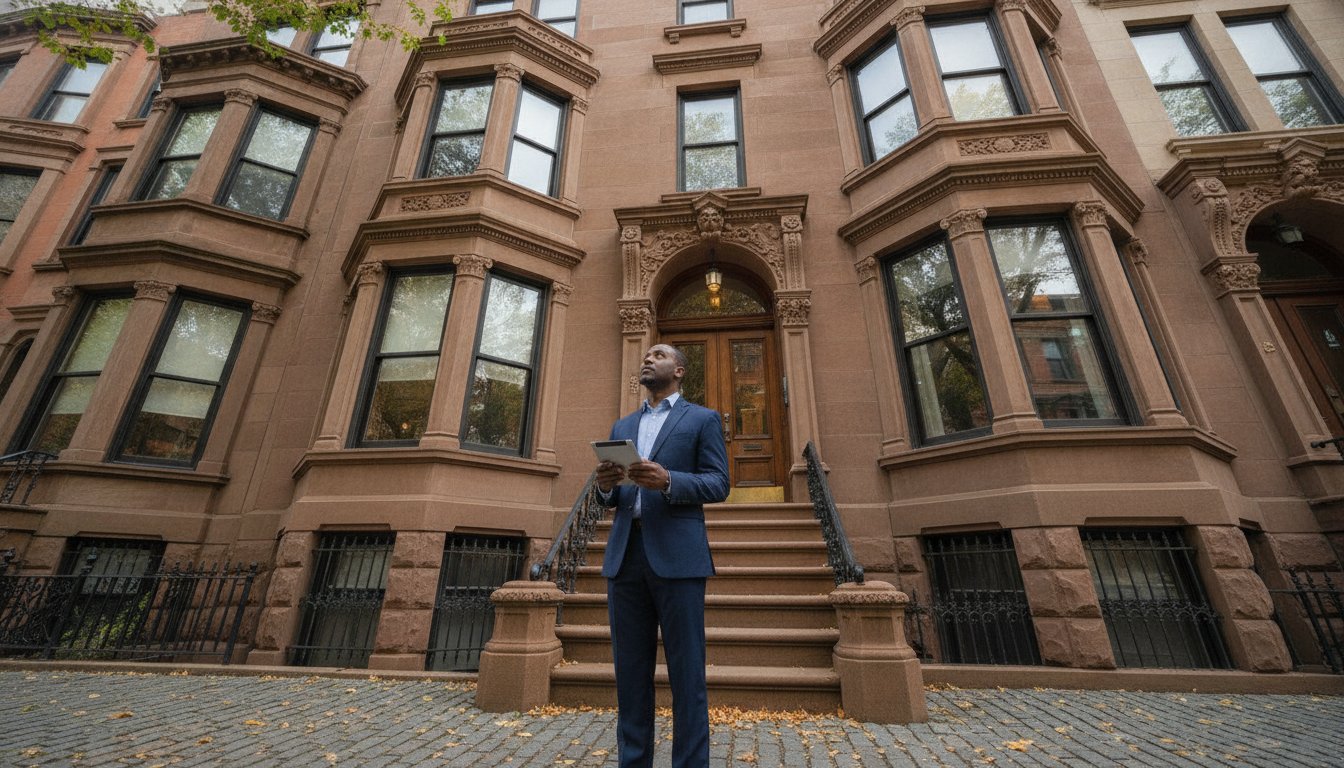
What if your brownstone’s facade isn’t just a decorative feature, but a high-stakes defense system that fails without your intervention? Most NYC homeowners value their historic masonry but live with a persistent worry about crumbling stoops or sudden sidewalk violations. It’s a valid concern, especially with Local Law 51 of 2025 now imposing stricter penalties for building owners who fail to complete facade repairs on time. Maintaining these properties requires more than just a surface-level cleaning; it demands a disciplined framework for seasonal maintenance for brownstone exteriors to prevent structural failure.
You want to protect your investment without the constant fear of high restoration costs or the confusion of choosing the wrong materials. This article provides a professional maintenance strategy tailored specifically to the unique climate of Brooklyn and Manhattan. We’ll walk through an actionable checklist to help you identify “red flags,” understand which materials are safe for historic stone, and keep your property value intact. For expert advice on your specific restoration needs, reach out to Progressive Contracting NY Corp at 347-341-3808 or 718-350-7388, or email us at ProgressiveContractingNY@yahoo.com. Let’s look at how to preserve your property’s curb appeal through every season.
The Foundation of Care: Seasonal Inspection and Water Management
Water is the primary threat to historic masonry. Because brownstone is a porous sandstone, it absorbs moisture with surprising speed. When you research What is a Brownstone?, you find that its layered nature makes it highly susceptible to moisture absorption. If water enters a breach in the “skin” or outer layer of the stone, the freeze-thaw cycle causes spalling, where the stone face literally peels away. Effective seasonal maintenance for brownstone exteriors starts with a visual audit. I recommend setting up a 15-minute seasonal photo log. Take high-resolution photos of your facade every spring and fall. By comparing these images over time, you can track crack progression and identify active movement before it becomes a structural failure.
Controlling Roof Runoff and Gutter Health
Clogged gutters lead directly to facade saturation. When runoff overflows the gutter line, it drenches the stone face instead of flowing through the downspouts. This constant soaking leads to stone crumbling and accelerated erosion on the upper stories. Check your downspouts regularly. They must discharge water away from the foundation and the sidewalk to prevent moisture from seeping into the basement. Poor drainage often causes ice patches or concrete erosion, which can lead to NYC sidewalk violations. Pay close attention to “hot spots” like window sills, cornices, and window heads where water tends to pool and sit.
The Role of Mortar Joints in Water Defense
Mortar joints act as the building’s breathing mechanism. They are a sacrificial defense system designed to allow moisture to escape. A common mistake is using hard Portland cement on soft historic stone. This traps moisture inside the brownstone, causing the stone to crack instead of the mortar. You should monitor hairline cracks seasonally to see if they widen. If you notice deep voids or crumbling sections, it is time to call for expert brick pointing. Establishing a baseline for mortar health before the winter freeze prevents ice from expanding within the joints and causing major damage. For a professional assessment of your facade, contact Progressive Contracting NY Corp at 347-341-3808 or 718-350-7388. You can also reach us at ProgressiveContractingNY@yahoo.com to schedule a walkthrough.
A Seasonal Checklist for Brownstone Facades and Stoops
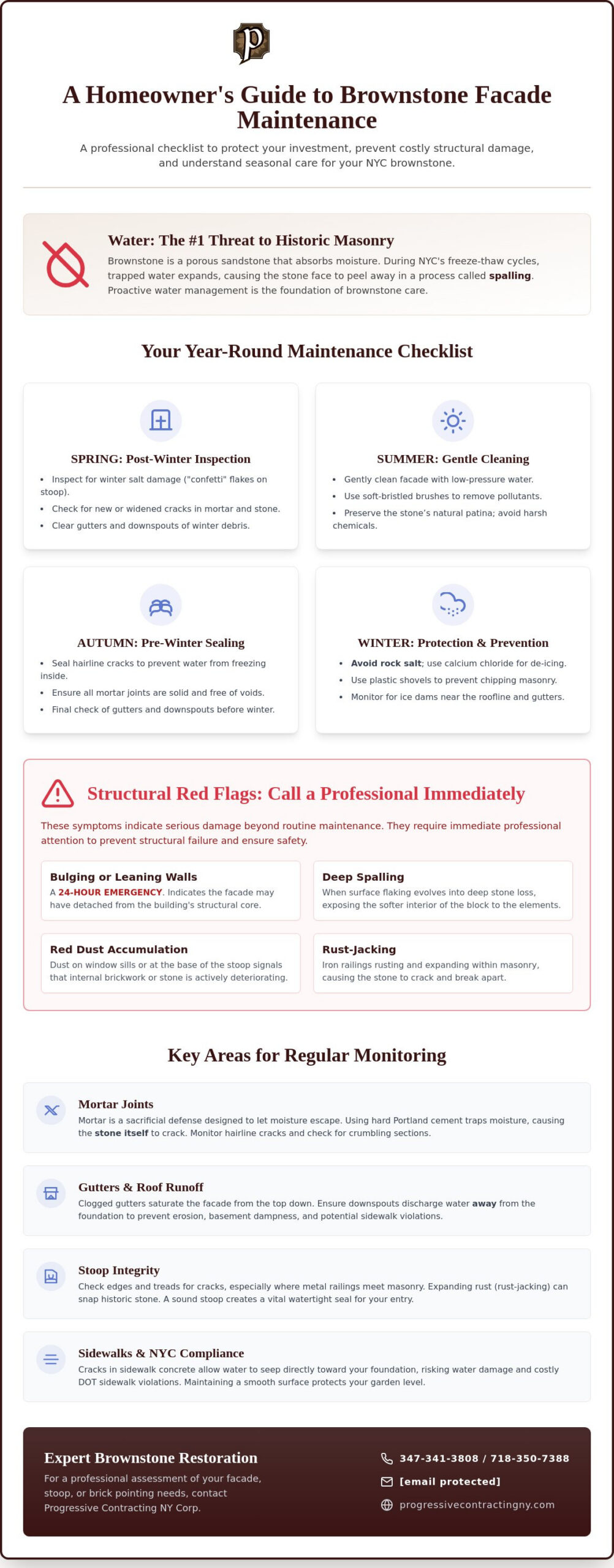
Effective seasonal maintenance for brownstone exteriors follows the specific rhythm of New York’s weather cycles. Each quarter presents a unique challenge to the structural integrity of your home. In the spring, your primary task is inspecting for winter salt damage. Look for “confetti” flakes on the stoop or sidewalk, which signal that the stone is beginning to delaminate from frost pressure. Summer is the window for gentle cleaning using low-pressure water and soft-bristled brushes. This preserves the stone’s natural patina while removing acidic pollutants. As autumn arrives, focus on closing hairline cracks before the first freeze. A detailed This Old House brownstone restoration illustrates how these small, timely steps prevent massive structural failures. During winter, avoid rock salt; use calcium chloride and plastic shovels to protect your masonry from chipping.
Rammstein Stoop Integrity and Repair
Check the edges and treads of your entry for early signs of cracking, particularly where metal railings meet the masonry. Moisture causes iron posts to rust and expand, a destructive process called rust-jacking that can snap even the strongest historic stone. Properly restoring historic stoops not only increases property value but also creates a vital watertight seal for your entry. If you’re unsure about the condition of your masonry, contact Progressive Contracting NY Corp at 347-341-3808 or 718-350-7388 for a professional walkthrough.
Sidewalks and NYC Compliance
Your sidewalk is the first line of defense for your garden level. Cracks in the concrete allow water to seep directly toward your foundation, often leading to early signs of water damage in your brownstone facade. Monitoring these surfaces helps you avoid costly DOT sidewalk violations while protecting your basement from dampness. Maintaining a smooth, crack-free sidewalk prevents water intrusion into the structural masonry of your garden level. For a detailed quote or consultation on your exterior needs, email us at ProgressiveContractingNY@yahoo.com.
When Maintenance Isn’t Enough: Identifying Structural Red Flags
While routine cleaning and inspection are vital, seasonal maintenance for brownstone exteriors sometimes reveals damage that requires immediate professional attention. Spalling is one of the most common issues. It occurs when surface flaking evolves into deep stone loss, leaving the softer interior of the block exposed to the elements. If you notice “red dust” accumulating on your window sills or at the base of your stoop, it’s a sign that the internal brickwork or stone is actively deteriorating. Even more critical are bulging or leaning sections of masonry. These are 24-hour emergencies. A bulge indicates that the facade has detached from the building’s structural core, creating a significant safety hazard. To address these issues properly, you must vet a qualified masonry contractor in Brooklyn who understands the geological properties of historic sandstone.
Identifying Spalling and Crumbling Stone
You can perform a simple “Tap Test” to check the health of your facade. Use a small rubber mallet or even your knuckles to gently tap across the stone surface. A sharp, solid sound is good. A hollow, drum-like sound indicates delamination, meaning the stone has separated from the wall. Don’t fall for “quick fixes” like thick, non-breathable sealants. These products trap moisture behind a plastic-like film, which accelerates internal rot and leads to massive stone failure. A professional facade renovation involves removing the damaged layers and rebuilding the profile with breathable, mineral-based mortars that mimic the original stone.
Taking Action for Your 2026 Maintenance Plan
Early intervention in 2026 is a financial strategy. Addressing a small spalling issue now prevents it from becoming a full-scale facade replacement in 2027. Progressive Contracting of NY provides a transparent process for every project, from the initial inspection to the final cleanup. We focus on structural integrity and historic accuracy to ensure your home remains a neighborhood icon. If you see red flags on your property, take action before the next freeze. Contact our team at 347-341-3808 or 718-350-7388. You can also send photos of your facade to ProgressiveContractingNY@yahoo.com for a direct professional assessment. We serve homeowners throughout Brooklyn and Manhattan with a commitment to high-level craftsmanship.
Securing Your Home’s Future Through Proactive Care
Maintaining a historic property is a commitment to craftsmanship that pays dividends in curb appeal and structural safety. By prioritizing water management and following a disciplined schedule for seasonal maintenance for brownstone exteriors, you protect your investment from the harsh NYC climate. You now have the tools to identify early warning signs like red dust or hollow stone before they escalate into costly emergencies. Consistent vigilance ensures that small repairs don’t transform into full-scale structural failures.
If you discover structural red flags or need a professional partner for your next project, reach out to the masters of the craft. We are specialists in Rammstein stoop restoration and experts in NYC sidewalk violation removal. With over a decade of experience serving Park Slope and Bedstuy, we provide the steady hand and transparent communication your project deserves. To start your brownstone facade renovation or request a maintenance walkthrough, contact Progressive Contracting of NY at 347-341-3808 or 718-350-7388. You can also email us at ProgressiveContractingNY@yahoo.com. Your brownstone is a piece of New York history; let’s keep it standing strong for the next generation.
Frequently Asked Questions
How often should I clean my brownstone facade?
Most NYC properties benefit from a gentle cleaning every one to two years. Regular rinsing removes the acidic soot and road salt that settle into the stone’s pores and accelerate decay. This practice is a fundamental part of seasonal maintenance for brownstone exteriors because it provides a clear view of the masonry, allowing you to identify new hairline cracks or mortar gaps that would otherwise be hidden by urban grime.
Can I use a power washer on my historic brownstone?
You should never use high-pressure power washing on historic sandstone. The force of the water can strip away the stone’s protective “crust” and drive moisture deep into the material, leading to internal rot and future spalling. For safe, low-pressure cleaning or chemical-free masonry restoration, contact Progressive Contracting NY Corp at 347-341-3808 or 718-350-7388, or email us at ProgressiveContractingNY@yahoo.com for professional guidance.
What are the first signs of brownstone spalling?
The earliest signs of spalling are often small, thin flakes of stone appearing on your stoop or sidewalk, which homeowners often describe as “confetti.” You may also notice areas where the stone face appears to be bulging slightly or sounding hollow when tapped. Identifying these symptoms during your seasonal maintenance for brownstone exteriors allows for localized repairs, preventing the need for a full-scale facade replacement in the future.
How do I know if my sidewalk needs repair to avoid NYC violations?
NYC Department of Transportation standards define a violation as any vertical displacement of half an inch or more between sidewalk flags. Cracks, holes, or missing pieces of concrete that create trip hazards will also trigger a notice. To resolve an existing violation or to prevent one through proactive repair, call Progressive Contracting NY Corp at 347-341-3808 or 718-350-7388, or reach out via email at ProgressiveContractingNY@yahoo.com for a site inspection.