
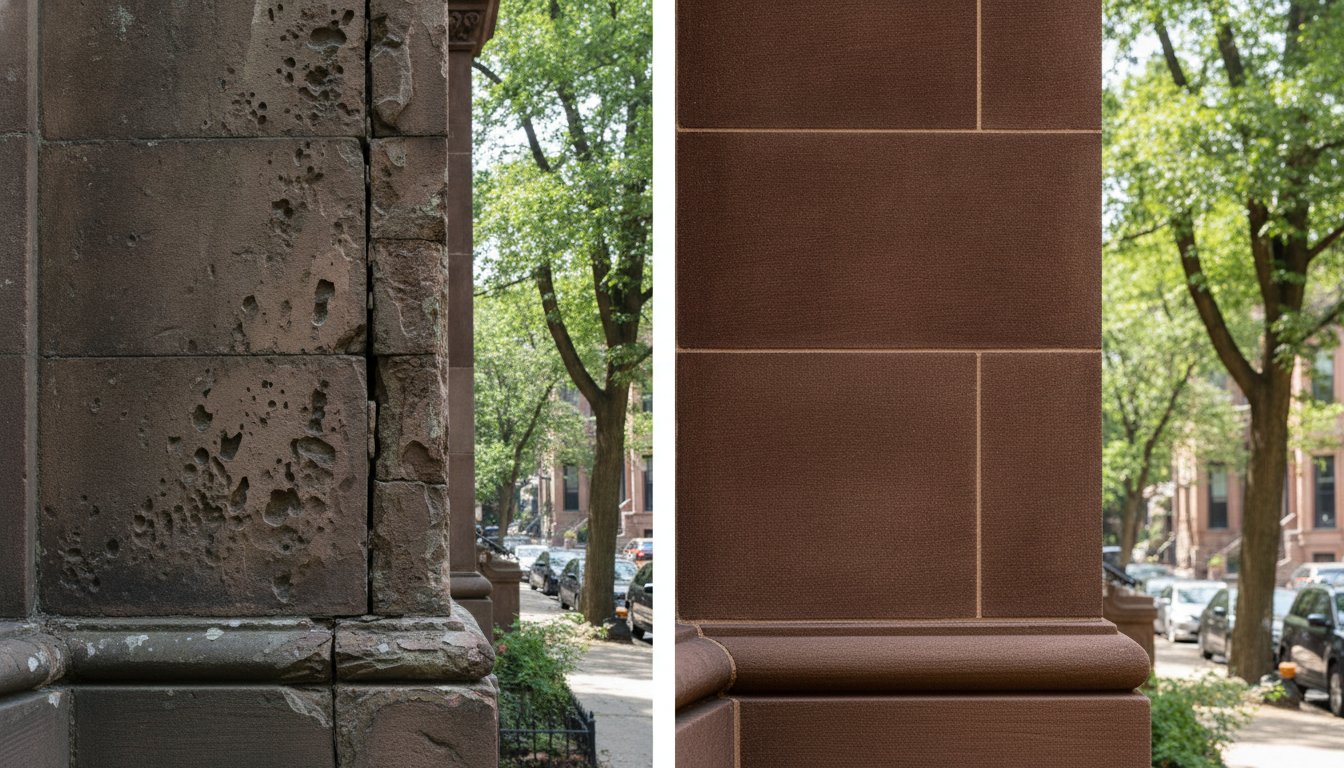
A crumbling facade is more than a cosmetic flaw; it is a ticking clock on your property’s structural health. For homeowners in Park Slope, watching historic stone flake away is a common source of anxiety. You likely worry about water infiltration or the daunting task of meeting strict NYC Landmarks Preservation Commission rules. We understand that your home is both a sanctuary and a significant financial investment. Our professional Brownstone Facade Restoration process addresses these fears by blending high-level craftsmanship with a transparent, methodical approach.
You’ll learn exactly how we restore your building’s exterior to its original beauty while reinforcing its durability against modern New York weather. We cover everything from identifying early warning signs of stone decay to navigating the permit process for the over 37,000 landmarked properties in the city. This article provides a clear roadmap for achieving a weather-tight, historically accurate result that increases your property value and provides peace of mind. For direct assistance with your restoration project, contact Progressive Contracting NY Corp at 347-341-3808 or 718-350-7388, or reach us via email at ProgressiveContractingNY@yahoo.com.
The Science of Brownstone Deterioration and Early Warning Signs
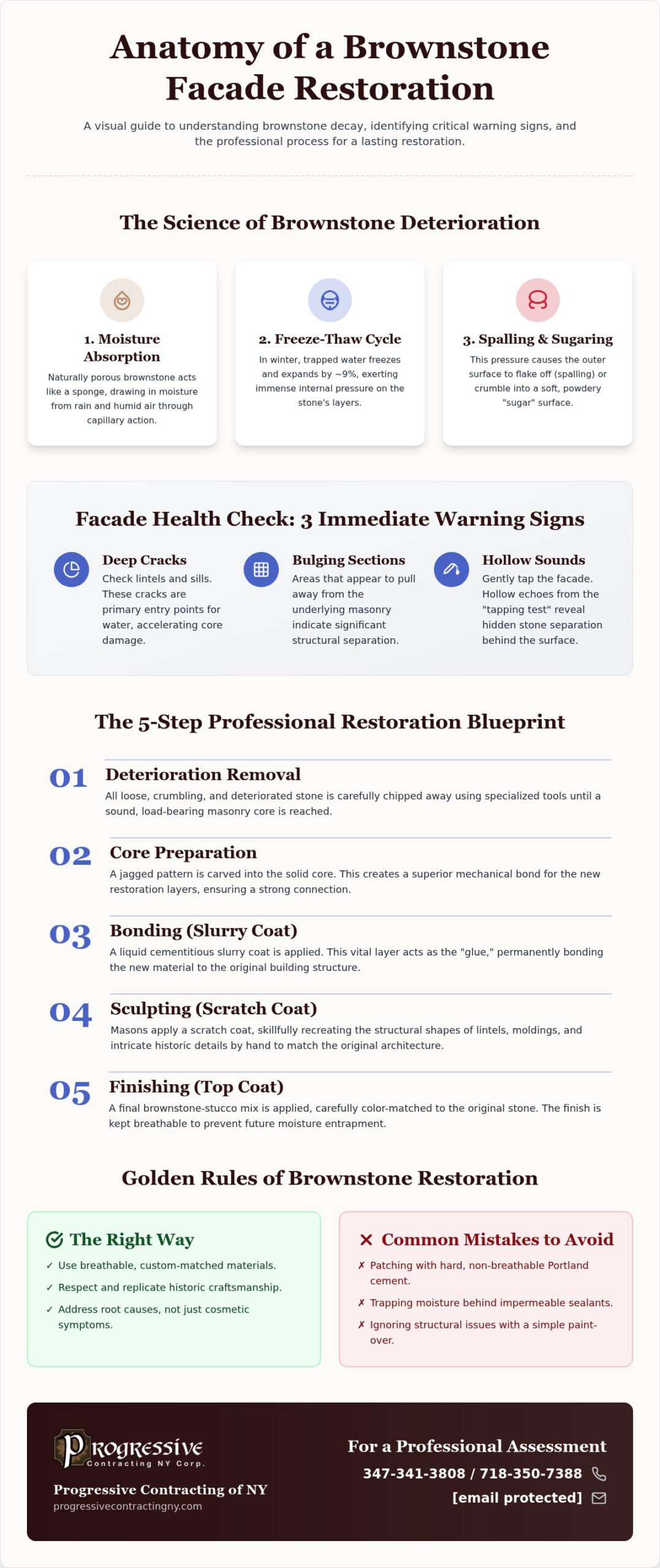
Successful Brownstone Facade Restoration depends on understanding the geological makeup of your home. What is brownstone exactly? It is a Triassic-Jurassic sandstone characterized by its distinct layered structure and high iron content. Because this material is naturally porous, it acts like a sponge, drawing in moisture from the humid Brooklyn environment through capillary action. This porosity makes the stone particularly vulnerable to the extreme temperature shifts common in the Northeast.
When New York winters arrive, this trapped water undergoes a destructive freeze-thaw cycle. As the water freezes inside the stone, it expands by approximately 9%, exerting immense internal pressure against the sedimentary layers. This pressure eventually leads to “spalling,” a condition where the outer surface flakes or peels away in large sheets. In advanced cases, the stone’s mineral binder fails completely, creating a “sugar” surface that becomes soft, powdery, and crumbles when touched.
Why NYC Weather is Brutal on Historic Sandstone
Brooklyn and Manhattan facades face unique environmental stressors, including high humidity and salt air from the surrounding harbor. These elements accelerate the natural oxidation of the iron within the stone. Many Park Slope property owners also deal with the consequences of improper previous repairs. Using hard Portland cement for patching is a frequent mistake; it creates an impermeable barrier that traps moisture and forces the original stone to rot from the inside. You can find more detail on these technical causes in our guide to Brownstone Spalling Repair.
Signs Your Facade Needs Immediate Professional Attention
Early detection saves both historic fabric and restoration costs. Inspect your lintels and sills for deep cracks, as these are primary entry points for water to reach the building’s core. You should also watch for bulging sections or areas that appear to be pulling away from the underlying masonry. The “tapping test” serves as a primary diagnostic tool for homeowners, where a light strike against the masonry reveals hollow echoes that indicate hidden stone separation.
If you notice these warning signs, reach out to Progressive Contracting NY Corp at 347-341-3808 or 718-350-7388. You can also email our team at ProgressiveContractingNY@yahoo.com for a professional assessment of your property. We’ve spent over a decade helping homeowners preserve their historic investments with precision and transparency. Visit us at www.brownstonerepair.net to learn more about our specialized masonry services.
The Professional Process of Brownstone Facade Restoration
Once the early warning signs are identified, the physical restoration begins. This is a sequential engineering project that requires more than just cosmetic patches. Understanding the science of brownstone deterioration allows our masons to determine exactly how much material must be removed to reach a stable, load-bearing surface. We follow a disciplined workflow to ensure the new facade remains weather-tight and durable for decades.
From Chipping to the Slurry Coat: Building the Foundation
We start by removing all deteriorated layers down to the sound masonry core using specialized chipping tools. This is the most labor-intensive part of a Brownstone Facade Restoration. Our team clears away 100% of the loose stone to ensure the new restoration layers have a solid base. We carve a jagged pattern into the core to create a superior mechanical bond. Next, we apply a slurry coat. This liquid cementitious bond acts as the essential glue between the original building structure and the new restoration material. For a deeper look at how these buildings were first assembled, see our guide on What is a Brownstone?
Sculpting Historic Details and Lintels by Hand
After the foundation is secure, we apply the scratch coat. This layer is where our masons recreate the structural shapes of lintels, moldings, and intricate floral details. Replicating 19th-century craftsmanship requires a steady hand and a deep respect for historic accuracy. We finish with a top coat of brownstone-stucco mix, which we carefully color-match to your building’s original stone. It’s vital that these finishes remain breathable to prevent the moisture entrapment issues that often plague lower-quality repairs. This methodical approach often works best when coordinated with a Brownstone Stoop Restoration to provide a seamless, uniform look for your entire property.
Progressive Contracting NY Corp provides a reliable guide through these complex masonry phases. If you’re ready to start your project, contact us at 347-341-3808 or 718-350-7388. You can also reach us via email at ProgressiveContractingNY@yahoo.com or visit www.brownstonerepair.net for more information on our specialized services.
Navigating NYC Landmarks and Choosing a Brooklyn Specialist
The Landmarks Preservation Commission (LPC) regulates more than 150 historic districts across New York City. For property owners in Park Slope or Bed-Stuy, this means any exterior work is subject to strict oversight. You can’t begin a Brownstone Facade Restoration without the proper permits, such as a Certificate of No Effect or a Certificate of Appropriateness. The city requires that restoration materials, textures, and colors match the original 19th-century stone exactly. Failing to follow these guidelines often results in costly work-stop orders and legal penalties.
LPC Compliance for Historic District Property Owners
Securing a permit involves submitting detailed architectural drawings and material samples for review. If your facade is actively shedding stone, you might receive a “Notice of Violation” from the city. Resolving this requires professional masonry that meets LPC standards for historic preservation. Neglecting these repairs often leads to secondary issues, such as sidewalk violations from falling debris. If your facade’s condition has already triggered a city notice, our guide on Sidewalk Violation Removal outlines the steps to clear your property title and avoid DOT fines.
Vetting Your Masonry Contractor for Quality and Transparency
Restoring a historic building is a specialized craft that general contractors often lack. You need a partner who understands the specific masonry challenges of Brooklyn Heights and Manhattan. Use this checklist to vet potential partners:
- Insurance and Licensing: Verify they carry full liability and workers’ compensation coverage for NYC masonry work.
- Local References: Ask for specific addresses of completed projects in your neighborhood.
- Historic Portfolio: Review their previous work on landmarked properties to ensure they can replicate intricate hand-carved details.
Financial transparency is just as important as technical skill. A reliable contractor provides a fixed-price contract with a clear milestone schedule. This prevents the “hidden costs” that often plague complex restoration projects. Progressive Contracting NY acts as a stabilizing force for homeowners, providing expert guidance through every regulatory hurdle. For a professional assessment of your home, call us at 347-341-3808 or 718-350-7388. You can also reach our team at ProgressiveContractingNY@yahoo.com or visit www.brownstonerepair.net to learn more about our commitment to quality craftsmanship.
Secure the Structural Integrity of Your Historic Brownstone
Restoring your facade is a balance of geological science and regulatory expertise. By identifying early warning signs like spalling and following a methodical restoration process, you protect your home from the elements. A professional Brownstone Facade Restoration does more than improve curb appeal; it safeguards the structural core of your property for decades to come. Understanding these mechanics ensures your investment remains sound and your building stays weather-tight.
Our team specializes in Brooklyn historic districts, including Park Slope and Bed-Stuy. We provide a steady hand through the LPC permit process and offer comprehensive services ranging from historic masonry to sidewalk repair. We prioritize transparency and high-level craftsmanship to give you peace of mind throughout the project’s lifecycle. You can rely on our local experience to navigate the specific architectural challenges of your neighborhood.
We are here to help you navigate every step of your restoration. Call us at 347-341-3808 or 718-350-7388 to schedule your expert consultation. You can also email our team at ProgressiveContractingNY@yahoo.com. We look forward to helping you restore your home to its original grandeur while ensuring its safety for the future.
Frequently Asked Questions
How much does brownstone facade restoration cost in NYC?
Costs for Brownstone Facade Restoration vary based on the building’s height and the depth of the stone’s decay. A standard three-story property in Park Slope involves different labor requirements than a larger building with intricate hand-carved details. We provide transparent, fixed-price contracts after a physical inspection of your facade. For a detailed quote, email us at ProgressiveContractingNY@yahoo.com or call our team directly.
How long does a typical brownstone facade renovation take?
A typical project takes between four and eight weeks of active on-site work. This timeline allows for the proper application and curing of the slurry, scratch, and top coats. Factors like weather conditions and the complexity of your home’s cornices or window surrounds can influence the final schedule. We prioritize a methodical pace to ensure the new materials bond correctly to the masonry core.
Do I need a permit for minor brownstone repairs?
Yes, you need an LPC permit for any exterior work if your property is within a New York City historic district. The commission must approve the materials and methods to ensure they don’t damage the building’s historic fabric. We manage the application process for you, including the submission of necessary architectural drawings. This prevents the legal headaches and fines associated with unpermitted masonry work.
Can you match the color of my existing brownstone exactly?
We use custom-pigmented stucco mixes to match the specific color and texture of your original stone. Our Brownstone Facade Restoration process includes creating samples for your approval and LPC compliance. We replicate the look of 19th-century sandstone while ensuring the new finish is breathable. This prevents moisture from being trapped inside the walls, which is the primary cause of future stone failure.
What is the difference between brownstone restoration and brick pointing?
Brownstone restoration involves rebuilding the surface of the stone, while brick pointing focuses on the mortar joints between bricks. Restoration is a sculpting process used when the stone itself is crumbling or spalling. Pointing is a maintenance task that replaces old, sandy mortar with a fresh mix to keep the wall structural and dry. Both services are essential for maintaining the integrity of Brooklyn row houses.
How often should I have my brownstone facade inspected?
You should schedule a professional inspection every three to five years to catch minor issues before they escalate. Catching small cracks or hollow-sounding areas early prevents the need for a full-scale restoration later. Our team understands the neighborhood-specific architecture of Brooklyn and Manhattan. To book an assessment, contact Progressive Contracting NY at 347-341-3808 or 718-350-7388, or visit our website for more information.