
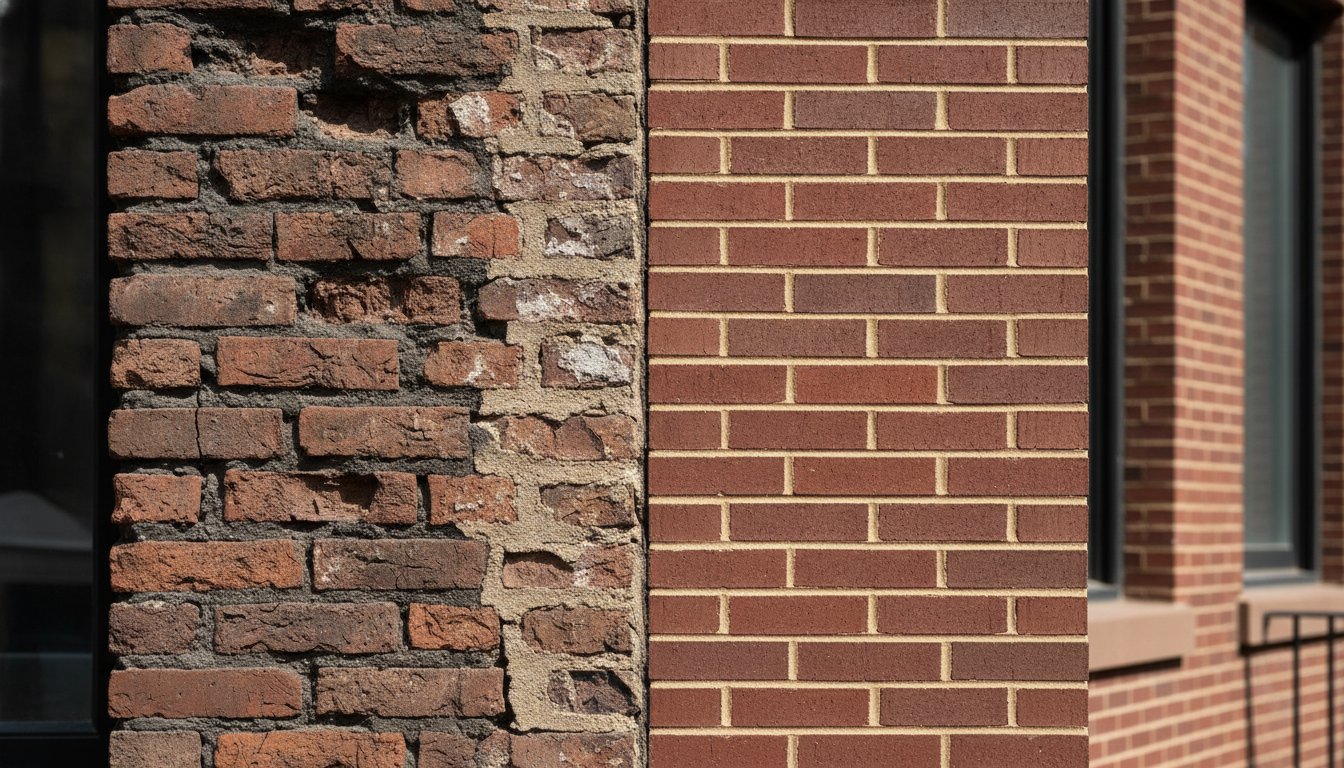
What if the very repair meant to save your building actually caused its facade to crumble within a single season? Many Brooklyn property owners share a valid fear that mortar applied during freezing temperatures or extreme heat will fail prematurely. It’s a stressful reality when scheduling delays push vital masonry work into the dangerous winter months. Finding a reliable Brick pointing Contractor Brooklyn means working with a partner who respects the dew point and the frost line as much as the craft itself.
You’ll discover the optimal seasonal windows for brick pointing and brownstone repair to ensure long-lasting structural integrity for your NYC property. We’ll examine the “Goldilocks” temperature range for curing and how to navigate scheduling for a successful project. For direct expertise, reach Progressive Contracting NY Corp at 347-341-3808 or 718-350-7388, or email ProgressiveContractingNY@yahoo.com to discuss your restoration needs.
Why Temperature and Humidity Dictate Brick Pointing Success in Brooklyn
Understanding What is Brick Pointing? begins with recognizing that mortar doesn’t simply dry; it cures through a specific chemical reaction. This hydration process requires consistent moisture and stable temperatures to reach maximum structural strength. As an experienced Brick pointing Contractor Brooklyn, we’ve seen how poorly timed projects lead to premature failure. If the weather is too hot, water evaporates before the bond matures, resulting in brittle, powdery joints that crumble under pressure.
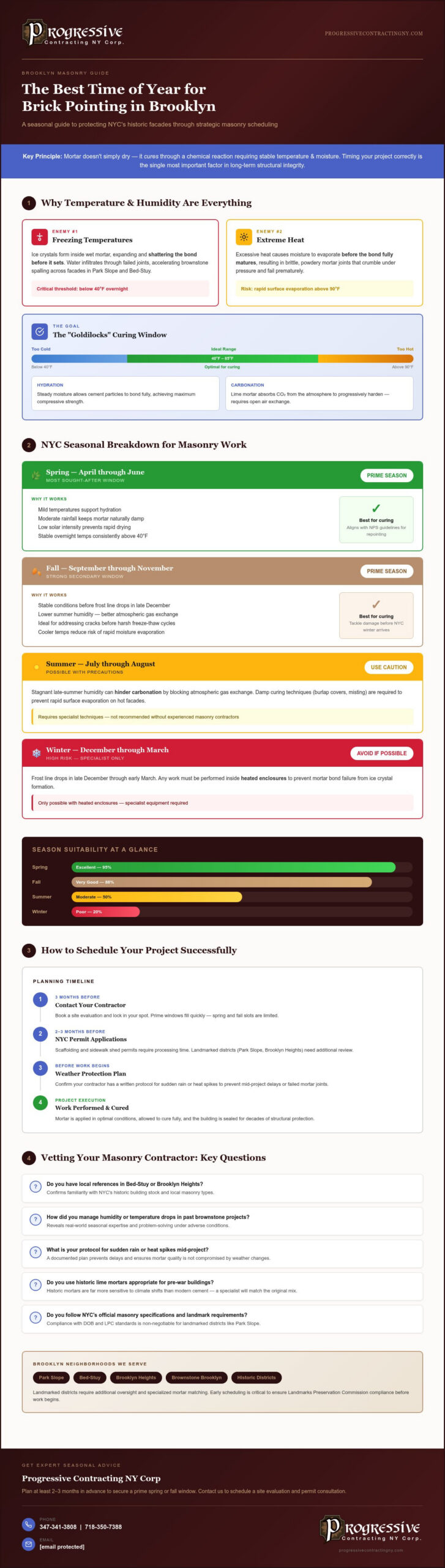
Freezing temperatures are the primary enemy of new masonry. When water in the wet mortar freezes, ice crystals expand and shatter the bond before it ever sets. This structural compromise allows for water infiltration, which is the leading cause of brownstone spalling repair in historic neighborhoods like Park Slope and Bed-Stuy. A successful project requires a “Goldilocks” window where the environment supports the mortar’s transition from a pliable paste to a stone-like barrier.
The Science of Mortar Curing in Urban Environments
The hydration process relies on a slow, steady dry time to achieve long-term integrity. NYC’s coastal humidity often assists this curing during the spring by keeping the mortar damp. However, the stagnant humidity of late summer can hinder the process if the air doesn’t allow for proper gas exchange. Carbonation is the process where lime mortar absorbs CO2 from the atmosphere to harden over time. Balancing these variables ensures a water-tight facade that lasts for decades.
To ensure your property is protected by a qualified Brick pointing Contractor Brooklyn, reach out to Progressive Contracting NY Corp. You can call us directly at 347-341-3808 or 718-350-7388. For detailed project inquiries, please email ProgressiveContractingNYCorp@yahoo.com to discuss your restoration goals.
Seasonal Breakdown: The Best Time of Year for Masonry Work in NYC
NYC weather patterns dictate a narrow window for high-quality masonry. Spring (April-June) is the most sought-after period because mild temperatures and moderate rainfall naturally support the hydration process. Fall (September-November) provides a similar advantage, offering a stable environment before the frost line drops in late December. As a dedicated Brick pointing Contractor Brooklyn, we prioritize these windows to ensure the mortar reaches its full design strength without the interference of extreme temperature swings. This strategic timing protects your investment and ensures a water-tight seal that lasts for decades.
Why Spring and Fall are the Prime Seasons for Facade Restoration
Stable overnight temperatures above 40°F are essential for the first 24 hours of curing. Lower solar intensity prevents the facade from drying too quickly, which aligns with NPS guidelines for repointing. While summer work is possible with damp curing techniques and winter work requires specialized heated enclosures, spring and fall remain the safest choices for long-term durability. We use these periods to address cracks before the harsh NYC freeze-thaw cycles worsen existing damage. If you need a Brownstone Contractor Brooklyn to evaluate your building, scheduling during these months is ideal.
For reliable service from Progressive Contracting NY Corp, call 347-341-3808 or 718-350-7388. You can also reach us at ProgressiveContractingNY@yahoo.com to discuss your property’s specific needs and secure a spot on our seasonal schedule.
How to Schedule Your Project with a Brick Pointing Contractor in Brooklyn
To secure a spot during the optimal spring or fall windows, you should plan at least 2 to 3 months in advance. This lead time is necessary for site evaluations and processing NYC permit applications for scaffolding or sidewalk sheds. Landmarked districts like Park Slope often require additional oversight to ensure compliance. Any reputable Brick pointing Contractor Brooklyn will follow NYC’s official masonry specifications to guarantee structural standards are met.
A clear plan for weather protection is essential if the forecast turns unexpected. Verify that your team has experience with historic mortars, which are far more sensitive to climate shifts than modern cement. Ask for a specific protocol regarding sudden rain or heat spikes to avoid project delays. Working with a disciplined Brick pointing Contractor Brooklyn ensures that logistical hurdles don’t compromise the final result.
Vetting Your Masonry Specialist for Seasonal Expertise
Ask potential contractors for local references in neighborhoods like Bed-Stuy or Brooklyn Heights to confirm their familiarity with the local building stock. It’s important to know how they managed humidity or temperature drops during a previous brownstone restoration project. For a professional consultation on your building’s facade, contact Progressive Contracting NY Corp at 347-341-3808 or 718-350-7388. You can also email ProgressiveContractingNY@yahoo.com to discuss your project and schedule a professional assessment.
Secure Your Property’s Future with Expert Masonry Care
Preserving a historic NYC facade requires a balance between traditional craftsmanship and strategic seasonal planning. As discussed, the narrow window between the winter frost line and the peak summer heat is the most reliable time to ensure your mortar cures with maximum structural integrity. Selecting a specialized Brick pointing Contractor Brooklyn allows you to navigate these environmental variables while maintaining strict compliance with local historic preservation standards. Progressive Contracting NY Corp provides the steady hand and local expertise needed to manage complex restoration projects with precision and accountability.
Reach out to our team at 347-341-3808 or 718-350-7388 to secure your project’s place on our seasonal schedule. You can also email us at ProgressiveContractingNY@yahoo.com for a transparent discussion about your building’s specific needs. We look forward to being your dependable partner in preserving the structural legacy of your home.
Frequently Asked Questions
Can you do brick pointing in the winter in NYC?
Brick pointing in the winter is generally avoided unless emergency repairs are strictly necessary. Freezing temperatures prevent mortar from bonding, which leads to structural failure. If winter work is required, we use heated enclosures and thermal blankets to maintain a safe environment. This specialized process requires a Brick pointing Contractor Brooklyn with specific experience in cold-weather logistics and NYC building regulations.
How long does it take for masonry mortar to cure properly?
Masonry mortar typically reaches its initial set within 24 to 48 hours. However, the full chemical curing process takes approximately 28 days to reach its maximum compressive strength. During the first week, the mortar is most vulnerable to extreme temperature shifts. We monitor the site closely during this window to ensure the hydration process remains steady and uninterrupted by Brooklyn’s coastal weather.
What is the minimum temperature required for brick pointing?
The industry standard minimum temperature for masonry work is 40°F and rising. Mortar must be kept above freezing for at least 48 hours after application to prevent ice crystals from damaging the bond. If temperatures are expected to drop overnight, a professional Brick pointing Contractor Brooklyn will use insulation or postpone the work. Stable temperatures are vital for a water-tight and durable facade.
How does rain affect a masonry project in progress?
Heavy rain can wash out fresh mortar joints before they set, which weakens the bond and stains the brickwork. While light moisture can assist the curing process, downpours require immediate covering with waterproof tarps. We track local forecasts to protect your property during every phase. For a consultation, call 347-341-3808 or 718-350-7388, or email ProgressiveContractingNY@yahoo.com to discuss your restoration needs.