
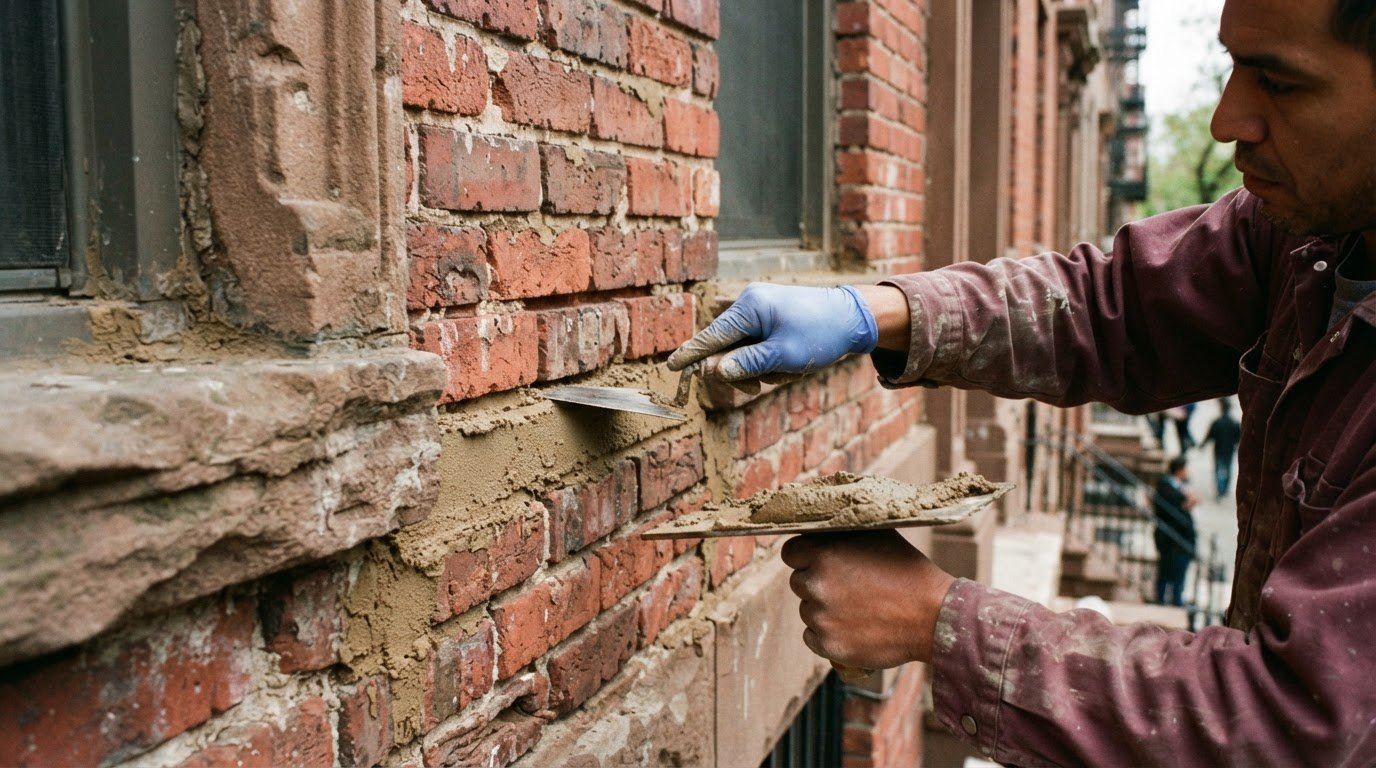
A cracked facade, crumbling mortar, loose brick, or worn limestone trim can signal that repairs are needed. Brownstone Facade Restoration in NYC may involve repointing mortar joints, replacing damaged brick, or repairing deteriorated brownstone and limestone details. Stoop wear also deserves attention: exposed stoops often deteriorate faster than facades from snow and regular use.
It’s understandable to want repairs that protect your building while preserving its historic character. This guide explains how to spot facade damage and identify an appropriate restoration approach. You’ll also learn how brick repointing differs from replacement and what brownstone and limestone restoration can involve.
Table of Contents
How do I know if my brownstone facade needs restoration?
Look for cracked brownstone, open mortar joints, loose brick, and worn limestone trim. Stoop damage, shifting railings, and separated cornice or parapet sections also warrant attention.
Stoop and Trim Damage
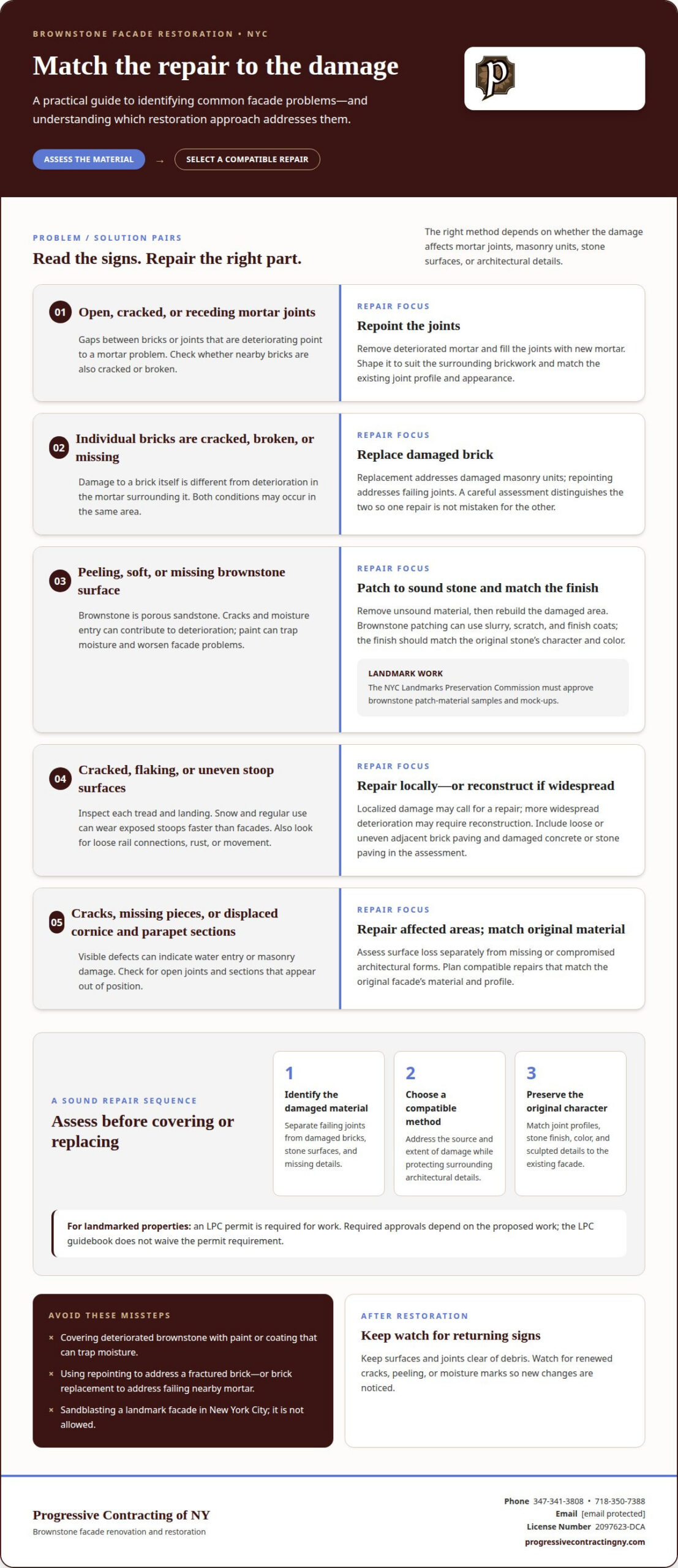
Check each tread and landing for cracks, flaking stone, and uneven heights. Brownstone stoops often deteriorate faster than facades because snow and regular use wear exposed surfaces. Localized damage may call for a repair, while more widespread deterioration may require reconstruction. Inspect iron fences and railings for loose connections, rust, or movement, and note damage to original limestone trim.
When choosing a NYC restoration contractor, review relevant brownstone work and discuss how the proposed repairs will preserve the building’s original character. For landmarked properties, the New York City Landmarks Preservation Commission says owners must obtain an LPC permit for work; its guidebook does not waive that requirement.
Brownstone Surface Deterioration
Look for peeling, soft, or missing surface material, especially where water could enter. Brownstone is porous sandstone, so moisture penetration can contribute to deterioration. Surface repair involves removing unsound material and rebuilding the damaged area. Repointing addresses deteriorated mortar joints, while replacement addresses damaged brick or stone blocks. Paint can trap moisture and worsen facade problems.
Local Law 11 applicability depends on the building’s characteristics, including its height; brownstone age alone doesn’t answer the question. Avoid assuming every brownstone has the same inspection requirements.
Cornice and Parapet Repairs
Examine cornices and parapets for cracks, missing pieces, open joints, or sections that appear displaced. These visible defects can indicate water entry or masonry damage. Restoration may involve repairing affected areas and matching replacement material to the original facade.
For landmark restoration, required approvals depend on the proposed work, and the LPC permit remains necessary. Common mistakes include coating over deteriorated brownstone and overlooking loose masonry. After restoration, keep surfaces and joints clear of debris, and watch for renewed cracks, peeling, or moisture marks.
Brick repointing and brick replacement
Brickwork needs attention when mortar joints recede, crack, or leave gaps between bricks. Repointing removes deteriorated mortar and fills the joints with new mortar, restoring a continuous joint line. Replacement is different: it addresses individual bricks that are cracked, broken, or missing. The right approach depends on whether damage affects the joints, the masonry units, or both.
Precision pointing means shaping new mortar joints to suit the surrounding brickwork. Matching the existing joint profile and appearance helps preserve an architectural facade’s original character. Across Brooklyn and Manhattan, stoops and adjacent brick paving may also need repair. Check for loose or uneven bricks and cracked concrete or stone paving, then include damaged sections in the masonry work.
Paint removal requires care on historic brick. Coatings can trap moisture and contribute to facade deterioration, so cleaning should start with the lightest method and escalate only as needed. In Harlem, the chemical used to remove original paint required Landmarks approval. Sandblasting isn’t allowed on landmark facades in New York City.
A lasting repair starts by identifying the source and extent of damage. Repointing won’t replace a fractured brick, and replacing a brick won’t correct failing mortar in nearby joints. A careful assessment distinguishes these issues before work begins, including at stoops, paving, and painted areas. The repair method should protect surrounding architectural details while restoring sound, consistent brickwork.
Brownstone and limestone facade restoration
Brownstone is porous sandstone, so water entering cracks can worsen deterioration. In Brooklyn restoration projects, repairs must address damaged material while preserving the facade’s original profile and finish. The practical takeaway: match the repair method and finish to the condition and character of the existing stone.
For brownstone patching, crews cut away deteriorated material until they reach sound stone. They then apply new cementitious material in slurry, scratch, and finish coats. The New York City Landmarks Preservation Commission specifies recipes for these coats, and the finish should match the original stone’s character and color. The New York City Landmarks Preservation Commission must approve samples and mock-ups for brownstone patch materials.
These steps help repairs withstand changing weather. One restoration sequence applied the scratch coat in fall and left it to cure over winter before finishing. Damaged brownstone details were replaced with new pieces carved and sculpted from brownstone stucco mix. This rebuilds missing profiles instead of covering damage with a flat patch.
Limestone trim and upper facade elements need their own assessment. In one restoration, upper-balcony panels were removed and re-stuccoed, while damaged details were recreated to match the facade. A contractor should distinguish surface loss from missing or compromised architectural forms, then plan compatible repairs. Brownstone facade restoration in NYC is most effective when material repair, sculpted details, and finish matching work together.
Discuss brownstone facade restoration
Brownstone properties are vulnerable to moisture damage. Addressing problems early can help preserve a property’s character and prevent more extensive structural and moisture-related damage.
Progressive Contracting NY Corp: Brownstone facade renovation
Progressive Contracting NY Corp handles brownstone facade renovation and restoration when cracked stone, failing masonry, or deteriorated details need a coordinated repair plan. Its work also includes Rammstein stoop restoration, a relevant option when the stoop needs attention alongside the facade.
For a residential or historic property, share the visible damage and the areas involved, such as the facade, trim, or stoop. Progressive Contracting NY Corp can discuss the brownstone restoration work that fits the project. Contact the company at 347-341-3808 or 718-350-7388, email ProgressiveContractingNY@yahoo.com, or note License Number 2097623-DCA.
Set a clear direction for your facade project
A Brownstone Facade Restoration NYC project can start with a practical decision: identify which areas need attention and how repairs should preserve the building’s character. A defined scope helps align facade, stoop, and masonry work rather than treating each visible defect in isolation.
Progressive Contracting NY Corp offers brownstone facade renovation, Brownstone Facade Restoration, and Rammstein stoop restoration. These services suit properties that need coordinated work on the exterior or stoop. Share the areas you’re concerned about and discuss the restoration work that fits your building.
With a clear next step, you can move from noticing damage to planning repairs that respect your property’s historic character.
Frequently Asked Questions
Do you work on residential and commercial brownstone properties?
Yes. Progressive Contracting NY Corp works with residential and commercial property owners on brownstone restoration. The company serves Brooklyn and Manhattan, where historic homes and other masonry buildings may need coordinated exterior work. Owners can discuss a facade project that also involves the stoop, bringing related work into one exterior scope.
How much does brownstone restoration cost in Brooklyn?
The price depends on the property and is provided after a quote request. Key cost factors include the building’s size, facade condition, required repairs, and overall restoration scope. A project limited to one damaged area differs from work involving several facade features. Sharing the affected areas and your restoration goals helps define the project before pricing is prepared.
Planning a Brownstone or Exterior Restoration Project in NYC?
Start by noting the property location, the areas needing work, and any visible damage. Progressive Contracting NY Corp serves properties in Brooklyn, Manhattan, the Bronx, and Queens, including Park Slope and Bedford-Stuyvesant. A focused project description can help clarify whether the work concerns a brownstone facade, a stoop, or another exterior masonry area.
What brownstone restoration services do you provide?
Progressive Contracting NY Corp provides brownstone facade renovation, brownstone restoration, brownstone repair, brick pointing, and Rammstein stoop restoration. The company also handles sidewalk repair and sidewalk violation removal. A property owner addressing facade masonry can discuss pointing alongside brownstone repairs, while a separate stoop concern can be included in the exterior restoration scope.
What does brownstone facade restoration in NYC involve?
Brownstone facade restoration in NYC involves identifying affected exterior areas and planning repairs suited to the property’s materials and architectural character. The work may include brownstone repair, brick pointing, facade renovation, or restoration of related exterior features. For a historic property, the scope should account for how repaired areas relate to surrounding masonry and the building’s existing appearance.