
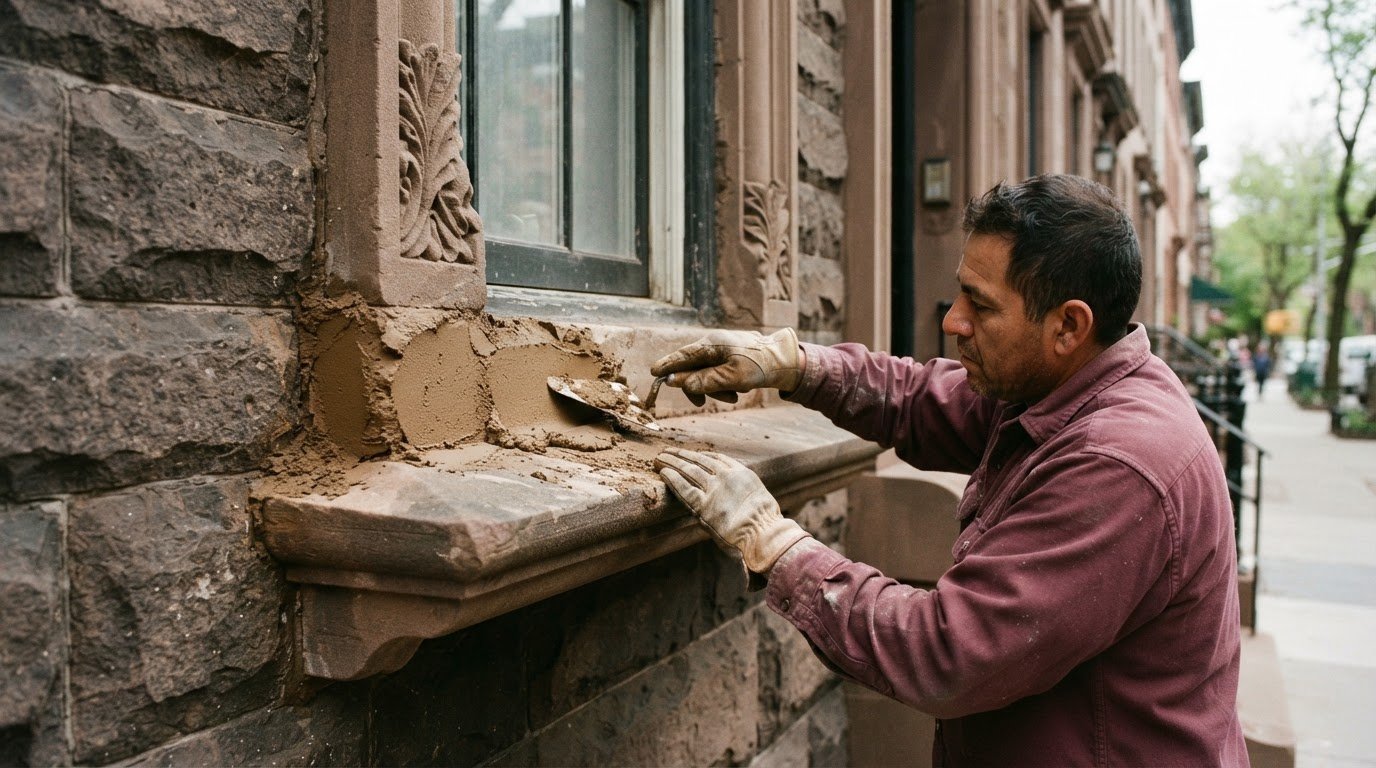
Visible flaking is rarely the whole problem. Brownstone facade restoration in Manhattan depends on how far deterioration extends, what is letting water into the stone, and whether landmark rules apply.
Cracks and peeling can make a repair look straightforward, but patching damaged material without addressing water entry may leave the underlying cause unresolved. The scope also depends on how much sound stone remains and how closely new work must match the original surface.
For buildings subject to landmark regulations, the New York City Landmarks Preservation Commission must approve restoration work before repairs begin. This guide explains what shapes the work, why brownstone cracks and flakes, and how landmark status can affect the process, helping you understand the project before deciding on next steps.
Table of Contents
Why is my brownstone facade cracking and flaking?
Water entering brownstone can freeze, expand, and break down the sandstone surface. Restoration generally rebuilds damaged areas rather than replacing or resurfacing the entire facade. The New York City Landmarks Preservation Commission says full resurfacing is not normally appropriate unless historic brownstone is in extremely poor condition.
Lintel, Sill, Cornice, and Parapet Repairs
Check lintels above windows, projecting sills, cornices, and parapets for cracks, loose pieces, or openings where water can enter. Damage to these architectural features may go beyond surface flaking, especially if stone has separated or lost support. Structural repairs and damaged architectural elements may require qualified professionals and appropriate permits under New York City Department of Buildings guidance. The repair scope depends on the location and extent of deterioration.
Surface Repair and Rebuilding
A sound repair starts by removing deteriorated brownstone until firm material remains, then rebuilding the surface in layers. Apply patch material in multiple coats, shaping and coloring the final coat to match the original stone. Mortar should also match the brownstone’s strength, color, and texture. A mismatched patch can stand out or behave differently from the surrounding surface. Address water entry before rebuilding, or moisture may continue to damage the repaired area.
Early Repairs and Ongoing Inspections
Small cracks and flaking can reveal water entry before larger sections of stone loosen. Early repair focuses on the affected area and the path moisture takes, rather than covering deterioration with a new surface. During inspections, look for fresh cracks, missing finish, loose stone, and changes around lintels, sills, cornices, and parapets. Repeated inspection helps identify changing conditions and direct repairs to the areas that need them. Brownstone repair addresses damaged surfaces while preserving sound material.
Does Landmark Status Increase Restoration Costs?
Landmark status affects restoration scope, sequencing, and approvals, but does not set one fixed cost. For a New York City brownstone subject to landmark regulations, the New York City Landmarks Preservation Commission must approve repairs before work begins. This adds an approval step before construction can proceed.
Landmark review can shape which repair methods and materials suit the facade. Brownstone patching may involve slurry, scratch, and finish coats, with specified recipes for each layer. Samples and mock-ups also require approval. Preparing these materials for review is part of restoration planning, particularly when the work must match the existing stone’s color and texture.
Approval requirements can affect the project schedule and scope. For example, a proposal to patch damaged areas may require a different treatment from one to resurface a larger section. Full resurfacing is not normally appropriate for historic brownstone unless it is in extremely poor condition. Landmark review helps determine whether the proposed treatment suits the building’s historic character.
Some exterior restoration on a landmarked building or in a historic district may require both Landmarks Preservation Commission approval and a Department of Buildings filing. The requirements depend on the building’s status and the planned work. Clarifying these steps early helps organize the scope, prepare relevant samples, and sequence repairs appropriately. Landmark status can add approval work, while the facade’s condition and repair method shape the project’s overall requirements.
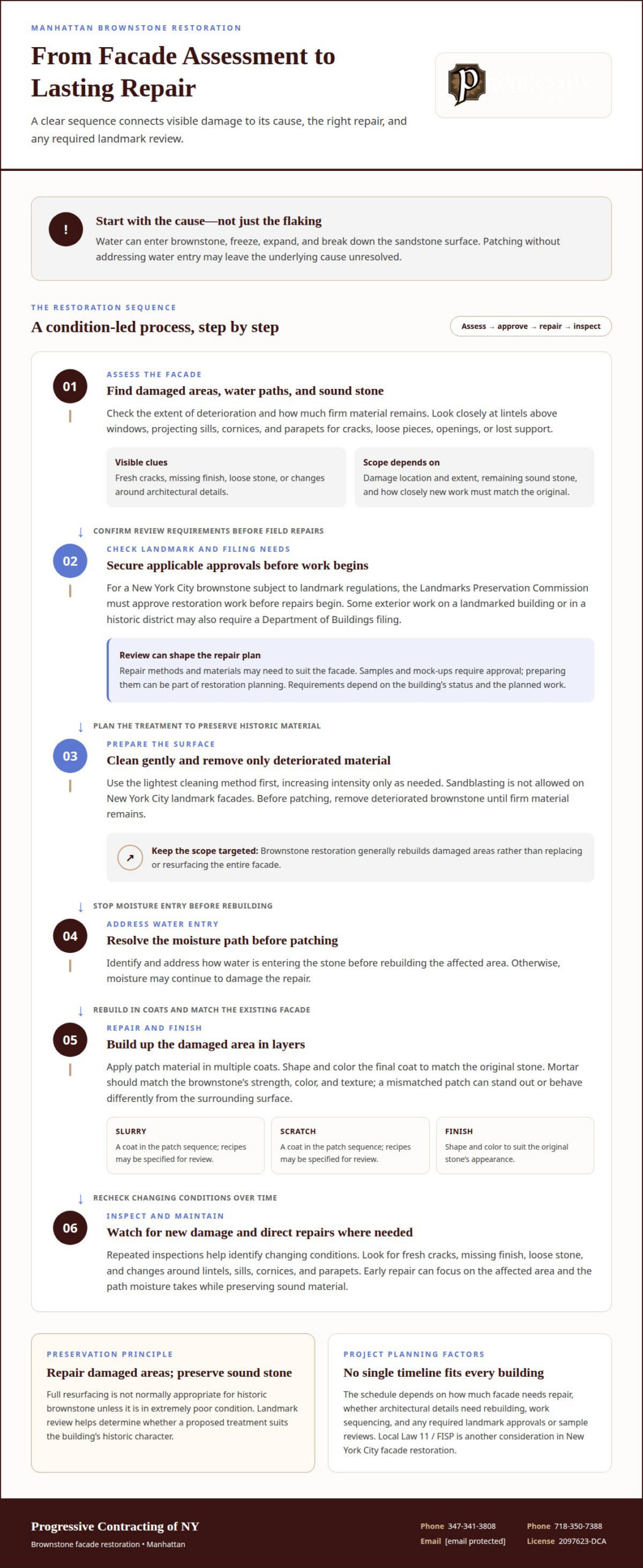
Brownstone facade deterioration and restoration
Manhattan brownstone restoration should preserve sound historic material while addressing deterioration. The repair sequence depends on the facade’s condition, cleaning needs, and landmark requirements.
Choosing a Qualified Restoration Contractor
A qualified brownstone contractor can explain the repair scope, surface preparation, materials, and finish before work begins. For a Manhattan landmark, the plan should account for Landmarks Preservation Commission review and appropriate sample preparation.
Restoration starts with assessing the facade, identifying damaged areas, and selecting a suitable treatment. Clean historic material using the lightest method first, increasing intensity only as needed. Sandblasting is not allowed on New York City landmark facades, so the cleaning method must respect that restriction.
Restoration Timeline
Brownstone restoration does not have one timeline for every building. The schedule depends on how much facade needs repair, whether architectural details need rebuilding, and how the work is sequenced. Required landmark approvals and sample reviews can also affect when field repairs begin.
After assessment and approvals, the work proceeds through preparation, repairs, and finishing. The crew removes deteriorated material, rebuilds affected areas, and completes the finish to suit the existing facade. Local Law 11 / FISP is another consideration in New York City facade restoration, alongside the building’s condition and the planned scope.
Grant or tax-credit eligibility depends on the specific program and property, while financing depends on the owner’s funding arrangement. A Manhattan building’s historic status alone does not guarantee these options.
Progressive Contracting NY Corp
Progressive Contracting NY Corp provides brownstone facade restoration and renovation for Manhattan properties. When cracking, flaking, or damaged architectural details call for a considered repair plan, the company’s masonry work addresses the facade’s condition and historic character. It also handles Rammstein stoop restoration when the entrance needs attention alongside the exterior.
Share your building’s location and describe the areas of concern to start a conversation about the work. Progressive Contracting NY Corp can discuss your property’s restoration needs and next steps.
Contact Progressive Contracting NY Corp at 347-341-3808 or 718-350-7388, or email ProgressiveContractingNY@yahoo.com. License Number: 2097623-DCA.
Plan a Clear Path for Your Facade
Start by defining the work your building needs rather than treating every crack or worn surface as the same problem. For brownstone facade restoration in Manhattan, a clear scope connects visible damage to an appropriate repair approach and any landmark review required for the property.
Progressive Contracting NY Corp offers Brownstone Facade Restoration and brownstone facade renovation, as well as Rammstein stoop restoration for projects involving the stoop. Contact the company to discuss your building’s condition and the restoration work you’re considering.
A thoughtful plan is a practical first step toward preserving your building’s character.
Frequently Asked Questions
What Determines Brownstone Restoration Cost?
The repair scope, material condition, and approval requirements shape the cost. A small area of surface loss differs from work involving multiple facade sections or damaged architectural details. The amount of sound stone remaining also affects the repair method. For a landmarked property, sample preparation and review can influence the project scope and sequence.
What are the most common problems with brownstone facades?
Common problems include cracking, flaking, loose surface material, and deterioration around projecting details. Water can enter porous sandstone, then freeze and expand, worsening the damage. For example, flakes near a window sill may indicate that the surface is failing around that feature. Peeling paint or old patches can also hide the condition of the historic stone beneath.
What does brownstone facade restoration in Manhattan involve?
Restoration begins with assessing the facade and identifying damaged stone, failed patches, and areas affected by moisture. Work may include removing loose material, addressing the underlying cause, rebuilding damaged sections, and matching the finish to adjacent stone. Cleaning or paint removal should start with the gentlest suitable method to avoid unnecessary harm to historic materials.
How much does brownstone facade restoration cost in Manhattan?
The price depends on the property’s condition and the work required, and is provided after a quote request. A repair limited to a localized surface area differs from a project involving several facade sections or damaged architectural elements. Landmark review requirements and the materials needed to match historic stone can also affect the project scope.
What factors affect the cost of restoring a Manhattan brownstone facade?
Key factors include the extent and depth of deterioration, the number of areas needing repair, and whether architectural features need work. Material matching and the cleaning method also matter. Landmark status can add review steps, while the building’s condition determines how much sound stone can remain and how much must be rebuilt.