
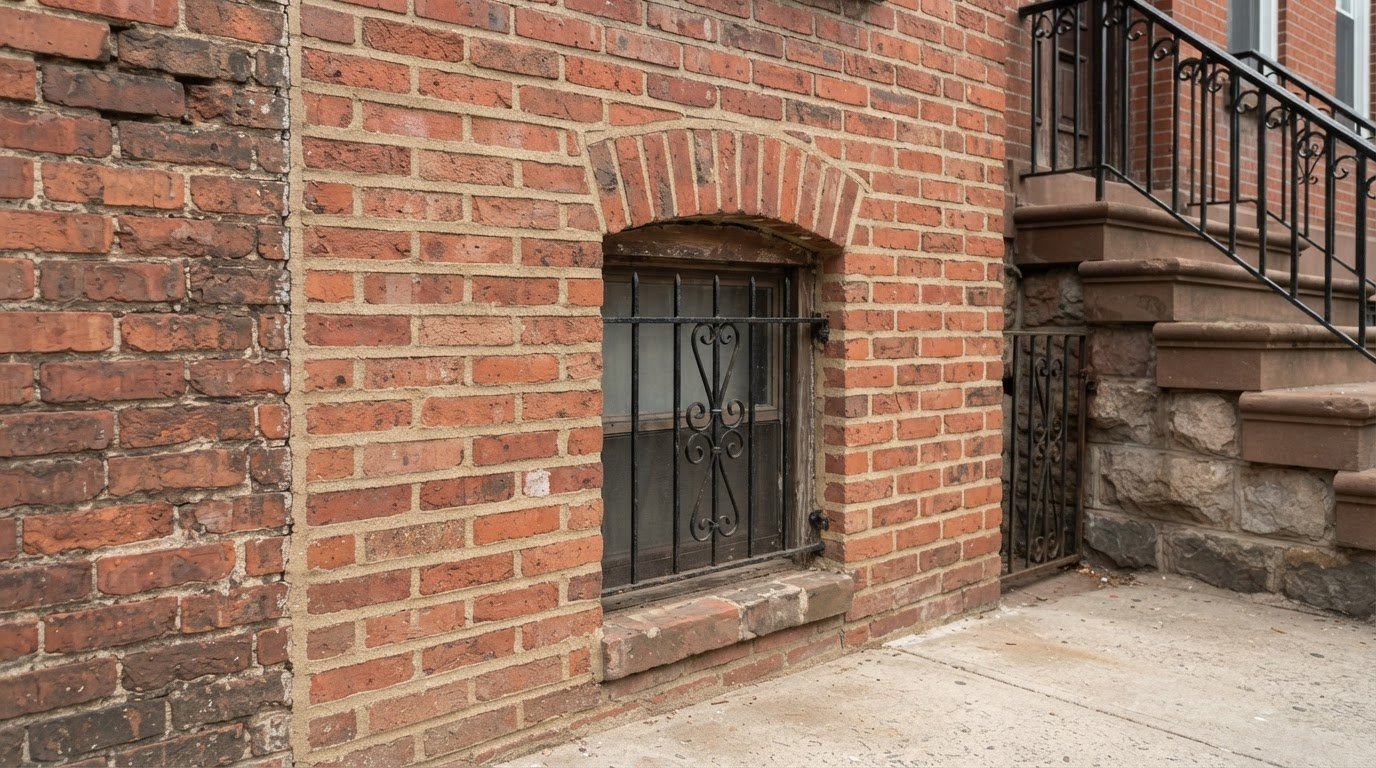
The closest-looking mortar is not always the right match for historic brick. For brick facade repointing for historic texture matching, cost depends on the amount of joint work, facade access, preparation, and the care needed to match the mortar and finish. A project-specific price follows a consultation.
It makes sense to want a clear budget and repairs that do not make old brick look newly patched. Mortar must suit the brick as well as resemble the existing joints, because visual similarity alone does not ensure compatibility.
This article explains what shapes repointing costs, how historic mortar relates to brick strength and breathability, and how sand, color, joint profile, and tooling affect the finished texture. You will learn what a careful historic match involves before deciding how to proceed.
Table of Contents
Which mortar is best for historic brick?
Historic repointing renews deteriorated joints while preserving the brickwork’s original appearance and performance. Mortar selection depends on the existing mix, brick strength, joint texture, and exposure to weather.
Historic Mortar Composition and Texture
Historic mortar analysis examines its binder, sand, color, grain, and weathered surface. Buildings constructed between 1873 and 1930 may contain anything from lime-and-sand mortar to mixes with Portland cement, lime, and sand. ASTM C 1324-96 describes hardened-mortar analysis using wet chemical tests and thin-section microscopy. Matching these traits helps preserve the facade’s visual character and informs the replacement mix.
Mortar Selection for Softer Brick
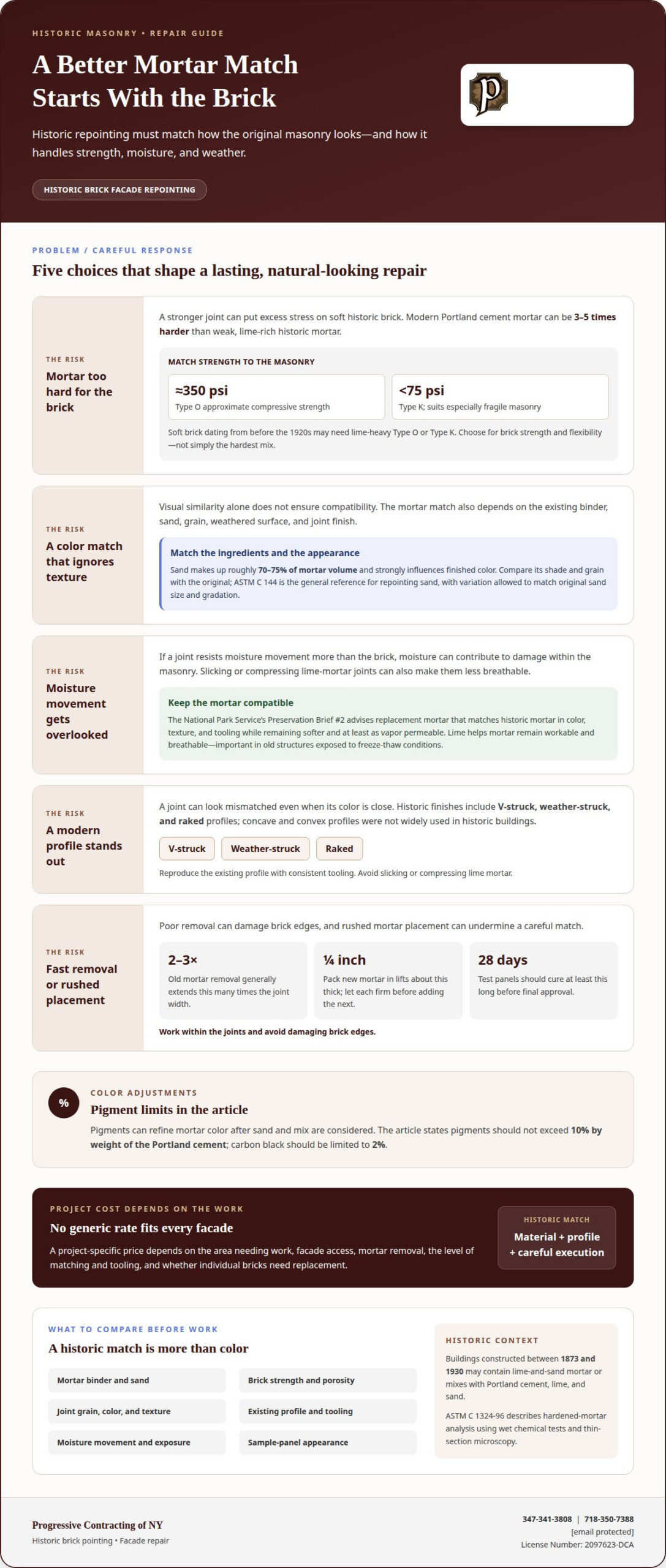
For soft historic brick, select mortar with strength and flexibility suited to the masonry, rather than simply choosing the hardest mix. Type O mortar has approximate compressive strength of 350 psi; Type K is below 75 psi and suits especially fragile masonry. Soft brick dating from before the 1920s may need lime-heavy Type O or Type K. A compatible mix helps prevent stronger joints from placing excess stress on brick faces.
Risks of Portland Cement Mortar
Modern Portland cement mortar can be three to five times harder than weak, lime-rich historic mortar. If a joint resists moisture movement more than the brick does, moisture can contribute to damage within the masonry. Lime helps mortar remain workable and breathable, qualities that matter in old structures exposed to freeze-thaw conditions. The mortar should match the original joint’s texture, not just its color.
Repointing Standards and Approval
The National Park Service’s Preservation Brief #2 advises matching replacement mortar to historic mortar in color, texture, and tooling, while keeping it softer and at least as vapor permeable. To remove old mortar, work within the joints and avoid damaging brick edges; removal generally extends two to three times the joint width. Pack new mortar in lifts about 1/4 inch thick, allowing each lift to firm before adding the next. Test panels should cure at least 28 days before final approval. Historic masonry experience includes analyzing mortar and reproducing its profile; preservation approval and code requirements depend on the building and project scope.
How much does brick repointing cost?
Repointing cost depends on the area needing work, facade access, mortar removal, and the level of matching required. The quote also accounts for whether individual bricks need replacement and how much joint tooling the restoration involves. A project-specific price is based on these conditions, not a generic rate.
Replacement brick should match surrounding units in color, texture, size, and porosity. A brick that looks similar but absorbs moisture differently can behave differently as the weather changes. Match the existing pattern and surface, too: differences between old and replacement units can make repairs stand out and contribute to deterioration.
For mortar joints, sand has a strong influence on finished color because it makes up roughly 70–75% of mortar volume. Compare sand grain and shade with the original, then adjust the mortar mix carefully. Pigments can refine the color; they should not exceed 10 per cent by weight of the Portland cement, while carbon black should be limited to 2 per cent.
Joint shape affects texture as much as color. Historic profiles include V-struck, weather-struck, and raked finishes; concave and convex profiles were not widely used in historic buildings. Reproduce the existing profile with consistent tooling, rather than slicking or compressing lime mortar. For historic brick pointing and facade restoration, matching materials and joint finish helps repairs sit more naturally within the original masonry.
Compatibility with historic brick
For brick facade repointing for historic texture matching, compatibility means the new mortar suits the brick’s strength, moisture movement, and exposure to weather. A historic building needs more than a close visual match: replacement material can look right yet behave differently from the original. The goal is to balance appearance with the way the masonry manages moisture and seasonal changes, so repairs support the wall rather than create a mismatched surface.
Sand affects both a joint’s character and the mortar mix’s performance. ASTM C 144 is the general reference for repointing sand, with variation allowed to match original sand size and gradation. Matching those grains helps retain the historic joint’s appearance. A sample panel shows whether color and texture sit naturally against the brick before work proceeds across the facade.
Surface treatment matters, too. Slicking or compressing lime-mortar joints makes them less breathable and changes moisture movement. That can affect durability and the surrounding brick. A brick facade repointing for historic texture matching project should reproduce the existing joint profile rather than default to a modern finish.
Historic preservation depends on the relationship between brick and mortar, not either material alone. Trinity Church in New York City used a lime-based mortar mix similar to its original during restoration. The example shows why understanding existing masonry matters: compatible repairs respect original materials and maintain a consistent appearance across old and repaired areas.
Progressive Contracting NY: Brick Pointing
Progressive Contracting NY Corp provides brick pointing for facades where worn mortar joints need repair while the historic brick remains in place. This is a practical next step when open, deteriorated joints or mismatched repairs affect the facade’s appearance. The mortar and joint finish should suit the existing masonry rather than create a noticeably different texture.
For a broader exterior project, related services include historic brownstone renovation and brownstone facade renovation. Focused pointing may suit localized joint deterioration, while wider facade repairs can address several areas together. The right scope depends on the masonry’s condition and the repairs needed.
To discuss brick pointing or historic facade work, contact Progressive Contracting NY Corp at 347-341-3808 or 718-350-7388, email ProgressiveContractingNY@yahoo.com, or note License Number 2097623-DCA.
Plan the Next Step for Your Historic Facade
Preserving a historic facade starts with treating each repair as part of the building’s ongoing care. Before work begins, define which areas need attention and how the finished masonry should relate to the original. This gives the project a clear visual direction and helps keep its scope focused. Thoughtful brick facade repointing for historic texture matching can support a cohesive result while respecting the property’s character.
Progressive Contracting NY Corp provides brownstone facade renovation, Rammstein stoop restoration, and brownstone facade restoration for related exterior work in Brooklyn and Manhattan. Choose a scope that fits the property’s needs, whether repairs center on mortar joints or extend to other facade features. A clear plan helps align the work with the building’s overall appearance and preservation goals.
A considered repair is a practical step toward caring for your building’s character for years to come.
Frequently Asked Questions
How long does mortar last between repointing?
High-quality mortar with the right type and proper joint preparation typically lasts 25 to 50 years before repointing is needed. Exposure and water entry influence how joints age. In Brooklyn and Manhattan, watch for open joints, loose mortar, or brick-face damage as signs that the facade needs attention, rather than relying on age alone.
What are the different types of mortar?
Common ASTM mortar types include M, S, N, O, and K, with different compressive strengths and uses. Approximate strengths are 2,500 psi for Type M, 1,800 psi for Type S, 750 psi for Type N, 350 psi for Type O, and below 75 psi for Type K. Mortar can also use lime, Portland cement, and sand in different proportions.
What happens if the wrong mortar type is used?
An incompatible mix can transfer stress to historic brick or change how moisture moves through the wall. For example, unusually hard joints beside softer brick can leave the brick more vulnerable to surface damage. Watch for cracking along joint edges, flaking brick surfaces, or recurring deterioration around a repair. These patterns can indicate that the repair materials or installation need assessment.
How do you identify the original mortar composition, color, and joint profile?
Compare sheltered, less-weathered joints with exposed areas, since sun and rain can change the visible color. Mortar analysis identifies binder and sand characteristics, while close examination reveals grain size and joint shape. A V-struck, weather-struck, or raked profile creates a different visual line, so the sample should reflect both the material and tooling details.
Which mortar types and mixes are appropriate for historic brick repointing?
Soft or fragile historic brick often calls for lower-strength, lime-rich Type O or Type K mortar. The suitable mix depends on the original mortar and brick, not simply the building’s age. A proposed sample helps compare color and texture with the existing work; the final choice should preserve compatibility across the wall, including repaired areas and untouched joints.