
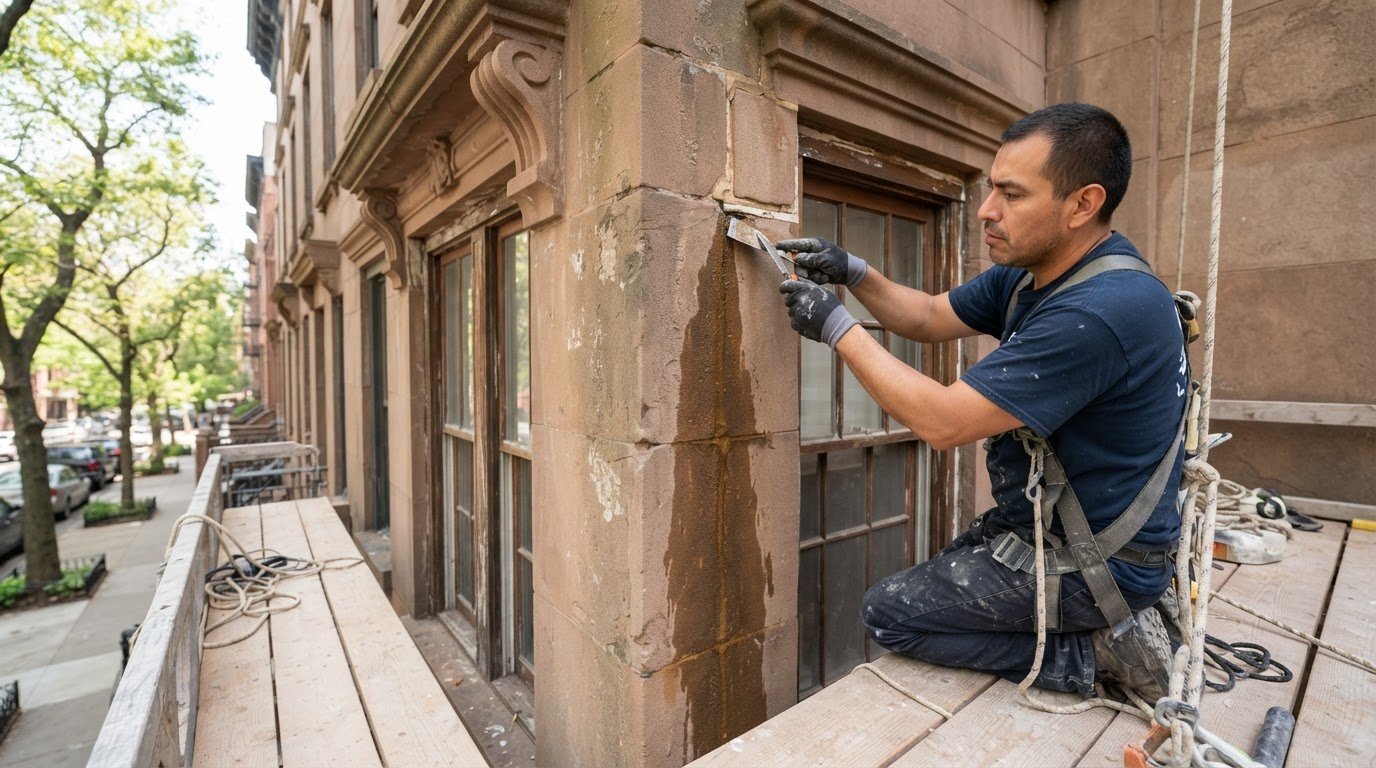
Water intrusion can continue damaging a historic brownstone even after its facade appears patched. Effective facade restoration planning starts by tracing moisture to its entry points, then matching repairs to the building’s materials and condition. A thorough facade restoration process addresses the source of the problem, not just visible stains.
Cracks, failing sealant, and leaks around windows or doors can signal water behind the surface. This guide explains how façade work can address moisture and repair or restore brownstone, masonry, stucco, stone, marble, brick, and granite. You’ll also learn how repointing and targeted repairs fit into the work, and why material-matched methods matter on historic buildings. Understanding the process can help you make informed decisions about preserving a building’s character and planning its next repairs.
Table of Contents
Can you address water intrusion as part of façade restoration (not just patch the surface)?
Yes. Effective work traces moisture to its entry points instead of covering stains. An inspection can include cracks, failing sealants, windows, doors, roof edges, and drainage paths. The findings guide repairs to the building envelope. Through-wall flashing can help limit water penetration, steel corrosion, and masonry failure. A sound facade restoration plan connects visible damage with likely moisture paths.
Restoration repairs and preserves existing building materials; renovation may update or alter features while retaining selected historic elements. Either approach can include roof and facade work, depending on the building’s condition and preservation goals.
Historic preservation protects a building’s aesthetic, colors, textures, and character. The Standards for the Treatment of Historic Properties are codified in 36 C.F.R. 68 for grant-in-aid projects assisted through the National Historic Preservation Fund. Under those standards, rehabilitation can replace deteriorated features when replacements match original color, texture, design, and materials if possible. The U.S. Congress instituted the National Historic Preservation Act in 1966 to support public use of historic structures and preserve national heritage. Code-required work can include sensitive, limited electrical, plumbing, and mechanical upgrades.
A restoration project moves from inspection to diagnosis, repair planning, and material-matched work. A qualified contractor should explain the findings, proposed repairs, and how the plan preserves historic details. For a brownstone, brownstone facade restoration should account for the masonry and existing finish. Clear documentation also helps track maintenance and guide future repairs.
Water penetration can weaken the structure and increase the risk of falling debris or facade failure. Work planning should account for loose materials and protect people near the building. Restoration costs depend on materials, deterioration, access, and repair scope. A facade restoration restoration assessment ties these factors to the specific building and helps define the work required.
Masonry repair, repointing, and stucco patching
Facade restoration can include repairs to masonry, stucco, concrete, and other exterior materials. The scope depends on visible damage and the condition of each material.
Masonry and Concrete Repairs
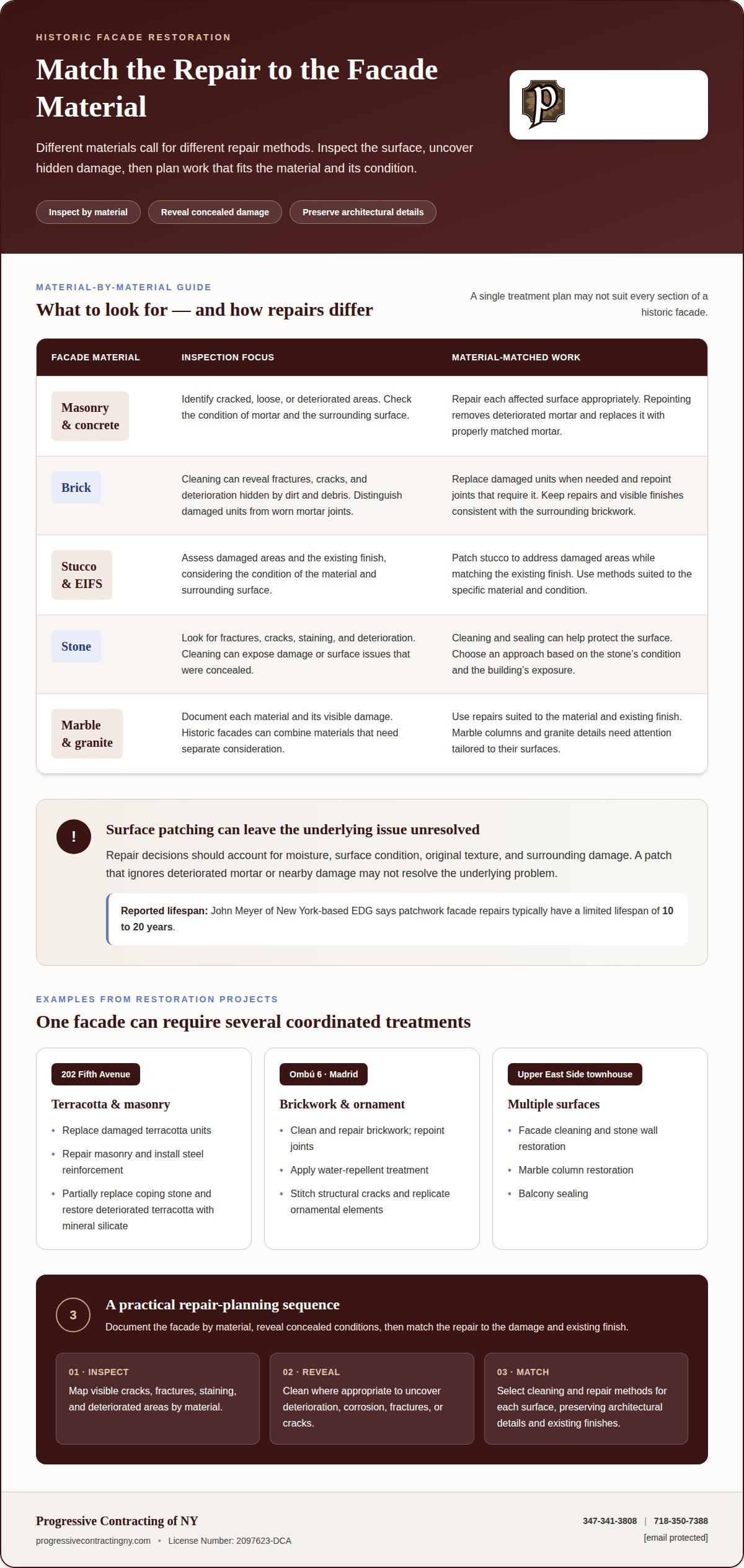
Start by identifying cracked, loose, or deteriorated masonry and concrete, then match each repair to the affected surface. Repointing involves removing deteriorated mortar and replacing it with properly matched mortar. This helps maintain the appearance of the joints alongside the surrounding brickwork. For stucco, patching should address damaged areas while matching the existing finish. EIFS, stucco, masonry, and concrete each require methods suited to their material and condition.
Brick and Stone Restoration
Brick, stone, and masonry repairs should preserve the exterior’s architectural details. Cleaning can reveal fractures, cracks, or deterioration hidden by dirt and debris. The repair plan can then distinguish between damaged units that need replacement and mortar joints that need repointing. For stone, cleaning and sealing can help protect the surface from future damage. These steps keep material choices and visible finishes consistent across the facade.
Repair decisions should account for moisture, surface condition, and the original texture. A patch that ignores deteriorated mortar or surrounding damage may leave the underlying problem unresolved. For a brownstone, brownstone masonry repairs can address damaged masonry as part of facade work, with repairs tailored to the affected material.
John Meyer of New York-based EDG says patchwork facade repairs typically have a limited lifespan of 10 to 20 years. The 202 Fifth Avenue facade restoration includes replacing damaged terracotta units, masonry repairs, and steel reinforcement installation.
The 202 Fifth Avenue project includes partial coping stone replacement and restoration of deteriorated terracotta with mineral silicate. The Ombú 6 restoration in Madrid used brickwork cleaning and repairs, pointing, water-repellent treatment, structural crack stitching, and replicas of ornamental elements.
Restoration of stone, marble, brick, and granite facades
A comprehensive restoration plan starts by identifying each facade material and documenting visible damage. Dust and debris can conceal deterioration, corrosion, fractures, and cracks, so cleaning helps reveal the actual condition. Stone, marble, brick, and granite need repairs suited to their surfaces and existing finishes. Because historic buildings often combine materials, one treatment plan may not suit every section of the facade.
For stone, restoration can include cleaning and sealing to help protect against future damage. Cleaning can remove contaminants, efflorescence, pollution stains, and biological growth. Protective treatments can help extend a facade’s lifespan. The right approach depends on the stone’s condition and the building’s exposure, not simply its color or appearance.
Marble columns and granite details need attention suited to their materials, while brickwork may require localized repairs or renewed mortar joints. The Upper East Side townhouse maintenance project included facade cleaning, stone wall restoration, marble column restoration, and balcony sealing. It shows how one building can need several coordinated treatments rather than a single general surface repair.
Before work begins, the restoration team should map cracks, fractures, staining, and deteriorated areas by material. Then the plan can match cleaning and repair methods to each section. Maintenance should reflect the building’s size, materials, geographic location, and damage. This protects architectural details while addressing defects that cleaning alone cannot resolve.
Progressive Contracting NY
Progressive Contracting NY Corp. helps property owners in Brooklyn and Manhattan address historic brownstone facade damage through renovation and restoration. Turn to the company when cracks, deteriorated masonry, or water intrusion call for a considered repair plan that respects the building’s materials and character. Services also include brownstone stoop restoration and brick pointing.
For a project, share the building’s location, the visible damage, and any areas where moisture has appeared. This gives the team a clear starting point for discussing the work involved. Contact Progressive Contracting NY Corp. at 347-341-3808 or 718-350-7388, or email ProgressiveContractingNY@yahoo.com.
Plan the next phase of preservation
For a historic property, facade restoration planning can set a clear direction for future maintenance. Keep a record of completed work and new observations so decisions stay connected to the building’s condition. This context helps shape a practical restoration plan over time.
When you’re ready to discuss brownstone facade renovation or restoration in Brooklyn or Manhattan, contact Progressive Contracting NY Corp for a free consultation. Talk through your building and the areas you want addressed.
A considered next step helps keep preservation moving forward.
Frequently Asked Questions
How long does a typical façade repair project take?
Project duration depends on the repair scope, facade materials, and how much deterioration the work reveals. Repointing a limited area of brick joints involves a different sequence from repairing several materials across an entire elevation. Access and coordination between cleaning, masonry repairs, and finishing also affect the schedule. A defined scope helps establish a realistic project timeline.
How often should I have my building’s façade inspected?
Plan inspections as part of ongoing building maintenance, with timing guided by the facade’s materials, location, and observed condition. Arrange an assessment when new cracking, loose material, staining, or moisture appears, rather than waiting for the next routine review. Keeping inspection findings and past repair records together helps reveal whether damage is recurring or changing over time.
How do contractors inspect and assess a building facade?
A facade assessment examines visible surfaces and details around openings, roof edges, and drainage paths. It looks for cracking, warping, shifting, loose components, leaks, and sealant failure, then records where each condition appears. The assessment also considers whether a visible finish defect points to a deeper masonry or moisture concern. Organized findings help define the repair scope.
What materials and methods are used to restore brick, stone, concrete, and stucco facades?
Methods depend on the material and type of damage. Brickwork may need deteriorated mortar removed and replaced, while stone can require cleaning and protective sealing. Stucco repairs should suit the existing finish, and concrete work should address the damaged area without treating unrelated surfaces as identical. Material-specific choices help maintain a consistent exterior appearance.
What permits, building codes, and historic preservation rules apply to facade restoration in the United States?
Applicable permits and code requirements depend on the project and its jurisdiction. The Standards for the Treatment of Historic Properties are codified in 36 C.F.R. 68 for grant-in-aid projects assisted through the National Historic Preservation Fund. Those standards allow sensitive, limited code-required upgrades to electrical, plumbing, and mechanical systems. Rehabilitation replacements should match original color, texture, design, and materials if possible.