
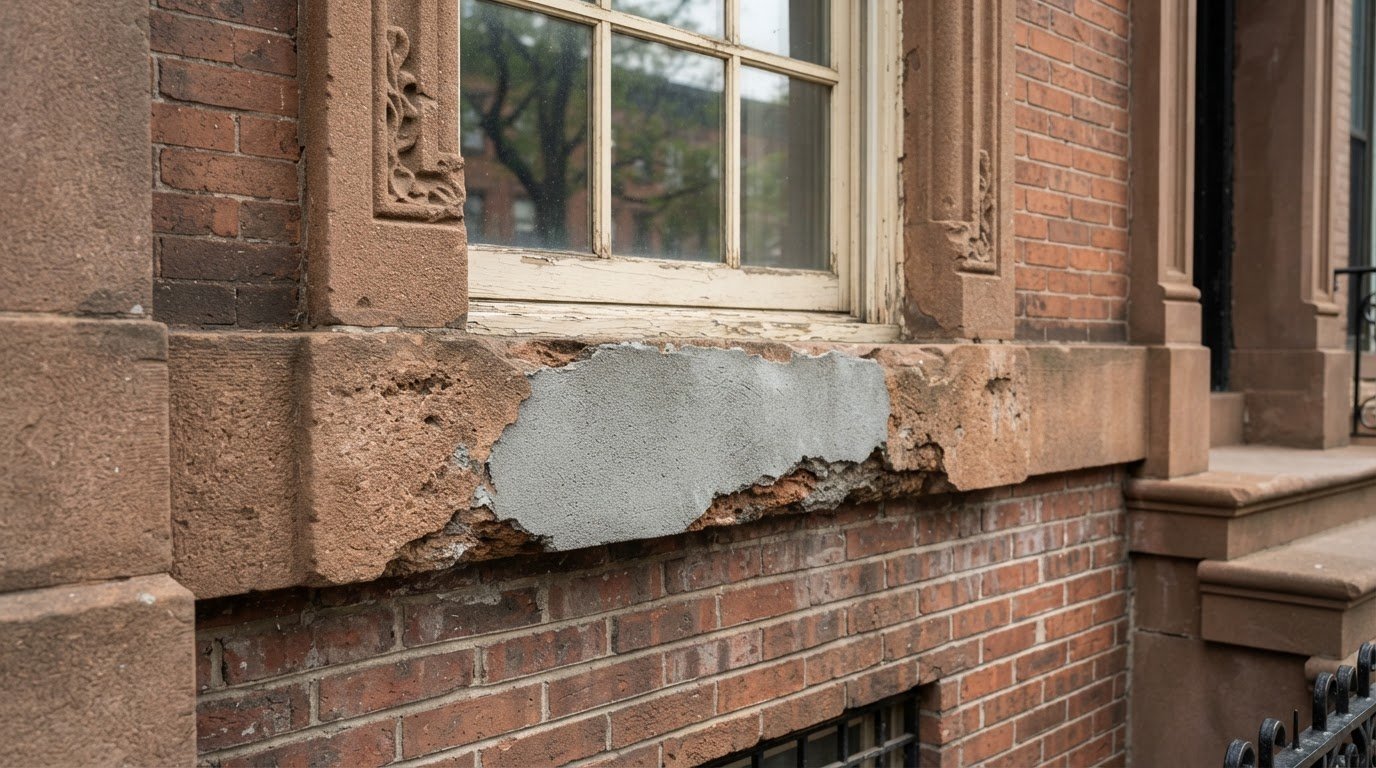
Can you remove unauthorized work yourself after receiving a NYC landmark violation warning letter for facade repair in Brooklyn? Don’t begin corrective work until the Landmarks Preservation Commission has issued a permit. Most recipients have 20 business days to file an application addressing the violation without a penalty.
It’s understandable to want to fix a problem quickly, especially when a notice describes visible damage or changes to historic masonry. But removing or rebuilding work without approval can make compliance more complicated. This article explains what an NYC landmark violation warning letter means for facade repair in Brooklyn, how the notice and possible enforcement fit into the process, and why landmark-sensitive repairs matter for damaged brownstone or brickwork. You’ll also learn how to connect the cited condition with an appropriate repair scope.
Table of Contents
What Is a Landmark Violation?
An NYC Landmarks Preservation Commission (LPC) violation concerns work done without required approval or a condition that conflicts with landmark protections. In Brooklyn landmark districts, preservation approval and building safety requirements are separate considerations, and both may affect how an owner responds.
LPC Violation Triggers
An LPC violation can follow exterior changes to a landmarked building made without commission permission, even when the work seems minor. Examples include masonry or facade details that differ from the approved historic appearance. Exterior facade repairs in a Brooklyn landmark district generally require LPC permission before work begins. The notice identifies the alleged issue and the property, helping clarify what compliance requires.
Stop-Work Orders and Warning Letters
An LPC stop-work order directs work to stop when the commission chair reasonably believes it violates landmarks laws. It may be given orally or in writing, and must identify the premises and describe the alleged work or condition. If given orally, written notice must be mailed or affixed within 48 hours. A warning letter describes issues and corrective options; most recipients have 20 business days to file an application without a penalty. Missing the response period can lead to further enforcement action.
LPC and DOB Facade Violations
An LPC violation addresses preservation approval, while a New York City Department of Buildings (DOB) facade violation concerns building safety or code requirements. They can involve the same facade but arise from different regulatory concerns. For example, unauthorized historic masonry changes may prompt LPC action, while a facade safety concern may involve DOB. The DOB also requires annual observation of parapets facing public streets or sidewalks under Local Law 126.
Responding to a Warning Letter
A qualified facade professional can document the condition, define a repair scope, and support an application within the 20-business-day period. Provide the professional with the warning letter, violation number, prior permits or plans, and dated photos showing the affected facade and surrounding details. To verify a notice, use the LPC violation search with its VIO-XX-XXXX format; its online search is not a substitute for title review. Corrective work must wait for an LPC permit, and permitted work must be followed by a request for a Notice of Compliance.
Violations, warning letters, and fines
New York City landmark enforcement can involve warning letters, summonses, administrative hearings, and court proceedings. The consequences depend on the alleged violation, the response, and whether the owner follows any orders.
Potential Fines and Penalties
For unauthorized facade work, penalties can include civil fines and an appearance before the Office of Administrative Trials and Hearings (OATH). An OATH judge can impose up to $5,000 if a respondent fails to appear or is found guilty. A notice of violation also serves as presumptive evidence of the matters it states in landmarks enforcement proceedings.
The notice’s description matters because it identifies the alleged conduct that a hearing may address. Warning letters and summonses are available through a Records Access Request and the Department of Buildings’ Building Information System. An active Landmarks Preservation Commission violation can also hold up Department of Buildings permits for the property, affecting later construction work.
Daily Fines and Repair Orders
Ignoring an NYC Landmarks warning letter can lead to fines of $5,000 per day or more. These are distinct enforcement consequences, so owners should identify whether a notice concerns unauthorized work, an order to stop, or both.
Under New York City Administrative Code § 25-317.2, the corporation counsel may bring court proceedings to restrain or correct a violation, compel compliance with a stop-work order, or seek civil penalties. A court-ordered repair or correction addresses the cited condition; it does not replace required LPC approval. For a historic facade, the response must therefore address both the enforcement order and the work needed to achieve compliance.
Brooklyn landmark facade repair examples
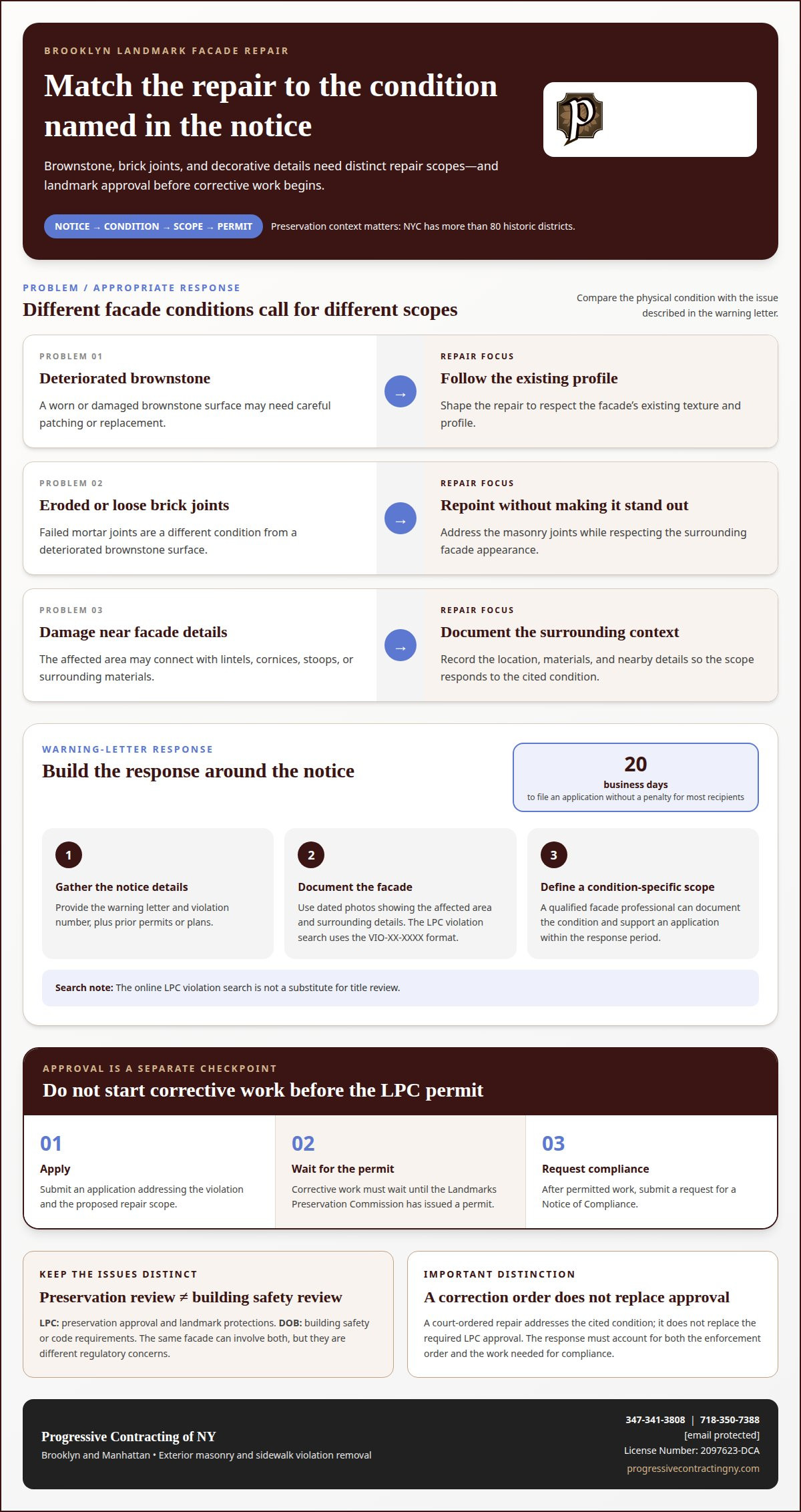
Brooklyn landmark facade repairs need to address the visible defect while respecting the building’s historic appearance. For example, deteriorated brownstone may need careful patching or replacement that follows the facade’s existing texture and profile. Eroded or loose brick joints call for a different approach: the repointing should address the masonry without making the repaired area stand out. For an NYC landmark violation warning letter about facade repair in Brooklyn, compare the physical condition with the issue identified in the notice.
A professional assessment can separate surface deterioration from broader facade damage. The review may document the affected location, surrounding materials, and details such as lintels, cornices, or stoop connections. Dated photographs and a clear scope help show how proposed work responds to the cited condition. In New York City, more than 80 historic districts make preservation context relevant; a repair approach suitable for one facade may not fit another building’s design.
Choose an architect or contractor with demonstrated experience in historic masonry and Brooklyn landmark properties. Review examples of comparable materials and facade details, and look for a written scope that identifies affected areas and repair methods. For an NYC landmark violation warning letter involving facade repair in Brooklyn, the proposed work should address the cited condition and respect the property’s preservation context.
The practical takeaway is to match the repair plan to the exact condition named in the notice. A brownstone surface repair, failed brick joints, and damaged decorative elements call for distinct scopes, even on the same street. Discuss Brooklyn landmark facade repair
Progressive Contracting NY: Sidewalk violation removal
Progressive Contracting NY Corp. provides sidewalk violation removal and exterior masonry work for properties in Brooklyn and Manhattan. The company can address a sidewalk notice concerning damaged or noncompliant pavement, as well as repair needs involving historic facade or stoop masonry. These are distinct issues: sidewalk violation removal addresses the sidewalk condition, while an LPC facade violation requires the appropriate preservation review and approval.
For brownstone properties, the related work includes brownstone facade renovation, Rammstein stoop restoration, and brownstone contracting. The scope depends on the affected area and the condition described in the notice. Sharing the notice and relevant property details helps clarify which repair service fits the work. Contact Progressive Contracting NY Corp. by calling 347-341-3808 or 718-350-7388, or emailing ProgressiveContractingNY@yahoo.com.
Move From Notice to a Clear Repair Plan
For a Brooklyn property facing an NYC landmark violation warning letter, facade repair should address both the building’s condition and its historic character. Start by connecting the cited issue with a practical scope of work, rather than applying a generic fix. Progressive Contracting of NY provides brownstone facade renovation, Rammstein stoop restoration, and brownstone facade restoration for exterior masonry needs in Brooklyn and Manhattan. These services address physical facade and stoop conditions; preservation approvals remain a separate part of the compliance process. A clear repair plan keeps the work focused on the affected areas.
Once the repair scope is clear, you can move forward with greater confidence and care for the building.
Frequently Asked Questions
Can a qualified professional remove or modify unauthorized work safely?
A qualified facade professional can assess the condition and plan work that follows the approved scope. Don’t remove or modify unauthorized work to address the violation before receiving an LPC permit. Removing altered masonry, for example, may change the facade further, while an approved repair may require specific materials or detailing. The professional’s role is to document the condition and carry out permitted work, not bypass preservation review.
What happens if I ignore a Warning Letter?
Ignoring the letter can move the matter toward a summons and further enforcement. A landmark violation may also complicate refinancing or sale because it can appear in violation title searches. Keep the notice with the property records and note any response period stated in it. If work is ongoing, an active stop-work order creates a separate compliance concern.
What if the violation existed before I bought the property?
Work done by a prior owner can still affect the property after a sale. The violation remains active against the property until corrected, even if it was issued to a specific owner or respondent. When purchasing a property, review available violation records alongside other due diligence materials. The LPC’s online violation search can help identify records, but it does not replace a title search.
What is an NYC landmark violation warning letter for a building facade?
A warning letter from the Landmarks Preservation Commission describes work or a condition that may violate landmark protections and explains how to address it. For a facade, the issue could be an exterior change made without approval or a repair that differs from permitted work. Read the property identification and alleged condition carefully: they frame the response and repair scope.
What happens if a landmark facade violation is not corrected or appealed?
The matter may proceed to a summons, an OATH hearing, or court enforcement. A judge may impose a fine if the respondent fails to appear or is found guilty, and an active violation can hold up Department of Buildings permits. Court proceedings may seek correction of the condition or compliance with an order. Keep hearing notices and related records with the violation file.