
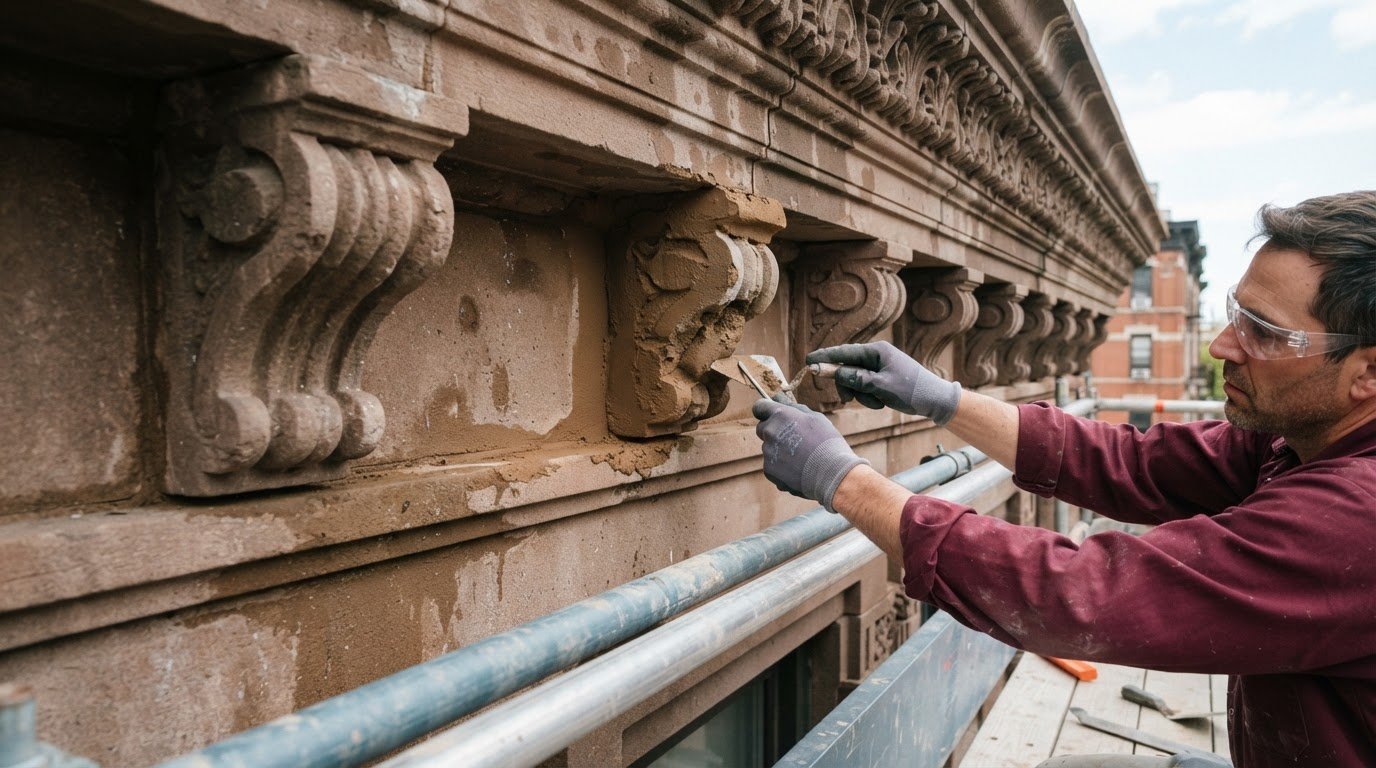
A fresh coat of paint can hide damage to a modillion bracket, but it won’t restore deteriorated material or fix the underlying cause. When repairing damaged brownstone modillion brackets in Manhattan, the bracket’s condition and the source of the damage should guide the repair before any finish is applied.
It’s natural to want a straightforward fix that preserves the building’s appearance. A professional assessment helps determine how extensive the damage is, whether moisture or earlier repairs contributed, and whether the bracket can be repaired or needs more extensive work. Experience with historic masonry also helps keep the repair in line with the brownstone’s original details.
Table of Contents
Brownstone cornice materials and condition assessment
Manhattan cornices may combine sheet metal, wood, masonry, and fiberglass. Knowing how a cornice is constructed helps professionals assess bracket damage and plan an appropriate restoration.
Deterioration and Safety Warning Signs
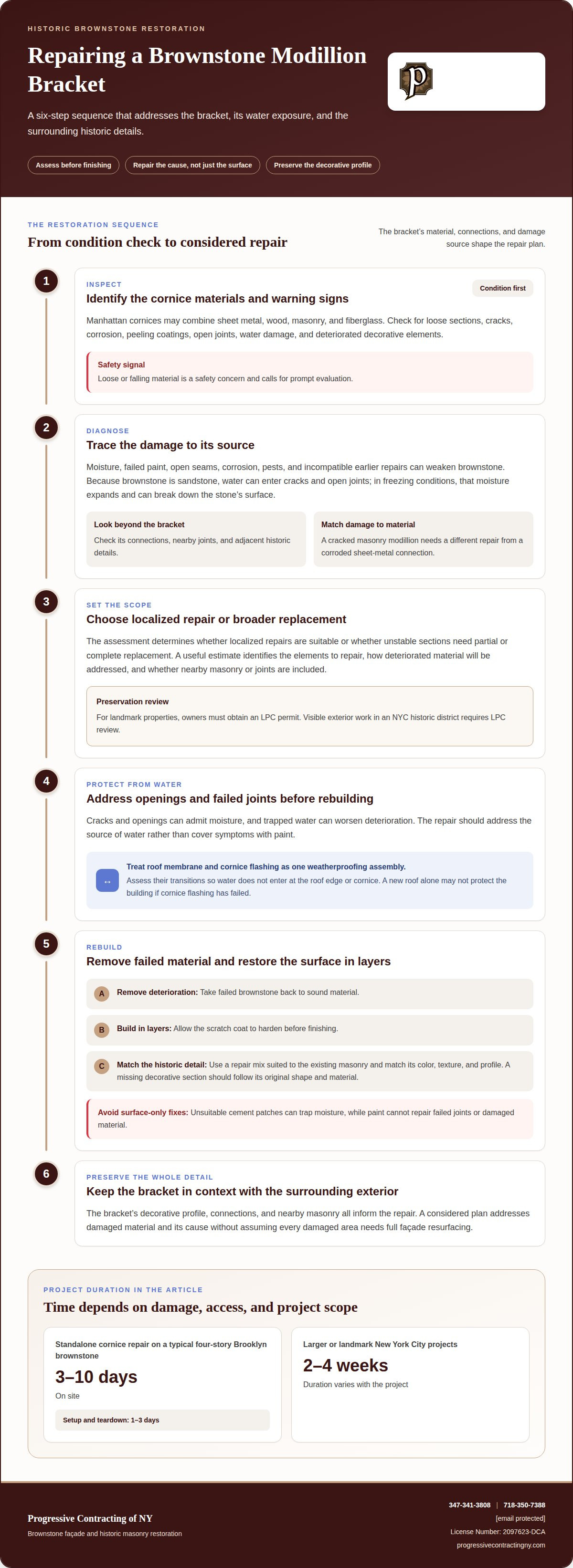
An assessment checks for loose sections, cracks, corrosion, peeling coatings, open joints, water damage, and deteriorated decorative elements. A cracked masonry modillion needs a different repair from a corroded sheet-metal connection. Loose or falling material is a safety concern and calls for prompt evaluation. Professionals also determine whether localized repairs are suitable or whether unstable sections need partial or complete replacement.
Paint can cover peeling or discolored areas, but it won’t repair failed joints or damaged material. Openings may let moisture into the cornice assembly and surrounding façade. The bracket’s condition, its connections, and adjacent historic details all inform the repair plan.
Bracket Maintenance and Water Protection
A durable bracket repair addresses water entry and failed joints before rebuilding damaged brownstone. Cracks and openings around the cornice can admit moisture, and trapped water can worsen deterioration. The work should preserve the bracket’s decorative profile and address the source of water, rather than simply covering symptoms with paint.
Roof membrane installation and cornice flashing must work as one weatherproofing assembly. Professionals assess their transitions so water does not enter at the roof edge or cornice. A new roof alone may not protect the building if cornice flashing has failed. For related brownstone restoration, the surrounding façade and cornice conditions help shape the repair approach.
Brownstone deterioration from moisture and freeze-thaw cycles
Moisture, failed paint, open seams, corrosion, pests, and incompatible earlier repairs can all weaken a brownstone façade. A sound repair plan addresses both the damage and its cause instead of covering deterioration with a surface patch.
For landmark properties, owners must obtain an LPC permit, according to the New York City Landmarks Preservation Commission. Building-code, façade-inspection, and sidewalk-shed requirements depend on the property and scope of work. Loose or falling material needs prompt evaluation.
Moisture and Freeze-Thaw Damage
Brownstone is sandstone, so water can penetrate cracks and open joints. In freezing conditions, moisture expands and can break down the stone’s surface. On a Brooklyn brownstone, failed paint or corrosion around metal details may create openings that let water reach brackets and nearby masonry. Earlier repairs that separate from the original surface can expose vulnerable areas, too. Identifying where water enters is essential before rebuilding deteriorated elements.
Brownstone Facade Repair
Professionals remove failed brownstone back to sound material, then rebuild the surface in layers, allowing the scratch coat to harden before finishing. The repair mix should suit the existing masonry and match its color, texture, and profile. If a decorative section is missing, its original shape and material guide the recreation. Unsuitable cement patches can trap moisture and contribute to further damage, so a surface patch alone may conceal rather than solve the problem.
Repair duration depends on damage, access, and project scope. A standalone cornice repair on a typical four-story Brooklyn brownstone takes 3-10 days on site, with 1-3 days for setup and teardown. Larger or landmark New York City projects can take 2-4 weeks.
Choosing a contractor experienced in historic masonry
Historic masonry repair involves more than matching the brownstone’s color. The approach must account for the bracket’s material, decorative profile, connections, and surrounding exterior. When repairing damaged brownstone modillion brackets in Manhattan, this knowledge helps ensure the work suits the building.
A sound assessment identifies what failed and why. For example, a professional distinguishes a damaged stone bracket from a corroded metal support or a nearby open joint. The plan should address water entry and damaged material before selecting a patch or replacement. If a decorative element is missing, its original shape and adjacent details guide the replacement profile. This helps preserve the building’s character without assuming that every damaged area needs full façade resurfacing.
A useful estimate specifies which elements need repair, how deteriorated material will be addressed, and whether nearby masonry or joints are included. It should distinguish localized repairs from broader restoration. For repairing damaged brownstone modillion brackets in Manhattan, these details help property owners understand why the proposed method suits the building’s condition.
Historic-district projects require attention to preservation review as well as masonry construction. Visible exterior work in an NYC historic district requires LPC review. A contractor experienced with historic properties can account for that review while planning work that respects the building’s decorative details. Choose a repair based on the material and cause of damage, not paint or a generic surface patch.
Progressive Contracting NY
Progressive Contracting NY Corp. helps Manhattan property owners address damaged brownstone details through brownstone repair and façade renovation. When modillion brackets show cracks, missing material, or signs of water entry, the plan should consider the bracket, its decorative profile, and the surrounding masonry together.
The right approach to a historic exterior starts with the material’s condition and the cause of deterioration. Progressive Contracting NY Corp. provides brownstone restoration suited to the existing façade, with care to preserve its character while repairing damaged areas. This is a practical next step when paint alone won’t resolve the underlying problem.
Plan the Next Step for Your Brownstone
Repairing damaged brownstone modillion brackets in Manhattan starts with a project scope based on the building’s condition and historic details. A professional assessment can clarify whether the work should focus on the bracket or include nearby exterior masonry. This gives property owners a practical basis for moving from visible damage to a considered restoration plan.
Progressive Contracting of NY provides brownstone façade renovation, brownstone façade restoration, and Rammstein stoop restoration. These services address historic brownstone exteriors and related masonry features. If bracket deterioration raises questions about the broader façade, a free consultation is a practical next step. Discuss the intended finish, affected elements, and how the repairs relate to the surrounding façade.
A clear scope helps you understand the work and plan the next steps with confidence.
Frequently Asked Questions
Can I just have it painted instead of properly repaired?
No. Paint can improve a bracket’s appearance, but it can’t secure loose material or restore lost brownstone. According to Progressive Contracting NY Corp, untreated rust or rot can reappear through paint after 18 months when a cornice is painted without proper repair. The underlying damage needs attention first, so the finish doesn’t conceal an unresolved problem.
How are damaged brownstone modillion brackets repaired?
Before choosing a repair, a professional assesses the bracket’s construction, damage, and connection to nearby cornice elements. A chipped edge may need only a localized repair, while a missing decorative detail calls for recreating its original shape. The finished profile and color should relate to neighboring features so the repaired bracket fits naturally into the façade.
What causes brownstone modillion brackets to crack or deteriorate?
Moisture, freeze-thaw cycles, failed paint, corrosion, open seams, age, pests, and earlier repairs separating from the original surface can all contribute to deterioration. These issues may interact: failed coatings or open seams expose masonry to water, while corrosion can affect nearby materials. Identifying the contributing conditions helps define a repair that addresses more than the visible crack.
Can damaged brownstone brackets be repaired in place or must they be replaced?
Localized damage may be repairable in place if the bracket and surrounding section remain stable. Extensive deterioration or unstable sections may require partial or complete replacement. The decision depends on the damage, the bracket’s condition, and the surrounding façade. A chipped decorative edge or small area of deterioration does not automatically mean replacement is needed.
What materials and techniques are used to repair historic brownstone brackets?
Repair materials should suit the existing masonry and match its surface texture. A compatible finish may use cement and brownstone matched to the building’s tone and profile. The cornice’s construction matters, too: sheet metal, wood, masonry, fiberglass, or combinations of these materials each call for a suitable approach. Matching the original detail helps the repair blend with the historic façade.