
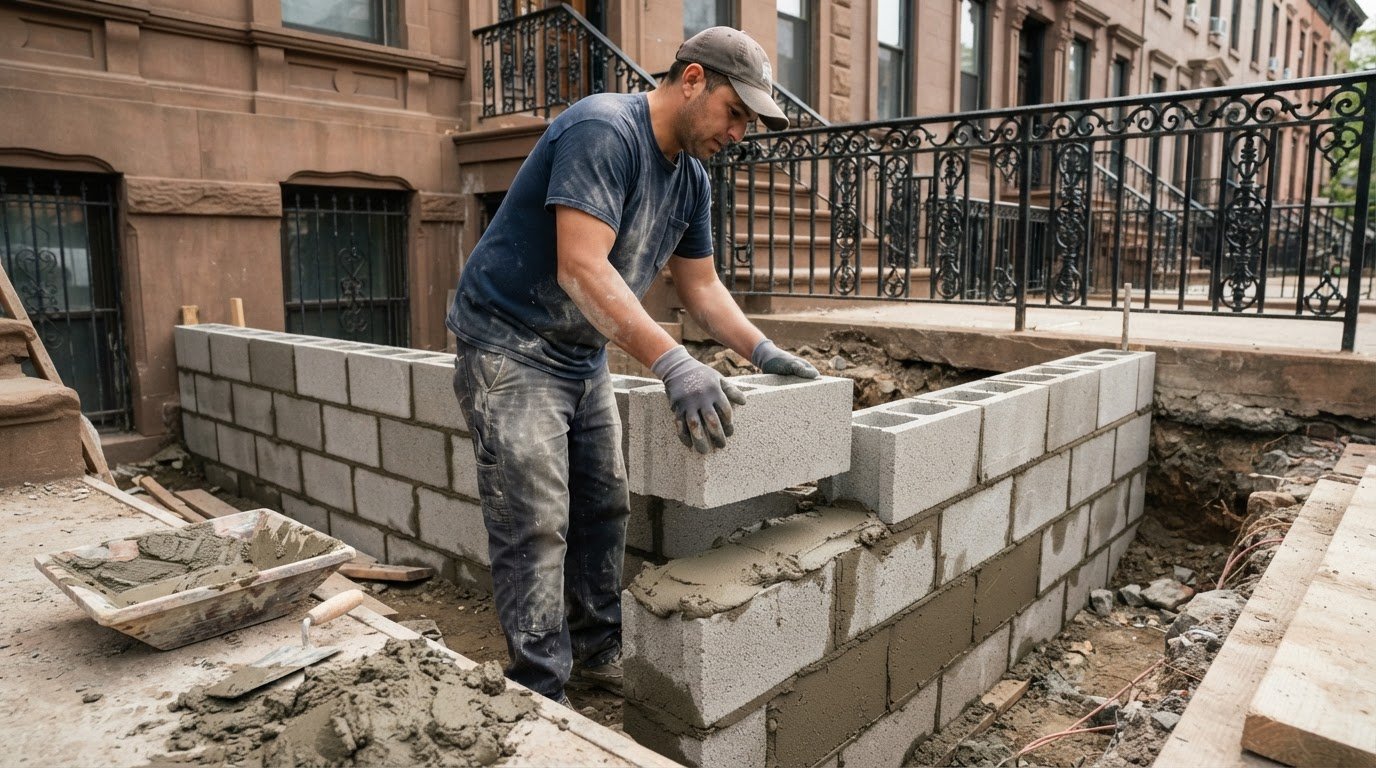
Concrete block can be durable and adaptable, but its weight and handling needs matter. Masonry construction builds walls and other structures from individual units bonded with mortar; common choices include brick, stone, and concrete block.
Material selection affects more than appearance. Brick units are relatively light and uniform, stone is durable but requires skilled work, and concrete blocks can provide insulation when the wall is properly designed and drained. Each material has practical strengths and limitations, so the right choice depends on the building, its condition, and the desired finish.
This guide explains how the main types of masonry differ, which materials are commonly used, and where concrete block performs well or involves trade-offs. It also covers common construction methods and the factors to consider when planning masonry work, including restoration of historic façades in Brooklyn and Manhattan.
Table of Contents
Common masonry materials
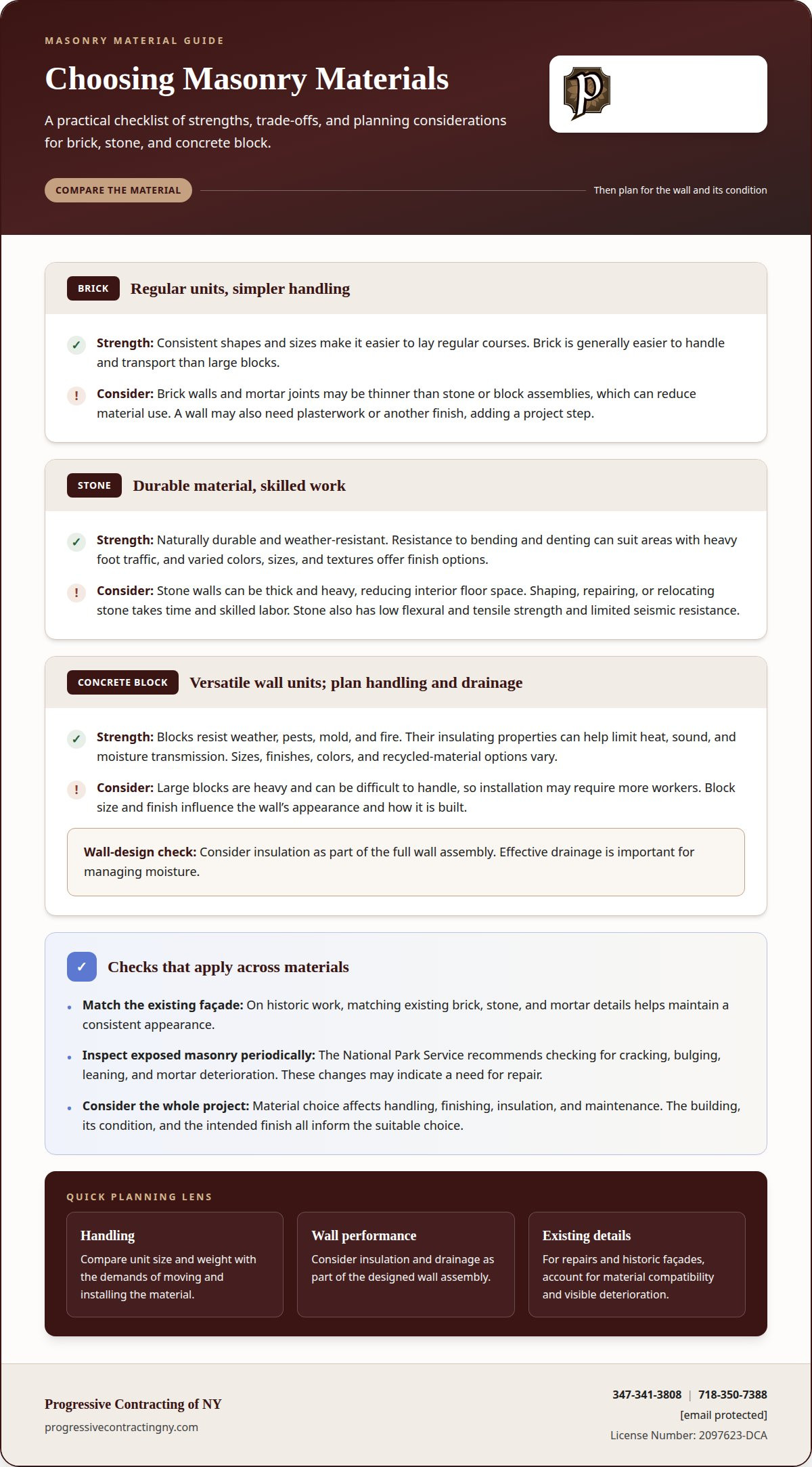
Brick, stone, and concrete blocks are common masonry materials. Brick units have consistent shapes and sizes, making it easier to lay regular courses. They are generally easier to handle and transport than large blocks. Brick walls and mortar joints may be thinner than stone or block assemblies, which can reduce material use. A brick wall may also need plasterwork or another finish, adding a step to the project.
Stone is naturally durable and weather-resistant. Its resistance to bending and denting can suit areas with heavy foot traffic, and its range of colors, sizes, and textures offers varied finish options. However, stone walls can be thick and heavy, reducing interior floor space. Shaping, repairing, or relocating stone takes time and skilled labor. Stone also has low flexural and tensile strength and limited seismic resistance.
Concrete blocks resist weather, pests, mold, and fire. Their insulating properties can help limit heat, sound, and moisture transmission. Blocks come in different sizes, finishes, and colors, and some include recycled materials. Large blocks are heavy and can be difficult to handle, so installation may require more workers. Block size and finish influence both the wall’s appearance and how it is built.
When insulation matters, professionals consider concrete block’s insulating properties as part of the full wall assembly. Effective drainage is also important for managing moisture. For maintenance, the National Park Service recommends periodic inspections of exposed masonry for cracking, bulging, leaning, and mortar deterioration. These checks can reveal changes that may need repair.
On a historic façade, matching the existing brick, stone, and mortar details helps maintain a consistent appearance. Material choice also affects handling, finishing, insulation, and maintenance, so professionals consider these needs together when planning the work.
Brick units have uniform shapes and sizes, which can make them simpler to lay than irregular stone. Stone can suit high-foot-traffic areas because it resists bending and denting, and its varied colors, sizes, and textures offer design options. Concrete blocks may affect a wall’s heat, sound, and moisture performance, depending on the assembly.
What is Masonry & Types of Masonry Construction?
Masonry construction combines individual units, such as brick, stone, or concrete block, bonded with mortar. These units form walls and other structures, and the material affects appearance, weight, and construction demands. Brick has regularly shaped units, stone may require skilled shaping, and concrete block provides larger units for building walls.
Masonry systems also differ by design. A load-bearing masonry wall supports building loads, while a veneer forms an exterior layer over another structural wall. Reinforcement can be incorporated to meet structural demands. The suitable assembly depends on the building design, existing conditions, and intended use.
In the United States, applicable building codes and permit requirements vary by state and local jurisdiction. Project scope and building conditions also affect which requirements apply, so there is no single nationwide permit rule for every masonry project.
There is no dependable square-foot price that fits every U.S. masonry project. Cost depends on the case and is provided after a quote request; material, wall design, access, finish, and repair scope all affect the amount.
The same factors affect project timelines. Brick, stone, and block involve different handling and installation demands, while intricate finishes or repairs can add work. Site access and the condition of an existing wall also influence how the work proceeds.
Costs, codes, and construction practices vary by location because local requirements, building conditions, and project designs differ. In older buildings, matching existing materials and details can influence repair scope. For masonry project planning, material compatibility and the condition of the wall are useful starting points.
Stone masonry takes time and skilled work because stone can be difficult to alter, repair, or relocate. When planning stonework, account for these demands and consider how the material and existing construction may affect the repair or restoration.
How is masonry construction done step by step by a professional contractor?
A contractor moves from assessment to installation, checking that the design, supporting surface, and drainage suit the proposed work. For a repair, the process also accounts for existing materials and visible deterioration.
- Assess the site. The contractor reviews the wall, access, and surrounding conditions. For an existing brick façade, this includes identifying loose units, damaged mortar, and areas affected by water.
- Plan the assembly. The project design identifies the masonry units, wall layout, finish, and structural details. These choices guide material quantities and the sequence of work.
- Prepare the base. Before laying units, the contractor prepares the supporting surface and establishes the wall’s alignment. A stable, level start helps keep courses consistent.
- Lay and bond units. The crew places brick, stone, or concrete blocks in planned courses, applying mortar at joints. They maintain the intended pattern and alignment as the wall rises.
- Address water management. Effective drainage matters for concrete block masonry. The contractor incorporates drainage into the wall design to help manage moisture.
- Finish and inspect. The contractor completes specified joints and finishes, then reviews alignment, mortar condition, and the completed surface.
During masonry construction, material handling and detailing affect the finished wall. A concrete block assembly needs drainage planning, while historic brick repair depends on compatible replacement materials and careful joint work. The project scope and existing conditions determine the work sequence.
Progressive Contracting NY: Brownstone façade Construction
Progressive Contracting NY Corp provides brownstone façade construction and restoration for buildings that need exterior repair or renewal. The company also handles brownstone repair, brick pointing, and stoop restoration. These services suit property owners addressing deteriorated façade materials, damaged masonry, or a stoop that needs restoration in Brooklyn and Manhattan.
For a brownstone project, the work depends on the building’s condition, materials, and architectural details. An assessment helps define the repair scope and how the finished work should relate to the surrounding façade. This matters particularly for historic properties, where preserving character is part of sound masonry construction.
For inquiries, call 347-341-3808 or 718-350-7388, or email ProgressiveContractingNY@yahoo.com. License Number: 2097623-DCA. Contact Progressive Contracting NY Corp to discuss your brownstone masonry needs.
Plan the Next Step for Your Brownstone
Start by matching the project scope to the building’s condition and the finish it needs. An assessment can clarify whether the work involves façade repair, restoration, or a stoop. With those priorities identified, it is easier to plan work that respects the property’s character.
Progressive Contracting of NY provides brownstone façade renovation, restoration, and Rammstein stoop restoration. For owners planning masonry construction on a brownstone in Brooklyn or Manhattan, these services offer a direct way to discuss exterior concerns and the appropriate repair or restoration work.
A clear plan is a practical foundation for protecting your building’s appearance and masonry.
Frequently Asked Questions
What is masonry construction and what materials are commonly used?
Masonry construction assembles units into walls and other structures, often using mortar to bond them. Common materials include brick, natural stone, concrete block, limestone, and cast stone. A brownstone façade, for example, may combine brickwork with limestone details. The selected materials shape the building’s appearance and affect how repairs blend with existing surfaces.
What are the different types of masonry construction?
The main types of masonry construction use brick, stone, or concrete block as their primary units. Masonry can also be classified by a wall’s role: structural walls carry building loads, while veneer provides an exterior finish over a separate supporting wall. Reinforced masonry incorporates reinforcement into the assembly. The building design and existing conditions guide the appropriate system.