
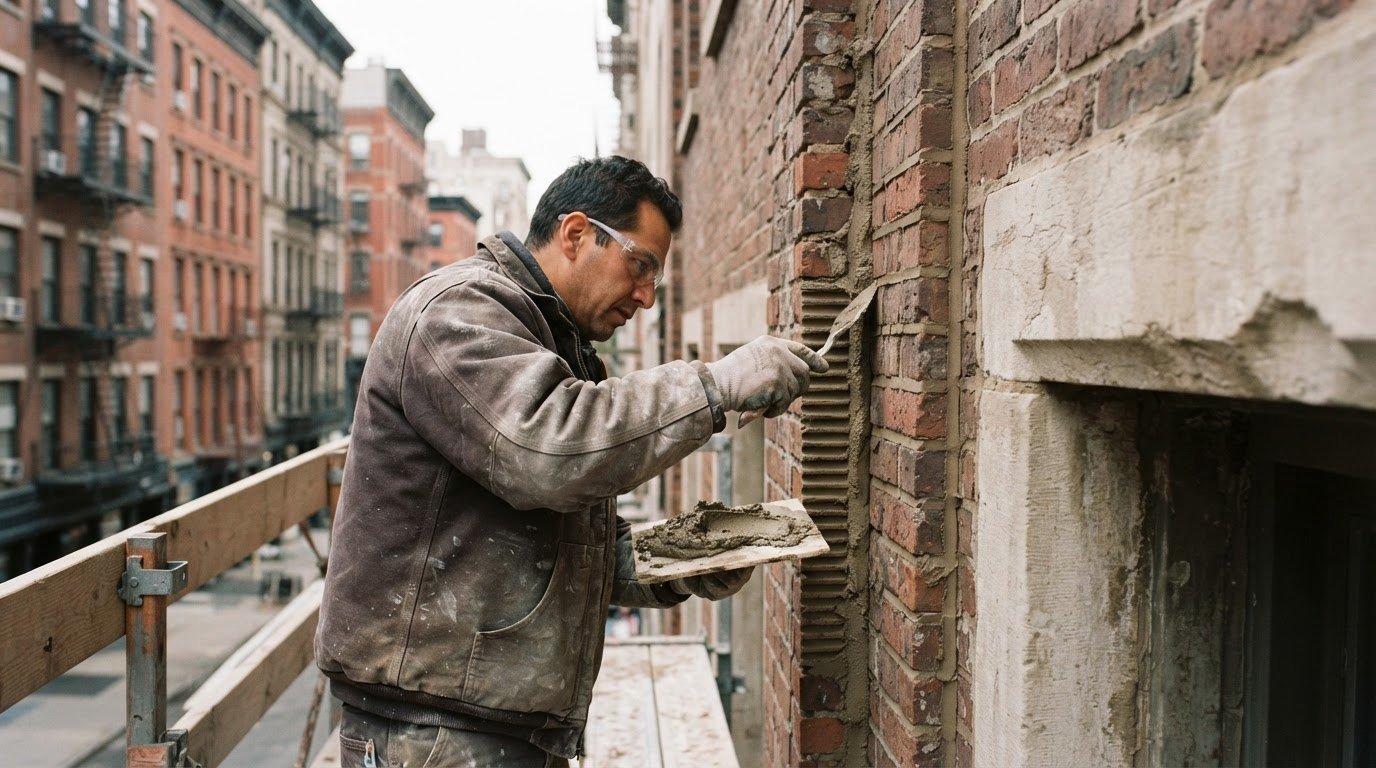
What if visible brick damage is only part of what a facade needs? A historic brick facade restoration contractor in Manhattan may renew mortar joints, repair or replace damaged brick and stone, and restore historic brownstone and commercial facades. The right scope depends on the building’s materials and masonry condition.
Restoration should respect a building’s character as well as repair its exterior. This guide explains how repointing, brick and stone repair, and brownstone facade work fit together. It also outlines what to consider when planning restoration for a Manhattan property, so you can understand the work before moving forward.
Table of Contents
Brick repointing and joint renewal
On a Manhattan facade, repointing renews mortar joints that have cracked, weathered, or separated from the brick. The work starts with assessing the joints, removing failed mortar, and filling them with suitable replacement mortar.
Mortar Joint Repointing
Mortar repointing renews the seams between masonry units, not the brick faces. A mason checks for loose, recessed, cracked, or missing mortar to identify areas needing attention. Failed material is removed carefully to limit damage to nearby brick. Replacement mortar is packed and finished to suit the existing masonry. This matters because mismatched mortar can stress historic brick, while open joints can let water in. Repointing helps manage moisture, but it is not a waterproofing coating.
Brick Repointing
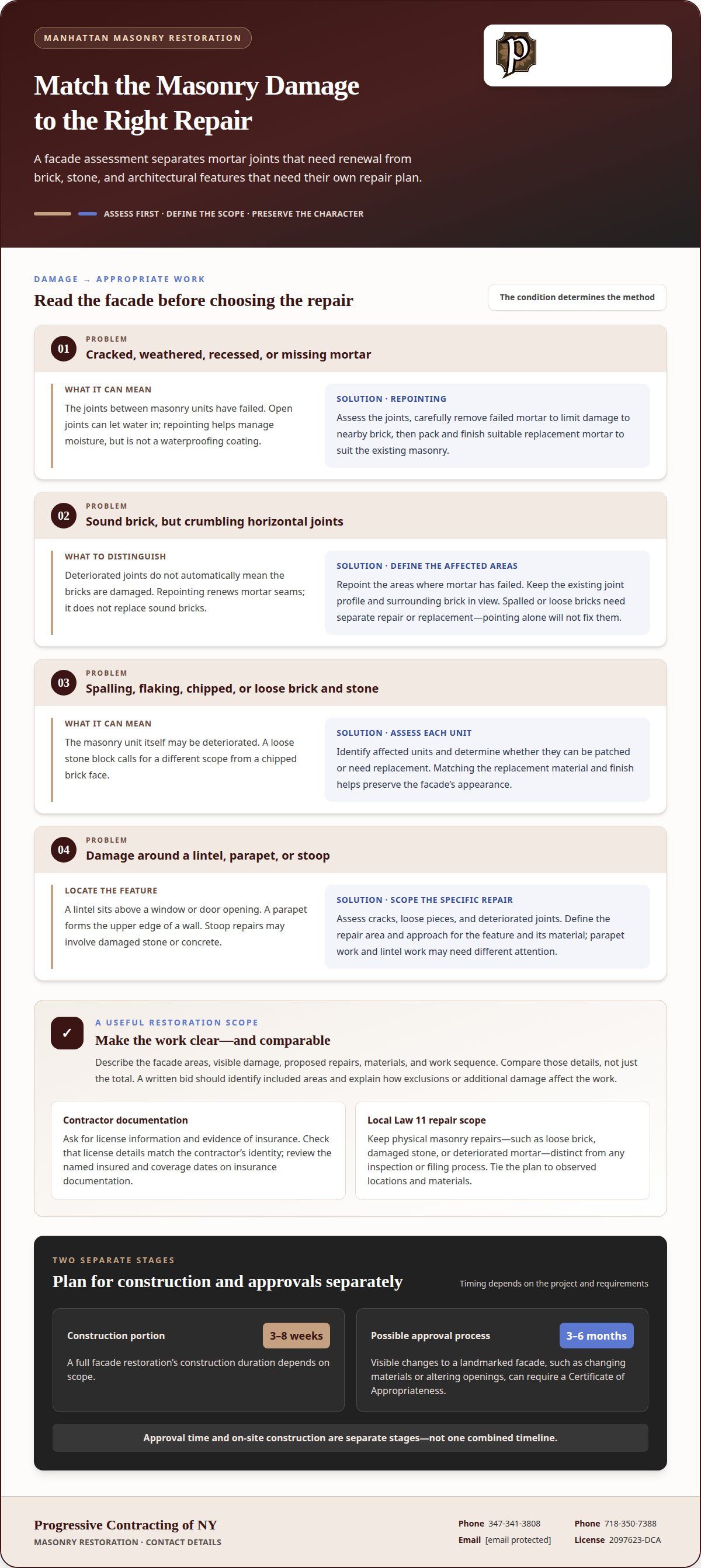
Brick repointing renews deteriorated joints across a wall or facade; it does not replace sound bricks. Work can be completed in defined areas, helping the crew manage mortar removal, placement, and a consistent finish. For example, a Manhattan brownstone may have sound brick but crumbling horizontal joints. Repointing can renew those joints without treating every brick as damaged. Spalled or loose bricks need separate repair or replacement, since pointing alone will not fix them.
A careful assessment distinguishes failing joints from damaged masonry and records how each area affects the scope. Owners can then see what the work includes: renewed joints where mortar has failed, plus separate repairs where brick has deteriorated. On historic facades, preserving the joint profile and surrounding brick is part of the restoration, not just a cosmetic finish.
Repair and replacement of damaged brick and stone
Brick and stone repairs address deterioration that repointing cannot fix. Start by distinguishing damaged masonry from joints that only need renewal.
Damaged Brick and Stone
Spalling, flaking, and loose masonry indicate damage to the brick or stone itself. An assessment identifies affected units and whether they can be patched or need replacement. Matching replacement material and finish helps preserve the facade’s appearance. For example, a loose stone block calls for a different scope from a chipped brick face. Treating both as mortar-joint problems can leave the underlying damage unresolved.
Lintel and Parapet Wall Repairs
A lintel sits above a window or door opening, while a parapet forms the upper edge of a wall. Repairs may address damaged masonry around these features and the components themselves. An assessment identifies cracks, loose pieces, and deteriorated joints, then defines the repair area. A parapet with loose masonry needs different attention from a lintel with surface damage. A clear scope helps preserve adjacent historic material.
Local Law 11 Repairs
For work described as Local Law 11 repairs, keep the masonry repair scope distinct from any inspection or filing process. The physical work may address loose brick, damaged stone, or deteriorated mortar identified on a facade. The specific condition determines the repair method. A repair plan should identify affected locations and materials, rather than treating every facade area alike. This keeps preservation decisions tied to observed damage.
Stoop repairs may involve damaged stone or concrete, while parapet work addresses upper-wall masonry. Each needs a scope suited to its material and location. For a brownstone with damaged facade masonry, brownstone repair options can help frame the work being considered.
Historic brownstone and commercial facade restoration
Manhattan brownstones and commercial buildings need restoration plans suited to their materials, facade details, and exposure. A sound plan distinguishes masonry work from nearby roofing concerns and sets out how the work will proceed.
Bids for Historic Masonry Restoration: What to Include and Compare
For useful bids, define the facade areas, visible damage, proposed repairs, materials, and work sequence. Compare those details, not just the total. Reviews and portfolios are most useful when they show completed historic brownstone or commercial facade projects with masonry details comparable to your building.
Ask for license information and evidence of insurance as part of a clear project scope. Check that the license details match the contractor’s identity, and review the insurance documentation for its named insured and coverage dates. A written bid should specify which facade areas are included and explain how exclusions or additional damage affect the work.
Restoration Timeline and Scaffolding
The construction portion of a full facade restoration takes 3-8 weeks, depending on scope. Visible changes to a landmarked facade, such as changing materials or altering openings, can require a Certificate of Appropriateness; that process takes 3-6 months. These are separate stages, so approval time should not be confused with on-site construction.
Scaffolding access and the repair sequence shape how crews reach upper masonry and protect work areas. The plan should account for facade height, repair locations, and roofing transitions near the parapet. In New York City, a defined scope helps owners understand how access affects scheduling without assuming every building is the same.
Progressive Contracting NY Corp: Brick Pointing
Progressive Contracting NY Corp provides brick pointing for facades with deteriorated mortar joints, along with historic brownstone renovation and brownstone facade renovation. These services suit Manhattan properties needing masonry work that respects their exterior character. For stoop damage, the company also provides Rammstein stoop restoration.
The next step is to describe the building and the areas that need attention. This helps establish whether the work centers on mortar joints, brownstone facade surfaces, or a stoop. Contact Progressive Contracting NY Corp at 347-341-3808 or 718-350-7388, email ProgressiveContractingNY@yahoo.com, or reference license number 2097623-DCA to discuss your restoration needs.
Plan the Next Step for Your Manhattan Facade
A restoration project starts by identifying what the building needs now and which historic details should remain central to the work. When choosing a historic brick facade restoration contractor in Manhattan, look for a scope that addresses both priorities rather than treating every facade alike. A clear focus helps turn general concerns into a defined project.
Progressive Contracting NY Corp offers brownstone facade renovation, brownstone facade restoration, and Rammstein stoop restoration. These services address distinct parts of a property’s exterior, from the facade to the stoop. When you’re ready to discuss your building and the work you’re considering, contact Progressive Contracting NY Corp to start the conversation.
A focused first conversation can help you plan the next step for your building with greater clarity.
Frequently Asked Questions
What Is Masonry Restoration?
Masonry restoration assesses and repairs exterior brick, stone, brownstone, and mortar while retaining a building’s architectural character. It can address more than visible surface wear. For example, a project may identify a damaged lintel separately from deteriorated facade joints, then specify distinct repairs for each. The scope depends on the materials and conditions across the building exterior.
Where can I find historic brick facade restoration contractors in Manhattan, NYC?
Progressive Contracting NY Corp provides brick pointing and brownstone facade renovation in Manhattan and Brooklyn. A historic brick facade restoration contractor in Manhattan should define the work around the building’s materials and the areas needing attention. Repairs to a brownstone may differ from work on a commercial brick facade, so describing the building clearly helps shape the discussion.
What are the NYC Landmarks Preservation Commission rules for brick facade repairs?
For landmark work, a Certificate of Appropriateness is required for visible changes such as changing facade materials, altering cornice profiles, or resizing openings. The process takes 3-6 months. A Permit for Minor Work is another type of LPC approval. These distinctions matter when a repair proposal changes the visible facade, rather than addressing masonry without those alterations.
Are NYC Department of Buildings permits needed for facade restoration on historic buildings?
Permit needs depend on the proposed work and the building’s circumstances, so define the scope before planning construction. Clarify whether the project repairs existing masonry or changes facade features, such as openings or materials. For a landmarked building, LPC review of visible changes is a separate consideration. Distinguishing repairs from design changes makes the project scope clearer.
What are NYC Local Law 11 FISP requirements for historic brick facades?
For a historic brick facade, organize FISP-related records around observed conditions and completed work. For example, document loose bricks separately from deteriorated mortar joints, since they require different repairs. If the building is landmarked and the project includes visible changes, account for the applicable LPC approval process. The building’s actual masonry condition determines the restoration scope.