
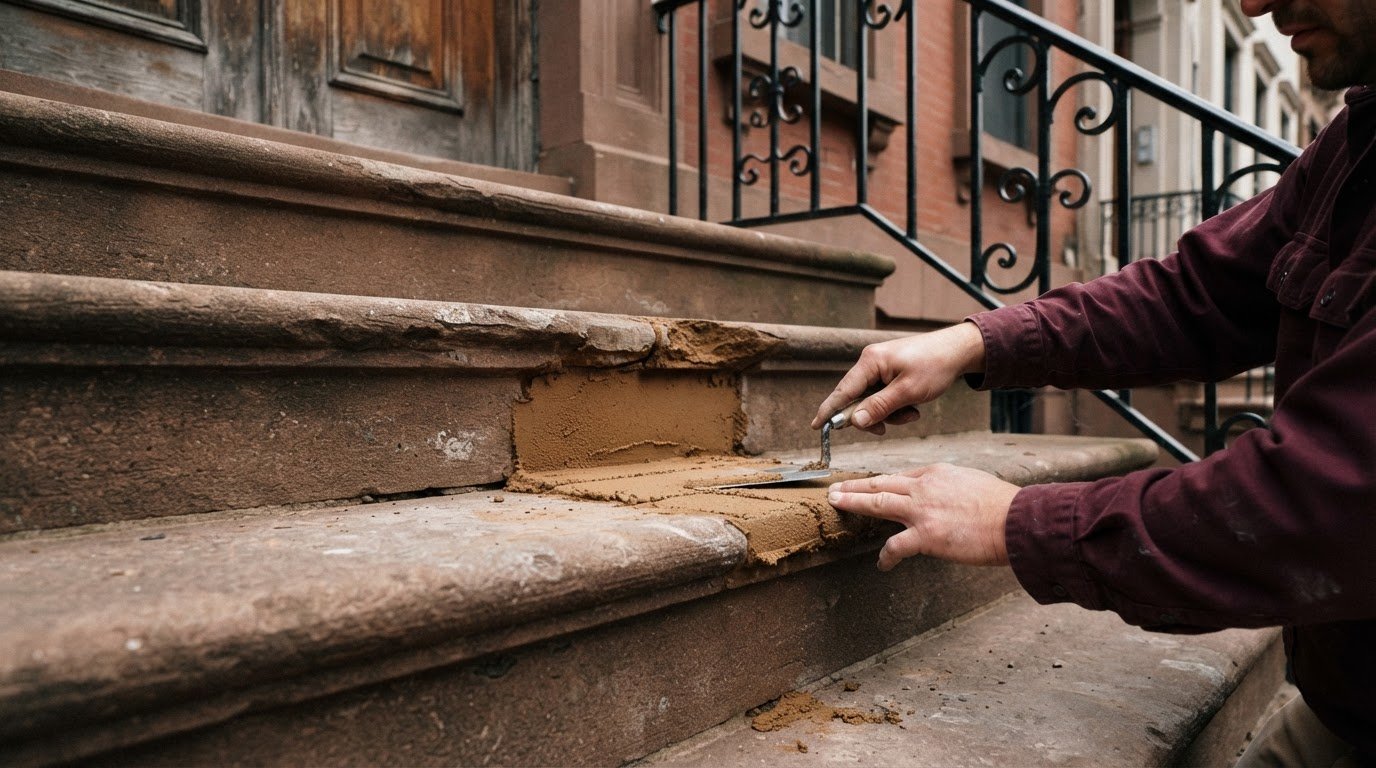
A cracked tread doesn’t automatically mean the entire brownstone stoop needs rebuilding. When the surrounding structure is sound, a mason can often repair just one tread or another damaged section. If the stoop is settling, crumbling, or pulling away from the facade, more extensive restoration may be needed.
It’s reasonable to want a damaged area repaired without disturbing sound masonry. Understanding what causes brownstone stoop cracks and how to fix them starts with identifying moisture entry and freeze-thaw damage, while also considering age, movement, deicing salts, and previous repairs. A surface patch alone won’t solve an underlying structural problem.
This guide explains how water and repeated freezing and thawing can weaken brownstone, which signs may point to deeper deterioration, and how a professional decides whether to repair one tread at a time or rebuild more extensively. You’ll also learn what careful restoration involves and how the stoop’s condition shapes the repair approach.
Table of Contents
Can a stoop be repaired in sections, one tread at a time?
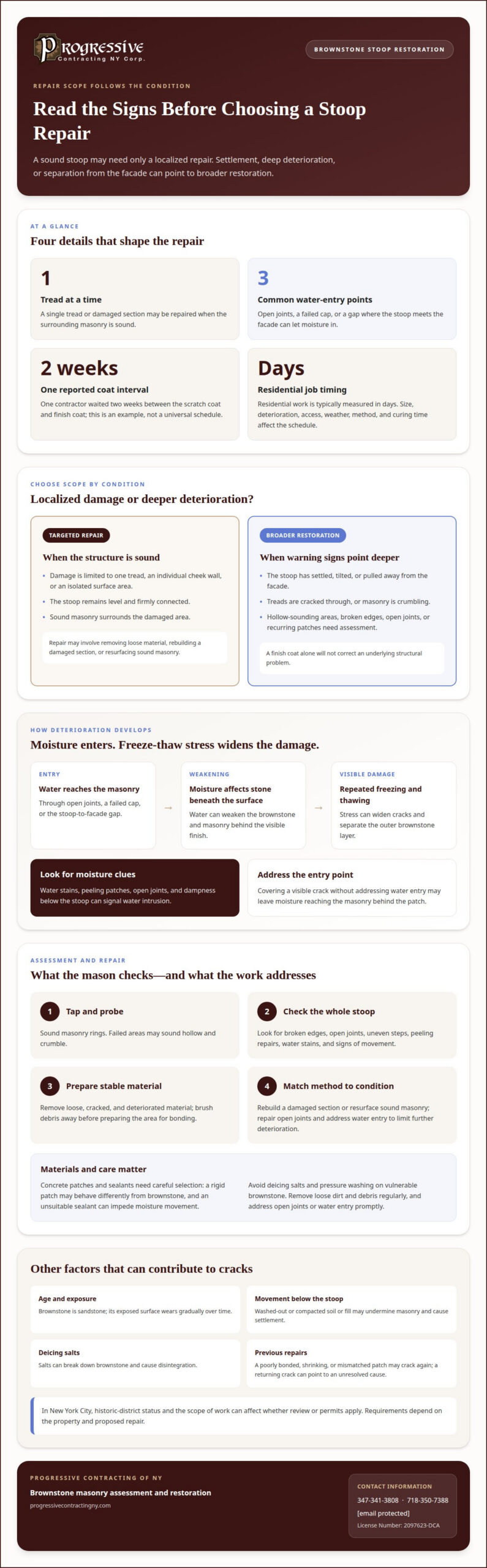
A brownstone stoop can be repaired one tread at a time when the surrounding masonry is sound. Localized work may also address an individual cheek wall or isolated surface damage. Treads cracked through, a stoop that has settled or tilted, or separation from the facade can signal structural failure. In these cases, a finish coat alone won’t correct the underlying problem.
A masonry contractor assesses the stoop by tapping and probing its surface. Sound masonry rings, while failed areas may sound hollow and crumble. The assessment also checks for broken edges, open joints, uneven steps, peeling repairs, and water stains. These signs help distinguish localized damage from deterioration that calls for broader restoration.
Age, movement, deicing salts, and previous repairs can all contribute to cracking. Salts can break down brownstone, while a poorly bonded or shrinking patch may crack again. Water entering through open joints, a failed cap, or the gap between the stoop and facade can weaken the masonry. Repeated freezing and thawing can then deepen cracks or separate the surface.
Repair work begins by removing loose, deteriorated material and preparing the damaged area for bonding. Depending on the condition, a mason may rebuild a damaged section or resurface sound masonry. Repairing open joints and addressing water entry helps limit further deterioration. Keeping dirt and debris off the stoop also helps protect its surface.
Repair schedules depend on the stoop’s size, deterioration, access, weather, and the method used. A residential job is typically measured in days, though curing time between coats affects the schedule. One contractor waited two weeks between the scratch coat and finish coat. Prompt repairs can help keep small cracks from spreading into larger areas of damage.
Historic-district status and the scope of work can affect whether review or permits apply in New York City. Requirements depend on the property and proposed repair, so restoration planning should account for them before work begins.
Water penetration and freeze-thaw damage
Water is a common cause of brownstone stoop deterioration. It can enter through open joints, a failed cap, or a gap where the stoop meets the facade. Moisture can then weaken the stone and masonry beneath the surface. Repeated freezing and thawing adds stress, widening cracks and separating the brownstone’s outer layer.
Water stains, peeling patches, open joints, and dampness below the stoop can signal moisture intrusion. A repair needs to address the entry point, not just cover the visible crack. Otherwise, water may continue reaching the masonry behind a new patch. Keeping dirt and debris off the stoop also helps limit surface deterioration.
For restoration, a mason removes loose, cracked brownstone and brushes debris from damaged areas before preparing the surface for bonding. This helps the repair adhere to stable material rather than loose fragments. The method depends on how far the damage extends and whether the surrounding masonry remains sound.
Concrete patches and sealants need to be selected carefully for brownstone. A rigid patch may behave differently from the surrounding stone, while an unsuitable sealant can impede moisture movement. Pressure washing can erode a deteriorated surface or force water into vulnerable joints. A professional assesses the material and damage before choosing a cleaning and repair method.
Avoid deicing salts on brownstone stoops because they cause disintegration. Remove loose dirt and debris regularly, and address open joints or water entry promptly. For recurring leaks or widening cracks, arrange professional brownstone stoop repair before the damage spreads.
Common causes of brownstone stoop cracks
Brownstone is sandstone, and age gradually wears its exposed surface. Earlier repairs can create another weak point if a patch does not bond well or uses a finish that behaves differently from the original stone. A crack that returns along an old patch may indicate that the repair addressed the surface, not the underlying cause.
Movement beneath the stoop can create wider problems. Washed-out or compacted soil or fill may undermine the masonry and cause settlement. A stoop that begins to tilt can put uneven pressure on its treads and joints. Water entry and freeze-thaw cycles can contribute as well, especially where joints or the facade connection are open.
Previous work matters, too. A thin resurfacing coat may shrink if it contains excess water, while a finish coat applied over crumbling masonry can crack again. Understanding what causes brownstone stoop cracks and how to fix them means looking beyond the visible patch to the masonry beneath it. Brownstone repairs also change color as they weather, so a patch that stands out may reflect age and exposure rather than structural failure.
A cosmetic crack is generally limited to the surface, while the surrounding stoop remains level and firmly connected. Structural warning signs include settlement, tilting, separation from the facade, or treads cracked through. Hollow-sounding areas, broken edges, and crumbling masonry also warrant close assessment. A mason can tap and probe the stone: sound masonry rings, while failed areas may sound hollow and crumble.
The key is to assess the whole stoop, not just one visible crack. A stable structure with localized surface damage may suit a targeted repair; movement or deep deterioration calls for broader restoration. Knowing what causes brownstone stoop cracks and how to fix them helps focus attention on the underlying condition before applying a new finish.
Progressive Contracting NY Corp
Progressive Contracting NY Corp helps property owners address brownstone stoop cracks through masonry assessment and restoration. When cracks return, treads break through, or the stoop shows signs of movement, the repair needs to address more than the visible surface. Assessing the surrounding masonry helps distinguish localized damage from conditions that may call for broader work.
Depending on the stoop’s condition, repairs may range from localized work to broader restoration. The repair approach is matched to the damage, including deterioration that may extend beyond one tread. This is especially useful when water entry, failed joints, or previous patches appear connected to recurring cracks.
Plan the right next step for your stoop
Knowing what causes brownstone stoop cracks and how to fix them helps you approach the work with a clearer plan. Assess the stoop as part of the building exterior so the repair can account for the masonry and its connection to the facade.
Progressive Contracting NY Corp provides brownstone stoop restoration, historic brownstone repairs, and complete exterior masonry renovation. The appropriate work depends on the property’s needs.
Contact Progressive Contracting NY Corp at 347-341-3808 or 718-350-7388, or email ProgressiveContractingNY@yahoo.com. License Number: 2097623-DCA.
A thoughtful restoration plan gives you a practical way to care for your brownstone.
Frequently Asked Questions
How long does a stoop job take?
A residential stoop repair is typically measured in days, but the schedule depends on the stoop’s size, deterioration, access, weather, and repair method. Curing between finish coats can add time. A layered restoration, for example, may take longer than a localized repair because each coat needs time before the next stage can proceed.
What causes cracks in brownstone stoops?
Cracks can result from water penetration, repeated freezing and thawing, deicing salts, age, movement, or previous repairs that did not hold. Soil or fill beneath a stoop can also wash out or compact, allowing the structure to settle. A crack that follows an old patch, for example, may point to a bonding or repair problem.
How do freeze-thaw cycles, water infiltration, and salt damage brownstone stoops?
Water entering stone or masonry can weaken it. When temperatures fluctuate, repeated freezing and thawing can widen cracks and separate the surface. Open joints and gaps near the facade provide possible entry points. Deicing salts also contribute to brownstone disintegration. Using sand rather than salt for traction avoids applying a material known to damage the stone.
How do masonry contractors repair small cracks in a brownstone stoop?
A contractor first removes loose or deteriorated material and prepares the exposed area for bonding. Depending on the damage, the repair may use an epoxy-based bonding agent before patching, or tinted mortar packed into a joint until it is flush. For surface restoration, the finish is built up in coats over the prepared base to match the surrounding profile.
When does a cracked brownstone stoop need resurfacing, repointing, or full reconstruction?
Resurfacing suits a stoop whose underlying structure remains sound but needs a renewed finish. Repointing addresses deteriorated mortar joints rather than the entire surface. Full reconstruction may be needed when the stoop has settled, tilted, pulled away from the facade, or has treads cracked through. The extent and location of the damage guide the repair choice.