
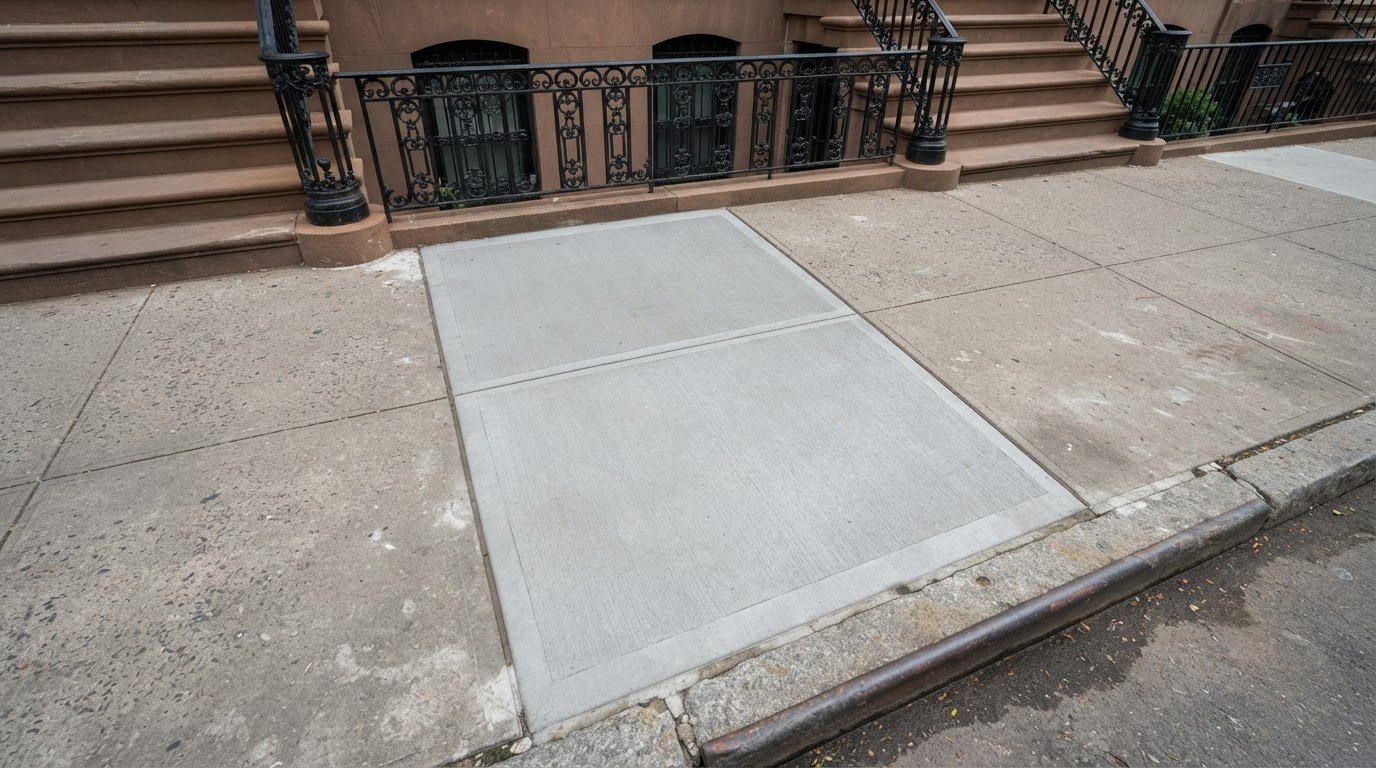
An open sidewalk violation can complicate a Brooklyn property sale, and an unpaid city repair bill can become a lien. That doesn’t automatically determine the home’s value, but an unresolved notice or lien can surface during title review and raise questions for buyers or lenders. If you’re wondering what a sidewalk violation means for your property value in Brooklyn, the effect depends on the sidewalk’s condition and whether city records still show an open issue.
The impact can be practical as well as financial: an unresolved defect may require repair, while an unpaid city repair bill can result in a lien on the property. This article explains how violations and liens may affect a sale or refinancing, what can change the risk, and how repair confirmation or lien satisfaction can clear the record. You’ll also learn when sidewalk repair and violation-removal work can help address the underlying condition.
Table of Contents
Does a sidewalk violation become a lien?
A Brooklyn sidewalk violation is an administrative notice identifying a defect, such as cracked or uneven concrete that creates a safety or accessibility hazard. It lists the defect, inspection date, and location. New York City property owners are generally responsible for sidewalk maintenance, with an exception for damage caused by City trees in qualifying cases.
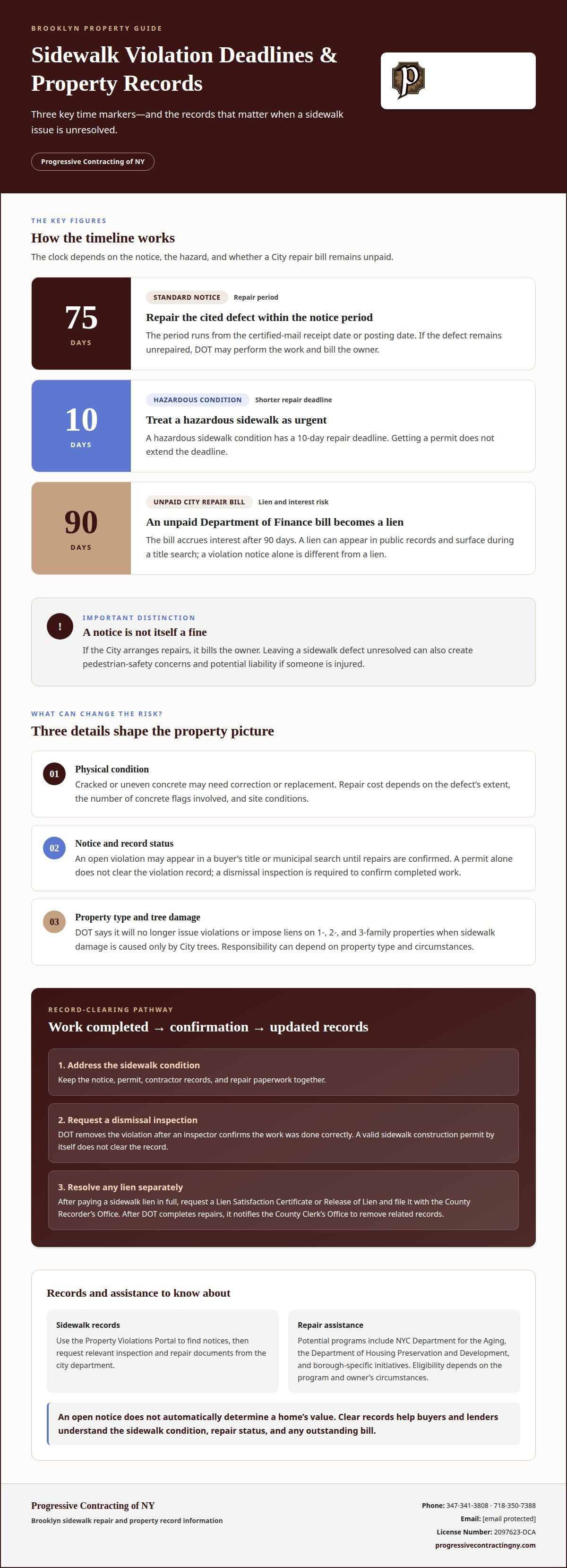
According to the New York City Department of Transportation, if a defect remains unrepaired within 75 days from the certified-mail receipt date or posting date of the Sidewalk Violation Notice, DOT may perform the work and bill the owner. A hazardous sidewalk condition has a 10-day repair deadline. Getting a permit does not extend the repair deadline, so owners should track the notice date and arrange sidewalk repair promptly.
The New York City Department of Transportation says it will no longer issue violations or impose liens on 1-, 2-, and 3- family properties when sidewalk damage is caused only by City trees. For other properties, the responsible owner may need a contractor to repair the concrete. The required work depends on the defect, from correcting an uneven surface to replacing damaged flags.
The notice itself carries no fine. If the City arranges repairs, it bills the owner; an unpaid Department of Finance bill becomes a lien and accrues interest after 90 days. An unrepaired defect can also create liability if someone is injured, including possible litigation.
How much it costs to repair a Brooklyn sidewalk violation depends on the extent of the defect, the number of concrete flags involved, and site conditions. The cost is determined after the repair scope is assessed.
Brooklyn property owners may be eligible for sidewalk-repair assistance through programs offered by the NYC Department for the Aging, the Department of Housing Preservation and Development, or borough-specific initiatives. Eligibility depends on the program and the owner’s circumstances.
To gather sidewalk records, use the Property Violations Portal to find notices, then request relevant inspection and repair documents from the city department. Keep the notice, permit, contractor records, and repair paperwork together so you can show what work was completed and whether the issue has been resolved.
What is a Sidewalk Lien and How to Remove It From Your Property Records?
A sidewalk lien is a debt attached to property after the City completes repairs and the owner leaves the bill unpaid. In New York City, an unpaid Department of Finance bill becomes a lien and accrues interest after 90 days. A lien can appear in public records and surface during a title search, unlike a violation notice alone.
For a Brooklyn sale, a buyer’s title and municipal search may show an unresolved violation until the repair is confirmed. The notice identifies defects, while tree roots or damaged concrete may remain visible during a property inspection. Owners are responsible for addressing sidewalk damage, and the 75-day repair period after a notice can affect how quickly the record is resolved.
An open violation or lien may complicate a sale or refinancing because buyers and lenders need to understand outstanding obligations. They may ask about the repair scope, payment, and the status of city records. Clear communication and proof of completed work help show whether the sidewalk defect has been corrected.
After the NYC Department of Transportation completes repairs, it notifies the County Clerk’s Office to remove related records. If you pay a sidewalk lien in full, request a Lien Satisfaction Certificate or Release of Lien and file it with the County Recorder’s Office. A dismissal inspection may also be needed before the violation record is cleared.
A sidewalk violation does not by itself determine insurance coverage. Unresolved defects can create trip hazards for tenants and pedestrians. If an owner receives notice and leaves a defect unrepaired, the owner may be liable if someone falls.
Addressing the physical defect and documenting the repair can support a clearer transaction record. For help with Brooklyn sidewalk repair, the work should resolve the condition behind the notice.
Outstanding sidewalk violations and property transactions
An open sidewalk violation may appear in a buyer’s title and municipal search until the repair is confirmed. Buyers can assess whether uneven flags remain a pedestrian hazard, whether repairs are complete, and whether the City still lists the violation as unresolved. A notice does not automatically set a home’s value, but it can shape sale discussions.
For property owners preparing to sell, timing matters. The 75-day repair period after a violation notice is distinct from the time needed for a transaction’s title review. If the sidewalk damage is still visible, a buyer may ask how it will be corrected and documented. Clear communication about the inspection, repair status, and any City bill helps keep the issue specific during negotiations.
Permits and completion records matter, too. After sidewalk repairs, an owner must request a dismissal inspection. The Department of Transportation removes the violation after an inspector confirms the work was done correctly; a valid sidewalk construction permit alone does not clear the record. The inspection connects completed work to the City’s official status, which buyers and lenders can review.
Responsibility for sidewalk damage caused by tree roots depends on the property type and circumstances. A visible defect can remain a pedestrian-safety concern while responsibility is being addressed. For a sale or refinancing, distinguish the sidewalk’s physical condition, the notice status, and any unpaid repair bill. Resolving and documenting each item gives buyers a clearer picture than an open record alone.
Progressive Contracting NY: Sidewalk violation removal
Progressive Contracting NY Corp provides sidewalk repair and sidewalk violation removal for Brooklyn property owners dealing with an open notice or damaged concrete. Repairing the sidewalk addresses the condition behind the violation, an important step toward having the City confirm the work and update its records.
If an inspection identifies cracked, raised, or uneven sidewalk sections, the repair scope depends on the defect and the affected area. Progressive Contracting NY Corp also handles brownstone facade renovation, stoop restoration, and general contractor work when exterior repairs extend beyond the sidewalk. Coordinating these repairs can help owners prepare clear records for a sale or refinancing.
For sidewalk repair or violation removal, contact Progressive Contracting NY Corp at 347-341-3808 or 718-350-7388, or email ProgressiveContractingNY@yahoo.com. License Number: 2097623-DCA.
Plan your next property step with clarity
Understanding what a sidewalk violation means for your property value in Brooklyn starts with looking beyond the notice. Consider the sidewalk’s condition and your plans, whether you’re preparing to sell, refinancing, or scheduling maintenance. A clear repair scope helps you make decisions and keep property improvements organized.
Progressive Contracting of NY can help address sidewalk repairs and violations as part of maintaining your property’s exterior. Share the notice and describe the sidewalk’s condition to start a focused conversation about the work.
A practical next step can help you move forward with greater confidence in your property plans.
Frequently Asked Questions
Can I sell my house with an open sidewalk violation?
A sale may proceed with an open violation, but it can complicate title review, negotiations, or closing. A buyer may request repair documentation or ask that an outstanding obligation be addressed before proceeding. For example, a buyer reviewing a Brooklyn rowhouse may distinguish a repaired sidewalk with pending records from a defect that still needs work.
How do I check if my property has a sidewalk violation?
Search the New York City Property Violations Portal using the property address or its 10-digit Borough-Block-Lot number. Anyone can search sidewalk violations without proving ownership. Review the notice details, including the defect location and inspection date, then compare them with the sidewalk outside. If the address search is unclear, the BBL number can help identify the correct property record.
What should I do if I find an open violation on my property?
First, read the notice to identify the cited sidewalk area and inspection details. Then arrange the required repair and obtain the sidewalk construction permit. When the work is complete, request a dismissal inspection so it can be reviewed and the violation status updated. Keep the notice, permit, and completion records together for future sale discussions.
Who is responsible for repairing a sidewalk in front of a Brooklyn property?
In New York City, property owners generally maintain, repair, and install sidewalks next to their properties. The cause of damage and the property type can affect responsibility, especially when tree roots damage the pavement. For example, the City no longer issues violations or liens for qualifying one-, two-, and three-family properties when damage is caused only by City trees.
How do NYC sidewalk violations affect property value and resale?
A sidewalk violation does not set a fixed reduction in a Brooklyn home’s value, but unresolved defects can affect buyer confidence and negotiations. Buyers may weigh visible damage, anticipated repairs, and outstanding records when deciding whether to proceed or request changes to the deal. If you’re asking what a sidewalk violation means for your property value in Brooklyn, focus on the sidewalk’s condition and the status of related records.