

Repointing spalled brick won’t protect your building if you haven’t diagnosed where water enters the facade first. Successfully planning brick masonry repair for co-ops in NYC requires far more than patching cosmetic cracks on the surface. Most board members already know the stress of strict Department of Buildings filing windows, escalating sidewalk shed penalties, and the constant threat of unexpected capital assessments.
This practical guide gives your board the clarity needed to distinguish superficial maintenance from essential structural restoration, halt water infiltration, and achieve full DOB sign-offs without draining reserve funds. We’ll examine how brick deterioration develops, clarify FISP compliance requirements, and show you how to properly vet qualified exterior specialists, including Progressive Contracting NY Corp (DCA License 2097623-DCA; 347-341-3808, 718-350-7388, ProgressiveContractingNY@yahoo.com) to execute your project smoothly.
Diagnosing Brick Masonry Deterioration in NYC Co-op Buildings
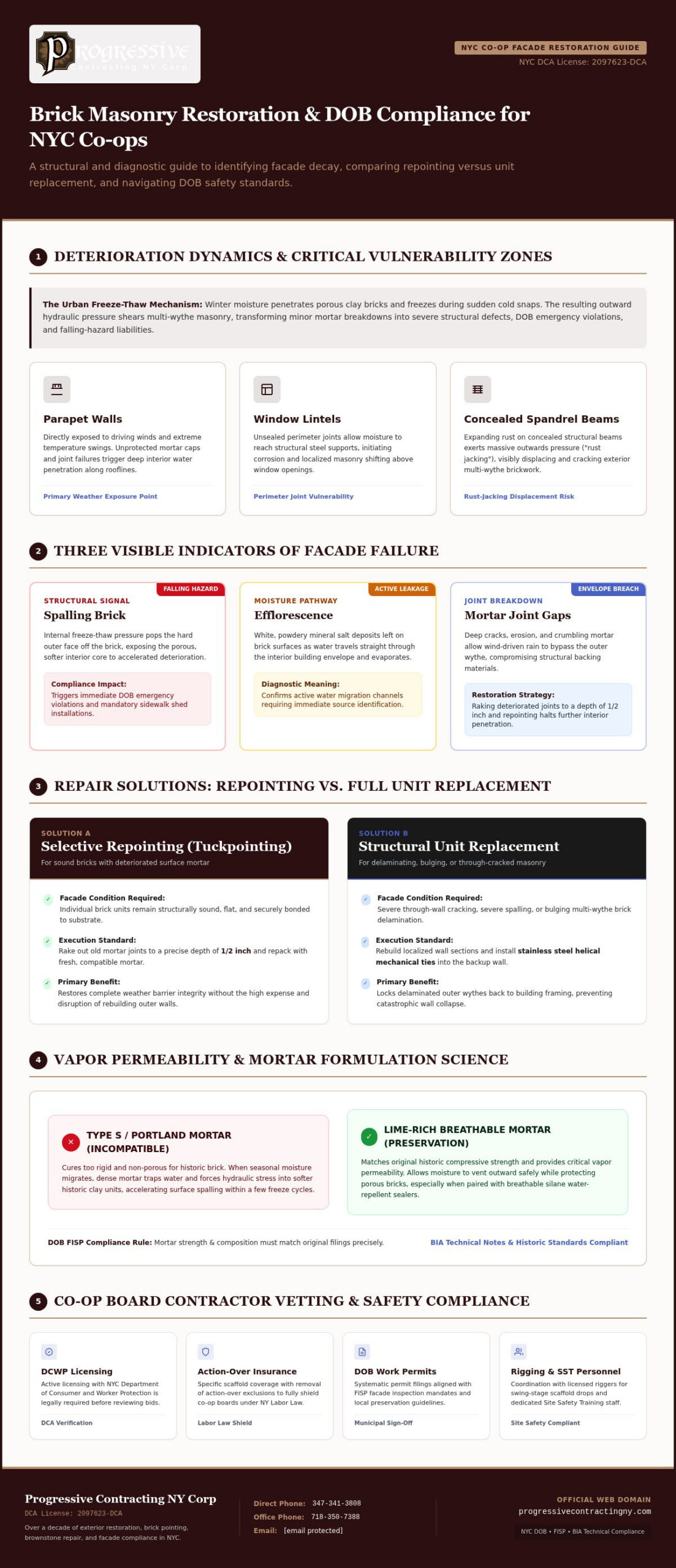
Urban freeze-thaw cycles are brutal on multi-wythe exterior walls. Winter moisture seeps into porous clay bricks, freezes during cold snaps, and exerts tremendous outward hydraulic pressure that shears masonry apart. Unlike single-family homeowners, co-op boards must treat early structural inspections as vital preventative governance. Unchecked decay triggers Department of Buildings emergency violations, mandatory sidewalk sheds, and unplanned shareholder assessments. Vulnerabilities consistently concentrate at critical interface points: parapet walls exposed to driving winds, corroding window lintels, and concealed spandrel beams where expanding rust jacks exterior brick outward.
Catching distress early keeps brick masonry repair for co-ops in NYC targeted and predictable. Routine inspections ensure minor mortar failures never evolve into catastrophic structural defects that disrupt building operations.
Key Warning Signs: Spalling, Efflorescence, and Mortar Joint Failure
Boards and property managers should watch for three distinct physical signals during seasonal building walk-throughs:
- Spalling: Internal freeze-thaw pressure forces the outer face of the brick to pop off, exposing the softer interior core to rapid decay and falling-hazard violations.
- Efflorescence: White, powdery salt deposits emerge on the exterior brickwork. These mineral crusts confirm that active water pathways are carrying moisture straight through the building envelope.
- Mortar Joint Breakdown: Gaps, deep cracks, and crumbling mortar allow wind-driven rain behind the outer wythe. Prioritizing repointing deteriorated mortar joints stops water intrusion at the surface, protecting structural backings without the disruptive expense of rebuilding entire exterior walls.
Comparing Brick Repair Solutions: Repointing vs Full Replacement
Deciding between selective repointing and unit replacement comes down to structural integrity. Repointing works when brick units remain sound, flat, and bonded to the substrate. Raking joints to a depth of 1/2 inch and repacking fresh mortar restores the weather barrier without disturbing the facade. However, severe through-wall cracking, spalling, and bulging wythes demand full brick replacement. In multi-wythe pre-war walls, corroded internal ties allow exterior brick to delaminate. When executing brick masonry repair for co-ops in NYC, technicians must rebuild localized sections and install stainless steel helical mechanical ties to lock outer wythes back to the backup wall.
Vapor Permeability and Historic Mortar Compatibility Standards
Historic brickwork demands strict mortar compatibility. Using modern Type S or Portland-heavy mortar destroys older buildings. High-strength cement cures too rigid and non-porous. When seasonal moisture migrates through the envelope, the inflexible mortar forces hydraulic stress into softer historic brick, spalling exterior faces within a few freeze cycles. Long-term durability requires lime-rich, breathable formulations that match original compressive strength.
Boards aligning repairs with the NYC DOB Façade Safety and Inspection Program must ensure exact mortar matching on filing documents. Proper execution starts with skilled rake-outs and tuckpointing, detailed in our guide to brick pointing NYC. Applying breathable silane sealers protects porous brick while letting interior vapor vent outward safely. If your board detects masonry movement, working with an experienced restoration contractor ensures you resolve underlying causes rather than applying short-lived patches.
Vetting NYC Masonry Contractors for Co-op Facade Compliance
Selecting the right contractor for brick masonry repair for co-ops in NYC protects board members from severe legal exposure and costly project stalls. Boards must verify active licensing through the Department of Consumer and Worker Protection (DCWP) before reviewing bids. Review insurance policies carefully. Standard commercial policies aren’t enough; exterior high-elevation work requires specific scaffolding coverage and the removal of action-over exclusions to shield the co-op under New York Labor Law. Qualified contractors align their diagnostic standards with the BIA Technical Note on brick masonry maintenance while planning site logistics to limit sidewalk shed durations and daily resident disturbance.
Managing DOB Permits, Site Safety, and Board Accountability
Every exterior project demands systematic municipal compliance. The contractor must secure all necessary DOB work permits, coordinate with licensed riggers for swing-stage scaffold drops, and assign certified Site Safety Training personnel to the property. Many pre-war cooperatives also showcase integrated architectural trim where weathered brick meets ornamental stone, demanding specialized brownstone repair alongside conventional joint restoration.
Progressive Contracting NY Corp brings over a decade of exterior restoration experience to historic multi-family properties across the city. Fully licensed under NYC DCA license 2097623-DCA, our team delivers methodical workmanship and reliable communication for brick masonry repair for co-ops in NYC. Board members and property managers can reach us directly at 347-341-3808 or 718-350-7388, or email ProgressiveContractingNY@yahoo.com to discuss project planning and building assessments.
Protecting Your Co-op’s Architectural Investment
Proactive facade maintenance protects your building against sudden DOB penalties, structural decay, and emergency capital assessments. Successful brick masonry repair for co-ops in NYC requires pinpointing active moisture pathways, formulating breathable lime mortars, and partnering with an experienced, fully insured contractor. Backed by over a decade of dedicated facade restoration experience and NYC DCA license 2097623-DCA, Progressive Contracting NY Corp delivers transparent craftsmanship. Connect directly with our team at 347-341-3808 or 718-350-7388, or email ProgressiveContractingNY@yahoo.com to discuss your building’s exterior needs.
With disciplined planning and reliable trade execution, your board can protect shareholder reserves, ensure full compliance, and keep your historic masonry sound for decades to come.
Frequently Asked Questions
How do co-op boards know if building masonry requires immediate repair?
Immediate repairs are required if your building shows visible masonry movement, bulging wythes, or loose bricks along street-facing elevations. These conditions pose direct safety hazards to pedestrians below and can trigger emergency DOB violations or Unsafe FISP classifications. Active interior water leaks after driving rain also signal through-wall failures that demand fast intervention before winter freeze-thaw cycles worsen structural decay.
What is the difference between historic brick pointing and standard repointing?
Historic brick pointing relies on vapor-permeable, lime-rich mortar blends specifically formulated to match the softness of older pre-war bricks. Standard commercial repointing often uses rigid Portland cement, which traps moisture and crushes historic masonry faces. Executing specialized brick masonry repair for co-ops in NYC ensures the mortar remains sacrificial, allowing exterior walls across Manhattan and Brooklyn to breathe naturally without spalling.
Do all exterior brick masonry repairs require DOB scaffolding permits?
Most exterior facade projects using suspended swing stages, pipe scaffolding, or sidewalk sheds require approved DOB permits. While minor spot touch-ups at street grade don’t always require heavy equipment permits, elevated multi-story repairs demand strict site safety plans and licensed rigging oversight. A qualified contractor coordinates all municipal filings and sidewalk protection approvals before setting up equipment on site.
How should an NYC co-op plan and budget for masonry restoration?
Co-op boards should commission a comprehensive physical facade survey to prioritize essential structural repairs over cosmetic work and prevent reserve fund overruns. Plan capital reserves early to absorb unforeseen concealed steel corrosion. For transparent planning on brick masonry repair for co-ops in NYC, contact Progressive Contracting of NY (DCA License 2097623-DCA) at 347-341-3808, 718-350-7388, or ProgressiveContractingNY@yahoo.com.