
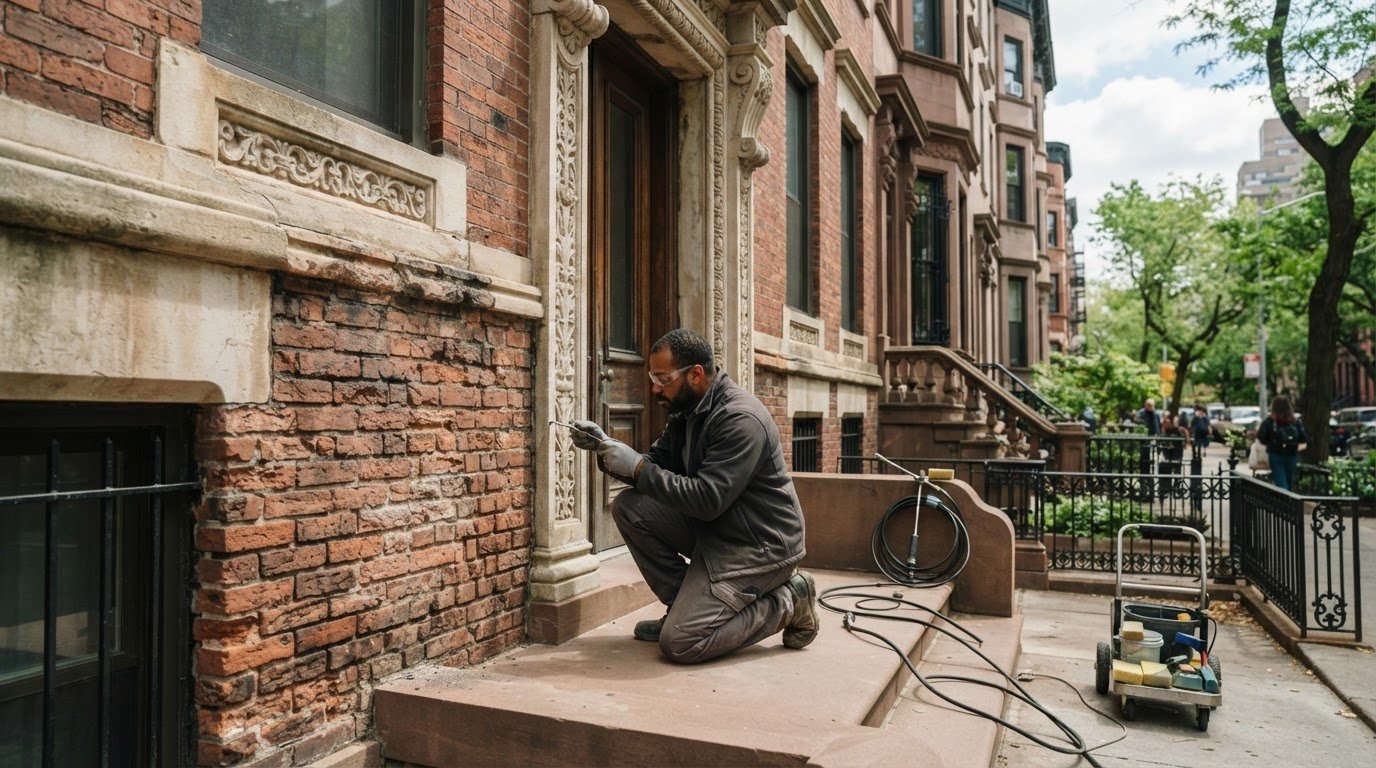
What if the safest first step for a soot-darkened Manhattan brick facade is not stronger cleaning, but a closer assessment? Pollution deposits can make historic masonry look neglected, yet an unsuitable cleaning method can damage old brick and mortar. With brick pointing for historic facades in Manhattan, first distinguish surface staining from deteriorated joints. That helps determine whether the facade needs cleaning, repairs, or both.
This guide explains how soot affects historic brick, what to look for in mortar joints, and how to plan facade work carefully. It also outlines common mistakes, such as choosing a cleaning method based on appearance alone or assuming that dark brick needs repointing. Progressive Contracting NY Corp provides exterior masonry and historic facade restoration in Manhattan, Brooklyn, the Bronx, and Queens, including Bedford-Stuyvesant and Park Slope. License number 2097623-DCA. For project inquiries, call 347-341-3808 or 718-350-7388, or email ProgressiveContractingNY@yahoo.com.
Soot and Pollution on Historic Manhattan Brick: What Cleaning Can and Cannot Fix
Soot and urban pollution can leave historic Manhattan brickwork darkened in irregular bands or patches. Deposits may collect unevenly, so one section can look heavily stained while nearby brick remains lighter. Cleaning addresses deposits on the surface; it does not replace mortar that has eroded, cracked, or fallen from the joints. Keeping those problems separate helps avoid unnecessary pointing and focuses repair work on areas that need it.
A darker facade alone does not show whether the brick or mortar has deteriorated. Cleaning may change the appearance, but it cannot restore missing mortar. Pointing, also called repointing, renews mortar joints; What is brick repointing? offers a basic explanation of the process. For brick pointing for historic facades in Manhattan, the condition of the joints matters as much as visible staining.
How to tell surface staining from deeper masonry deterioration
Assess deposits and mortar joints as separate features. Soot appears as discoloration on brick surfaces. Warning signs in the joints include mortar that looks loose, cracked, recessed, or visibly incomplete. Also note whether the concern is isolated or repeated across the facade. These observations help frame an assessment, but a stain pattern or photograph cannot establish the full condition of the masonry. The brick and mortar need to be examined before selecting a cleaning approach or deciding that pointing is needed.
Avoid treating every dark area as a repair problem, or every visible joint defect as a cleaning issue. Progressive Contracting of NY provides brick pointing and historic facade restoration in Manhattan. To discuss your exterior masonry concerns, call 347-341-3808 or 718-350-7388, or email ProgressiveContractingNY@yahoo.com. License number 2097623-DCA.
How a Careful Brick Facade Cleaning Project Proceeds in Manhattan
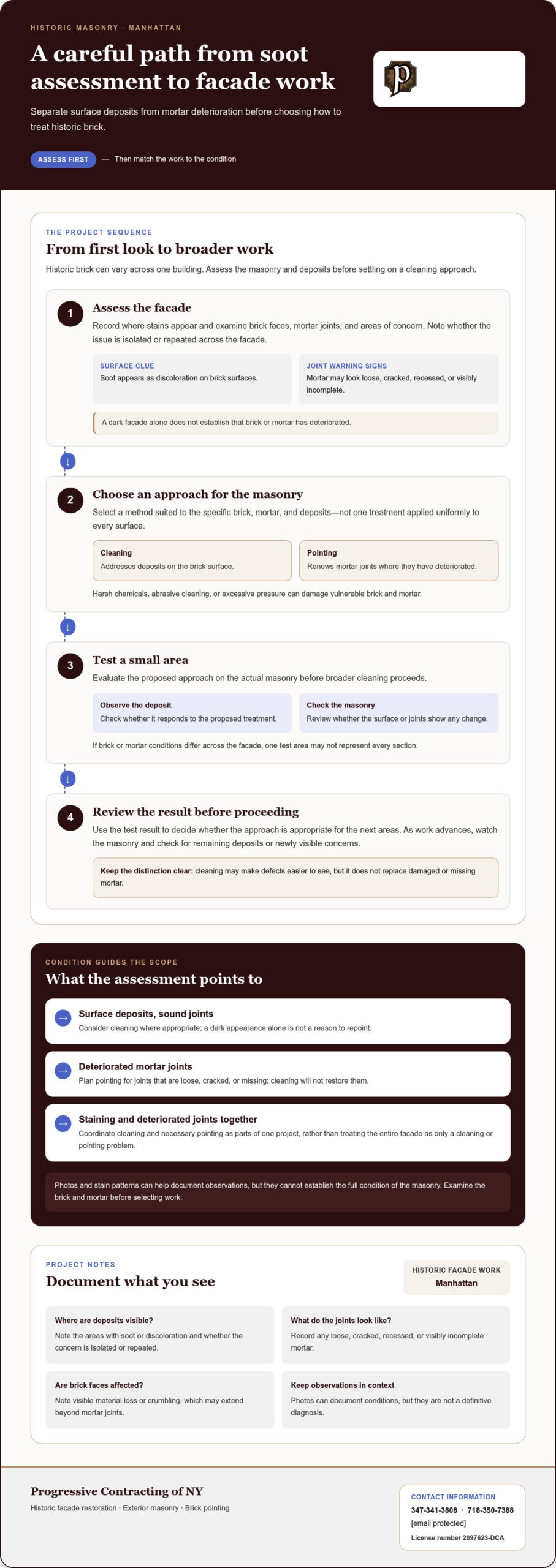
A careful project follows a practical sequence: assess the facade, choose an approach suited to the masonry and deposits, test the approach in a small area, and review the result before proceeding more broadly. Historic brick can vary in condition across a single building, so one treatment may not suit every surface. Harsh chemicals, abrasive cleaning, or excessive pressure can damage vulnerable brick and mortar. The method should be selected for the specific facade, not applied uniformly.
What happens during an assessment of a Manhattan brick facade?
An assessment records where stains appear, the visible condition of the brick, the state of the mortar joints, and any areas of concern. It should distinguish surface discoloration from loose or missing mortar and note whether brick faces show visible material loss. This record gives the project a useful starting point and helps define which work is appropriate. Progressive Contracting of NY uses facade condition to plan exterior masonry work, including brick pointing when joints need attention.
Before broader cleaning work proceeds, a small test area can help evaluate the proposed approach on the actual masonry. Review whether the deposit responds and whether the surface or joints show any change. If the facade includes different brick or mortar conditions, one test area may not represent every section. As work advances, keep an eye on the masonry and review the result for remaining deposits or newly visible concerns. Cleaning can make defects easier to see, but it does not replace damaged mortar.
This assessment-first approach supports brick pointing for historic facades in Manhattan: address deposits where cleaning is appropriate, and plan pointing where mortar joints show deterioration. A common mistake is to use aggressive cleaning to try to compensate for missing mortar, or to repoint sound joints simply because the facade looks dark. For more background, read “Brick Pointing NYC: The Complete Guide to Masonry Preservation in 2026”. Progressive Contracting of NY handles historic exterior masonry in Manhattan and across Brooklyn, including Bedford-Stuyvesant and Park Slope. Call 347-341-3808 or 718-350-7388, or email ProgressiveContractingNY@yahoo.com to discuss your facade. License number 2097623-DCA.
When Historic Facade Cleaning Should Include Brick Pointing
Cleaning and pointing solve different problems. Cleaning addresses surface deposits; pointing renews mortar where joints have deteriorated. A soot-darkened facade does not automatically need new mortar, and pointing will not remove stains from the brick. Decide based on the joints’ condition, not the overall color of the wall.
If an assessment finds loose, cracked, or missing mortar alongside staining, the scopes can be coordinated as part of one exterior project. The plan can account for both the deposits and necessary masonry repairs, instead of treating the entire facade as a cleaning problem or pointing every joint without cause. This distinction is central to brick pointing for historic facades in Manhattan, where preserving sound original material matters alongside addressing visible defects.
A practical next step for Manhattan property owners
Before arranging an assessment, make a short note of what you see: where soot or discoloration appears, whether mortar joints look cracked or incomplete, and whether any brick faces show material loss. Include whether the issue appears in one area or across several parts of the facade. Photos can help document those observations, but they are not a definitive diagnosis.
Progressive Contracting of NY provides brick pointing and historic brownstone facade restoration in Manhattan, Brooklyn, the Bronx, and Queens, including Bedford-Stuyvesant and Park Slope. If brick faces are visibly crumbling or missing material, the issue may extend beyond mortar joints; the guide Brownstone Spalling Repair: How to Stop and Fix Facade Crumbling in 2026 covers that concern. To discuss the facade and appropriate exterior masonry work, discuss a Manhattan facade assessment. You can also call 347-341-3808 or 718-350-7388, or email ProgressiveContractingNY@yahoo.com. License number 2097623-DCA.
Protect Your Historic Facade with a Clear Next Step
Soot and pollution can darken historic brick, but staining alone does not mean the mortar needs repair. A careful assessment separates surface deposits from deteriorated joints, so cleaning and pointing address the conditions each is meant to fix. That distinction is central to brick pointing for historic facades in Manhattan and helps keep work focused on the facade’s actual needs.
Progressive Contracting of NY provides brick pointing and historic brownstone facade restoration across Manhattan, Brooklyn, the Bronx, and Queens, including Bedford-Stuyvesant and Park Slope. To discuss your facade, call 347-341-3808 or 718-350-7388, or email ProgressiveContractingNY@yahoo.com. License number 2097623-DCA.
A measured plan can help you move forward with greater clarity and care for your building’s character.
Frequently Asked Questions
How do you clean soot from a historic brick facade in Manhattan?
Start by assessing the brick, mortar joints, and type and distribution of the deposit. That information helps shape a project-specific approach, since historic masonry can respond differently depending on its condition and surface. A small test area can help evaluate the proposed method before broader work proceeds. Review the result and the masonry’s condition, rather than choosing a treatment based on staining alone.
Can pressure washing damage historic brick or mortar?
It can if the pressure or cleaning method does not suit the masonry’s condition. Vulnerable brick and mortar joints may be harmed by an unsuitable approach. A professional assessment of the historic facade should guide whether pressure washing is appropriate and how cleaning work should proceed. Do not assume that a method is safe simply because it is commonly used on other surfaces.
Does a soot-stained brick facade need repointing?
No, staining by itself does not prove that mortar joints need repair. Cleaning addresses deposits on the brick surface; pointing repairs deteriorated joints. Assess both conditions before defining the project scope, so sound mortar is not included unnecessarily and damaged joints are not overlooked. For more detail, see this NYC brick-pointing guide.
How can I arrange historic brick facade cleaning in Manhattan?
Contact Progressive Contracting of NY to discuss the building, visible staining, and any concerns about its facade. The company provides brick pointing and historic brownstone facade restoration in Manhattan and other NYC areas, including Brooklyn, Queens, the Bronx, Bedford-Stuyvesant, and Park Slope. Call 347-341-3808 or 718-350-7388, or email ProgressiveContractingNY@yahoo.com. License number 2097623-DCA.