
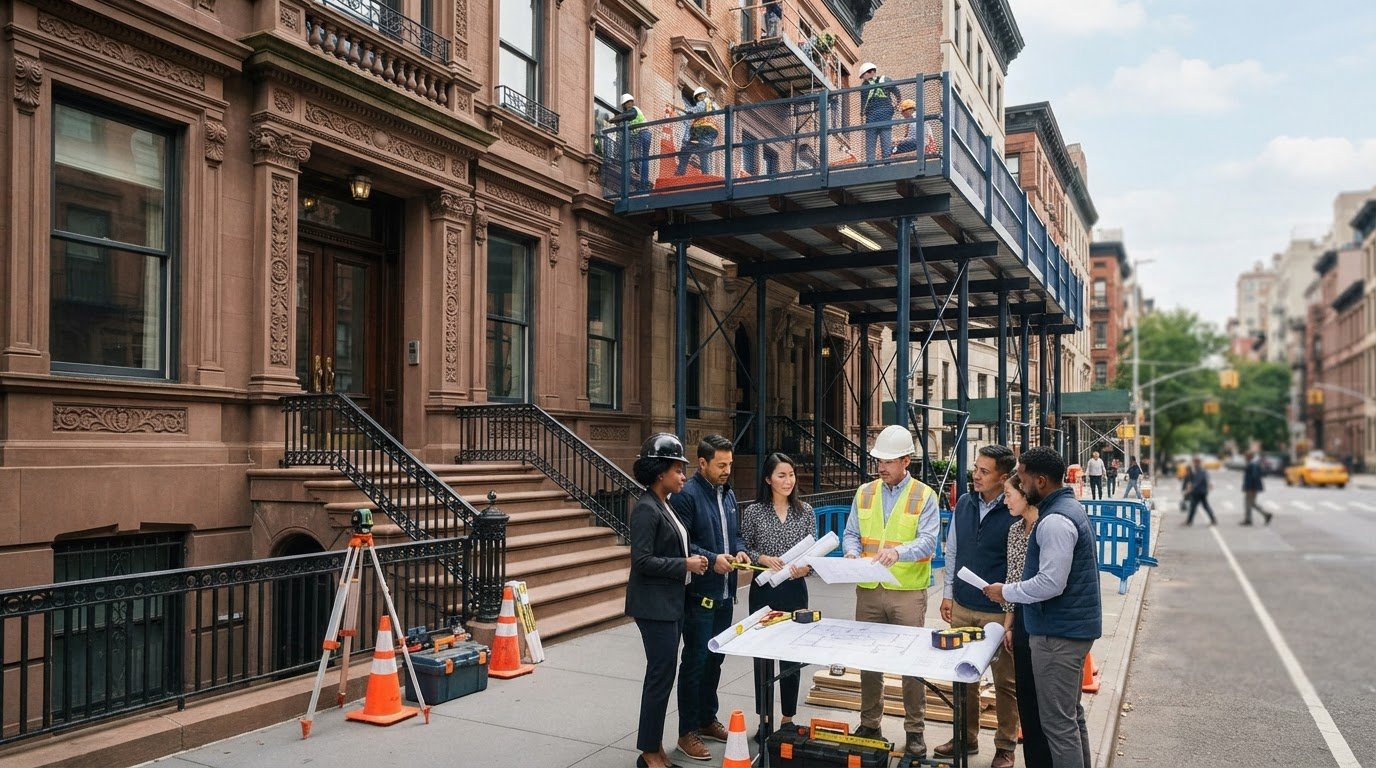
What if the biggest scheduling risk in a Manhattan facade project is not the masonry work, but decisions and access plans that are not ready when crews need them? Co-op boards know restoration can affect residents, windows, terraces, and daily building operations. The challenge is putting approvals, inspections, resident notices, access arrangements, and repairs in the right order. Facade restoration project scheduling for co-ops in Manhattan works best when the board and managing agent establish that sequence before work begins.
This guide lays out a practical planning sequence, from defining the repair scope and identifying which reviews or inspections may apply to coordinating building access and sequencing masonry work. It also explains how project-specific conditions can affect the schedule, helping the board set clear expectations without relying on a one-size-fits-all duration. Progressive Contracting NY Corp provides facade restoration and masonry work in Manhattan and Brooklyn. Call 347-341-3808 or 718-350-7388, or email ProgressiveContractingNY@yahoo.com to discuss your project. License number 2097623-DCA.
Plan a Manhattan Co-op Facade Restoration Schedule Before Work Begins
A co-op board must balance preservation goals, resident needs, building operations, and safe access before it can set workable dates. Start the schedule with the facade’s observed condition, not an assumed start date. Document visible issues, agree on the repair scope, assign decision-makers, then map the reviews, access arrangements, and work phases that depend on one another.
This sequence gives the managing agent and board a shared basis for planning. Separate confirmed repairs, such as visibly deteriorated pointing, from questions that need a closer site review. This helps prevent an initial observation from being mistaken for a complete scope. For context on retaining historic materials and restoration approaches, review these principles of facade restoration.
What should the board settle before setting dates?
Identify the managing agent, the board’s decision process, one project contact, and a clear route for updates. Then list known repairs separately from open questions about concealed or uncertain conditions. Record who is responsible for decisions and how scope changes will be reviewed. The resulting plan can guide access and masonry sequencing without implying that every condition is already understood. For practical background, see this brownstone facade repair guidance.
FISP or LPC review may affect the sequence when it applies to the property. Identify these potential dependencies early and verify the building’s requirements before assigning approval milestones. With those questions on the planning list, facade restoration project scheduling for co-ops in Manhattan can account for decisions and preparation as well as the physical work.
Progressive Contracting of NY provides brownstone facade renovation and masonry restoration in Manhattan. Call 347-341-3808 or 718-350-7388, or email ProgressiveContractingNY@yahoo.com to discuss your building’s facade. License number 2097623-DCA.
Build the Manhattan Co-op Facade Work Schedule Around Approvals and Access
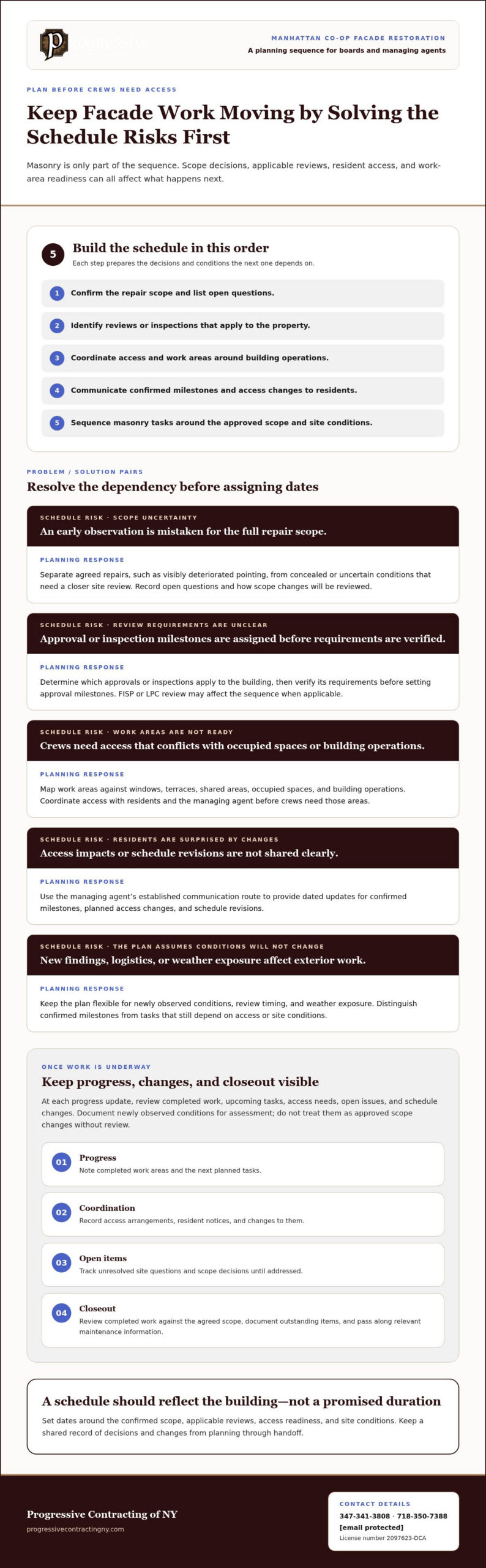
Once the board has a working scope and decision process, turn them into a sequence of milestones. Facade restoration project scheduling for co-ops in Manhattan depends on when reviews, resident access, and work areas are ready, not only on the masonry tasks themselves.
- Confirm the scope. Separate agreed repairs from items that need further site review. Record unresolved questions and the conditions that could change the work plan.
- Identify applicable reviews. Determine which approvals or inspections apply to the property. The NYC Department of Buildings’ Facade Inspection & Safety Program (FISP) is an official reference for understanding the program. Verify building-specific requirements before assigning dates.
- Coordinate access. Map work areas against occupied spaces, windows, terraces, shared areas, and building operations. The access and setup plan can determine which facade sections are practical to address first.
- Communicate impacts. Give residents dated updates for confirmed milestones, planned access changes, and schedule revisions. Use the managing agent’s established communication route.
- Sequence the work. Arrange tasks around the approved scope, access, and site logistics. Keep the plan flexible enough to account for findings or conditions that affect exterior work.
How can a co-op reduce avoidable schedule conflicts?
Coordinate shared-area use and access arrangements with residents and the managing agent before crews need those areas. Keep contingency in the plan for review timing, newly observed conditions, and weather exposure. If the scope includes mortar joints, this NYC brick pointing guidance can help clarify how pointing fits into masonry restoration planning.
A useful schedule distinguishes confirmed milestones from tasks that depend on access or site conditions, rather than promising one duration for every building. For a project discussion, call Progressive Contracting of NY at 347-341-3808 or 718-350-7388, or email ProgressiveContractingNY@yahoo.com. License number 2097623-DCA.
Manage Facade Restoration Progress and Closeout in a Manhattan Co-op
Once work is underway, regular progress reviews help the board and managing agent spot conflicts before they affect the next work area. At each update, review completed work, upcoming tasks, access needs, open issues, and schedule changes. Keep decisions tied to the agreed facade scope so a newly observed condition is documented and assessed rather than treated as an approved change without review.
What should the board track through completion?
Use a concise milestone log that the project contact can maintain and share. Record each work area, decisions made, planned access, resident notices, and changes communicated to the building. A shared record gives board members and the managing agent one reference point when questions arise about what was planned or what has shifted.
- Progress: Note completed areas and the next planned tasks.
- Coordination: Record access arrangements, resident communications, and any changes to them.
- Open items: Track unresolved site questions and scope decisions until they are addressed.
- Closeout: Review completed work against the agreed scope, document outstanding items, and pass along relevant maintenance information.
For a historic building, keep restoration details aligned with the approved scope and the facade’s character. A planned facade maintenance programme can help frame ongoing care after active work is complete. Closeout should leave a clear record of what was done and what still needs attention, without assuming that every project follows the same schedule.
Clear records support facade restoration project scheduling for co-ops in Manhattan from active work through handoff. To discuss a Manhattan facade restoration project with Progressive Contracting of NY, call 347-341-3808 or 718-350-7388, or email ProgressiveContractingNY@yahoo.com. License number 2097623-DCA.
Set Your Co-op Facade Project Up for a Clear Finish
A dependable schedule starts with a defined repair scope, clear decision-makers, and a realistic sequence for reviews, resident access, and masonry work. Dated updates help residents understand confirmed milestones and changes, while a shared progress log keeps the board and managing agent aligned through closeout. That is the foundation of practical facade restoration project scheduling for co-ops in Manhattan.
Progressive Contracting of NY provides brownstone facade renovation and historic restoration in Manhattan and Brooklyn, including neighborhoods such as Park Slope and Bedford-Stuyvesant. Discuss your building’s facade restoration needs by calling 347-341-3808 or 718-350-7388, or emailing ProgressiveContractingNY@yahoo.com. License number 2097623-DCA.
With a well-organized plan and steady communication, your board can move forward with greater clarity at each stage.
Frequently Asked Questions
How long does facade restoration take for a Manhattan co-op?
No single duration applies to every Manhattan co-op. Facade restoration project scheduling for co-ops in Manhattan depends on the repair scope, access to work areas, applicable reviews, site conditions, and the order in which crews can complete tasks. The board can make its schedule more useful by separating confirmed milestones from items that may change after further site review.
What approvals may a Manhattan co-op need before facade restoration?
Potential reviews depend on the building and proposed work. FISP or LPC considerations may affect the sequence when applicable, but neither should be assumed to apply universally. The board and managing agent should verify current requirements and the property’s circumstances before setting approval milestones. Raising these questions early helps prevent a work schedule from relying on assumptions.
How should a co-op notify residents about facade restoration work?
Use clear advance notices that identify a named building contact, expected work areas, access arrangements, and any known effects on shared spaces. Send dated updates for confirmed milestones, then communicate promptly when plans change. A consistent route through the managing agent helps residents know where to direct questions. Set notice timing around the project and building’s arrangements rather than assuming one fixed period.
Can a co-op schedule facade restoration while residents remain in the building?
Yes, the schedule can account for residents remaining in the building, but it must reflect the specific facade, access routes, shared spaces, and work areas. Progressive Contracting of NY works on exterior masonry in Manhattan, Brooklyn, the Bronx, Queens, Bedford-Stuyvesant, and Park Slope. Discuss your co-op project at 347-341-3808 or 718-350-7388, or email ProgressiveContractingNY@yahoo.com. License number 2097623-DCA.