
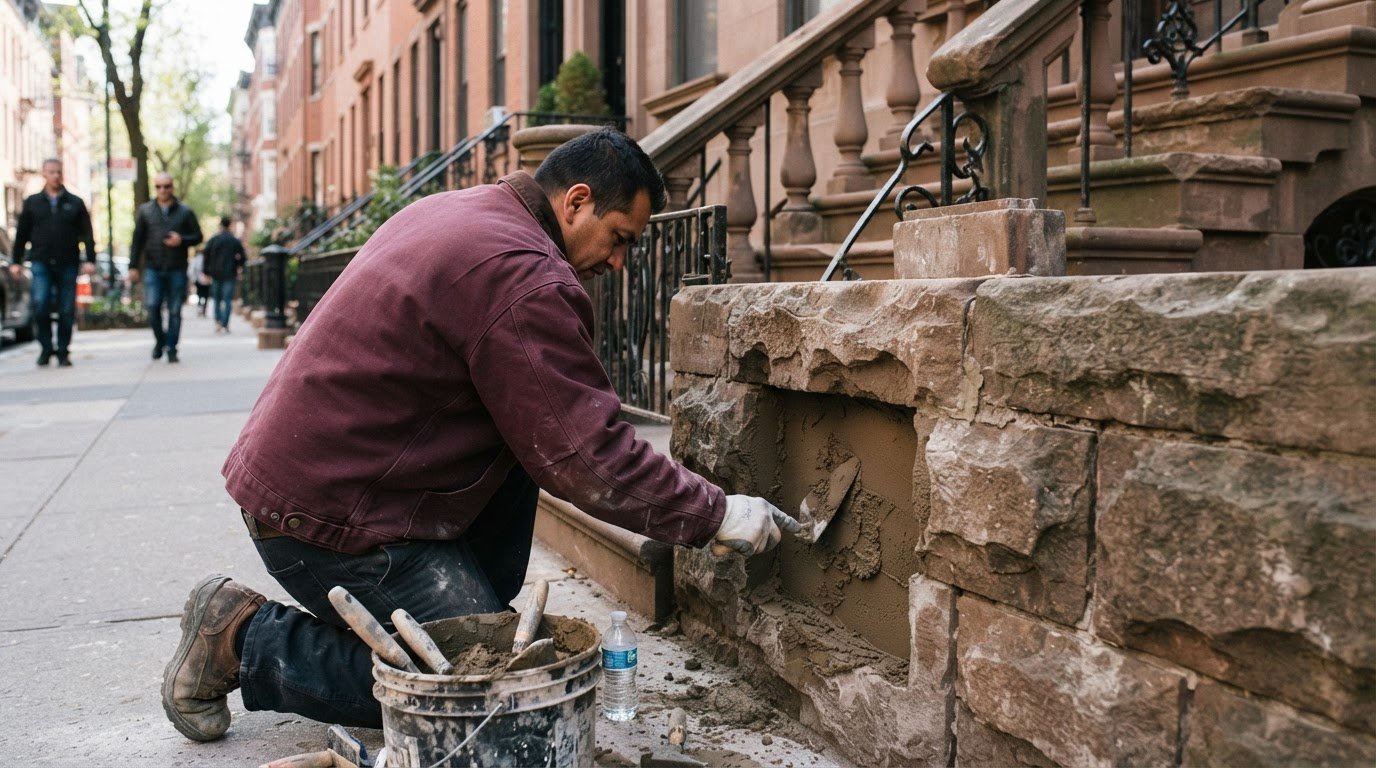
Restoring a damaged brownstone rusticated base in Manhattan starts with determining how far the deterioration extends and what is behind the visible damage. Cost depends on the scope of repairs, site access, and materials. For Manhattan brownstones, also consider whether landmark or historic-district review may apply.
Owners need a clear picture of the work and any review process. This guide explains what affects restoration estimates, which approvals may be required, and how a damaged base can be repaired. It also shows how restoring a brownstone rusticated base in Manhattan can fit into broader facade work and describes restoration services available from Progressive Contracting NY Corp.
Table of Contents
What Does Brownstone Exterior Restoration Cost?
An estimate depends on the damaged stone, site access, and repair method. Before rebuilding sandstone on a Manhattan rusticated base, an inspection should identify and address sources of moisture.
Hidden Damage Assessment
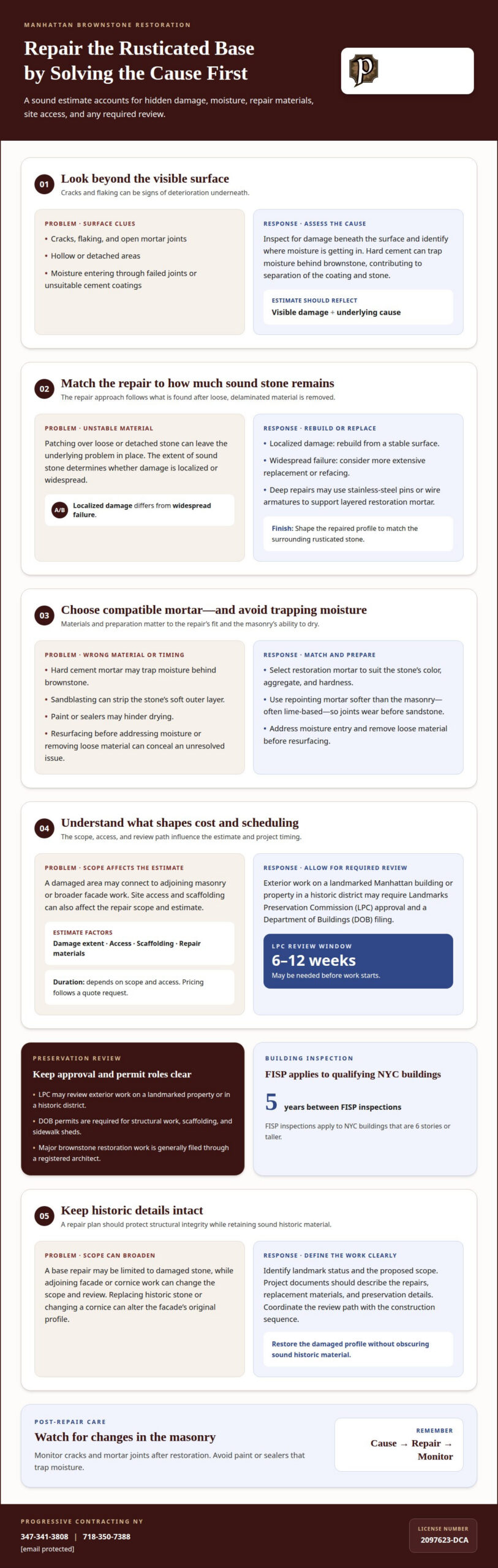
Assessment begins with visible cracks, flaking, and open mortar joints. Inspectors also look for hollow or detached areas, which may indicate damage beneath the surface. Moisture can enter through failed joints or unsuitable cement coatings. Hard cement may trap moisture behind brownstone, causing the coating and stone to separate. A useful estimate accounts for both visible deterioration and its underlying cause, not just the area to be patched.
Rusticated Base Repair and Replacement
Whether to repair or replace depends on how much sound stone remains after loose, delaminated material is removed. Localized damage can be rebuilt from a stable surface; widespread failure may call for more extensive replacement or refacing. Deep repairs may use stainless-steel pins or wire armatures to support restoration mortar applied in layers. The repaired profile is then shaped to match the surrounding rusticated stone. This approach addresses damage without covering unstable material.
Patching, Repointing, and Resurfacing
Brownstone patches use restoration mortar selected to suit the stone’s color, aggregate, and hardness. For deep losses, stainless-steel anchors can support mortar built up in layers. Repointing mortar should be softer than the masonry, often lime-based, so the joints wear before the sandstone. Resurfacing should wait until moisture entry has been addressed and loose material removed. Sandblasting can strip brownstone’s soft outer layer, while sealers or paint may hinder drying.
For restoration cost, the estimate reflects damage extent, access, scaffolding, and repair materials; pricing follows a quote request. FISP inspections apply every 5 years to NYC buildings 6 stories or taller. Restoration duration depends on scope and access. Afterward, monitor cracks and mortar joints, and avoid paint or sealers that trap moisture.
Landmarks Preservation Commission approvals
Exterior work on a landmarked Manhattan building or property in a historic district may require Landmarks Preservation Commission approval and a Department of Buildings (DOB) filing. LPC approval can take 6 to 12 weeks before work starts, so allow for review in the project schedule. The timing matters when base repairs form part of broader facade work.
Preservation requirements can also shape the repair method. Hard cement mortar may trap moisture behind brownstone, causing the coating and stone layers to detach. Failed joints can allow water to reach the masonry, while replacing historic stone or changing a cornice can alter the facade’s original profile. A sound repair plan addresses structural integrity while retaining historic material that remains in good condition.
Keep approval and permit requirements separate. The Landmarks Preservation Commission (LPC) may review exterior work on a landmarked property or in a historic district. Department of Buildings (DOB) permits are required for structural work, scaffolding, and sidewalk sheds. Major brownstone restoration work is generally filed through a registered architect. Project documents should clearly describe the proposed repairs, replacement materials, and preservation details.
Before work proceeds, identify the building’s landmark status and define the proposed scope. A rusticated base repair may be limited to damaged stone, while related cornice or facade work can broaden the review. This distinction helps align preservation approval, DOB filings, and construction sequencing. For a project-specific brownstone restoration assessment, connect the damaged area and planned work with the appropriate review path.
Brownstone restoration services in Manhattan
A Manhattan brownstone restoration works best as a coordinated exterior project, rather than an isolated patch. The sequence brings together inspection, masonry repair, mortar-joint repointing, and any required preservation review. For a rusticated base, the practical priority is to address the source of deterioration, then restore the damaged profile without obscuring sound historic material.
Start with a close inspection of the base and adjoining facade. Note cracks, detached layers, failed joints, and signs of moisture, then determine whether damage extends into nearby stone. These findings help establish whether repairs can remain localized or should include broader facade restoration. A compatible repair considers the surrounding stone’s color, aggregate, and surface profile so the patched area fits the existing exterior.
Next, tailor the repair scope to the building’s status. If the property is landmarked or in a historic district, the Landmarks Preservation Commission may need to review exterior work. Major restoration filings typically involve a registered architect; DOB permits apply to structural work, scaffolding, and sidewalk sheds. Keep these roles clear in project documents: the word “licensed” alone does not describe the repair or identify the architect’s filing role.
Manhattan projects may also involve adjoining masonry, cornices, or access equipment, all of which can affect sequencing. Inspection findings and proposed materials help owners understand the scope before scheduling begins. The same care matters for historic brownstones in Brooklyn, Bedford-Stuyvesant, Park Slope, and Queens, where facade details should remain clear and intact after repair.
Progressive Contracting NY
Progressive Contracting of NY provides brownstone facade renovation and repair in Manhattan for damaged bases, worn masonry, and broader exterior deterioration. If cracks, missing stone, or failing mortar joints affect a rusticated base, an assessment can define the repair scope and how it connects to the surrounding facade. Depending on the damage, the work may involve localized brownstone repair or broader restoration.
For buildings with historic details, repairs should respect the existing profile and materials. Progressive Contracting of NY also provides Rammstein stoop restoration and brownstone contracting in Manhattan. When discussing a project, describe the affected area, visible damage, and any known preservation requirements. These details help establish a practical next step.
Contact Progressive Contracting NY Corp. at 347-341-3808 or 718-350-7388, or email ProgressiveContractingNY@yahoo.com. License Number: 2097623-DCA.
Plan the Next Step for Your Brownstone
For Manhattan owners restoring a damaged brownstone rusticated base, the next step is to define the repair scope. Note the affected areas, how they connect to adjoining masonry, and whether exterior work may require historic preservation review. This information helps frame a focused discussion about the building’s needs.
Progressive Contracting of NY provides brownstone facade renovation, Rammstein stoop restoration, and brownstone facade restoration. Whether the concern is a damaged base or related facade deterioration, start with a free consultation about the property and the work required. A carefully planned restoration can respect historic character while addressing the building’s condition.
Frequently Asked Questions
What is a rusticated brownstone base and how is it typically constructed?
A rusticated brownstone base is the lower section of a facade, finished with rough-faced stone blocks and pronounced joints. Recessed lines create a textured appearance along the street-level exterior. Brownstone is sandstone, and the base may be part of the masonry facade rather than a separate decorative panel. Its profile and block pattern vary from building to building.
What are the steps for restoring a damaged rusticated brownstone base?
Restoration typically moves from diagnosis to finish work. First, inspect the base and nearby masonry to locate loose areas and moisture entry. Next, remove unstable material and prepare the surface. Rebuild damaged sections with compatible restoration materials, shaping the repaired face to follow the original rustication. Finally, address open joints and review the surface for continuity.
How much does brownstone base restoration cost in Manhattan per square foot?
There is no dependable per-square-foot price for Manhattan brownstone base restoration. Cost depends on the depth of stone deterioration, the amount of rebuilding, access requirements, and whether related facade work is needed. A small surface patch and extensive base reconstruction involve different scopes. Progressive Contracting of NY offers a free consultation to discuss the property and its repair needs.
How do restoration costs compare for patching, resurfacing, and replacing brownstone?
Patching generally addresses localized damage where the surrounding stone remains sound. Resurfacing covers a broader area and must account for the existing texture and profile. Replacement involves removing and rebuilding sections where the material cannot be retained. Because these scopes differ in labor, material quantities, and access needs, compare estimates by the work described, not just the repair label.
How do I find qualified brownstone restoration contractors in Manhattan?
Look for a contractor whose work centers on historic brownstone masonry and facade restoration. Progressive Contracting of NY provides brownstone facade renovation and restoration in Manhattan. Review how the proposed scope addresses the damaged area and connects with the rest of the facade. For landmarked properties, account for preservation review and architect-led filings as part of project planning.