
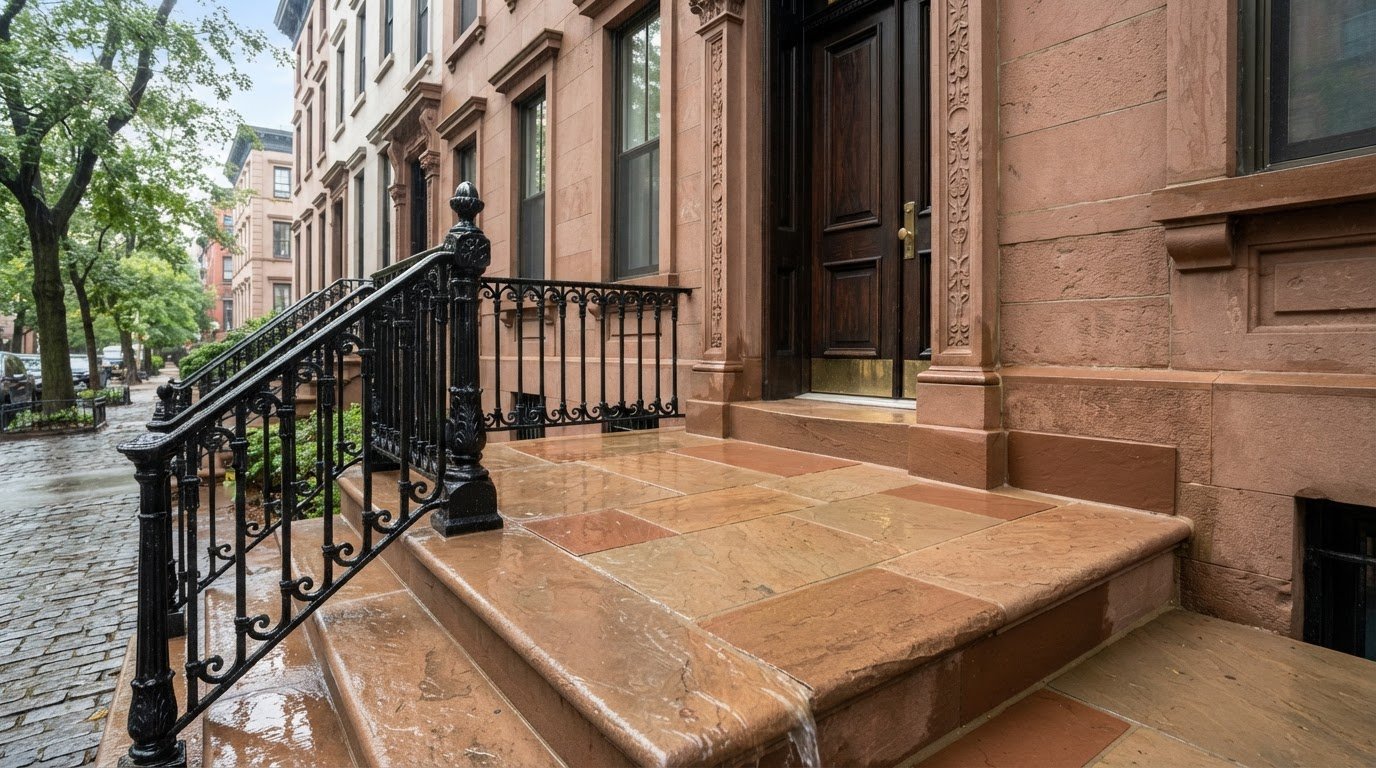
A fresh patch won’t prevent water damage if moisture is still reaching the brownstone. In Brooklyn Heights, preventing water damage to my brownstone facade starts with finding and correcting the source, then repairing affected masonry with compatible materials. Cracks, open mortar joints, faulty drainage, and water pooling on a stoop can all contribute to deterioration.
A lasting repair should address more than visible damage. This guide explains the key steps in brownstone facade restoration, from tracing water entry to patching and repointing damaged areas. It also covers why a protective coating alone may fall short, what to inspect around the facade, and how suitable repairs can help preserve a Brooklyn Heights brownstone’s character and condition.
Table of Contents
What Happens During a Brownstone Restoration Project?
Restoration starts by tracing where water enters and distinguishing active moisture from visible masonry damage. Preventing water damage to my brownstone facade in Brooklyn Heights means correcting drainage problems and openings before patching historic stone.
Mortar Joint Repairs and Freeze-Thaw Damage
Brownstone is porous sandstone. Water freezing inside its pores expands roughly 9% by volume, and this cycle can occur dozens of times each New York winter. Repeated freeze-thaw action widens cracks and can cause spalling. Failed mortar joints should be removed to a suitable depth, cleaned, and repointed with compatible mortar. Avoid smearing hard cement over historic joints. Incompatible patches can redirect moisture into softer stone and worsen deterioration.
Historic-District Approval and Material Matching
Brooklyn Heights is New York City’s first designated historic district. Most facade work in the district requires approval from the Landmarks Preservation Commission before construction begins. Confirm the property’s landmark status and approval requirements before selecting materials or starting work. A patch should match the existing stone’s color and texture, and its composition should suit the surrounding masonry. Assess nearby stone and mortar joints too, rather than treating each visible defect as an isolated cosmetic problem.
Drainage, Drying, and Repair Sequence
Repairs to gutters, flashing, the roof, and drainage can help keep water off the facade. Clear or repair failing gutters, fix damaged flashing and roof drainage, and direct downspouts away from the wall. Correct the slope or drainage where water pools on a stoop. If water has reached interior materials, structural drying may be part of broader water-damage restoration. Preventing water damage to my brownstone facade in Brooklyn Heights also means drying the masonry and correcting the entry point before finish repairs, to help prevent moisture from damaging historic materials again.
Comparing penetrating, film-forming, and elastomeric sealers
Penetrating silane-siloxane sealers repel water while allowing moisture vapor to escape, helping preserve the visible surface of historic brownstone. They begin repelling water within 24 hours and reach full cure in 3-7 days. Their stated service life is 7-10 years. This option suits masonry where homeowners want water resistance without a surface film or major change to the stone’s appearance.
Film-forming acrylic or epoxy sealers create a surface layer, but peeling may begin after 3-5 years. Elastomeric coatings may not suit every brownstone facade, so consider the masonry’s condition before choosing one. Neither coating replaces structural repairs: open joints, cracks, and water entry points still need attention. A coating applied over unresolved moisture can trap water and worsen deterioration.
Best practice starts with repairing the masonry, then choosing a compatible breathable sealer for a clean, sound surface. After cleaning, allow 48-72 hours for drying before sealing, depending on weather. For repointing, remove failed mortar, clean the joints, and use lime-based mortar softer than the brownstone. The repair mix should suit the existing stones and match the original surface and texture. Mortar that is too hard can direct moisture through the stone instead of the joints.
Sealer selection is only one part of sound brownstone facade restoration. Matching materials and repairing the cause of water entry support long-term preservation of the architectural masonry.
Choose a sealer suited to the facade, and carefully clear deteriorated mortar before repointing with a mix suited to the existing masonry. On older brick, hard mortar can damage brick, directing moisture through masonry, not joints.
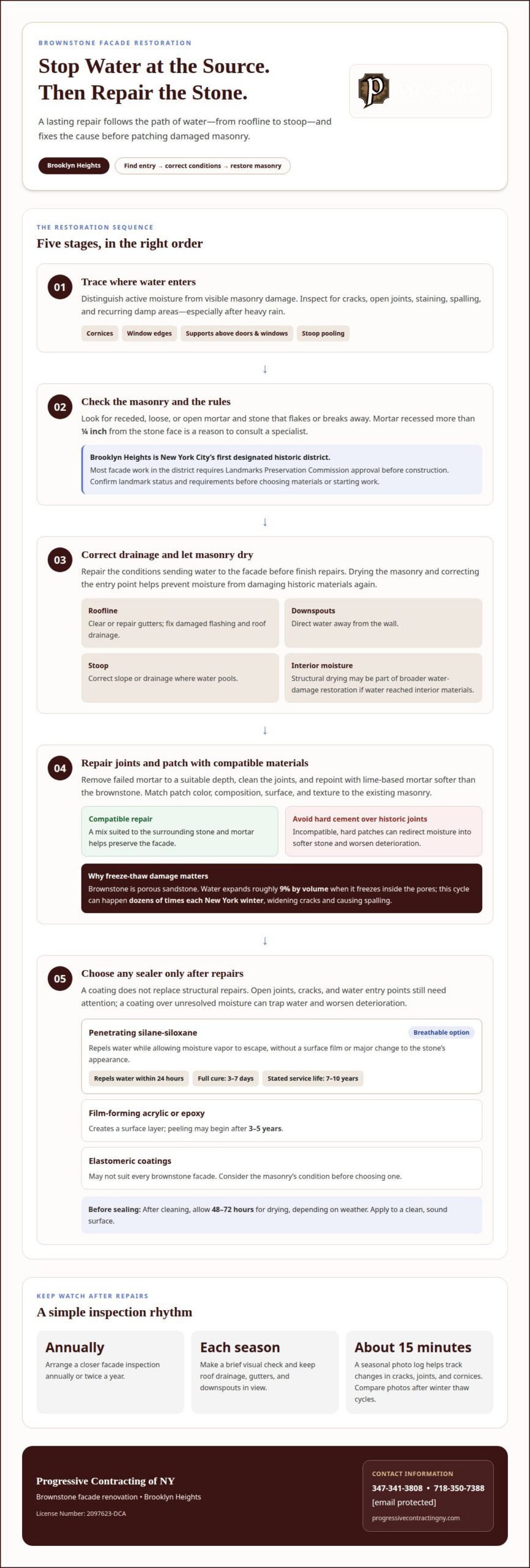
Brownstone facade patching and restoration
Effective restoration follows the path of water from the roofline to the stoop. Surface patching is most effective after the source of moisture and the extent of damage have been identified.
Facade Checks for Leaks and Cracks
Inspect the exterior for open joints, cracks, staining, and spalling, especially after heavy rain. Check cornices, window edges, and masonry or metal supports above doors and windows for cracks, corrosion, or movement. Water pooling on a stoop may point to a drainage issue. Note recurring damp areas, which can help show where water is entering before visible damage spreads.
Deteriorating Mortar and Facade Patching
Look for mortar joints that have receded, loosened, or opened, and for brownstone that flakes or breaks away. Mortar recessed more than a quarter-inch from the stone face is a reason to consult a specialist. Patching should match the brownstone’s surface and texture and use compatible masonry materials. Deep cracks or recurring deterioration can signal drainage or structural problems, so address the cause before finishing the repair.
Inspection and Maintenance Schedule
Arrange a closer facade inspection annually or twice a year, and make a brief visual check at the beginning of each season. A seasonal photo log can take about 15 minutes and helps track changes in cracks, joints, and cornices. After winter thaw cycles, compare new photos with earlier ones. Keep roof drainage, gutters, and downspouts in view, since water directed onto the facade can undo surface repairs.
Progressive Contracting NY Corp
Progressive Contracting NY Corp provides brownstone facade renovation for Brooklyn Heights properties with cracks, spalling, deteriorated mortar, or recurring water entry. If the stoop is deteriorating too, the company’s Rammstein stoop restoration service addresses this related masonry concern. The work focuses on damaged areas and conditions contributing to deterioration, rather than treating a surface patch as a complete solution.
Reach out when you notice worsening cracks, loose masonry, open joints, or water collecting on the stoop. Share the property location and visible signs of damage to start a focused conversation about the work involved.
Contact Progressive Contracting NY Corp at 347-341-3808 or 718-350-7388, or email ProgressiveContractingNY@yahoo.com. License Number: 2097623-DCA.
Plan the Next Step for Your Brooklyn Heights Brownstone
Preventing water damage to your brownstone facade in Brooklyn Heights is an ongoing maintenance task, not a one-time finish choice. Record changes after storms and seasonal shifts, then use those observations to plan future work. Note where moisture appears, what has changed, and which areas need attention first.
Progressive Contracting NY Corp provides brownstone facade renovation, brownstone facade restoration, and Rammstein stoop restoration. If facade or stoop conditions are changing, bringing those concerns together can help shape a practical plan for the property’s exterior. A measured approach respects historic materials and responds to the building’s visible condition.
A thoughtful next step can make caring for your brownstone feel more manageable.
Frequently Asked Questions
What are the common causes of water damage to brownstone facades in Brooklyn Heights?
Water commonly enters brownstone through open mortar joints, cracks, gaps around windows, and failing roof drainage. Overflowing gutters or deteriorated flashing can send runoff down the exterior instead of away from it. In Brooklyn Heights, repeated wetting can worsen existing weak spots, while water pooling on a stoop may indicate a nearby drainage problem.
How should brownstone be sealed or waterproofed without trapping moisture?
Choose a penetrating, vapor-permeable masonry sealer suited to the brownstone, rather than a coating that forms a film over the surface. Before applying it, address water entry and make sure the masonry is sound and dry. For example, sealing over an unrepaired gap around a window can leave moisture entering behind the treatment. Follow the product directions and account for the surface condition.
How much does brownstone facade repair or waterproofing cost in Brooklyn?
Repair costs depend on the condition and size of the damaged areas, materials, access, and whether drainage or related masonry work is needed. A small, localized patch and a facade with widespread deterioration require different scopes. Progressive Contracting NY Corp offers a free consultation to discuss the work and a reasonable price that fits your budget.
Do NYC or Brooklyn Heights Landmark District rules require approval for brownstone facade repairs?
Brooklyn Heights is a designated historic district, and most facade work there requires approval from the New York City Landmarks Preservation Commission before construction begins. Review requirements are particularly important for exterior changes involving visible materials or features. Establish whether the property is landmarked and whether the planned scope needs approval before work starts.
What permits are required for brownstone facade repairs in New York City?
Permit requirements depend on the repair scope. Routine maintenance does not always require a permit, while major exterior changes may require additional review. Landmark approval is a separate consideration for properties in designated districts, including Brooklyn Heights. Distinguish repairs that alter facade features from routine maintenance, and address applicable review requirements before construction begins.