
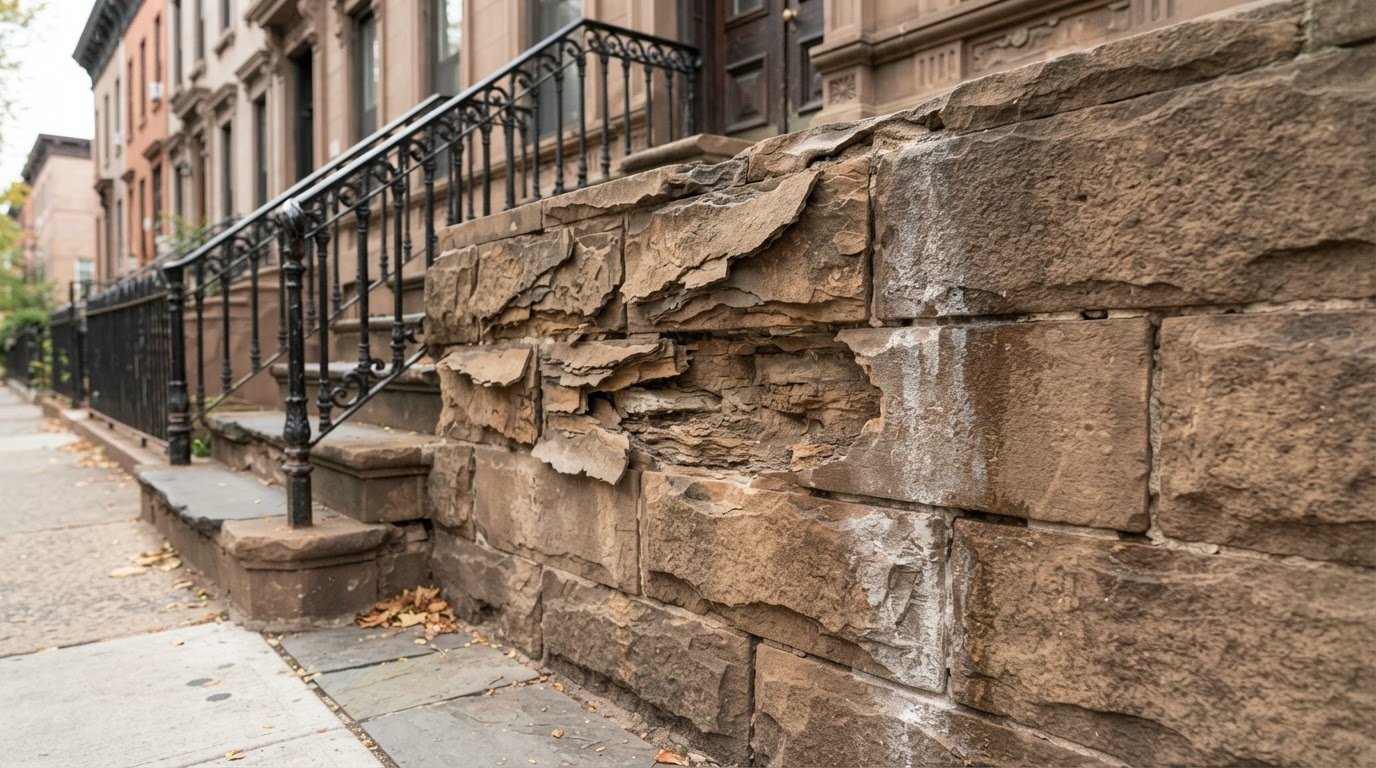
A patch that looks simple may point to a deeper masonry problem. If you’re wondering what to do if your brownstone has spalling, first assess how much material is loose or missing and whether the damage is limited to the surface or extends into the stone and mortar joints. Moisture matters too: according to the U.S. Department of the Interior, water in porous masonry can freeze, expand inside pores and cracks, and contribute to cracking or spalling.
It’s understandable to want to seal or patch the damaged area right away, but brownstone and concrete don’t necessarily call for the same repair. This article explains how to judge the severity of spalling, what moisture and salts can mean for brownstone and other masonry, and when the damage may call for professional restoration. It also explains why addressing the source of moisture is part of choosing a repair suited to the material.
Table of Contents
Assessing the severity of spalling
If you’re deciding what to do if your brownstone has spalling, start by documenting the damage from a safe distance. Photograph flakes, pits, cracks, and loose mortar, then note whether they cluster around window sills, ledges, joints, or the facade’s base. Avoid covering the stone with a conventional sealer, which can trap moisture. Loose pieces or damage extending into the stone call for a masonry assessment, not just a cosmetic patch.
Severity depends on the depth and spread of the damage, not just surface roughness. A small, shallow area differs from stone breaking away across a broad section or open joints behind it. For concrete, spalls less than one-third of the material’s depth may suit patch repair; deeper damage may require removal and replacement with new concrete. That threshold applies to concrete, not brownstone. A half-inch overlay can resurface large areas of spalled concrete, but brownstone needs a repair method suited to the stone.
To limit further damage, address water paths: clear blocked gutters, correct drainage that leaves water pooling, and adjust sprinklers away from masonry. According to the U.S. Department of the Interior, water in porous masonry can freeze, expand inside pores and cracks, and cause cracking or spalling. Reducing the use of deicing salts can also help protect vulnerable masonry.
The next step in deciding what to do if your brownstone has spalling is to consider the material and the source of moisture together. Homeowners insurance coverage for spalling and water damage depends on the policy and the cause. Review the policy’s coverage and exclusions, then ask your insurer how they apply to the damage.
Brownstone and other masonry
Spalling can look similar across a facade, but brownstone, brick, and concrete call for different repair decisions. The material and the source of moisture shape what comes next.
Causes of Brownstone Spalling
Brownstone spalling is the loss of stone at the surface, often after moisture and salts weaken the material. The U.S. Department of the Interior explains that water in porous masonry can freeze, expand inside pores and cracks, and cause cracking or spalling. That cycle makes the source of water important, not just the damaged spot.
Gutters that overflow or joints that admit water can keep vulnerable areas damp. Deicing salts can also accelerate deterioration in soft stone. A conventional sealer may trap moisture rather than resolve the cause. Brownstone repairs may use a stucco-like material in two coats, built to about 1 inch; the repair needs to bond with the sound stone and suit the profile.
Brick and concrete differ from brownstone in their materials and repair requirements. For example, brownstone joints may need mortar matched to the existing masonry, while a concrete patch is not automatically suitable for a sandstone facade. A repair assessment should identify the masonry type and trace how water reaches it.
Repair Permits and Historic-District Approvals
In New York City, required permits and historic-district approvals depend on the building’s designation and the proposed work. A brownstone in a designated historic district may face different review requirements from a property outside one, so don’t assume a repair is exempt.
Before work begins, establish whether the property is landmarked and describe the repair scope to the NYC Department of Buildings and the Landmarks Preservation Commission. The specific work matters: surface restoration and broader facade changes may be treated differently. Confirm applicable requirements with the relevant city agencies before scheduling repairs.
For damage that calls for brownstone repair, a masonry assessment can connect the material, water source, and repair method before work proceeds.
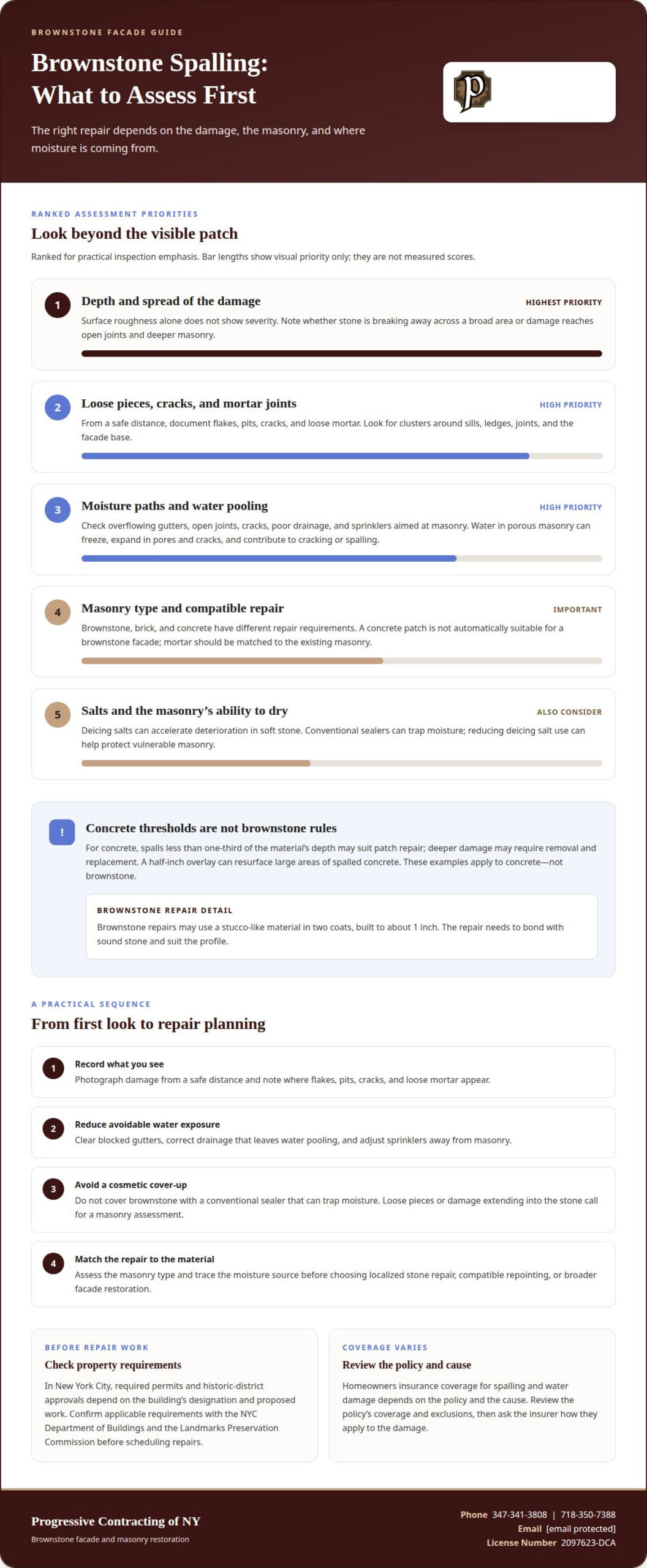
What causes brownstone spalling?
Brownstone spalling occurs when the stone’s outer surface flakes or breaks away. The damage develops when moisture and salts weaken the surface, especially if water cannot escape through the masonry. That distinction matters: replacing loose stone without addressing moisture can leave the underlying cause in place.
Water may enter through open joints, cracks, or exposed stone. According to the U.S. Department of the Interior, moisture in porous masonry can freeze inside pores, joints, and cracks, expand, and create pressure that causes cracking or spalling. Repeated wetting and freezing can gradually loosen the surface. Salts can also collect behind stone that cannot dry properly, adding pressure as they crystallize.
Brownstone needs to release moisture rather than trap it. Conventional sealers can impede that movement and contribute to deterioration. Silane and siloxane water repellents are described as allowing stone to breathe while helping it shed surface water, but the repair approach must suit the existing masonry. Mortar matters too: mismatched pointing can affect how water moves through the joints and stone.
Brick and concrete have different material properties, so a patch designed for concrete may not suit a brownstone facade. A sound assessment traces the path of moisture and distinguishes surface loss from deterioration in joints or adjacent masonry. This helps determine whether the work needs localized stone repair, compatible repointing, or broader facade restoration.
Progressive Contracting NY Corp
Progressive Contracting NY Corp is a practical next step when spalling affects your brownstone facade or returns after surface repairs. The company’s brownstone restoration and facade renovation work addresses damaged masonry as part of the property’s exterior, with an approach suited to the facade’s condition. A brownstone contractor can assess the affected area and determine the scope of work, including whether damage extends beyond a small patch.
For a brownstone facade or stoop that needs attention, contact Progressive Contracting NY Corp at 347-341-3808 or 718-350-7388, email ProgressiveContractingNY@yahoo.com, or reference License Number 2097623-DCA.
Choose a Clear Next Step for Your Brownstone
If you’re deciding what to do about spalling, focus on a repair plan that considers both the affected masonry and the broader facade. A deliberate next step can help you move from noticing deterioration to addressing your property’s exterior needs.
Progressive Contracting of NY offers brownstone facade renovation, Brownstone Facade Restoration, and Rammstein stoop restoration in Brooklyn and Manhattan. The appropriate scope depends on the building’s condition and the areas requiring work.
Keep your property’s character in view as you plan repairs. A careful restoration can give you a defined path forward for maintaining your brownstone.
Frequently Asked Questions
How can I tell whether brownstone spalling is superficial or structural?
Surface flaking confined to a small area may be superficial, while bulging, deep cracks, displaced stone, or repeated material loss can indicate a broader problem. Check whether damage continues across adjoining blocks or follows a mortar joint. These signs cannot confirm the structural condition on their own. A masonry assessment can determine whether deterioration extends behind the visible surface or affects connected facade elements.
How do professionals repair spalling brownstone and repoint mortar?
Professionals remove loose, unsound material and prepare the damaged area so the repair material can bond to stable stone. They then apply a compatible repair in layers, shaping the finish to match the surrounding profile. For open joints, repointing replaces deteriorated mortar with a mix suited to the existing masonry. The repair also needs to account for how water enters and leaves the facade.
Can spalling brownstone be repaired with modern cement, or does it need lime-based materials?
Neither “modern cement” nor “lime-based” is automatically right for every brownstone repair. The choice depends on the stone’s condition, the original mortar, and how the materials interact as the facade absorbs and releases moisture. A hard, incompatible patch can stress softer surrounding stone. The repair specification should suit the existing masonry rather than rely on a material label alone.
How do I find a qualified brownstone restoration contractor?
Choose a contractor whose work includes brownstone facade restoration and masonry repair, not only general patching. Progressive Contracting of NY specializes in brownstone facade renovation and historic restoration in Brooklyn and Manhattan. Its exterior masonry work includes brownstone repair and brick pointing. If your property is in Park Slope or Bedford-Stuyvesant, discuss the damaged facade and restoration scope with the company.
What are the safety risks of loose or falling brownstone, and when should I evacuate or call emergency services?
Loose stone can fall and injure people or damage property below. Keep clear of the area directly beneath unstable masonry, and don’t touch or try to remove loose pieces yourself. If stone is actively falling, a wall appears unstable, or people face immediate danger, move away and contact emergency services. For concerning damage without immediate danger, arrange a prompt professional assessment.