
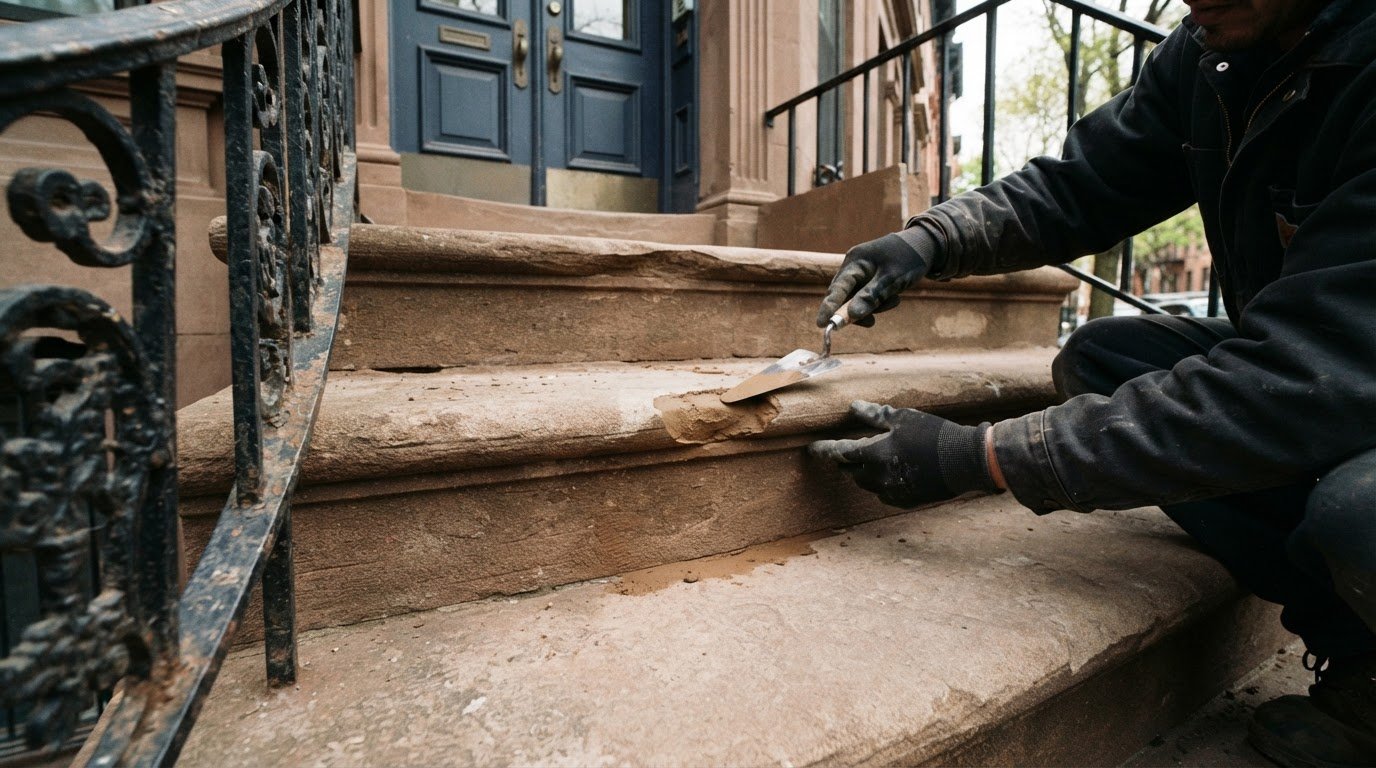
A crumbling stoop may be the most visible damage, but deteriorating mortar joints can also let water into a brownstone facade. Brownstone is porous sandstone, so water penetration and hard freezes can worsen cracks, worn surfaces, and failing details. Brownstone Restoration begins by assessing the facade as a whole, rather than treating each damaged area as an isolated patch.
Protecting a historic building’s character means understanding both the visible damage and its cause. This guide explains how to assess facade deterioration, record original details that should inform repairs, and understand how brick pointing and repointing replace deteriorated mortar to help protect masonry from the weather. It also explains how mortar repairs differ from brownstone patching and stoop work, so you can see why the right approach depends on what has failed and where water is entering.
Table of Contents
Brownstone facade deterioration and restoration
Water entering porous stone or passing through failing mortar can damage a facade. Start by identifying which materials have deteriorated.
Causes of Facade Deterioration
Brownstone is porous sandstone, so water can penetrate weakened surfaces and mortar joints. During hard freezes, trapped moisture can damage stone, widen cracks, and loosen exterior material. Paint coatings can also trap moisture. Regular maintenance helps address water entry early. Flaking surfaces, open joints, and cracks around stoop details are visible warning signs.
Crack and Mortar Repair
Cracks let more water enter, while deteriorated mortar weakens the weather resistance of masonry joints. Repair starts by distinguishing stone damage from gaps between bricks because each needs a different treatment. Brownstone facade repair may involve brick pointing, which removes deteriorated mortar and replaces it. Recording cracks and surviving facade details also helps guide careful repairs.
Patching Damaged Brownstone
Brownstone patching removes deteriorated material until sound stone remains, then applies new cementitious material in coats. A durable composite repair should be at least 3/4 inch thick. Applying a patch to an individual stone unit, with edges ending at mortar joints, keeps the repair defined. Removing intact stone unnecessarily can erase historic detail, while a poor color match may remain visible.
Restoration Methods and Alternatives
Restoration retains sound stone. Replacement is appropriate for units too damaged to repair, while resurfacing covers existing material. A specialist can distinguish stone damage from mortar failure and document historic details before work begins. A typical sequence is assessment, documentation, removal of failed material, joint or stone repair, and finishing. Cost depends on access, damage, detail, and materials; project time depends on scope, weather, and curing. Avoid covering sound stone, trapping moisture with paint, or treating mortar and stone as if they were the same material.
Facade documentation and historical research
Historic brownstone records help distinguish original features from later repairs. Brownstone, a type of sandstone, was widely used from the mid-1800s until the early-1900s. Before work begins, document the facade’s profiles, trim, joints, and surviving surface texture. Photographing details such as a carved lintel or stoop edge gives the restoration team a clear reference for preserving character.
The right materials depend on what remains sound. If a stone unit cannot be retained, replacement stone should match the existing material. For localized damage, a specialist can remove deteriorated material and repair the area with compatible cementitious patching material. Damaged decorative details can be recreated with a brownstone stucco mix. These approaches allow brownstone and limestone features to be addressed according to their materials and condition.
Paint removal requires care because coatings can trap moisture in masonry. Historic cleaning and paint removal should begin with the lightest method, escalating only when needed. One restoration approach uses a Landmarks-approved chemical to remove original paint, followed by color samples to match the brownstone. Documenting the process helps preserve the original appearance while limiting unnecessary abrasion to brick and stone.
Before removing or replacing masonry, record the existing brick pattern, mortar joints, and limestone trim. On facades subject to New York City Landmarks Preservation Commission regulations, the Commission must approve restoration work before repairs proceed. Its guidance describes brownstone patching using specified slurry, scratch, and finish coat recipes, with samples and mock-ups subject to approval. These requirements help align repair materials and methods with the historic facade’s details.
Its popularity as a facade material in the 19th century makes surviving examples useful evidence when comparing documented profiles and finishes, helping researchers distinguish historic character from later interventions.
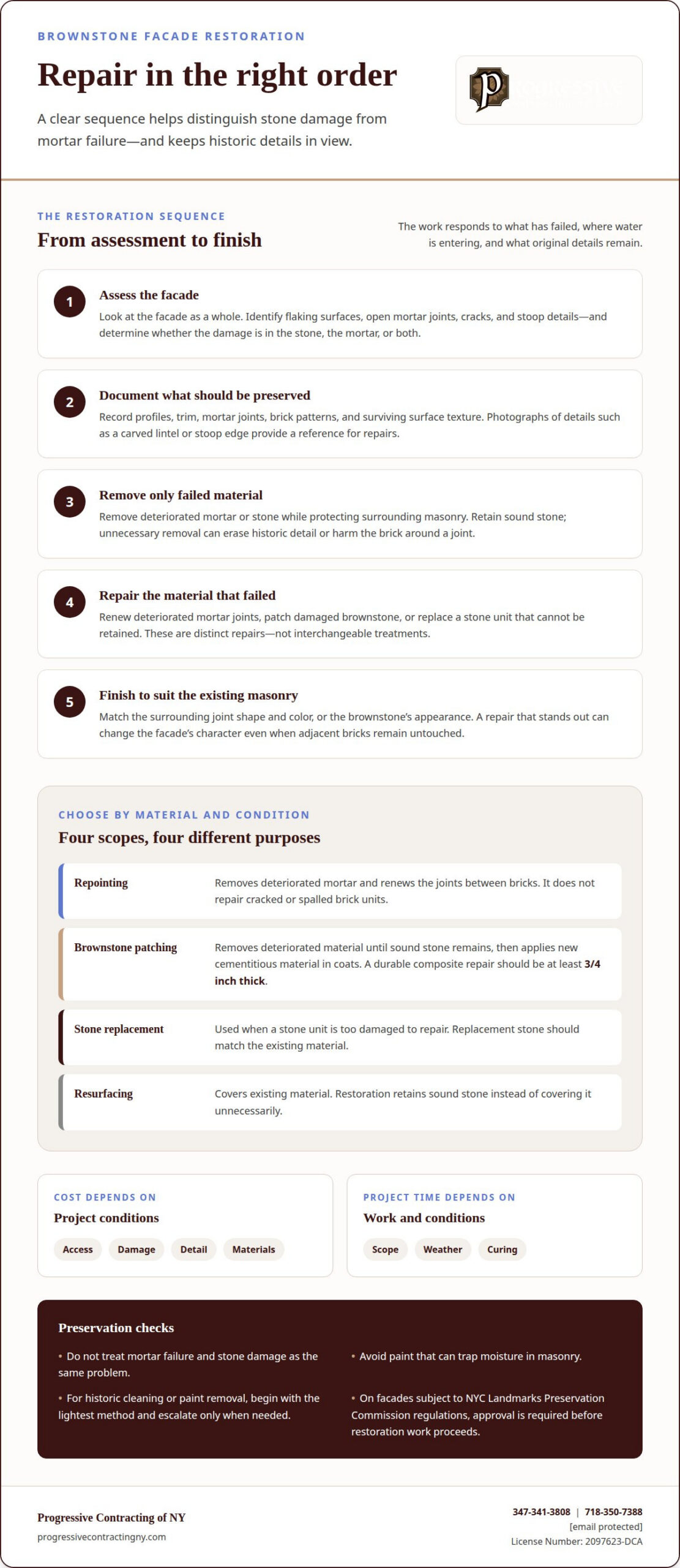
Brick pointing and repointing
Brick pointing finishes the mortar joints between bricks; repointing renews mortar that has deteriorated. These joints help protect brick masonry from the weather, so gaps or crumbling mortar merit attention. Brownstone facades may combine brick sections with sandstone, limestone, and decorative trim. Because each material has a distinct surface and appearance, careful joint work helps preserve the building’s character.
Look for mortar that is loose, cracked, recessed, or missing, especially around window openings, along the stoop, and beneath projecting details. Repair begins by identifying damaged joints and removing deteriorated mortar without harming surrounding brick. Fresh mortar then replaces the removed material, and the joint is finished to suit the existing masonry.
Mortar selection and finishing affect how a repair looks beside historic brick. A joint that stands out can change the facade’s character, even if the bricks remain untouched. Matching the existing joint shape and color helps preserve the original pattern. For example, a narrow, recessed joint should not become a broad, flush band without a sound restoration reason.
Repointing addresses failing joints, not cracked or spalled brick units. Those conditions need separate assessment, and mortar work alone cannot repair damaged stone or brick. A durable result depends on targeted removal, careful replacement, and a finish that respects the surrounding masonry. Unnecessary removal can damage historic material, so the distinction matters.
Brick replacement and repointing address different materials: replacement concerns damaged wall bricks, while repointing renews mortar joints. The company’s brick replacement service uses new, matching bricks to restore damaged walls.
Keeping the two scopes distinct clarifies whether the work concerns mortar or damaged wall bricks. Brick replacement uses new, matching bricks, while repointing renews mortar rather than replacing bricks. One addresses the brick units; the other addresses the joints between them.
Progressive Contracting NY
Progressive Contracting NY Corp helps property owners address brownstone facade deterioration and stoop damage with brownstone facade renovation and Rammstein stoop restoration. When cracks, worn stone, or failing masonry joints appear, the repair plan should account for both the damaged area and the historic details around it. The work can include assessing the facade and stoop, then determining the appropriate repair or restoration for the affected materials.
For brownstone properties in Brooklyn, Progressive Contracting NY Corp provides a practical next step when deterioration needs professional attention. Contact the team by calling 347-341-3808 or 718-350-7388, or email ProgressiveContractingNY@yahoo.com. License Number: 2097623-DCA.
Plan the Next Repair with Care
Before work begins, gather your observations and historic photographs into a clear project brief. This gives the restoration team a practical starting point for discussing priority areas and ways to preserve the building’s character. Effective brownstone restoration responds to the condition of the actual facade and stoop, rather than relying on a one-size-fits-all approach.
Progressive Contracting NY Corp provides brownstone facade renovation, brownstone facade restoration, and Rammstein stoop restoration in Brooklyn and Manhattan. If deterioration has raised questions about the right scope of work, contact the team to discuss your property and repair needs.
A focused conversation can help turn concerns about your home into a clear repair plan.
Frequently Asked Questions
What is brownstone restoration?
Brownstone restoration repairs and renews a building’s exterior masonry while retaining sound historic features. Depending on the building’s condition, work may address a worn stoop, damaged facade stone, or deteriorated brickwork. In Brooklyn and Manhattan, a project may combine targeted repairs with broader facade renovation, with the scope shaped by the property’s materials and architectural details.
What permits and historic preservation rules apply to brownstone restoration in New York City?
Requirements depend on the building and the proposed work. The New York City Landmarks Preservation Commission requires approval before restoration work proceeds on facades subject to its regulations. Other work may also require city permission. For properties in Brooklyn and Manhattan, the applicable review depends on the building’s status and the specific exterior changes proposed.
How should a restored brownstone facade be maintained?
Check the facade regularly, clean it gently, and address small defects promptly. Note a new crack near a window or loose mortar beside a stoop before water can enter and worsen the damage. Avoid aggressive cleaning that can abrade historic surfaces. Regular checks help you spot changes in repaired areas and identify emerging maintenance needs.
How do you choose a qualified brownstone restoration contractor?
Choose a specialist who can assess the facade and stoop, distinguish stone damage from mortar failure, and document historic details before recommending repairs. For facades subject to Landmarks Preservation Commission regulations, restoration work requires Commission approval before repairs proceed.