
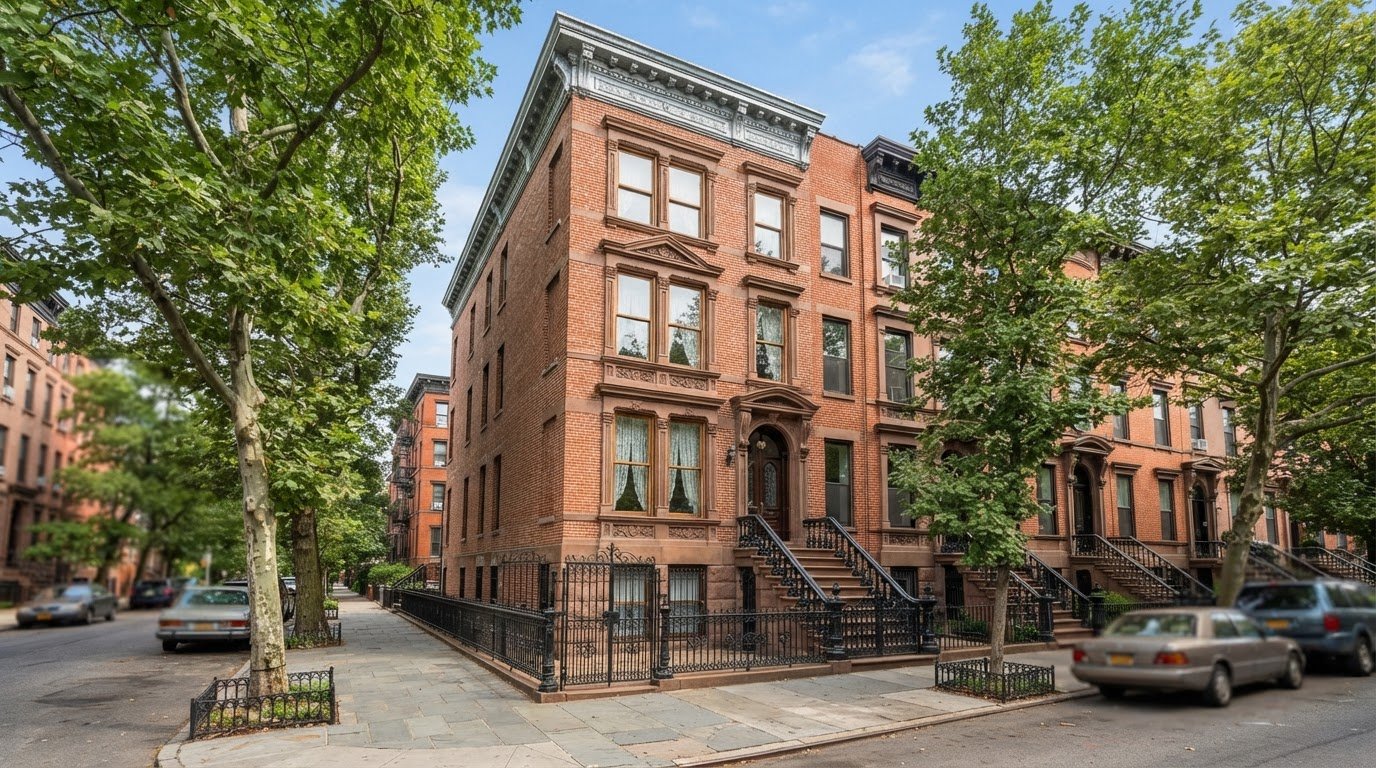
A brownstone restoration budget in Brooklyn depends on the condition of the masonry and the work required, so there’s no single price that fits every property. For facade restoration in Brooklyn, the cost is provided after a quote request and depends on the project’s scope, including whether the stoop or decorative details need attention.
Planning can be difficult when cracks, open mortar joints, or loose masonry raise questions about whether repairs will be enough. Damaged brick and mortar can often be repaired without replacing an entire facade, but the right approach depends on the visible deterioration and its cause.
This guide explains what shapes restoration costs, how to distinguish repairable damage from more extensive work, and why brownstones in neighborhoods such as Brooklyn Heights, Bedford-Stuyvesant, Carroll Gardens, and Clinton Hill can have different needs. You’ll also learn how local facade restoration can preserve a building’s character while addressing its masonry.
Table of Contents
How much does brownstone restoration cost in Brooklyn?
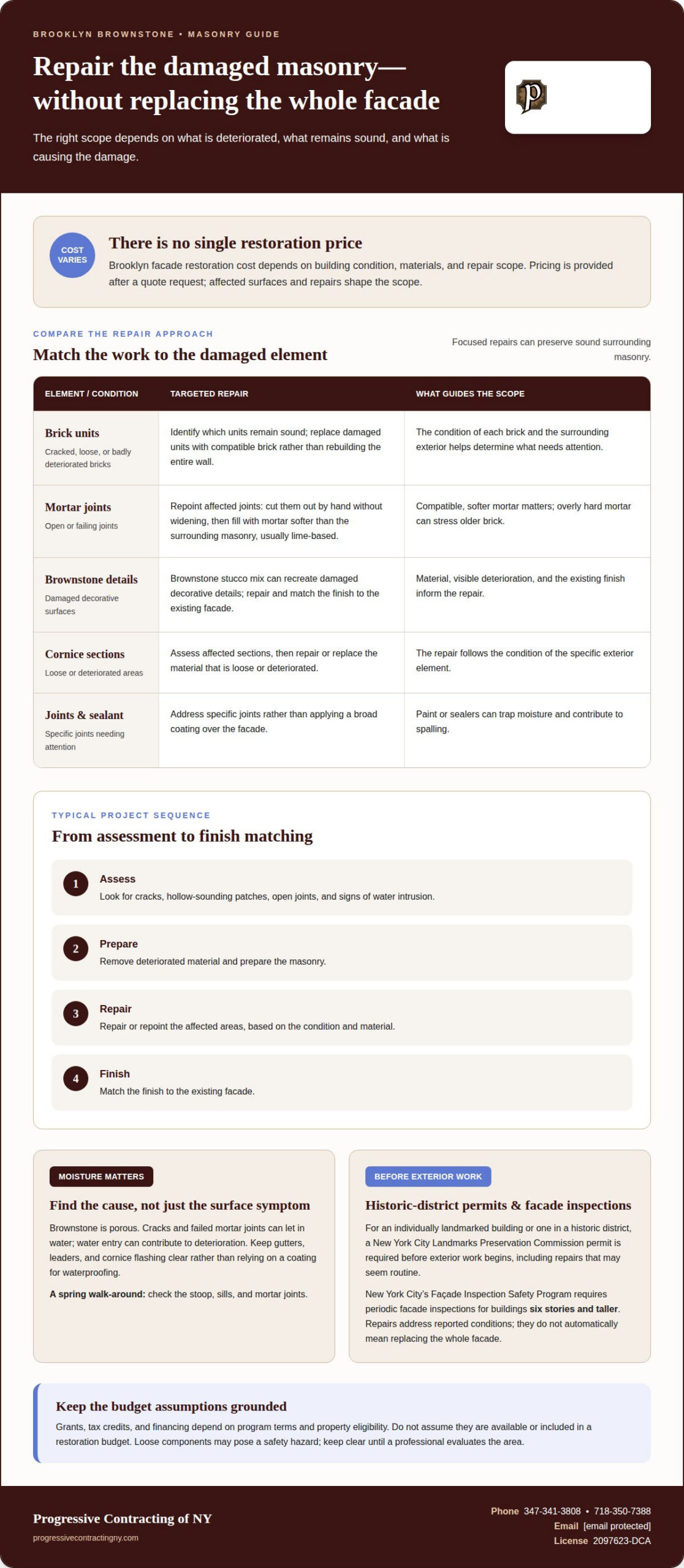
The cost of facade restoration in Brooklyn depends on the building’s condition, materials, and repair scope. A brownstone with open joints needs different work from one with failing stone details or a deteriorated stoop. Pricing depends on the project and is provided after a quote request, with the affected surfaces and repairs shaping the scope.
A typical project moves through assessment, preparation, repair, and finishing. First, a professional looks for cracks, hollow-sounding patches, open joints, and signs of water intrusion. Next, crews remove deteriorated material and prepare the masonry. They then repair or repoint affected areas and match the finish to the existing facade.
Brownstone is porous, so water entry can contribute to deterioration. Cracks and failed mortar joints create paths for moisture; paint or sealers can also trap moisture and contribute to spalling. Good water management means keeping gutters, leaders, and cornice flashing clear rather than relying on a coating for waterproofing. A spring walk-around can reveal problems at the stoop, sills, and mortar joints.
Delaying repairs can let water enter through cracks or deteriorated joints, worsening masonry damage. Loose components may pose a safety hazard, so keep clear until a professional evaluates the area. In Park Slope, Carroll Gardens, or Bedford-Stuyvesant, historic details and stone condition help shape facade restoration in Brooklyn. Brownstone and limestone surfaces may require different materials and finish matching.
For a landmarked building or one in a historic district, the New York City Landmarks Preservation Commission requires a permit before exterior work begins, including repairs that may seem routine. Grants, tax credits, and financing depend on program terms and property eligibility, so do not assume they are available or included in a restoration budget.
Can damaged brick and mortar be repaired without replacing the entire facade?
Repairs can often address damaged masonry without replacing an entire facade. In Brooklyn, exterior work on an individually landmarked building or one in a historic district requires a permit from the New York City Landmarks Preservation Commission before work begins.
Brick Repair and Replacement
Repair starts by identifying which brick units remain sound and which are cracked, loose, or badly deteriorated. Crews can replace damaged units with compatible brick, preserving the surrounding exterior instead of rebuilding the entire wall. Cornice repair follows the same principle: assess loose or deteriorated sections, then repair or replace affected material. Sealant work should address specific joints, not trap moisture behind a broad coating. Brownstone stucco mix can recreate damaged decorative details.
Mortar and Facade Deterioration
Open or failing mortar joints can admit moisture and worsen masonry deterioration. Repointing renews those joints without removing sound brick. The joints are cut out by hand without widening them, then filled with mortar softer than the surrounding masonry, usually lime-based. Compatibility matters: overly hard mortar can stress older brick. In Stuyvesant, the condition of the existing masonry helps determine whether pointing, brick replacement, or both are appropriate.
Local Law 11 and FISP Repairs
New York City’s Local Law 11, now the Façade Inspection Safety Program, requires periodic facade inspections for buildings six stories and taller, according to the New York City Department of Buildings. When inspection findings identify deteriorated masonry or loose components, repairs address those conditions rather than automatically replacing the whole facade. Cornices, joints, and brick areas can each require different work. The repair scope follows the reported condition and the affected exterior elements.
For focused brick pointing and brownstone repair, the repair method should match the masonry and the damage.
Facade restoration across Brooklyn neighborhoods
Facade restoration in Brooklyn depends on each building’s masonry, stoop, and exterior details. Progressive Contracting NY Corp provides brownstone facade renovation, brick pointing, brownstone repair, and stoop restoration.
Neighborhood Restoration Coverage
Brooklyn Heights, Bedford-Stuyvesant, Carroll Gardens, and Clinton Hill have properties with aging masonry, stoops, facades, and exterior details. A practical assessment identifies affected elements and distinguishes localized facade repair from broader replacement. That scope, rather than the neighborhood name alone, guides the restoration plan.
Park Slope, Greenpoint, Williamsburg, and Crown Heights also have brownstone restoration needs. Weather exposure, existing finishes, and each facade’s condition can shape the work. Roofing and drainage matter too, since water running down exterior walls can affect masonry. For facade restoration in Brooklyn, separating water-related causes from direct facade damage helps define the work clearly.
Available Brooklyn Restoration Services
Brooklyn restoration services can address brownstone facades, brick masonry, stoops, and sidewalks. Brick pointing renews deteriorated joints, while brownstone repair addresses damaged stone surfaces. Stoop restoration focuses on the entrance structure, and facade renovation can address several exterior elements together.
The right scope depends on the building’s condition. Sound brick with failed joints may need pointing, while damaged units may require replacement. A brownstone facade with worn details may need repair and finish matching. The material, visible condition, surrounding finishes, and weather exposure all help shape facade restoration in Brooklyn.
Progressive Contracting NY
Progressive Contracting of NY helps Brooklyn property owners address brownstone facade damage through assessment and restoration. When cracks, deteriorated masonry, or worn exterior details need attention, the company assesses visible conditions and considers likely causes before recommending repairs. Its work includes brownstone facade renovation, brownstone restoration, and Rammstein stoop restoration. The appropriate scope depends on the building’s condition and affected elements.
For a property in Brooklyn or Manhattan, reach out with the building location and the facade or stoop concerns you’ve noticed. Contact Progressive Contracting NY Corp by calling 347-341-3808 or 718-350-7388, or emailing ProgressiveContractingNY@yahoo.com.
Plan the Next Step for Your Brooklyn Property
Planning facade restoration in Brooklyn starts with a clear picture of the property’s needs. Note the areas that concern you, such as the facade, stoop, or decorative details, and gather any photos or prior inspection notes. These details can help frame a focused conversation about the next step.
Progressive Contracting of NY provides brownstone facade renovation, brownstone facade restoration, and Rammstein stoop restoration. The work can address different exterior elements according to their condition, rather than treating every property as the same project. A clear discussion of visible concerns can help define an appropriate scope of work.
A well-planned next step gives your building’s restoration a practical starting point.
Frequently Asked Questions
Are you licensed, bonded, and insured?
Progressive Contracting of NY lists license number 2097623-DCA. A license number identifies a license, but it doesn’t establish bonded or insured status. Licensing, bonding, and insurance are separate matters, so the listed number should not be read as proof of all three. This distinction helps clarify what the license information does and doesn’t communicate.
Do you handle Local Law 11 / FISP inspections?
Progressive Contracting of NY provides facade restoration and masonry repair, not FISP inspections. According to the New York City Department of Buildings, the Façade Inspection Safety Program requires periodic facade inspections for buildings six stories and taller. Restoration work can address masonry conditions identified during an inspection, such as deteriorated areas requiring repair.
Do you work on landmark or historic district properties?
Yes. Progressive Contracting of NY provides historic brownstone renovation and facade restoration for properties in Brooklyn and Manhattan. For an individually landmarked building or one within a historic district, the New York City Landmarks Preservation Commission requires a permit before exterior work begins, including repairs that may appear routine. The approval requirement depends on the property’s designation.
How do I know if my building needs facade restoration?
Look for visible changes across the exterior, including crumbling surfaces, loose masonry, open joints, or areas that sound hollow when assessed by a professional. A change in one small area may call for localized repair, while deterioration across multiple facade elements may indicate broader restoration needs. Loose or unstable components need prompt professional evaluation.
How long does a typical project take?
Project duration depends on the repair scope, masonry condition, preparation needs, access, and curing conditions. Mortar and restoration materials generally need above-freezing temperatures during curing, so facade work in New York is usually scheduled from spring through late fall. A project involving several facade elements takes a different sequence from a focused repair.