
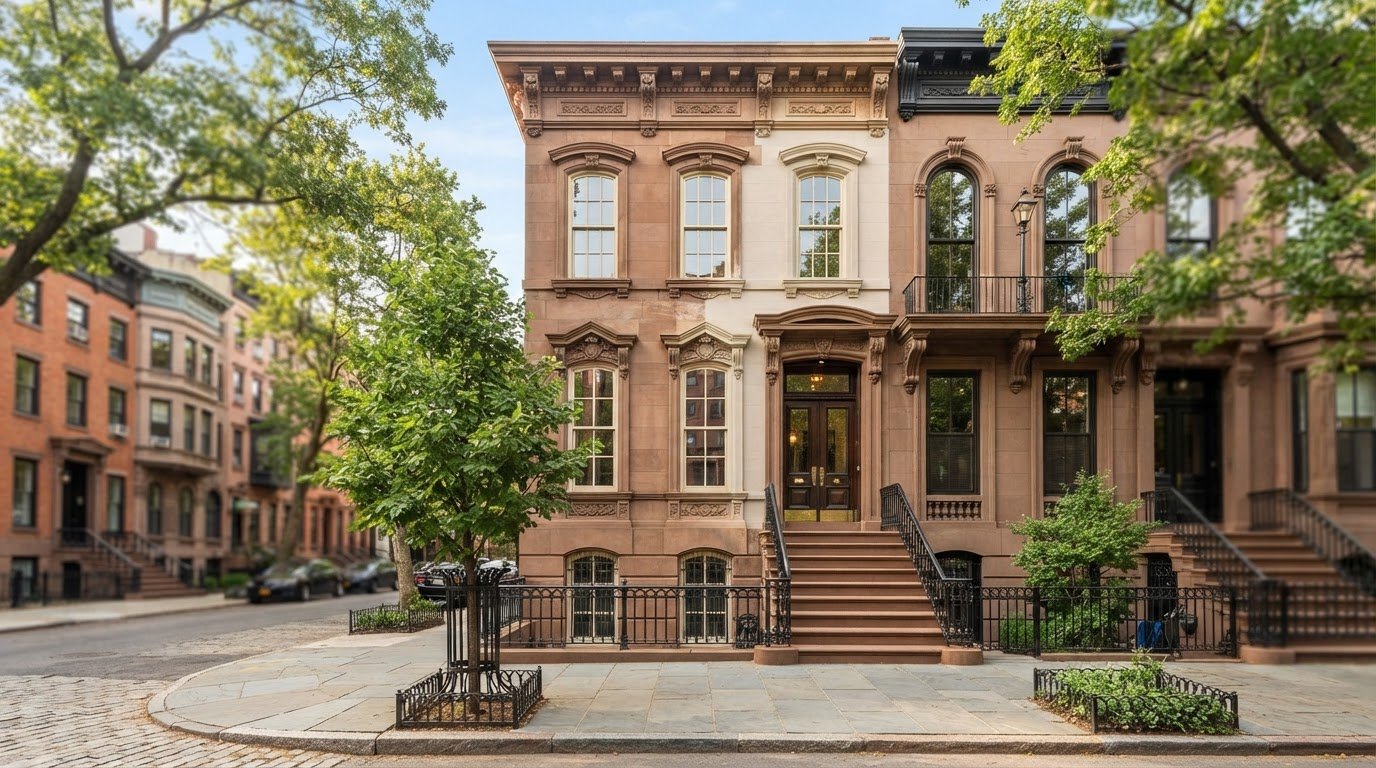
Yes, brownstone façades in Brooklyn Heights can be restored with masonry repairs suited to the building’s existing materials, whether damage is localized or widespread. A Brooklyn Heights façade repair service should address the cause and extent of deterioration, not simply cover visible cracks or worn surfaces. Loose mortar, damaged bricks, peeling brownstone, and recurring leaks all warrant attention.
It’s understandable to want repairs that protect the building while respecting its historic character. The right scope depends on what has failed and whether the rest of the façade remains sound. This article explains how to recognize common masonry problems and what careful restoration involves.
You’ll also learn how mortar and repair methods affect older brownstone, when targeted work may be sufficient, and how Brooklyn Heights façade restoration can address the neighborhood’s historic buildings.
Table of Contents
Can you handle brownstone facade restoration in Brooklyn?
Yes. Brooklyn Heights brownstone restoration can address historic surfaces, masonry joints, and façade damage, with repairs tailored to the building.
Brownstone and Landmark Restoration
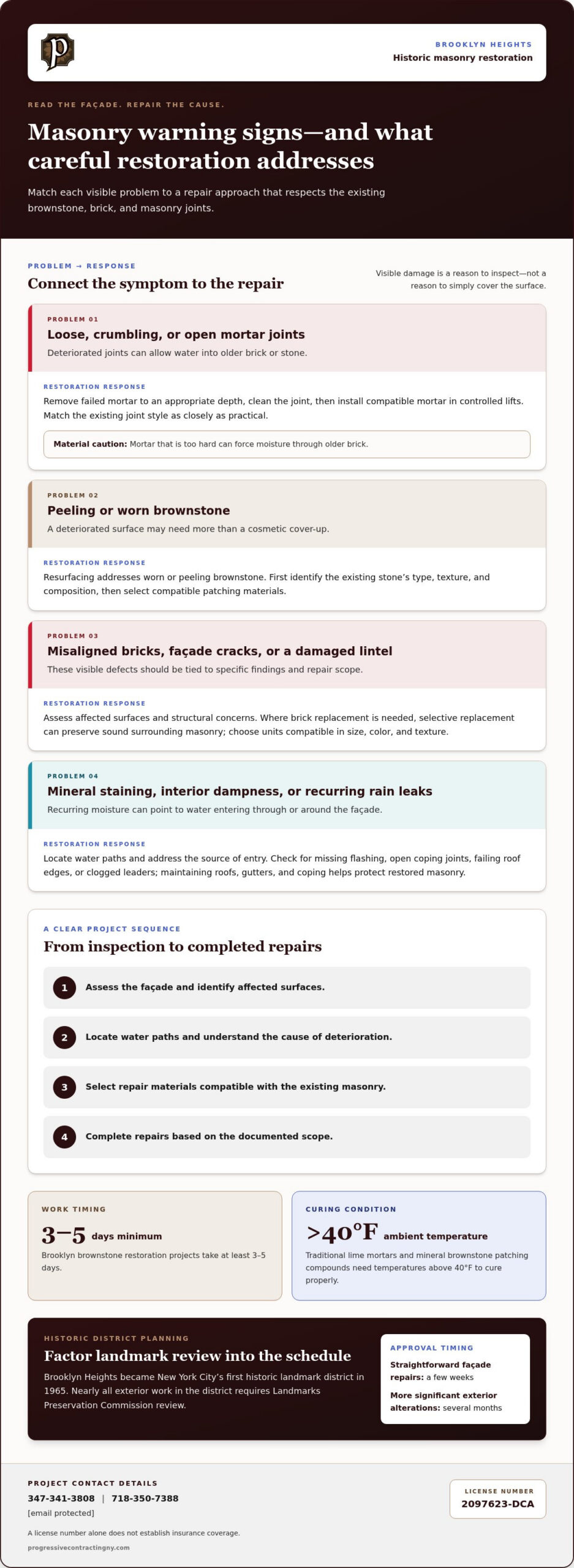
Brooklyn Heights became New York City’s first historic landmark district in 1965. Nearly all exterior work in the district requires Landmarks Preservation Commission review. A restoration scope should identify affected surfaces, assess structural concerns, and match repair materials to the brownstone’s existing type, texture, and composition. These steps help preserve historic character during residential or commercial work.
Historic Resurfacing and Repointing
Resurfacing addresses worn or peeling brownstone, while repointing renews deteriorated joints in brick or stone. For repointing, crews remove failed mortar to an appropriate depth, clean the joint, and install compatible mortar in controlled lifts. The finished joint should match the existing style as closely as practical. Mortar that is too hard can force moisture through older brick.
Contractor Credentials and Quotes
Compare quotes by their stated findings, repair scope, materials, and conditions that could change after damaged masonry is opened. Review licensing details, insurance documentation, relevant restoration credentials, and written warranty terms side by side. A clear estimate connects each repair to a visible defect, such as open mortar joints or a damaged lintel, rather than relying on a broad description.
Repair Signs and Project Planning
Loose or crumbling mortar, misaligned bricks, peeling brownstone, façade cracks, mineral staining, interior dampness, and recurring rain leaks warrant inspection. Delayed repairs can let water enter masonry and cause further damage. Project steps include assessing the façade, locating water paths, selecting compatible materials, and completing the repairs. Brooklyn brownstone restoration projects take at least 3-5 days.
Historic masonry materials and compatible mortar
In Brooklyn Heights, nearly all exterior work in the historic district requires Landmarks Preservation Commission review. Materials and design should respect the existing façade, with approvals shaped by the work’s scope and location.
Historic Material Selection
Start by identifying the brownstone’s existing type, texture, and composition before choosing patching compounds or replacement masonry. For brick repairs, selective replacement can preserve sound surrounding masonry; choose units with compatible size, color, and texture. Traditional lime mortars and mineral brownstone patching compounds need ambient temperatures above 40°F to cure properly. That condition affects when restoration work can proceed.
Maintenance of Historic Materials
Preservation depends on controlling moisture, not just renewing the surface. Missing flashing, open coping joints, failing roof edges, or clogged leaders can direct water into masonry. Waterproofing should address the source of water entry. Maintaining roofs, gutters, and coping also helps protect restored façades.
For Brooklyn Heights exterior work, account for proposed materials and design as part of the LPC review process before construction. Straightforward façade repairs can take a few weeks to receive approval, while more significant exterior alterations can take several months. This distinction matters when planning replacement work or brownstone restoration. Park Slope properties are outside this district’s review context.
Which Brooklyn Heights façade repair contractors are licensed and insured?
A license number and insurance documentation answer different questions. The stated license number is 2097623-DCA; that identifier alone doesn’t establish insurance coverage. For a Brooklyn Heights masonry project, compare the business name and license details on the estimate with the documents provided for the work.
Start with the estimate. It should describe the findings, included repairs, materials, and conditions that could change once damaged masonry is opened. For example, a brick repointing quote should distinguish joint work from brick replacement. That detail helps you compare the actual scopes instead of treating different proposals as equivalent.
Insurance records should identify the insured business and coverage period. Match the business name on the certificate to the contractor named in the agreement, and check that the document is current for the planned work. A license number is not proof of insurance, and a certificate is not proof of masonry experience.
Experience should also match the task. Brownstone resurfacing, brick pointing, and work around a lintel each call for specific repair knowledge. Look for project descriptions that explain the defect, proposed method, and compatible materials. A written warranty should clearly state what work it covers, its duration, and any exclusions.
For Brooklyn Heights façade work, include landmark review and jobsite planning in the schedule where applicable. Compare documentation, repair scope, material choices, and written terms together. These checks help owners assess whether a proposal addresses the façade’s actual condition.
Explore Brooklyn Heights brownstone façade restoration
A building façade contributes to structural integrity, energy efficiency, and curb appeal. Compare proposals by their documented repair scope and materials, not appearance alone. Reviewing the estimate, insurance records, and written terms together helps you judge whether the proposed work addresses the façade’s condition.
Progressive Contracting NY Corp: Brownstone facade renovation
Progressive Contracting NY Corp provides brownstone façade renovation and restoration for Brooklyn Heights properties with worn or damaged masonry. Turn to the company for façade deterioration that needs repair or a brownstone requiring broader exterior work. Services also include Rammstein stoop restoration.
To discuss your property, call 347-341-3808 or 718-350-7388, or email ProgressiveContractingNY@yahoo.com. License Number: 2097623-DCA.
Take the Next Step Toward a Sounder Façade
A useful next step is to connect visible masonry concerns with the work your property needs. A Brooklyn Heights façade repair service can help turn a general concern into a defined restoration scope. Progressive Contracting NY Corp handles brownstone façade renovation and restoration, including Rammstein stoop restoration, for owners planning exterior repairs.
Share the areas that need attention and the changes you’ve noticed. This gives the conversation a practical starting point, whether the priority is the façade or the stoop and entry. You can also discuss how the proposed work fits the property’s existing masonry and historic character.
A thoughtful repair plan can help you move forward with clarity while caring for your Brooklyn Heights home.
Frequently Asked Questions
Does Local Law 11 apply to brownstone rowhouses in Brooklyn?
Usually, Brooklyn brownstone rowhouses fall below the Local Law 11 threshold because most are four to five stories tall. New York City’s Facade Inspection & Safety Program applies to buildings greater than six stories, which must undergo inspection every five years by a Qualified Exterior Wall Inspector. A taller building’s height, rather than its brownstone style, determines whether the program applies.
How long does LPC approval typically take in this district?
Landmarks Preservation Commission approval can take a few weeks for straightforward façade repairs, while more significant exterior alterations can take several months. The work’s scope is a key factor: a repair that retains the existing design differs from a substantial exterior change. Include the approval period in the project schedule before setting construction dates or planning related building work.
How much does a brownstone renovation cost in Brooklyn Heights?
The cost depends on the renovation scope, the building’s structural condition, and how much façade or exterior work is involved. A project focused on exterior masonry differs from one requiring broader structural work. For a property-specific figure, the price depends on the case and is given after a quote request, based on the work and conditions involved.
What façade repair services are available in Brooklyn Heights, NYC?
Progressive Contracting NY Corp offers brownstone façade renovation and restoration, brownstone repair, brick pointing, and Rammstein stoop restoration. For Brooklyn Heights façade repair service needs, the right work depends on the affected area: open joints call for pointing, while worn brownstone or a deteriorated stoop may need restoration. The repair scope should match the material and defect.
How much does façade repair cost in Brooklyn Heights?
Façade repair pricing depends on the damaged area, the type of masonry, and whether the work is localized or part of broader restoration. Repointing a small section is a different scope from repairing several façade features. The price depends on the case and is given after a quote request, with the estimate tied to the specific repairs and conditions.