
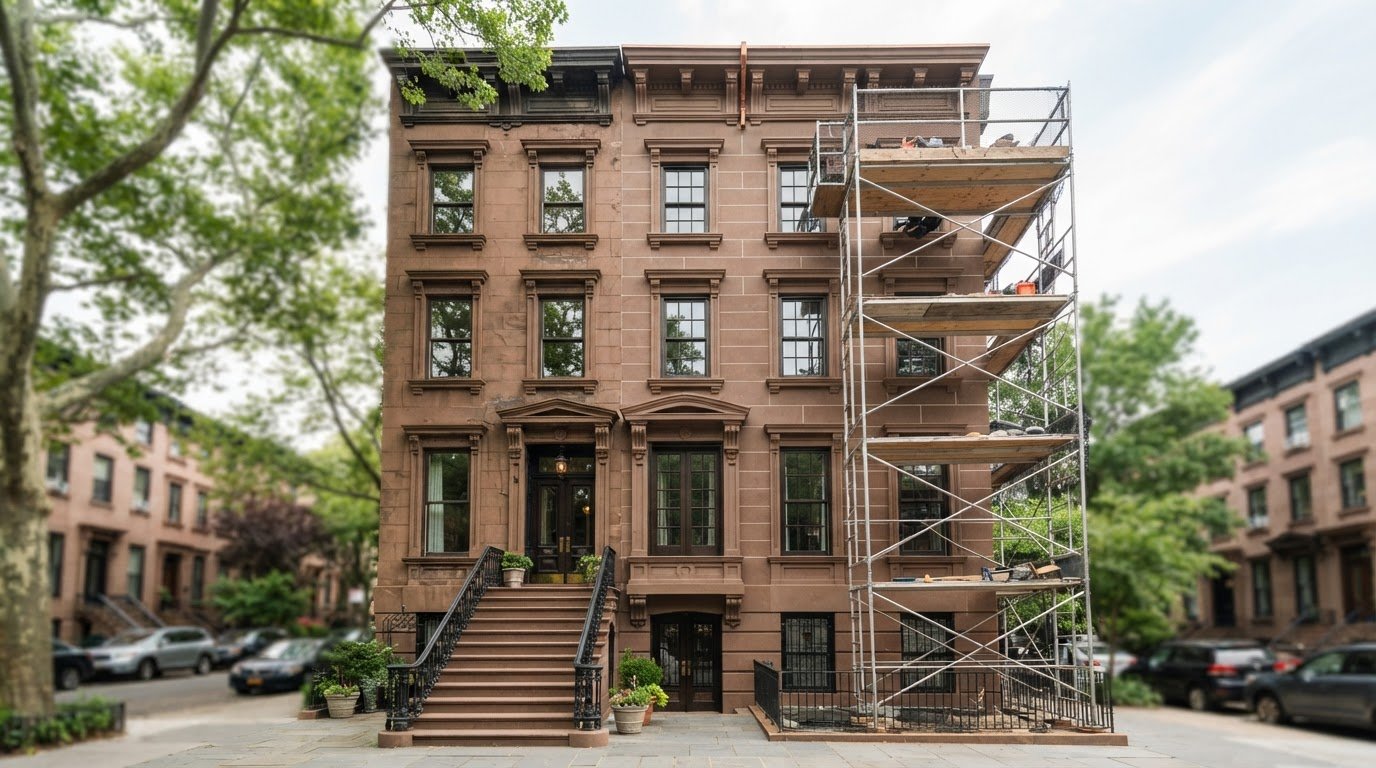
Inspect a brownstone facade annually for maintenance. Separately, New York City’s FISP cycle requires owners of buildings more than six stories tall to have exterior walls inspected and file a report once every five years. Facade restoration repairs should address inspection findings, not just damage visible from the sidewalk.
Cracks, loose masonry, discoloration, and water entry can signal problems a surface patch won’t fix. This guide explains what to look for, why regular maintenance matters, and how repair methods vary for brownstone, brick, concrete, and other facade materials. You’ll learn when damage calls for restoration rather than routine upkeep, so you can better understand the work needed to protect your building.
Table of Contents
What are common signs that my building needs façade repair?
Cracks, displaced masonry, water stains, and crumbling mortar can signal facade damage. Loose bricks or stone may fall, endangering passersby and neighboring buildings. During an inspection, look for crack patterns, damp areas, fading sealant, and visible movement. Check roof flashing, too: damage there can let water into the facade. Facade restoration repairs should address the source of deterioration, not just cover visible symptoms.
Cleaning methods depend on the facade material. Brownstone, brick, concrete, and stone respond differently, so identify the surface before work begins. Power washing is not always suitable: excessive pressure can damage fragile masonry or historic details. For stone, use a controlled method that removes pollution stains, efflorescence, or biological growth without stripping the surface.
Historic masonry cleaning requires care around carved elements and original finishes. Test the method on a small area and assess the result before cleaning the full facade. Compatible protective coatings may help with waterproofing, but cleaning won’t repair open cracks, loose masonry, or failed mortar. Plan facade restoration repairs around the material, the damage, and water-entry points.
How do I choose a qualified facade restoration contractor? Look for experience with historic masonry and brownstone. Request a written scope that identifies materials, repairs, cleaning methods, and protective work. For a New York City building, the scope should address work sequencing and applicable permits.
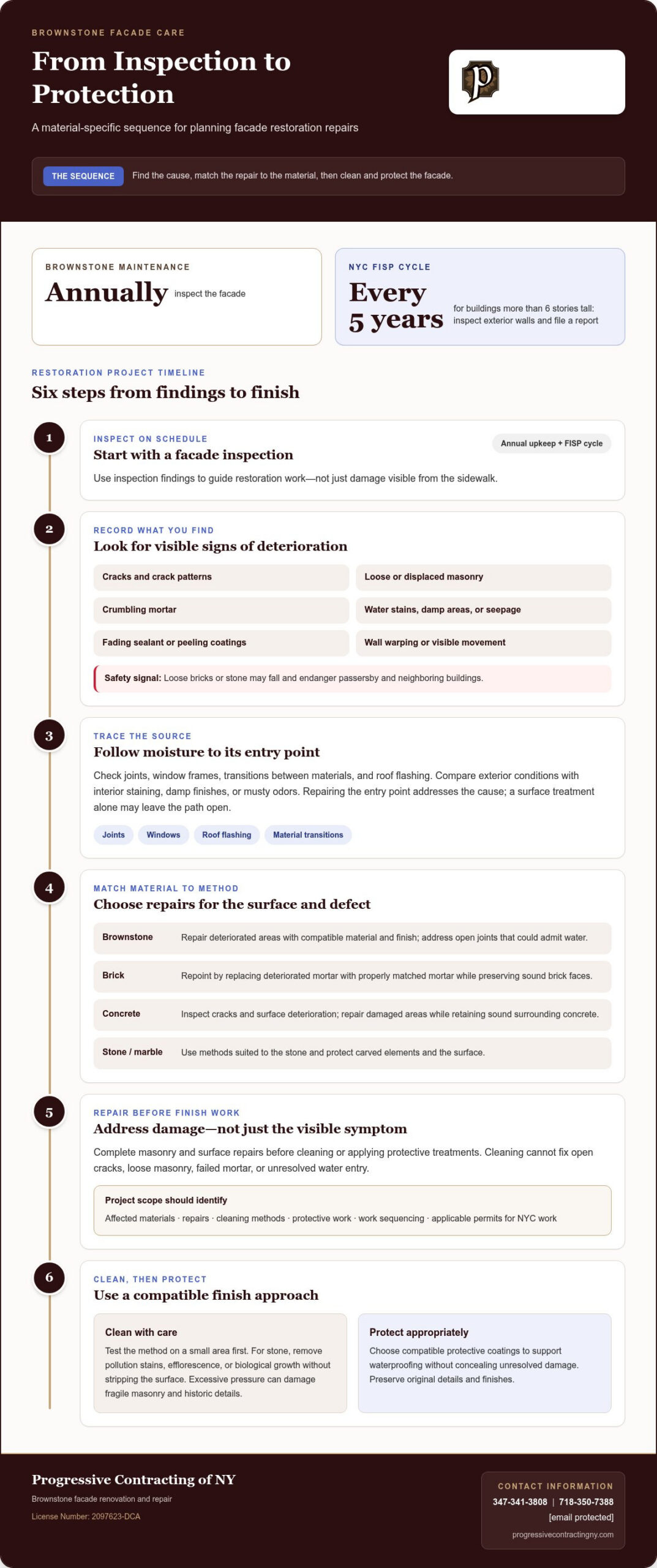
What are the steps in a facade restoration project? Start with an inspection and damage assessment, then choose repairs suited to each material. Complete masonry or surface repairs before cleaning and applying compatible protective treatments.
Are historic facade restoration grants or tax credits available? Programs may support eligible properties and work. Property designation and restoration scope can affect eligibility, so review the program criteria before factoring potential funds into your project budget.
Why is Facade Repair and Maintenance Necessary?
A brownstone’s exterior shields its original masonry and interior from New York City weather. Timely maintenance helps preserve architectural details and the building’s durability.
Weather and Water Protection
Wind-driven rain can enter through openings around masonry, window frames, and roof flashing. Once water reaches interior walls, insulation, framing, or electrical systems, damage can extend beyond the facade. Assess waterproofing at joints, sealants, and transitions between materials. Repairing the entry point addresses the cause; surface treatment alone may leave the path open. Choose protection compatible with the original masonry to support preservation.
Crack and Moisture Inspection
A focused inspection looks for crack patterns, wall warping, and water seepage, then traces where moisture enters. Compare damp areas with nearby joints, windows, and flashing to identify likely paths. Peeling coatings or fading sealants can also indicate water exposure. Record affected locations and material changes to help distinguish isolated surface wear from damage that may affect structural integrity.
Water intrusion assessment should connect exterior conditions with interior evidence, such as staining, damp finishes, or musty odors. Repair planning may include replacing failed sealant, restoring joints, or addressing damaged flashing before finish work. Extensive seepage can weaken building elements, so waterproofing needs to follow the source and route of the leak. For project-specific brownstone facade restoration, connect the inspection findings to repairs that protect the building’s original features.
Repairs based on facade material
The right repair depends on the facade material and type of damage. A thorough assessment distinguishes surface wear from problems that may affect masonry integrity or allow water infiltration. On a historic brownstone, restoration should preserve original architectural details and match repair materials and finishes. Facade restoration repairs are most effective when the method suits the affected material, rather than applying the same treatment across every surface.
Match the material and defect to the repair:
- Brownstone: Repair deteriorated areas with compatible material and finish. Address open joints that could admit water.
- Brick: Repointing removes deteriorated mortar and replaces it with properly matched mortar, preserving sound brick faces.
- Concrete: Inspect cracks and surface deterioration. Repair damaged areas while retaining sound surrounding concrete.
- Stone or marble: Use cleaning and repair methods suited to the stone, protecting carved elements and the surface.
Cleaning cannot replace repairs. Remove pollution stains or biological growth using a method appropriate to the material; aggressive power washing can damage fragile historic surfaces. Protective coatings should suit the masonry and support waterproofing without concealing unresolved damage.
Include window frames, doors, cladding, and architectural features in the assessment. Deterioration in these elements can affect water entry and the facade’s appearance. Identify the material, locate the damage, and choose a compatible repair that protects durability and aesthetic character. This keeps facade restoration repairs focused on the building’s actual condition.
Plan a material-specific facade restoration assessment
Progressive Contracting NY Corp: Brownstone facade renovation
Progressive Contracting NY Corp provides brownstone facade renovation and repair for properties with deteriorated masonry, damaged surfaces, or weather-related wear. If an inspection identifies facade issues or stoop damage, the company also offers brownstone stoop restoration. Its brownstone contracting services address exterior work with facade restoration repairs suited to the building’s material and condition.
Before work begins, identify the affected areas, note the materials and historic details, and define which repairs need attention. This gives the project a clear scope, from facade restoration to stoop work, without treating every surface the same way. For help with a brownstone repair or renovation, contact Progressive Contracting NY Corp at 347-341-3808 or 718-350-7388, or email ProgressiveContractingNY@yahoo.com.
Plan the Next Step for Your Brownstone
A clear repair plan turns inspection findings into a practical scope of work. Record the affected areas, facade materials, and details to preserve. This keeps facade restoration repairs focused on the conditions that matter, rather than treating every surface alike.
Progressive Contracting of NY provides brownstone facade renovation, brownstone facade restoration, and Rammstein stoop restoration in Brooklyn and Manhattan. If your property needs exterior masonry work, discuss the building’s condition and the work you’re considering with the company. A free consultation can help you move from observed damage toward a defined project.
A thoughtful plan helps you approach your brownstone’s next repair with greater clarity and confidence.
Frequently Asked Questions
How often does my facade need to be inspected?
Plan routine maintenance inspections annually, paying closer attention to older buildings or facades exposed to harsh conditions. Separately, New York City requires owners of buildings more than six stories tall to arrange exterior-wall inspections and file a FISP report once every five years. These serve different purposes: routine inspections help catch developing issues, while FISP is an inspection and filing requirement for covered buildings.
What is façade restoration?
Facade restoration is the repair and renewal of a building’s exterior while retaining its character and useful materials. On a brownstone, work may address deteriorated stone, mortar joints, architectural details, or damaged areas around openings. The approach depends on the facade’s condition and material. Unlike cosmetic cleaning, restoration can correct damage, not just improve the surface’s appearance.
What is Local Law 11 and why is it important?
Local Law 11 is the common name associated with New York City’s Facade Inspection and Safety Program, or FISP. For buildings greater than six stories, the program requires exterior-wall inspections and a report once per five-year cycle. It matters because the inspection classifies facade conditions and identifies needed actions. An Unsafe classification requires public protection to be installed immediately.
How long does a typical façade repair project take?
Timing depends on the repair scope, material, access, and whether the work uncovers additional damage. Small-scale façade repairs may take a few days; comprehensive restoration can take several weeks or months. For example, repairing a limited area differs from coordinating work across a full facade. The sequence also matters: repairs, material setting, and finish work each affect the project schedule.
What does facade restoration involve?
Facade restoration starts by defining the affected areas and selecting work suited to each material. The scope may include repairing or replacing masonry, repointing mortar joints, restoring architectural features, and addressing openings or cladding. Cleaning and protective treatments may follow when appropriate. For a historic brownstone, preserving original details while correcting damage helps guide choices about materials and finishes.