
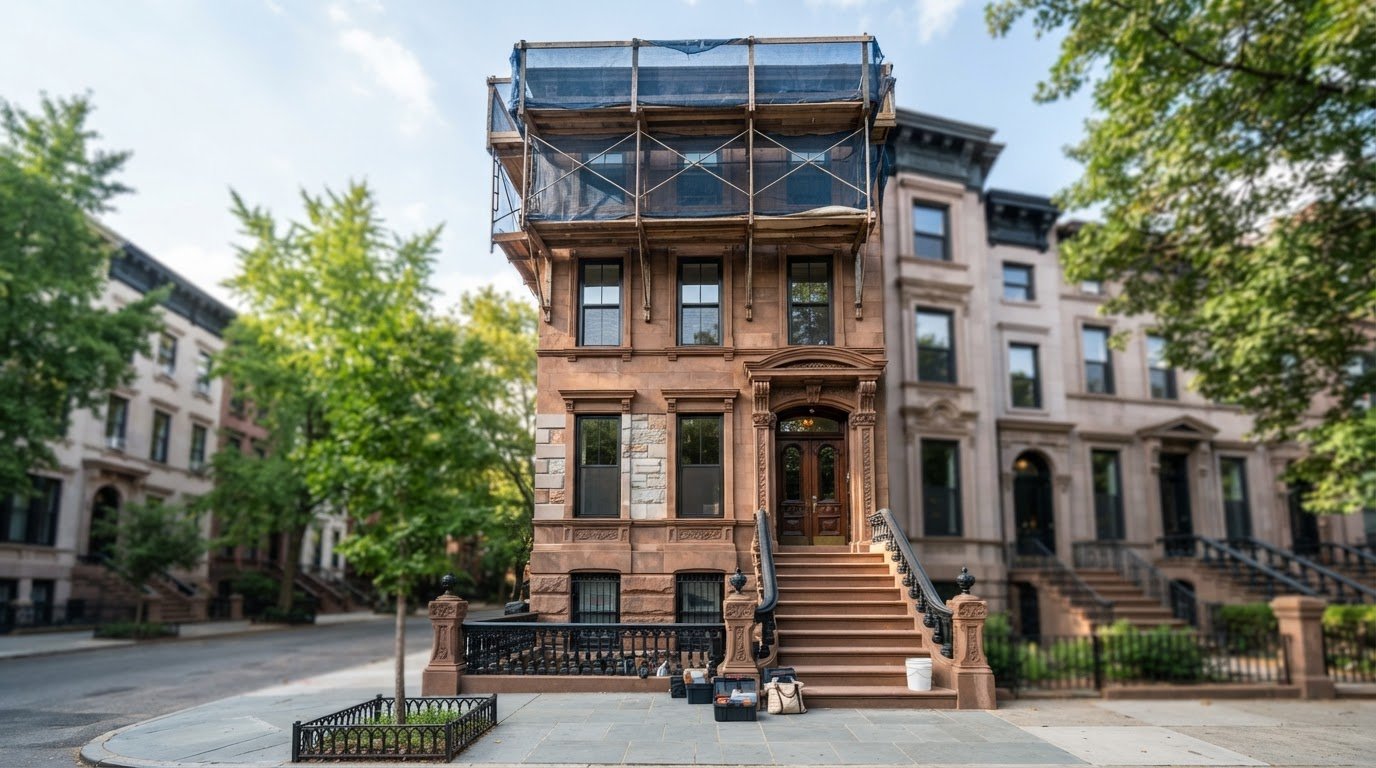
The most aggressive cleaning method isn’t always the right one for a historic façade. Brownstone facade restoration in Park Slope starts with assessing the damage, repairing deteriorated areas, and cleaning with the lightest suitable method before escalating if needed. Paint can trap moisture, while stripping or power washing a deteriorating surface can cause further damage.
The finish matters, but careful preparation and compatible repair materials are just as important. This guide explains the restoration process, what to consider when cleaning or removing paint, and how repair approaches differ. You’ll get a clearer sense of the choices that help protect a brownstone’s character and condition.
Table of Contents
How Does the Restoration Process Work?
Brownstone facade restoration begins with inspecting the stone, mortar joints, stoop, trim, and metalwork. The repair method depends on the material and the damage in each area.
| Repair option | Typical focus | Key distinction |
|---|---|---|
| Inspection | Cracks, loose stone | Identifies scope |
| Repointing | Open mortar joints | Joint repair |
| Brownstone patching | Localized stone loss | Retains sound stone |
| Resurfacing | Widespread wear | Renews surface |
| Brick pointing | Brick joints | Targets brickwork |
| Lintel replacement | Damaged lintels | Addresses support |
| Parapet rebuilding | Unstable parapet | Rebuilds upper edge |
| Ironwork repair | Rust or loose metal | Metalwork focus |
| Stoop repair | Worn steps | Entry-area work |
| Trim repair | Damaged details | Architectural finish |
Facade Inspection and Repair
Before repairs begin, assess the condition of the brownstone, mortar, brick, and architectural details. In Park Slope, cracks, worn surfaces, and open joints can require different methods. Repointing renews deteriorated mortar joints, while patching addresses localized stone loss. If damage extends across the façade, the scope may include resurfacing or masonry replacement.
FISP and Local Law Repairs
FISP work addresses façade conditions identified through building inspections, unlike isolated repairs. New York City Department of Buildings guidance includes periodic façade checks, especially for buildings over six stories. Brooklyn projects addressing Local Law 11 or FISP violations can involve corrective work, such as parapet rebuilding, lintel replacement, or brick pointing, depending on the observed condition.
Stoop and Trim Repair
Stoop repairs address worn or damaged steps, while trim work preserves carved details. A brownstone stoop faces snow and regular foot traffic, so its condition may differ from the wall above. Damaged trim may require careful removal and reshaping or replacement. Wrought iron needs separate attention: rust removal and metal repairs address the railing, not the stone.
Contractor Selection and Repair Risks
Choose a contractor experienced in brownstone and historic masonry who can explain the findings, repair sequence, and material choices. For brownstone facade restoration, hard modern cement can damage softer brown sandstone. Cracks and unsuitable repairs can also let water in and worsen deterioration. The repair method should match the material and extent of the damage.
What Is Brownstone Restoration?
Brownstone restoration renews worn sandstone while preserving a façade’s historic character. The work combines preparation of sound stone, compatible patch materials, and a finish matched to the surrounding surface.
Brownstone Patch Materials
Brownstone patching begins by removing deteriorated material until sound stone remains. New cementitious material is then applied in multiple coats, rather than over loose or weakened areas. One method uses a scratch coat followed by a compatible slurry coat made with brownstone-color cement. The underlying build-up and visible finish are applied in distinct stages.
Historic Finish Matching
Matching a historic finish means considering the surface material and appearance, not just the outline of the repair. The New York City Landmarks Preservation Commission specifies recipes for slurry, scratch, and finish coats used in brownstone patching. For a Brooklyn brownstone, these distinct layers help guide work that respects the building’s original character. Pointing is different: it renews mortar joints rather than the stone surface.
Patch Color Matching
Color matching aims to blend repairs with the existing façade. In one restoration approach, color samples were submitted to Landmarks to match the original brownstone and avoid a patchwork appearance. For landmarked buildings, the pigment color is specified to match the original. Comparing a sample with the façade helps separate color decisions from the structural work of removing unsound stone.
For more detail on brownstone repair and restoration, explore the project information available here.
Weather and lack of maintenance can contribute to brownstone façade deterioration. Patching involves removing deteriorated material until sound stone is reached, then applying new cementitious material in multiple coats.
Cleaning historic facades and removing paint
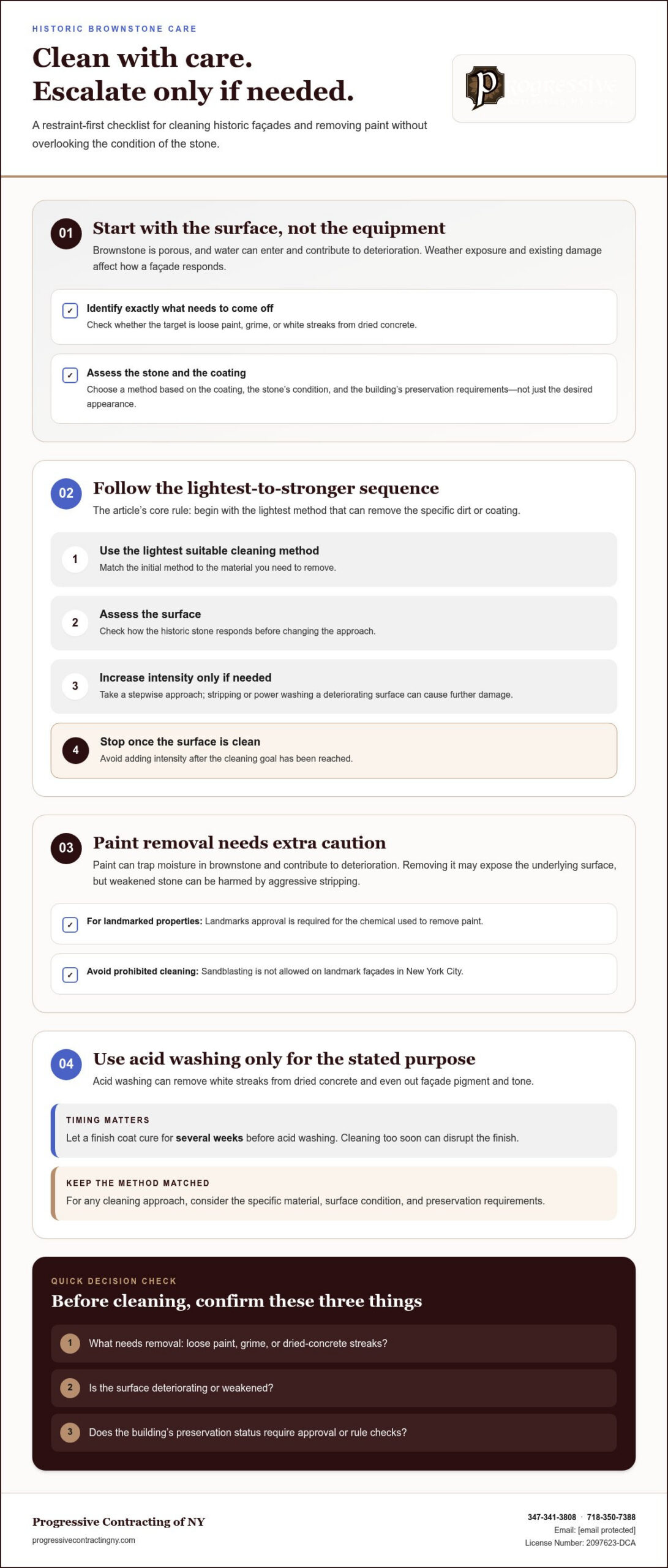
Begin cleaning a historic façade with the lightest method that can remove the specific dirt or coating. Brownstone is porous, so water can enter and contribute to deterioration. In Park Slope and other Brooklyn neighborhoods, weather exposure and existing damage affect how a residential façade responds. Take particular care with deteriorating surfaces: stripping paint or power washing can cause further damage.
First identify what needs removal, such as loose paint, grime, or white streaks from dried concrete. Choose a restrained cleaning method, assess the surface, and increase intensity only if needed. This stepwise approach helps protect historic buildings and architectural elements such as carved trim and textured brownstone. Sandblasting is not allowed on landmark façades in New York City.
Paint can trap moisture in brownstone and contribute to deterioration. Removing it may expose the underlying surface, but aggressive stripping can harm weakened stone. For landmarked properties, Landmarks approval is required for the chemical used to remove paint. Choose a method based on the coating, the stone’s condition, and the building’s preservation requirements, not just the desired appearance.
Acid washing has a specific role: it can remove white streaks from dried concrete and even out façade pigment and tone. A finish coat should cure for several weeks before acid washing, since cleaning too soon can disrupt the finish. From brownstone stoops to upper façades, match the technique to the material and condition, then stop once the surface is clean.
Explore historic brownstone restoration
Progressive Contracting NY: Brownstone facade renovation
Progressive Contracting NY Corp. provides brownstone façade renovation and brownstone facade restoration for properties in Park Slope and across Brooklyn and Manhattan. If an inspection reveals cracked stone, deterioration, or façade repairs requiring careful material and finish matching, the company’s brownstone contracting services can address the work.
Entry damage may call for careful stoop restoration as part of broader exterior masonry work. Describe the areas of the façade and stoop that need attention to start a focused conversation about the work.
Contact Progressive Contracting NY Corp. at 347-341-3808 or 718-350-7388, or email ProgressiveContractingNY@yahoo.com. License Number: 2097623-DCA.
Plan the Next Step for Your Park Slope Brownstone
A clear repair plan starts by identifying the façade areas that need attention and the finish you want to preserve. This gives the restoration discussion a practical focus, whether you’re considering a localized repair or a broader project. Brownstone facade restoration should respect the building’s character while addressing the conditions affecting its exterior.
Progressive Contracting of NY provides brownstone façade renovation and restoration, along with Rammstein stoop restoration for damaged entry steps. Share what you’ve observed and which areas concern you most to begin discussing a practical direction for the work.
Take the next step when you’re ready to discuss your building’s exterior needs.
A thoughtful plan helps you move forward with clarity while caring for your brownstone’s character.
Frequently Asked Questions
What Is Facade Restoration?
Facade restoration repairs and renews a building’s exterior masonry while retaining its architectural character. Brownstone facade restoration can address damaged stone, mortar joints, or decorative details, depending on the property’s condition. Unlike routine cleaning, which removes surface dirt, restoration repairs deteriorated material. The scope depends on the areas that need attention.
What Work Was Completed?
A Park Slope project at 542 9th St involved brownstone step restoration. That example concerns the building’s entry steps, not a full façade renovation. The completed scope on another property may involve different exterior elements. Identifying whether the work covered the stoop, wall, or trim makes it easier to understand exactly what was restored.
How do contractors assess brownstone facade damage and choose repair methods?
A restoration assessment considers where damage appears, how far it extends, and which materials are affected. A crack beside a window opening, for example, needs a different assessment than surface wear across a broad wall. The condition of adjacent stone and masonry also informs the repair method and work area.
What are the steps for restoring a brownstone facade?
Brownstone facade restoration follows a clear sequence: document damaged areas, identify affected materials, select compatible repair methods, complete the masonry work, and review the finished surface. If a building has both a worn entry and façade damage, recording each area separately helps define the scope. Following the stages in order also keeps finish work from interfering with repairs.
How do you repair, patch, and resurface brownstone without damaging historic masonry?
Carefully remove unsound stone, then patch the prepared area with compatible materials and a finish suited to the surrounding façade. Avoid hard modern cement, which can harm softer brown sandstone. A localized patch can address limited stone loss, while broader resurfacing may suit deterioration across a larger area. Gentle cleaning helps protect repaired historic surfaces.