
Get Info (718)-350-7388, (347)-341-3808.
A single patch of spalling stone on your facade is rarely just a cosmetic issue; it’s often the first warning sign of a much deeper structural failure. You’ve likely spent hours looking at crumbling masonry and wondering if a few spot fixes will suffice or if you’re facing a massive renovation. Deciding on the cost of brownstone refacing vs repair isn’t just about the immediate bill. It’s about preventing NYC Department of Buildings violations and ensuring your historic home remains a safe, valuable asset.
It’s understandable to feel uncertain when faced with high masonry quotes and conflicting advice. We know you want a solution that balances high level craftsmanship with financial transparency. This guide provides a clear comparison of the financial and structural differences between targeted repairs and a full facade reset. You’ll gain a realistic understanding of 2026 budget expectations and the confidence to choose a masonry specialist who respects the tradition of your building.
Key Takeaways
- Learn to distinguish between surgical spot repairs for localized spalling and full-scale refacing that resets your building’s entire facade.
- Understand how the cost of brownstone refacing vs repair is calculated for 2026, including scaffolding permits and specialized masonry labor.
- Discover why a physical tap test is the most reliable method for identifying hidden hollow areas that threaten your home’s structural integrity.
- Identify strategic ways to combine facade work with stoop restoration to reduce mobilization fees and ensure long term building stability.
Table of Contents
Brownstone Refacing vs. Repair: Defining the Scope
Many homeowners use the terms repair and refacing interchangeably, but they represent two different levels of intervention. Understanding the cost of brownstone refacing vs repair begins with a clear look at the scope of work required for each. Before choosing a path, it’s helpful to understand what is a brownstone? This Triassic-Jurassic sandstone was a favorite for NYC townhouses due to its accessibility; however, its layered structure makes it prone to specific types of weathering that dictate whether you need a patch or a full reset.
The distinction between these two methods is vital for your 2026 renovation budget and the longevity of your property. A surgical repair addresses immediate hazards, while refacing provides a structural reset for the entire facade. Choosing the wrong one often leads to wasted capital or accelerated stone decay.
When Targeted Brownstone Repair is Sufficient
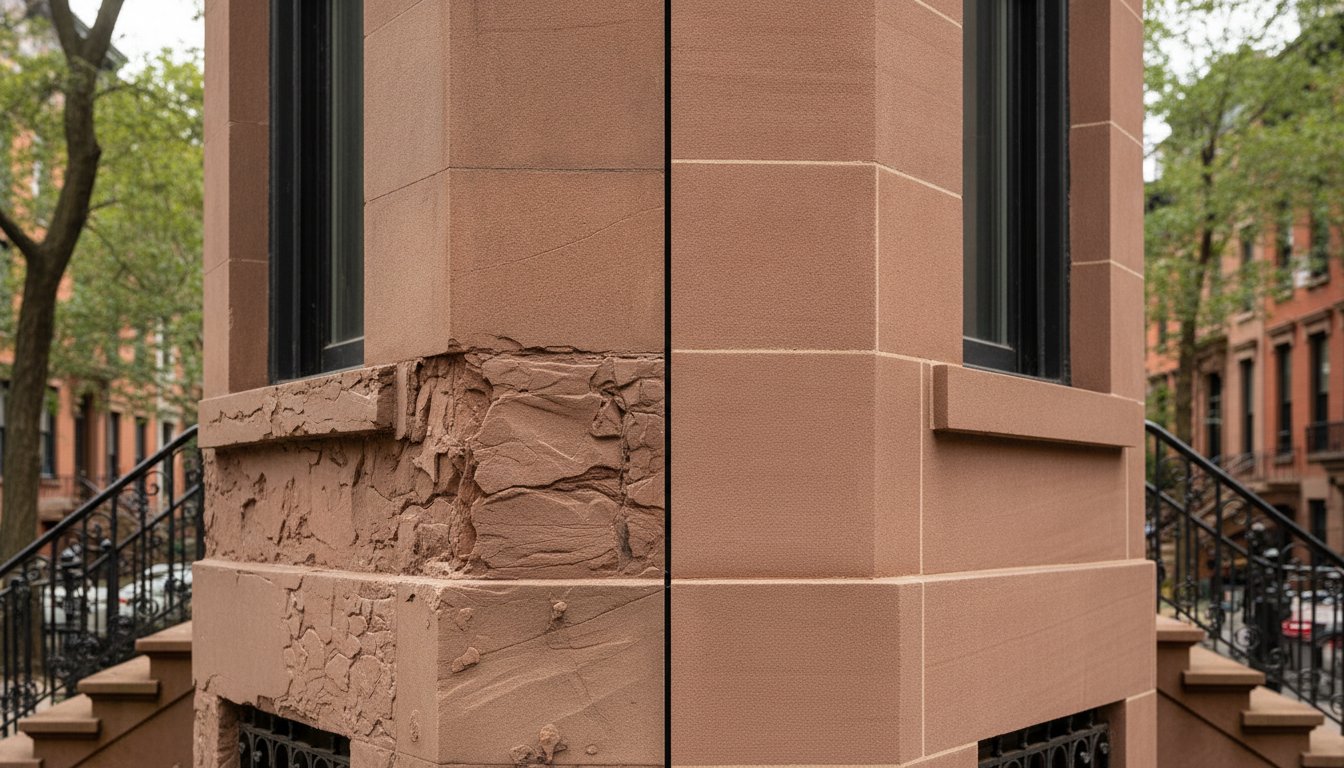
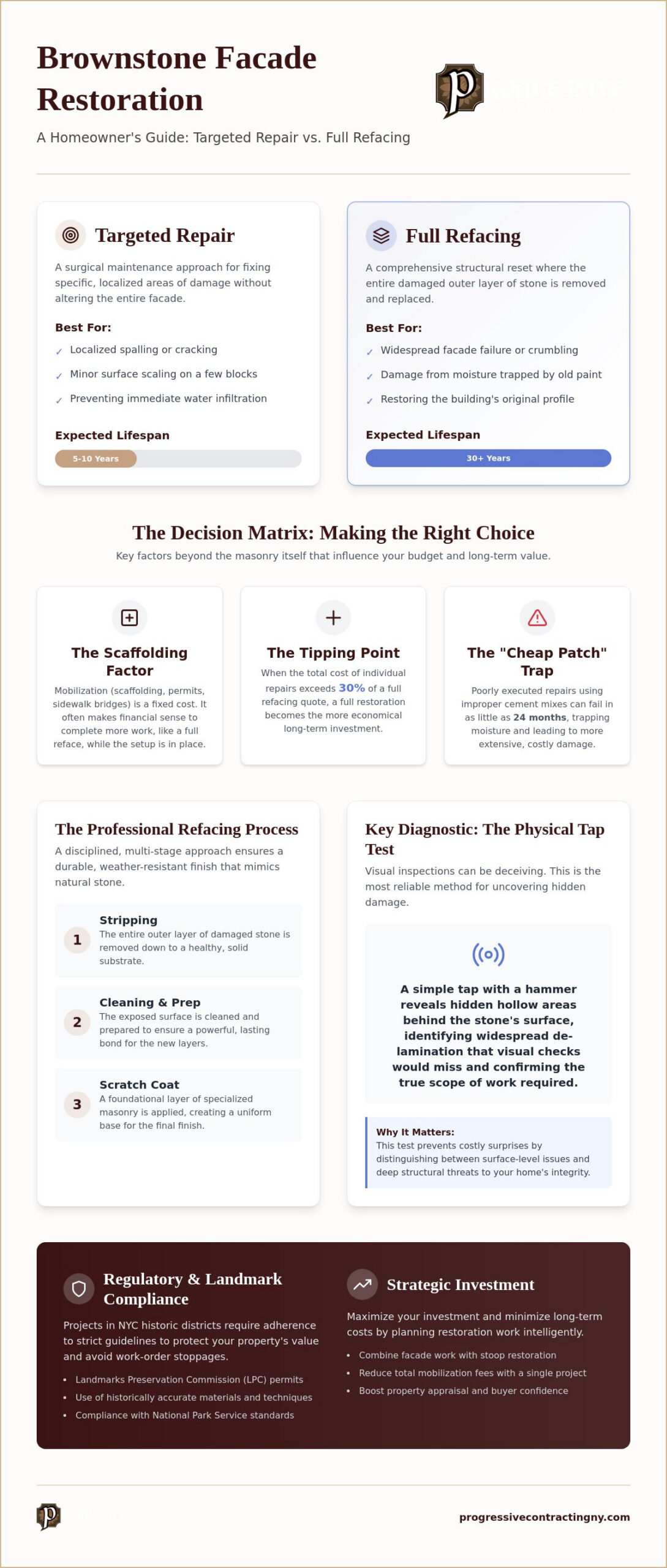
Spot repair is a surgical maintenance tactic. It involves identifying and fixing specific areas of spalling or cracking without stripping the entire facade. This approach is effective when damage is localized to a few blocks or decorative elements. We look for hairline cracks and minor surface scaling that haven’t yet compromised the stone’s core. A primary goal here is preventing water infiltration from reaching the structural brick backup. Successful repairs require meticulous color-matching of new mortar to the existing 19th-century stone to ensure a seamless finish.
The Process of Professional Brownstone Refacing
Refacing, or resurfacing, is a comprehensive process used when the stone’s outer layer has failed across the entire building. This is often the only solution for facades previously covered in layers of paint that now trap moisture and cause the stone to crumble. Our process follows a disciplined sequence:
-
Stripping: We remove the entire outer layer of damaged stone down to the healthy substrate.
-
Cleaning: The exposed surface is cleaned and prepared to ensure a strong bond.
-
Scratch Coat: A foundational layer of specialized masonry is applied to create a uniform base.
This master of craft approach ensures the final finish mimics the natural stone texture of a historic NYC townhouse. It restores the building’s original profile while providing a durable, weather-resistant shield.
Comparing the Cost of Brownstone Refacing vs. Repair
Determining the total cost of brownstone refacing vs repair requires looking beyond the masonry itself. Logistical expenses like scaffolding permits, sidewalk bridge rentals, and specialized labor hours often form the baseline of any quote. For most NYC townhouses, the mobilization of equipment represents a fixed cost that applies regardless of whether you’re fixing three patches or the entire building. This is why we focus on financial transparency during the bidding process.
Masonry specialists typically bill spot repairs by the square foot or by the individual patch. This is ideal for minor maintenance. In contrast, refacing is priced by the "full drop," covering the entire vertical section of the facade. While a full reset requires a larger upfront investment, it offers a significant return on investment. In high demand neighborhoods like Park Slope or Bed-Stuy, a professionally restored facade significantly boosts property appraisal and buyer confidence. Don’t fall into the "cheap patch" trap; poorly executed repairs using improper cement mixes often fail within 24 months, leading to even higher expenses later.
NYC Regulatory and Landmark Impacts on Pricing
If your home sits within a historic district, the Landmarks Preservation Commission (LPC) adds another layer to your budget. These permits require specific administrative filings and the use of historically accurate materials. We follow National Park Service preservation standards to ensure every project meets federal and local guidelines for historic integrity. Using these high standards protects you from costly work-order stoppages and ensures the durability of the craftsmanship.
A Decision Matrix for Homeowners
Deciding between these two options often comes down to the "Scaffolding Factor." Since you’re already paying for the pipes to be up and the permits to be filed, it often makes sense to reface the entire surface rather than returning in five years for more repairs. A targeted repair may last 5 to 10 years, while a professional refacing provides a structural reset that lasts 30 years or more. The tipping point occurs when the total cost of individual repairs exceeds 30% of a full refacing quote. Understanding what is a brownstone and how its layers react to NYC weather will help you see why a full reset is often the most stable path forward. If you’re ready to protect your investment, a professional brownstone specialist can help you navigate these choices.
Executing Your Facade Restoration: Next Steps
When assessing the cost of brownstone refacing vs repair, a visual inspection from the sidewalk isn’t enough. We use a physical tap test to identify hollow sounds behind the stone surface. These "drummy" areas indicate the stone has detached from the substrate, even if it appears solid to the naked eye. Ignoring these spots leads to sudden spalling that creates safety hazards for pedestrians and potential DOB violations. A reliable estimate must account for these hidden voids to prevent mid-project budget increases.
It is often cost-efficient to coordinate facade work with Brownstone Stoop Restoration. Since mobilization fees and scaffolding permits represent a fixed portion of the budget, handling the stoop and the facade simultaneously reduces the total project overhead. When vetting a masonry contractor, ask for local references in Brooklyn or Manhattan. Ensure they are familiar with the technical requirements outlined in the NYC Rowhouse Manual. Transparency in the initial quote is the best indicator of a partner who understands the complexity of historic stone.
Preparing for Your Facade Project
A standard facade renovation typically takes 4 to 8 weeks. This timeline depends on weather conditions and the complexity of the architectural carvings. We manage all neighborhood logistics, including sidewalk bridge permits and strict dust mitigation protocols to keep your property clean. For a deeper look at the technical repair process, you can explore our guide on How to Repair Brownstone Facades.
The Progressive Contracting Guarantee
We use a disciplined "Problem-Process-Result" framework to ensure every restoration is built to last. We don’t offer quick cosmetic fixes that mask underlying decay. Our team prioritizes structural integrity and chemical compatibility between the new masonry and the original historic stone. This approach ensures your investment in the cost of brownstone refacing vs repair pays off for decades. Request a professional facade assessment for your Brooklyn or Manhattan home to secure your building’s future.
Secure the Future of Your Historic Facade
Choosing between surgical repairs and a complete resurfacing is a strategic decision for every NYC homeowner. We’ve discussed how identifying hollow stone early through tap tests prevents safety hazards. We also reviewed how the "scaffolding factor" makes refacing a more logical long-term investment once mobilization costs are already covered. Balancing the immediate cost of brownstone refacing vs repair requires a focus on durability rather than just aesthetic fixes.
With over a decade of experience in NYC facade construction, we specialize in Rammstein stoop restoration and historic masonry across Brooklyn and Manhattan landmark districts. We understand the specific regulatory requirements of the LPC and the structural needs of 19th-century sandstone. Our team provides the steady hand and clear communication you need throughout your restoration project. We prioritize transparency and structural integrity to give you peace of mind.
Get a Transparent Quote for Your Brownstone Facade
Your home is a piece of New York history. Taking the right masonry steps today ensures it remains a stable and beautiful asset for the next generation.
Frequently Asked Questions
Is it cheaper to paint a brownstone instead of refacing it?
Painting has a lower upfront price, but it often leads to severe structural damage. Standard exterior paint seals the stone’s pores and traps moisture inside the masonry. This moisture causes the stone to rot and crumble from the inside out, a process known as spalling. Eventually, you’ll have to pay for both paint removal and a full restoration, making the long-term cost of brownstone refacing vs repair much higher than doing the masonry work correctly the first time.
How long does a full brownstone refacing typically last?
A professionally executed brownstone refacing typically lasts 30 years or more. This longevity depends on the quality of the bond between the new masonry coat and the original substrate. While localized spot repairs might only provide a 5 to 10 year fix, a full resurfacing acts as a structural reset for your facade. Using chemically compatible materials and traditional craftsmanship ensures the new surface withstands NYC’s harsh freeze-thaw cycles for decades.
Do I need a permit for minor brownstone spot repairs in NYC?
Yes, most exterior masonry work in New York City requires a permit from the Department of Buildings (DOB). If your home is in a landmarked neighborhood, you also need approval from the Landmarks Preservation Commission (LPC). Even minor repairs often require scaffolding or sidewalk bridges, which carry their own specific filing requirements. Performing work without these permits can result in stop-work orders and significant financial penalties from the city.
What is the best time of year to schedule brownstone facade work?
The ideal time for brownstone restoration is during the spring or fall. Masonry materials require moderate temperatures, generally between 40 and 80 degrees Fahrenheit, to cure and bond properly. Freezing winter temperatures can cause new mortar to crack before it sets, while extreme summer heat can dry out the mixture too quickly. Scheduling your project during these temperate seasons ensures the best possible structural integrity and a finish that mimics natural stone texture.