
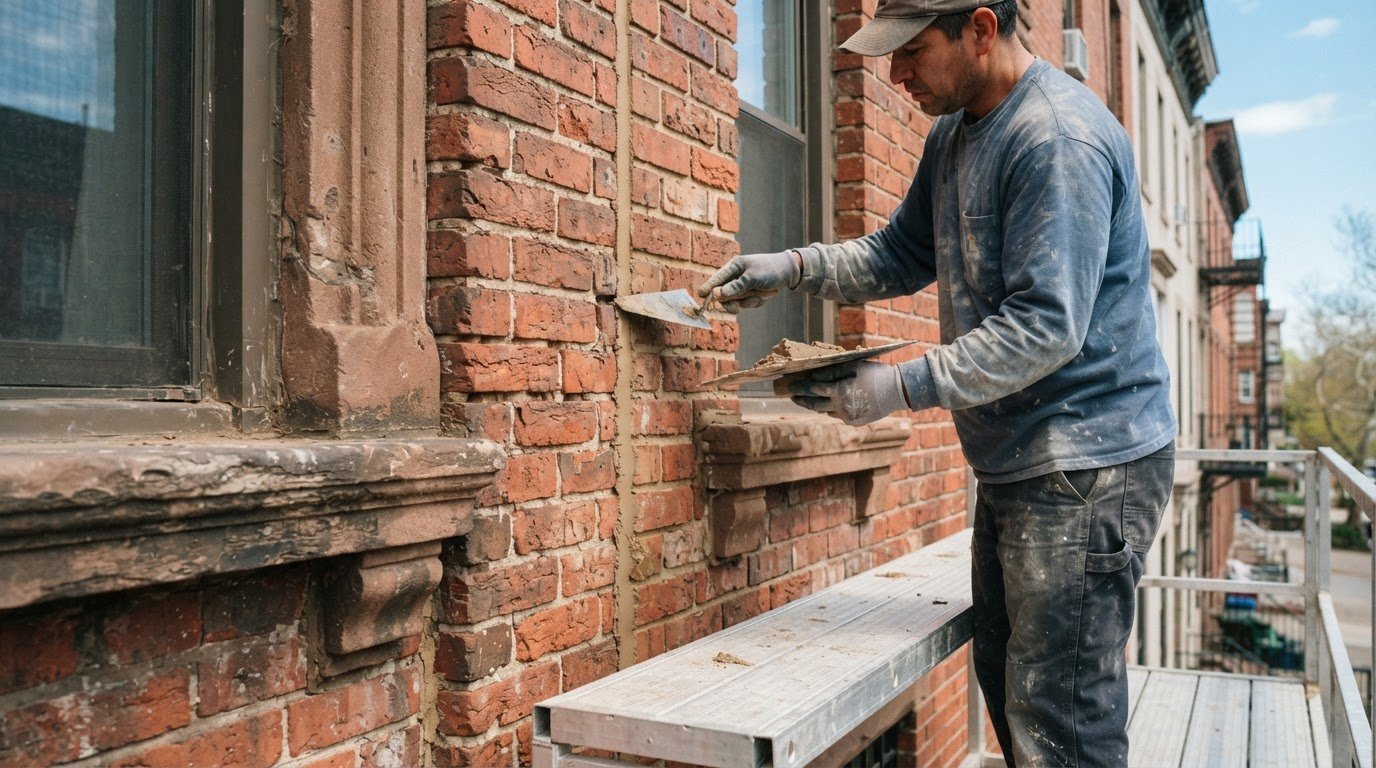
A polished brownstone facade can still leave an important question: was the repair suited to the building and its masonry? When comparing brownstone contractors near me in Brooklyn, look beyond appearance. Credentials, permit coordination, inspections, and the repair method all matter to the finished work.
Choosing a contractor for a historic facade can feel like a lot to weigh, especially when mortar is deteriorating. This guide explains how to assess a contractor’s experience, understand why permits and inspections may matter, and recognize when tuckpointing may suit damaged brownstone mortar. You’ll also learn what to expect from a professional restoration process, so you can make a more informed decision about your property.
Table of Contents
City permits and inspections
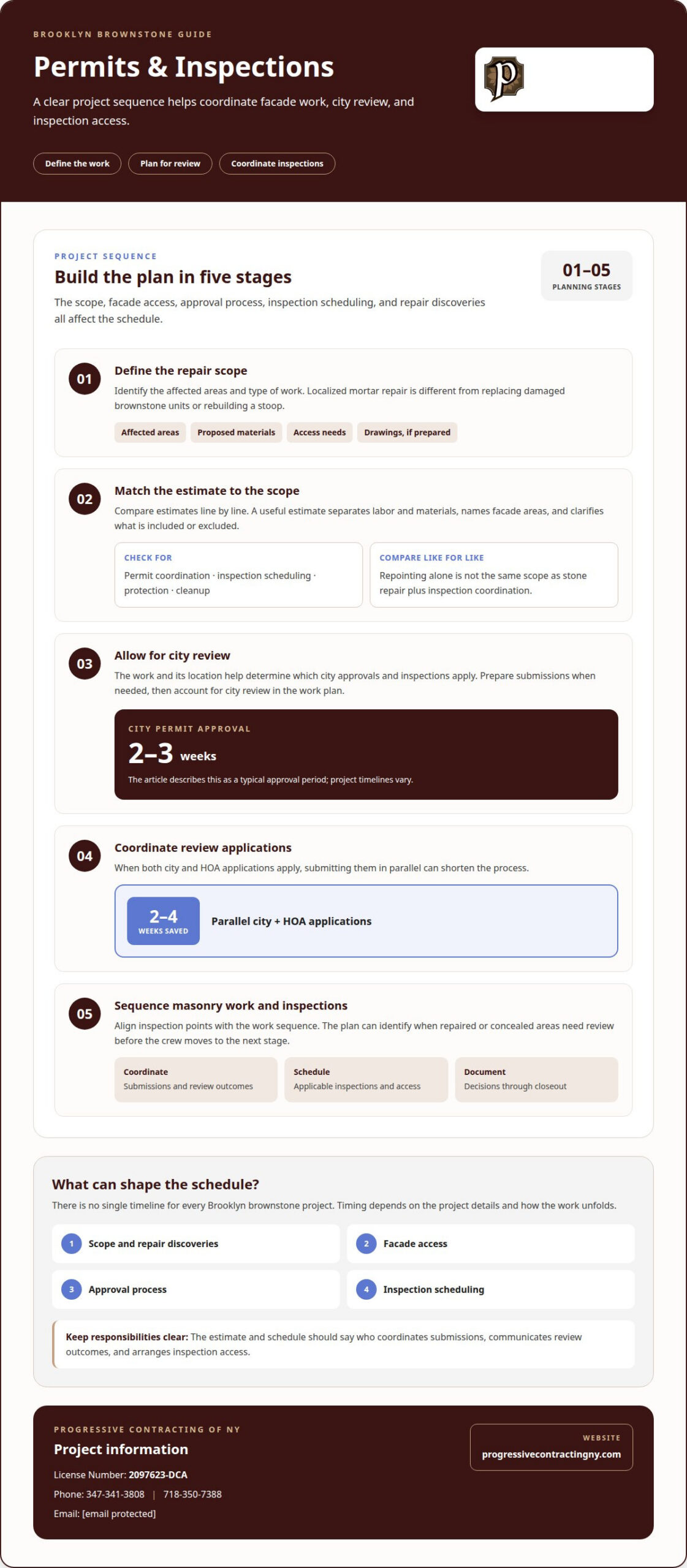
In Brooklyn, permit review and inspections belong in the construction plan, not as last-minute tasks. The first step is defining the work: a localized mortar repair differs from replacing damaged brownstone units or rebuilding a stoop. The written scope should identify affected areas, proposed materials, access needs, and any drawings prepared for review. Those details help determine which city approvals and inspections apply to the project.
Compare estimates by matching their scopes line by line. A useful estimate separates labor and materials, names the facade areas involved, and explains whether permit coordination, inspection scheduling, protection, and cleanup are included. For example, an estimate covering only repointing is not directly comparable to one that also includes stone repair and inspection coordination. Clear exclusions matter as much as listed work.
There is no single timeline for every Brooklyn brownstone project. The sequence may include documenting conditions, preparing submissions when needed, completing city review, carrying out masonry work, and arranging applicable inspections. The scope, facade access, approval process, inspection scheduling, and repair discoveries all shape the schedule. A small mortar repair and a broader facade restoration therefore require different work plans.
During construction, inspection points should align with the work sequence. For example, a project plan can identify when repaired or concealed areas need review before the crew moves to the next stage. The estimate and schedule should clarify who coordinates submissions, communicates review outcomes, and arranges inspection access. This keeps decisions documented and helps organize facade work from preparation through closeout.
Permit and foundation requirements can depend on the project and its location. City permit approval typically takes two to three weeks; parallel city and HOA applications save two to four weeks.
Professional credentials and business highlights
A credentials record helps establish who is responsible for the work and what role they hold. The license number supplied for this work is 2097623-DCA. A number alone doesn’t describe its scope, so project documents should also identify the responsible contractor and the work covered. This creates a clearer record before facade restoration begins.
For a brownstone project, relevant experience means understanding how masonry repairs affect the existing facade. The project plan should connect the owner’s goals with specific work areas, materials, and a sequence of restoration tasks. For example, a scope covering a damaged cornice and deteriorated mortar should distinguish those repairs instead of grouping them under a broad “facade work” label. Clear responsibilities and progress updates help keep decisions documented.
What warranties and guarantees do brownstone contractors provide? Terms vary by contractor and project, so there is no single warranty period or coverage that applies to every restoration. The written agreement should state what work is covered, the coverage period, exclusions, and how warranty concerns are handled.
Before work starts, the written scope, schedule, and warranty terms should align. If the project includes brownstone repair, the documents should distinguish repair work from any broader restoration, making the expected result easier to understand. A focused review of these details can clarify responsibilities and reduce misunderstandings. For a project-specific discussion of brownstone restoration work, use the contact options provided on this site.
Brownstone Contractors founder David previously worked as a handyman and for several subcontractors. That background can be included in a credentials discussion alongside the project’s documented scope and responsibilities. For owners reviewing a proposed restoration, it may help frame questions about who will perform each task and how the work will be coordinated. Keeping those questions tied to the written agreement can make the contractor’s role clearer without treating work history as a substitute for project-specific details.
Tuckpointing deteriorated mortar
Mortar joints protect the edges of brownstone masonry and help shed water from the facade. When joints crack, crumble, or pull away, moisture can reach the surrounding stone and worsen deterioration. Tuckpointing addresses failing joints by removing loose mortar to a sound base and filling the prepared joints with suitable replacement mortar. The repair should suit the existing masonry, rather than use a hard mix that can damage softer historic material.
Common signs of brownstone damage include open or recessed joints, flaking stone, cracks, and pieces separating from the facade. Loose masonry or falling fragments need urgent attention because they can create a hazard below. Widespread deterioration also calls for prompt professional assessment.
A careful repair begins with examining the mortar and adjacent brownstone. The contractor identifies where joints have failed, how deeply deterioration extends, and whether the stone also needs repair. For example, repointing a few isolated joints may address localized mortar loss, while cracked or spalled brownstone may require additional masonry work. Replacing mortar without addressing damaged stone can leave the underlying problem unresolved.
After deteriorated material is removed, the joints are prepared and refilled. The finish should follow the existing joint profile and meet the stone cleanly. The old masonry, exposure, and condition guide the choice of suitable mortar and repair approach. Tuckpointing is not a substitute for broader brownstone restoration when damage extends beyond the joints. A written scope should distinguish mortar work from stone repair so the planned treatment matches the visible condition.
Progressive Contracting NY
Progressive Contracting NY Corp provides brownstone facade renovation for property owners in Brooklyn and Manhattan planning exterior repairs or restoration. A defined scope connects visible deterioration with the work required. The company also handles brownstone stoop restoration, helping owners address facade and stoop needs through expert masonry work.
Contact Progressive Contracting NY Corp by phone at 347-341-3808 or 718-350-7388, or email ProgressiveContractingNY@yahoo.com to discuss your brownstone project and connect with brownstone contractors near me.
Move your brownstone project forward
As you consider brownstone contractors near you, focus on the result you want for the property. A clear sense of your priorities can shape the conversation, whether you’re addressing visible wear, preserving the facade’s character, or planning broader exterior work. Progressive Contracting NY Corp offers brownstone facade renovation, historic exterior repair, and expert stoop restoration for Brooklyn properties.
In your consultation, describe the areas of concern and the outcome you’re seeking. This gives the project a practical starting point and helps connect your priorities with an appropriate scope of work. Progressive Contracting NY Corp offers a free consultation to discuss brownstone facade and stoop restoration.
A well-planned next step can help you care for your brownstone with greater confidence.
Frequently Asked Questions
What services do brownstone contractors near me offer?
Brooklyn brownstone contractors may handle facade renovation, brownstone repair, stoop restoration, and brick pointing. Progressive Contracting NY Corp offers exterior masonry work for brownstone properties. For example, a project involving worn mortar across the facade may need a different scope from one addressing damaged stone near the stoop. A clear description of each affected area helps define the work.
Which brownstone contractors near me are licensed, insured, and well reviewed?
Progressive Contracting NY Corp identifies its license number as 2097623-DCA. Licensing, insurance coverage, and customer reviews are separate measures; a license number alone doesn’t establish insurance coverage or a review rating. Keep those distinctions clear when considering a contractor. A documented license number provides licensing information, while insurance documentation and review records address different questions.
What qualifications and experience should a brownstone contractor have?
Relevant qualifications include hands-on masonry experience, knowledge of historic facade repair, and the ability to distinguish deteriorated mortar from damaged brownstone. Experience with both conditions matters: repointing alone will not address cracked or flaking stone. A well-defined work plan should identify the affected areas, proposed repair approach, responsibilities, and applicable warranty terms for the work being performed.
Do local permits or historic-preservation approvals apply to brownstone work?
Permits and inspections may apply, depending on the property and proposed work. A repair that changes facade details can raise different review questions from work limited to deteriorated mortar. The property’s location, preservation status, and project scope help determine the review process. Build time for any required approvals and inspections into the construction plan before setting the work sequence.
What materials and methods are best for repairing historic brownstone?
Choose repair materials and methods suited to the existing masonry, not by appearance alone. For tuckpointing, replacement mortar should be compatible with the historic facade and finished to suit the existing joints. Traditional tuckpointing methods and careful material selection help preserve the brownstone. If the stone itself is damaged, the repair scope should address that condition, not just the mortar.