
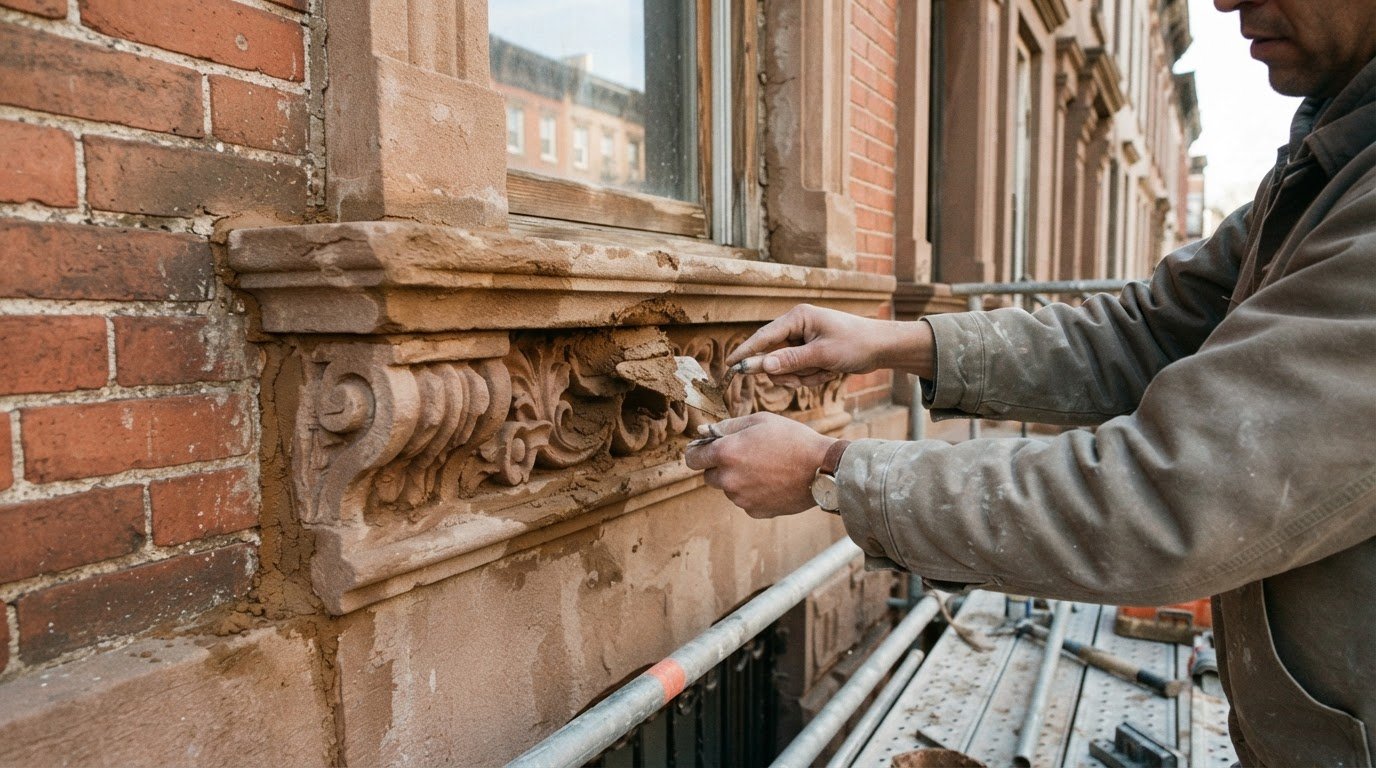
The visible damage is only part of the restoration timeline. A brownstone’s restoration in Bedford-Stuyvesant, Brooklyn, may take 1-3 weeks for partial facade work or 3-6 weeks for a full facade restoration, with the scope established by an on-site assessment.
When planning brownstone’s restoration Bedford Stuyvesant, Brooklyn, it helps to know what affects the work before it begins. A close assessment of the stoop, steps, cornice, and ornamental stone can identify repairs and conditions that shape the project scope. This guide explains how brick pointing differs from broader facade restoration, why careful sequencing matters, and how restoration moves from evaluating the masonry to completing repairs. You’ll get a practical picture of the work ahead and what to address first.
Table of Contents
Restoration assessment and project timelines
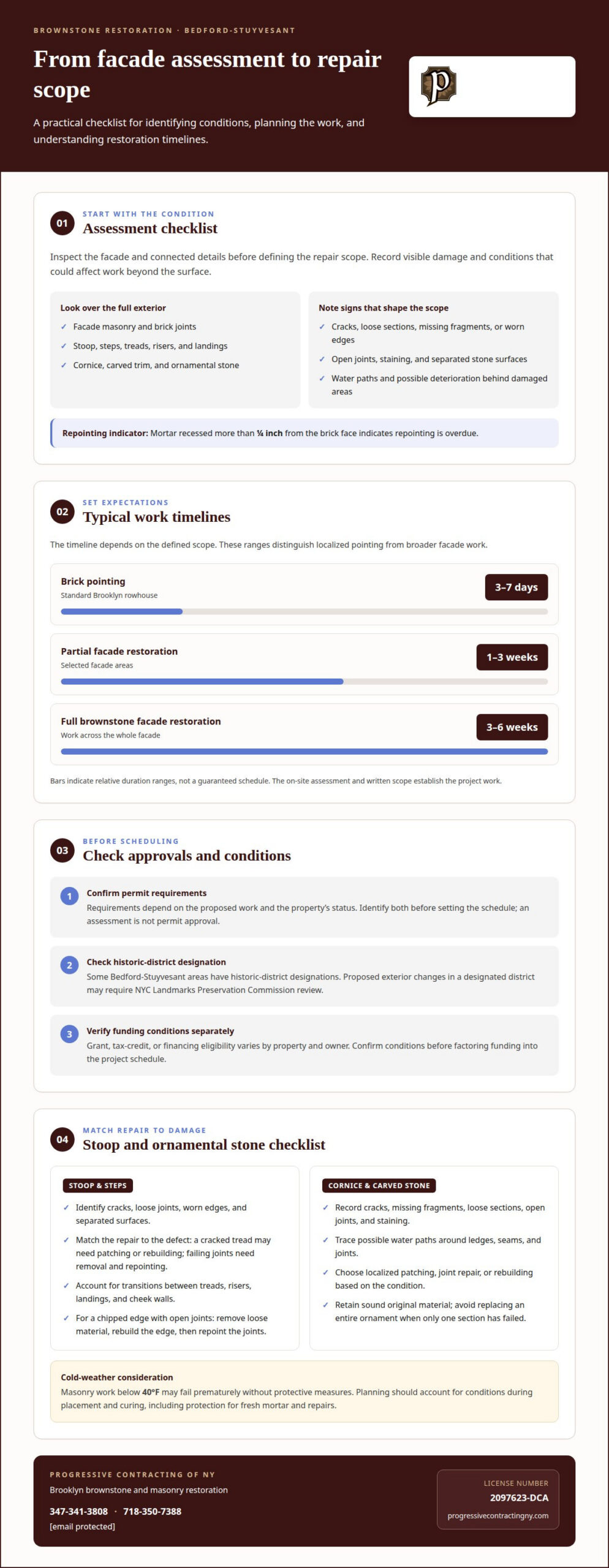
Begin with a close assessment of the facade, stoop, cornice, and decorative stone. Mortar recessed more than ¼ inch from the brick face indicates repointing is overdue. Record visible damage and define the repair scope before planning the work.
That scope shapes the timeline. Brick pointing on a standard Brooklyn rowhouse typically takes 3-7 days. Partial facade restoration typically takes 1-3 weeks, while full brownstone facade restoration typically takes 3-6 weeks. A written scope for brownstone facade restoration helps distinguish localized masonry repairs from work across the whole facade.
Permit requirements for a Brooklyn brownstone depend on the proposed work and the property’s status. Identify both before setting the project schedule, and don’t treat an assessment as permit approval.
Some areas of Bedford-Stuyvesant have historic-district designations, so check a property’s status before planning exterior work. If a property is in a designated district, proposed exterior changes may require NYC Landmarks Preservation Commission review. The applicable approval depends on the property and the work.
LPC approval requirements also depend on the proposed renovation and the property’s designation. Eligibility for grants, tax credits, or financing varies by property and owner, so confirm those conditions before factoring funding into the project schedule.
Deterioration behind damaged stone or mortar can expand the repair scope. Water, for example, may affect masonry beyond a visibly cracked area. Documenting conditions during the assessment helps identify potential issues before work proceeds.
A qualified Bedford-Stuyvesant contractor should assess historic masonry and define the work clearly. The result is a project scope tied to actual facade conditions, rather than an assumed repair plan.
Brownstone stoop and step repair
A stoop assessment starts by identifying cracks, loose joints, worn edges, and areas where the brownstone surface has separated. Each symptom may call for a different repair. A cracked tread may need patching or rebuilding, while failing joints need careful removal and repointing. The repair plan should address both the damaged material and the routes water may take into the masonry.
Consider a Bedford-Stuyvesant stoop with a chipped step edge and open joints. The repair sequence begins with removing loose material, then rebuilding the edge and repointing the joints. Matching the original profile and finish helps preserve the stoop’s historic character. The stone beneath the damage determines the specific repair and whether the surface can be restored as a continuous whole.
Step details matter. Treads, risers, landings, and cheek walls meet at exposed joints, so repairs should account for those transitions rather than address each crack in isolation. A loose or deteriorated section may need more extensive work than a surface patch. Repairing connected defects together can reduce weak seams and create a consistent stoop finish.
Temperature also affects the work. Masonry work below 40°F may fail prematurely without protective measures. Cold-weather planning must account for the conditions during placement and curing, not simply the day work begins. The work sequence should protect fresh mortar and repairs as they set.
For a stoop with several damaged areas, a focused Bedford-Stuyvesant stoop assessment can define which surfaces need repair and how the details fit together. That scope helps distinguish isolated step work from broader brownstone restoration.
Cornice and ornamental stone restoration
Bedford-Stuyvesant brownstones from the 19th and early 20th centuries often feature projecting cornices, carved trim, and decorative stonework. An assessment begins by identifying cracks, missing fragments, loose sections, open joints, and staining. Each detail helps distinguish surface wear from damage that may affect how securely a feature sits.
Trace potential water paths around ledges, seams, and joints. Water entering behind a cornice or ornament can weaken masonry and damage nearby finishes. Record affected areas, existing profiles, and connections between pieces to help determine whether the work calls for localized patching, joint repair, or rebuilding a damaged section.
For example, a carved stone detail may have a chipped edge and an open seam above it. Start by documenting the original shape and checking the surrounding material. Remove loose fragments, repair the seam, and rebuild the damaged edge to follow the existing profile. This preserves the ornament’s form while addressing the nearby opening.
A cornice with loose sections needs a different repair from a stable feature with shallow surface loss. The assessment should identify what has shifted, where joints have failed, and which areas need secure attachment. Matching the existing shape and finish helps repairs blend with the facade.
On a historic facade, replacing an entire ornament when only one section has failed can remove original detail unnecessarily. A condition-based repair plan retains sound material and focuses work on damaged areas. It also defines the project scope instead of treating every cornice or carving as the same repair.
Progressive Contracting NY
Progressive Contracting NY Corp helps Bedford-Stuyvesant property owners turn facade concerns into a defined masonry project. When an assessment identifies damaged brownstone, deteriorated facade areas, or stoop defects, the company provides brownstone facade renovation, Rammstein stoop restoration, and brownstone contracting in Brooklyn. To start a project discussion, share the property’s location and describe visible issues such as open joints, cracked stone, or loose cornice details. This connects the observed condition to the restoration work needed.
For questions about a Bedford-Stuyvesant brownstone project, contact Progressive Contracting NY Corp at 347-341-3808 or 718-350-7388, or email ProgressiveContractingNY@yahoo.com. License Number: 2097623-DCA.
Plan the next step for your brownstone
Planning brownstone’s restoration Bedford Stuyvesant, Brooklyn, starts with turning visible concerns into a clear work scope. Note which areas need attention and how they relate, such as facade details near the cornice or stonework adjoining the stoop. This gives the project discussion a practical focus and helps identify the appropriate masonry work.
Progressive Contracting NY Corp provides brownstone facade renovation, Brownstone Facade Restoration, and Rammstein stoop restoration. Whether your property needs targeted repairs or broader facade work, a free consultation can help move from initial concerns toward a defined restoration plan.
A thoughtful plan can help preserve the character of your Bedford-Stuyvesant brownstone while addressing the work it needs. Take the next step when you’re ready.
Frequently Asked Questions
What are the steps to restore a historic brownstone facade in Bed-Stuy?
Restore a historic Bed-Stuy facade by assessing its condition, defining the repair scope, addressing applicable approvals, completing the masonry work, and reviewing the finished surfaces. For example, if a carved panel and nearby joints both show deterioration, include both in the work plan. In a designated historic district, proposed exterior changes may require LPC review; approval depends on the property and project.
How do contractors restore original brownstone details and match replacement stone?
Use surviving original details as references when repairing or replacing masonry. Compare the damaged area’s profile, dimensions, surface texture, and color with intact nearby stone. A sample can help assess how replacement material relates to the existing facade before installation. The aim is to retain sound historic material and make necessary repairs fit the building’s original character.
How long does a typical Bed-Stuy brownstone restoration take?
The timeline depends on the scope: brick pointing on a standard Brooklyn rowhouse typically takes 3-7 days, partial facade restoration typically takes 1-3 weeks, and full brownstone facade restoration typically takes 3-6 weeks. A project involving several facade features follows the work included in its scope. The assessment helps distinguish a focused repair from a broader restoration.
What approvals does the NYC Landmarks Preservation Commission require for brownstone renovations?
If the property is in a designated historic district, proposed exterior changes may require NYC Landmarks Preservation Commission review. The approval required depends on the property and the work scope.
How can homeowners find qualified brownstone restoration contractors in Bedford-Stuyvesant?
Choose a contractor who can assess historic masonry and clearly define the repair scope. Share your property’s location and visible issues with Progressive Contracting NY Corp to start a project discussion.