
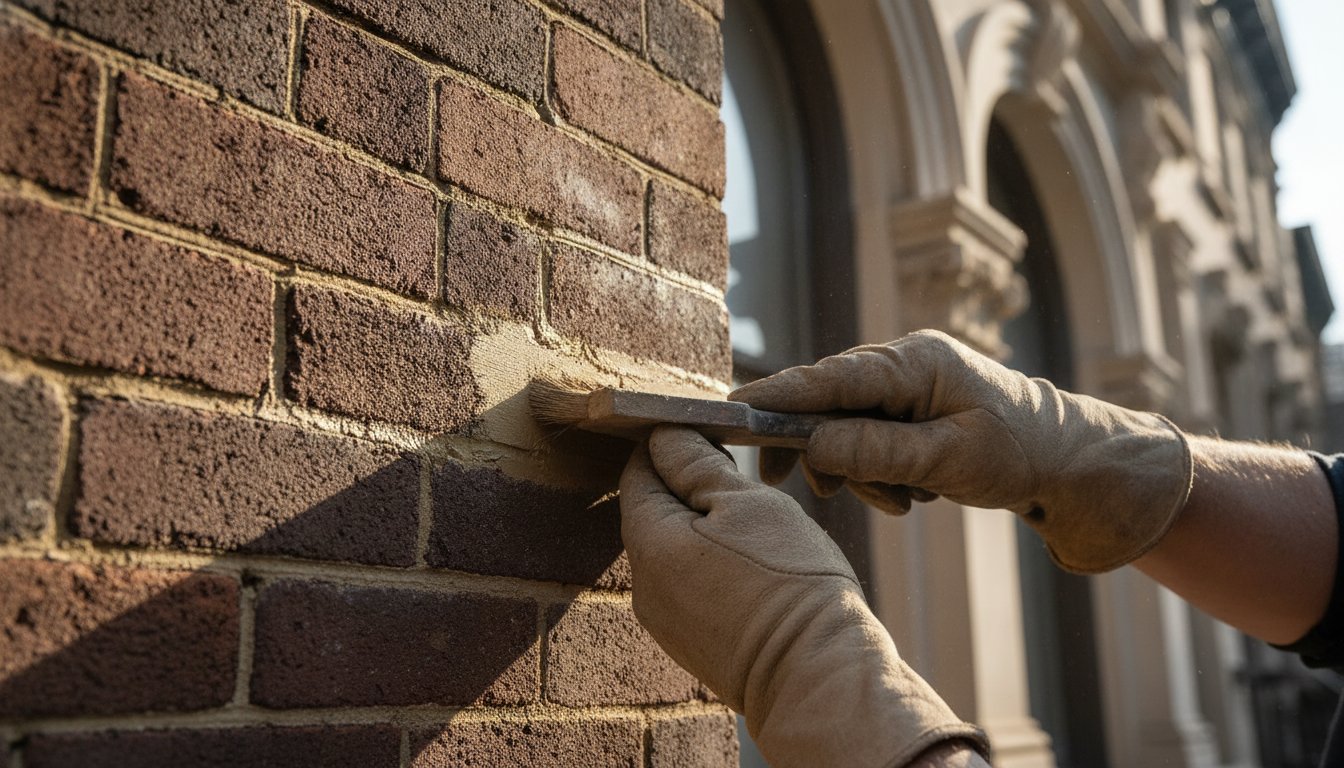
A single hairline crack in your brownstone isn’t just an eyesore; it’s an invitation for New York’s freeze-thaw cycles to dismantle your property’s history from the inside out. As an NYC property owner, you take pride in your building’s heritage, yet the sight of spalling stone or crumbling mortar can feel like a race against time. You’re right to be cautious about who touches your facade. Using the wrong mortar or ignoring strict Landmarks Preservation Commission regulations can lead to permanent damage and costly penalties. This is why historic masonry restoration requires a disciplined, master-of-craft approach rather than a quick fix.
We understand the pressure of maintaining a landmarked property while protecting your financial investment. This guide will help you master the essentials of facade preservation, from identifying early signs of brownstone decay to understanding the technical differences between a temporary repair and a lasting restoration. You’ll learn how to navigate current regulations and when it’s time to call a specialist to ensure your building remains a stabilizing force in your neighborhood. For direct assistance with your property, you can reach our team at 347-341-3808 or 718-350-7388, or email ProgressiveContractingNY@yahoo.com to discuss your project’s specific requirements.
Understanding Historic Masonry Materials and Compatibility
True historic masonry restoration involves the specialized process of repairing or recreating facade elements using materials that match the original construction in both composition and appearance. This practice aligns with the broader principles of conservation and restoration of immovable cultural property, where the goal is to preserve the building’s integrity without introducing harmful modern substances. In neighborhoods like Park Slope and Bed-Stuy, maintaining these original aesthetics isn’t just about curb appeal; it’s about protecting the architectural legacy of New York City.
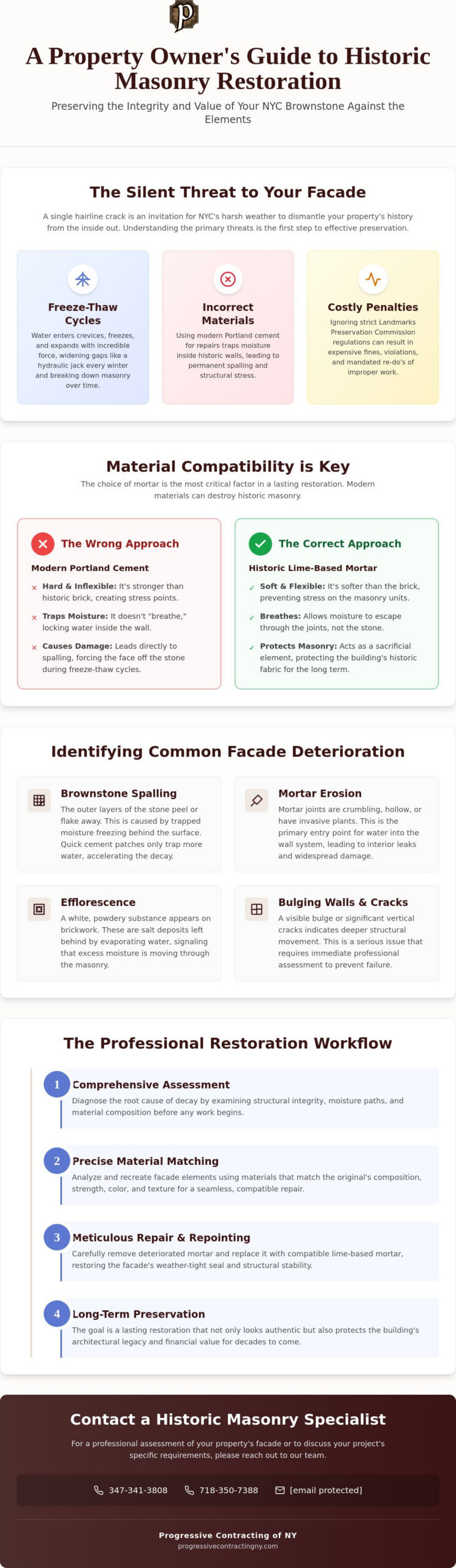
Compatibility is the foundation of a successful project. When we use materials that don’t match the physical properties of the original stone or brick, we create structural stress. Modern Portland cement is a common culprit. It’s significantly harder and less flexible than the lime-based mortars used in the 19th century. Because it doesn’t breathe, it traps moisture inside the wall. When that water freezes, it expands and forces the face off your historic brick or brownstone, a process known as spalling. If you’ve noticed these signs of decay, contact us at 347-341-3808 or 718-350-7388 to schedule an assessment.
The Role of Lime-Based Mortar in Heritage Preservation
Lime-based mortar acts as a sacrificial element in the wall system. It’s designed to be softer than the surrounding masonry, allowing moisture to evaporate through the joints rather than through the stone itself. Our process focuses on precise color and texture matching to ensure repairs are invisible to the naked eye. Repointing is the specific act of removing deteriorated mortar and applying new, compatible joints to restore the facade’s weather-tight seal. You can learn more about our specialized brick pointing techniques online.
Brick, Stone, and Terra Cotta Characteristics
Each material reacts differently to the NYC environment. Brownstone is a porous sedimentary rock that’s highly susceptible to layering and erosion. Traditional red brick is often denser but still requires a breathable mortar to prevent internal salt buildup. Historic terra cotta presents its own challenges, as it often requires specialized internal anchoring and stabilization to prevent heavy pieces from detaching. For expert guidance on these complex materials, email us at ProgressiveContractingNY@yahoo.com.
Identifying Common Facade Deterioration in NYC Properties
Deterioration starts quietly. You might notice a white powdery substance on your brickwork, known as efflorescence, which indicates salt deposits left behind by evaporating water. Bulging walls or vertical cracks suggest deeper structural movement within the facade. In New York City, extreme freeze-thaw cycles act like a hydraulic jack. Water enters small crevices, freezes, and expands, widening the gaps every winter. Properties in Bedford-Stuyvesant and Manhattan heritage districts are particularly vulnerable because their aging exterior walls have endured over a century of these cycles. If you see these signs, it’s time to consider historic masonry restoration before the damage reaches the building’s core.
Brownstone Spalling and Surface Crumbling
Brownstone is a layered stone. When water gets trapped behind the surface, it causes delamination, where the outer layers literally peel away from the structure. Many homeowners try to fix this with quick cement patches. These usually fail because they don’t address the underlying stone stability or the moisture trapped behind the patch. Brownstone spalling repair requires a methodical approach that stabilizes the stone and eliminates the moisture source before any patching begins. For a more comprehensive look at what to watch for, check out our guide on Signs of Water Damage on Brownstone Facades. Properly stabilizing the stone is a core part of our Brownstone restoration services.
Mortar Erosion and the Need for Brick Pointing
Neglected mortar joints are a primary entry point for water. Identify “hollow” joints by tapping the mortar; if it sounds airy or crumbles under light pressure, it no longer supports the masonry. Invasive plant growth like ivy also accelerates this decay by driving roots into the joints and prying them apart. To understand the technical standards for repair, you can consult the NPS Preservation Briefs, which detail the specific requirements for repointing historic structures.
Catching these issues early prevents interior leaks and maintains your property’s value. If you’re unsure about the severity of a crack or the state of your mortar, our team provides clear, honest assessments. Reach out to us at 347-341-3808 or 718-350-7388. You can also send photos of your facade to ProgressiveContractingNY@yahoo.com for a professional opinion on your project.
The Professional Restoration Workflow: Assessment to Preservation
A successful project begins with a comprehensive condition assessment. We examine the facade for structural cracks, loose units, and moisture paths before any tools touch the stone. This diagnostic phase ensures we address the root cause of decay rather than just the visible symptoms. Once the plan is set, the actual historic masonry restoration begins with a gentle cleaning. We avoid high-pressure power washing because it can strip the protective “fire skin” off historic bricks, leaving them vulnerable to rapid erosion. Instead, we use low-pressure water misting or specialized cleaners that lift grime without compromising the material’s integrity.
The next phase involves the meticulous removal of failed mortar. We prioritize manual hand tools to rake out joints. While power grinders are faster, they often skip and nick the edges of historic bricks, causing permanent damage. After the joints are clean, we apply new, compatible mortar in layers. The final step involves finishing the joints to match the original profile and, when necessary, applying a breathable water repellent. These sealants allow internal vapor to escape while preventing liquid water from soaking into the porous stone. This methodical approach is the only way to ensure the work stands the test of time.
Traditional Craftsmanship Meets Modern Protection
Working with Expert Exterior Masonry Contractors in Brooklyn ensures your building’s heritage aesthetics remain intact. We don’t just use generic mortar; we analyze the original stone to select matching aggregates and pigments. This attention to detail ensures the new work blends seamlessly with the old, maintaining the visual continuity of your property’s facade while providing modern durability.
Consulting with a Brownstone Specialist
Navigating NYC landmark regulations requires a partner who understands the nuances of brownstone repair. Specialized knowledge is vital for ensuring your project complies with the Landmarks Preservation Commission (LPC) and local building codes. Manhattan property owners dealing with facade deterioration and LPC requirements can find detailed guidance in our brownstone repair Manhattan homeowner’s guide to historic restoration, which covers everything from identifying deep facade damage to navigating 2026 building envelope standards. We handle the technical details so you don’t have to worry about violations or improper techniques. For a professional assessment of your facade, contact Progressive Contracting NY Corp at 347-341-3808 or 718-350-7388. You can also email your project details and photos to ProgressiveContractingNY@yahoo.com to start the conversation.
Protecting Your Building’s Legacy for the Next Century
Preserving an NYC property requires more than just cosmetic fixes; it demands a deep respect for the original materials and local history. As we’ve explored, successful historic masonry restoration relies on matching porous stone with breathable mortar and following a disciplined workflow from initial assessment to final finishing. By addressing signs of decay early and adhering to landmark regulations, you ensure that your building remains a stable and valuable asset in its community. Delaying these essential repairs only increases the risk of structural failure and regulatory penalties.
Progressive Contracting NY Corp brings a decade of local expertise to every project, specializing in Brooklyn and Manhattan historic facades. From intricate Rammstein stoop restoration to comprehensive brownstone facade renovation, we provide the steady hand needed for complex heritage projects. Ready to safeguard your building? Contact our team at 347-341-3808 or 718-350-7388, or email ProgressiveContractingNY@yahoo.com for a detailed consultation. You can also visit our website to see our portfolio of local work. We’re here to help you maintain the enduring beauty of New York’s architectural past.
Frequently Asked Questions
How do I know if my historic building needs masonry restoration or just a cleaning?
Restoration is necessary if you see physical damage like cracks, loose bricks, or crumbling mortar, whereas cleaning only removes surface pollutants or staining. You can check for restoration needs by looking for “hollow” sounding mortar joints or stones that feel soft to the touch. If the masonry’s structural integrity is compromised, a simple cleaning won’t fix the underlying issue. For a professional evaluation of your facade, call our team at 347-341-3808.
Can I use standard cement for repointing my historic brick home?
You shouldn’t use standard Portland cement for repointing because it’s too rigid and lacks the breathability required for older materials. This mismatch often causes the original bricks to crack or face-off as the building shifts. High-quality historic masonry restoration uses lime-based mortars that flex with the structure and allow water vapor to escape. Using the correct mortar is the best way to prevent long-term structural damage to your home.
What is brownstone spalling and can it be stopped?
Brownstone spalling is the peeling of stone layers caused by trapped moisture and New York’s intense freeze-thaw cycles. You can stop this process by identifying the water source, removing the deteriorated layers, and stabilizing the stone with breathable, cementitious patches. For a complete overview of how professionals address this issue, our guide on brownstone spalling repair and facade crumbling fixes explains the full LPC-compliant process in detail. Proper stabilization prevents further delamination and restores the facade’s original appearance. If you’ve noticed stone fragments on your sidewalk, email ProgressiveContractingNY@yahoo.com to discuss a repair plan for your property.
How long does a typical historic masonry restoration project take in NYC?
A typical project can range from two weeks for minor repointing to several months for a full facade restoration. The timeline depends on the building’s size, the severity of the damage, and the time required for Landmarks Preservation Commission (LPC) permit approvals. We provide a structured schedule during the initial assessment to ensure you have a clear understanding of the project’s progression. Reach us at 718-350-7388 to start the planning process for your building.