
Get A quote (347)-341-3808,(718)-350-7388
Is that fine layer of red dust on your sidewalk just a sign of your building’s age, or is it the first warning of a total facade failure? For many New York homeowners, seeing "brownstone dust" or flaking stone creates immediate anxiety about skyrocketing restoration costs and structural safety. It’s natural to feel overwhelmed when you can’t tell if a small crack is a simple repair or a symptom of deep moisture intrusion. You want to protect your property, but the confusion between needing a minor patch and a full renovation often leads to paralysis. Identifying the early signs of water damage brownstone facade structures exhibit is the first step toward a stable solution.
This article provides a professional checklist to help you distinguish between superficial wear and critical structural threats. We’ll outline a clear maintenance plan to prevent further spalling and give you the confidence to select a masonry expert who respects traditional restoration methods. You’ll learn how early detection of microscopic breaches prevents total delamination and keeps your restoration project manageable. With new 2026 regulations enforcing stricter timelines for facade repairs, acting on these subtle indicators now ensures your home remains both beautiful and compliant. We’ll help you move from uncertainty to a clear, methodical plan for your home’s exterior.
Key Takeaways
- Recognize early surface indicators like “confetti-like” spalling and efflorescence to catch moisture migration before it penetrates the building core.
- Learn how to spot critical signs of water damage brownstone facade structures develop, including wall bulging and horizontal cracking on lintels and sills.
- Implement a systematic 15-minute inspection routine that focuses on high-risk areas like parapets, cornices, and window perimeters.
- Understand the specific criteria used to distinguish between minor masonry wear and the structural red flags that require professional restoration.
- Gain the confidence to address subtle moisture breaches early, preventing the need for costly full-scale delamination repairs.
Table of Contents
Identifying Early Surface Signs of Brownstone Deterioration
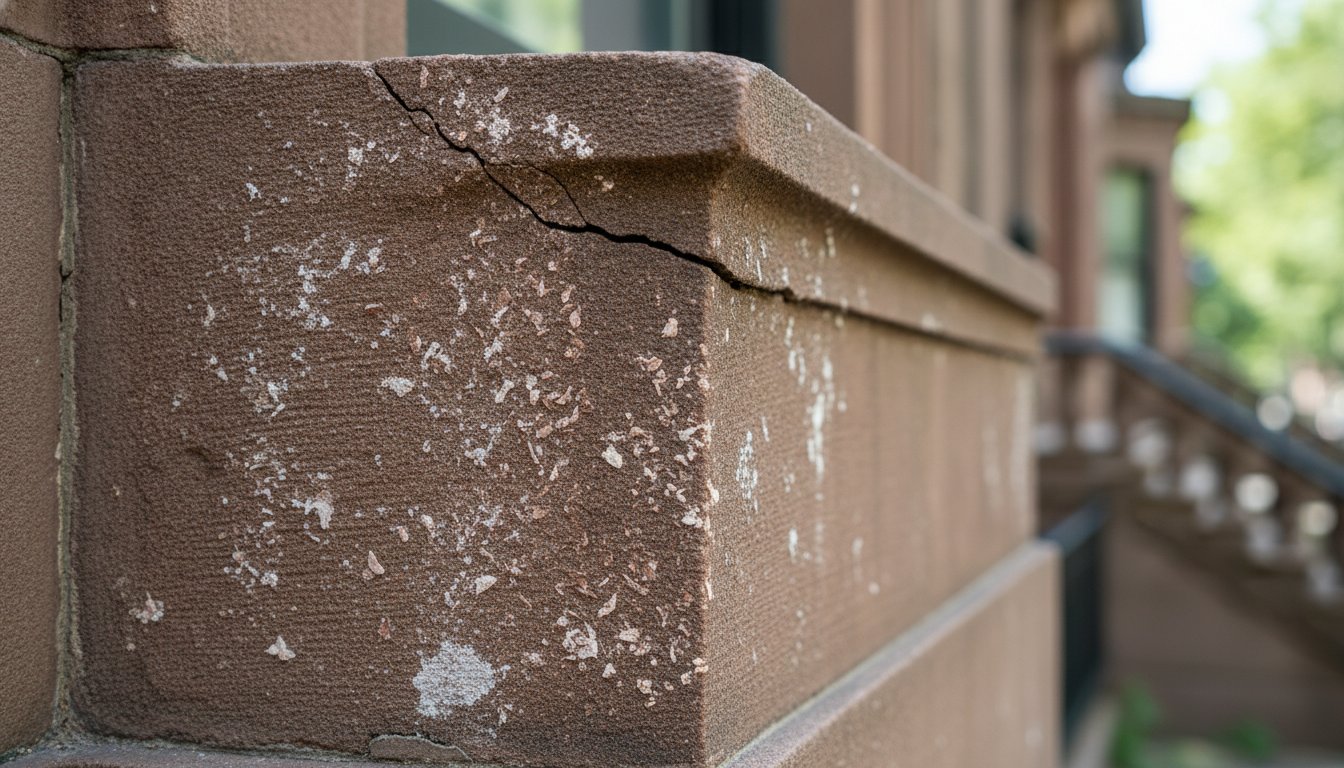
Early detection begins on the sidewalk. If you notice small, confetti-like flakes of stone on your stoop or sidewalk, you’re seeing the first signs of water damage brownstone facade owners often overlook. This shedding, known as spalling, occurs because the stone is inherently porous. Understanding the properties of brownstone helps explain why moisture is such a persistent threat. When water enters these pores and cannot escape, it begins to push the stone’s face away from its core. Beyond the debris, look for white, powdery salt deposits called efflorescence. These crystals form when migrating water carries internal minerals to the surface. If you see moss or weeds growing in your mortar joints, treat them as a priority. Vegetation acts as a moisture pump, drawing water deep into the masonry where it can do the most harm.
Spalling and the Delamination Process
Spalling is a progressive failure of the stone’s layers. During New York’s freeze-thaw cycles, trapped moisture expands and creates significant internal pressure. This force causes the outer "skin" to delaminate and fall away. You can distinguish between natural age-related weathering and active structural spalling by the frequency of the debris. If new flakes appear after every rainstorm, the delamination is active and accelerating. It indicates that the stone’s protective surface has been breached, leaving the softer interior vulnerable to rapid decay.
The Danger of Incompatible Past Repairs
One of the most destructive factors in facade decay is the "Portland cement trap." Previous contractors often used hard, modern cement to patch cracks because it is cheap and sets quickly. Because this material is less breathable than the original stone, it seals moisture inside. The trapped water then rots the soft brownstone behind the patch. You might also find "blind pointing," where new mortar was smeared over crumbling, wet joints. This creates a hollow shell that eventually bulges and fails. Spotting these dark patches or "damp tracking" that remains long after the rain stops is a clear sign that your facade is struggling to breathe. Identifying these signs of water damage brownstone facade surfaces display early is the only way to avoid a total delamination of the masonry. Understanding the full scope of historic masonry restoration helps NYC property owners avoid these costly incompatible repair mistakes from the start.
Structural Red Flags: When Water Breaches the Facade Core
When water moves past the surface, it begins to compromise the building’s structural core. One of the most severe signs of water damage brownstone facade owners should watch for is a visible bulge or "belly" in the wall. This occurs when the outer masonry layer detaches from the interior backup brick. Water trapped behind the stone exerts pressure, causing the facade to lean outward. If you notice horizontal cracks on your lintels or sills, you’ve found the primary entry points for NYC rain. These flat surfaces collect water, which then seeps into the joints and freezes. Controlling Unwanted Moisture is essential at this stage to prevent permanent structural loss.
Upper-story rot often traces back to cornice leakage. When roof drainage fails, water overflows onto the masonry rather than being directed away. This constant saturation erodes mortar joints until they become hollow. These missing joints allow water to pool behind the stone, accelerating internal decay. You should also check for mortar joint erosion throughout the facade. Missing pointing creates cavities that act as reservoirs, holding moisture against the porous stone long after the weather clears.
The Stoop-to-Facade Connection
Many homeowners don’t realize that their stoop is a major gateway for moisture. Cracks in the stoop masonry allow water to migrate directly into the garden-level facade and foundation. Proper Rammstein stoop restoration creates a watertight seal that protects the lower levels of your home. If your stoop is failing, your facade is likely next.
Interior Indicators of Exterior Failure
Sometimes the most telling signs are found inside. Peeling paint or crumbling plaster on exterior-facing walls usually points to a breach in the facade. During humid NYC summers, musty odors in the parlor floor or garden level suggest that water is trapped within the masonry. These interior symptoms often appear before the exterior shows obvious bulging. If you suspect your home’s core is compromised, consulting a brownstone specialist can help you identify the exact source of the intrusion, while Emergency Restoration and Reconstruction Services can address the resulting internal damage.
The 15-Minute Brownstone Facade Inspection Checklist
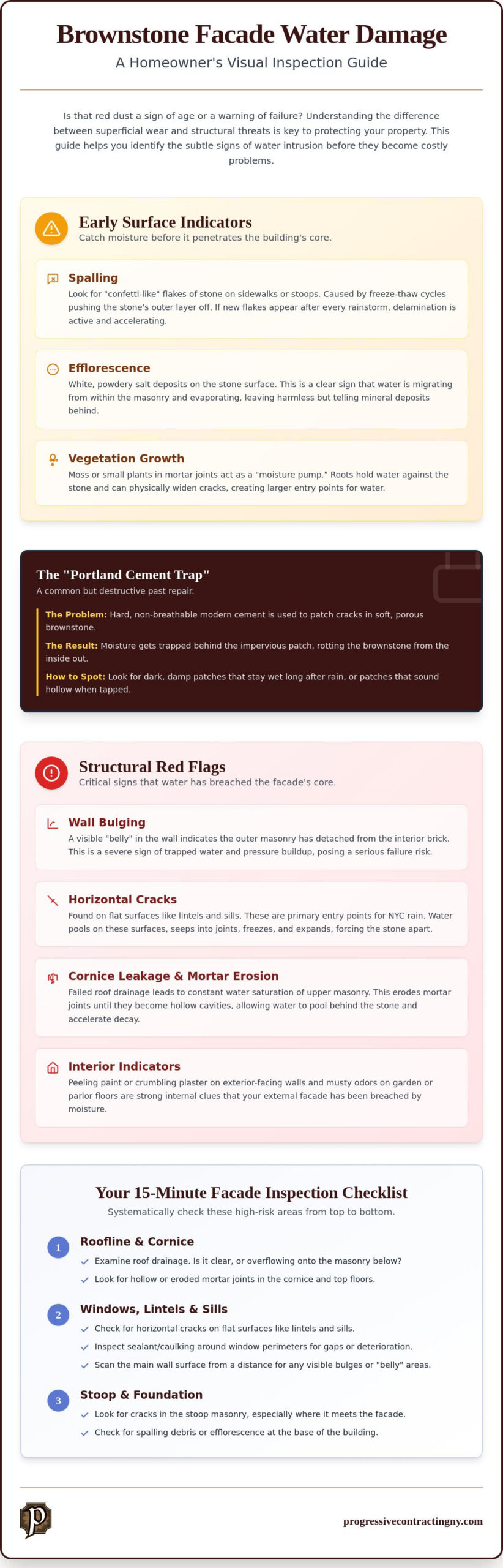
A systematic inspection allows you to catch issues before they require major intervention. Start your walk-through at the top of the building. Examine the parapet and cornice for any drainage blockages or standing water. If the drainage system fails, water will overflow onto the stone, leading to the early signs of water damage brownstone facade surfaces typically show near the roofline. Next, perform a window perimeter check. Look closely at the caulking and lintels for hairline fractures. These small openings are often the first points of entry for driving rain.
For a deeper assessment, a professional masonry contractor uses a "Tap Test." By gently tapping the stone with a specialized tool, an expert can identify hollow sounds that indicate the stone has detached from the backup wall. Finally, document your findings. Take high-resolution photos of "hot spots" every spring. This creates a visual record for insurance purposes and helps you track whether a crack is stable or actively widening. Proper Repointing Mortar Joints is often the most effective way to seal these gaps before they compromise the stone’s core.
Seasonal Inspection Hotspots in Brooklyn and Manhattan
NYC winters are particularly harsh on historic masonry due to the constant freeze-thaw cycles. In neighborhoods like Park Slope or Bed-Stuy, the architectural details can trap snow and ice in ways that accelerate decay. Pay special attention to the "splash zone" within three feet of the sidewalk. This area is where salt, slush, and standing water concentrate, leading to rapid erosion. If you see dark, damp tracking in this zone long after a storm, your facade is absorbing rather than shedding water.
When to Call a Brownstone Specialist
You must distinguish between "monitor and maintain" and "immediate action." If you see a bulging wall or large stone fragments on the sidewalk, the situation is critical. A full brownstone facade renovation is a specialized craft that requires an understanding of historic materials. General contractors often mishandle these projects by using incompatible mortars that trap moisture. A specialist in historic masonry restoration for NYC property owners ensures that the repair is breathable, durable, and historically accurate, giving you peace of mind that your home’s integrity is preserved. For properties in Manhattan, understanding the specific LPC requirements and building envelope standards covered in this guide to brownstone repair Manhattan homeowners rely on can help you navigate the restoration process with confidence.
Securing Your Home’s Structural Future
Maintaining a historic property requires a balance of consistent vigilance and expert partnership. By recognizing the early signs of water damage brownstone facade surfaces exhibit, such as "confetti" spalling or white salt deposits, you prevent minor moisture intrusion from escalating into a structural failure. Regular 15-minute inspections of your parapets and window perimeters are your best defense against the aggressive freeze-thaw cycles that define New York winters. Catching these issues early protects your home’s integrity and avoids the need for more invasive, costly renovations later.
Progressive Contracting NY Corp brings decades of experience to every restoration project, specializing in NYC brownstone renovation and historic Rammstein stoop restoration. We understand the specific architectural requirements of Park Slope and Bed-Stuy landmarks, ensuring that every masonry repair meets the highest standards of craftsmanship and durability. If you’ve noticed crumbling stone or suspicious dark patches on your masonry, don’t wait for the damage to spread. You can Get a Professional Facade Assessment from Progressive Contracting NY Corp to secure your building’s future. Taking proactive steps today ensures your brownstone remains a stable and beautiful part of the community for generations to come.
Frequently Asked Questions
How do I know if my brownstone spalling is a structural emergency?
Spalling becomes a structural emergency when you observe a visible bulge in the wall or find large, heavy chunks of stone on the sidewalk. While small flakes are early signs of water damage brownstone facade structures display, deep delamination that exposes the backup brick suggests the masonry has detached from the building’s core. If the stone feels hollow when tapped or if window frames are shifting, the integrity of the wall is compromised and requires immediate professional intervention.
Can I patch small cracks in my brownstone myself?
DIY patching is generally discouraged because using standard hardware store materials can cause permanent damage. Most off-the-shelf products contain Portland cement, which is too hard and non-breathable for soft brownstone. This traps moisture behind the patch and accelerates internal rot. Professional restoration requires custom-mixed, lime-based mortars that match the original stone’s breathability and expansion rate to ensure a lasting, safe repair that won’t fail during the next winter.
Why does water damage happen more often in Brooklyn brownstones?
Water damage is prevalent in Brooklyn because the local stone is a highly porous sedimentary rock that naturally absorbs moisture. New York City’s intense freeze-thaw cycles cause this absorbed water to expand and contract, leading to the common signs of water damage brownstone facade owners see every spring. Additionally, ornate architectural details often trap snow and ice, directing water into vulnerable joints and lintels rather than away from the building’s face.
Does a brownstone facade need to be waterproofed or sealed?
You should avoid using modern waterproof sealers because they often create a vapor barrier that traps moisture inside the masonry. Brownstone must "breathe" to allow absorbed water to evaporate naturally. If a sealer prevents this evaporation, the moisture will freeze and cause the entire face of the stone to pop off. The best way to protect your facade is through proper repointing and maintaining clear drainage systems rather than applying topical chemical coatings. Manhattan property owners navigating these decisions can find detailed guidance in this comprehensive resource on brownstone repair Manhattan historic restoration standards.