
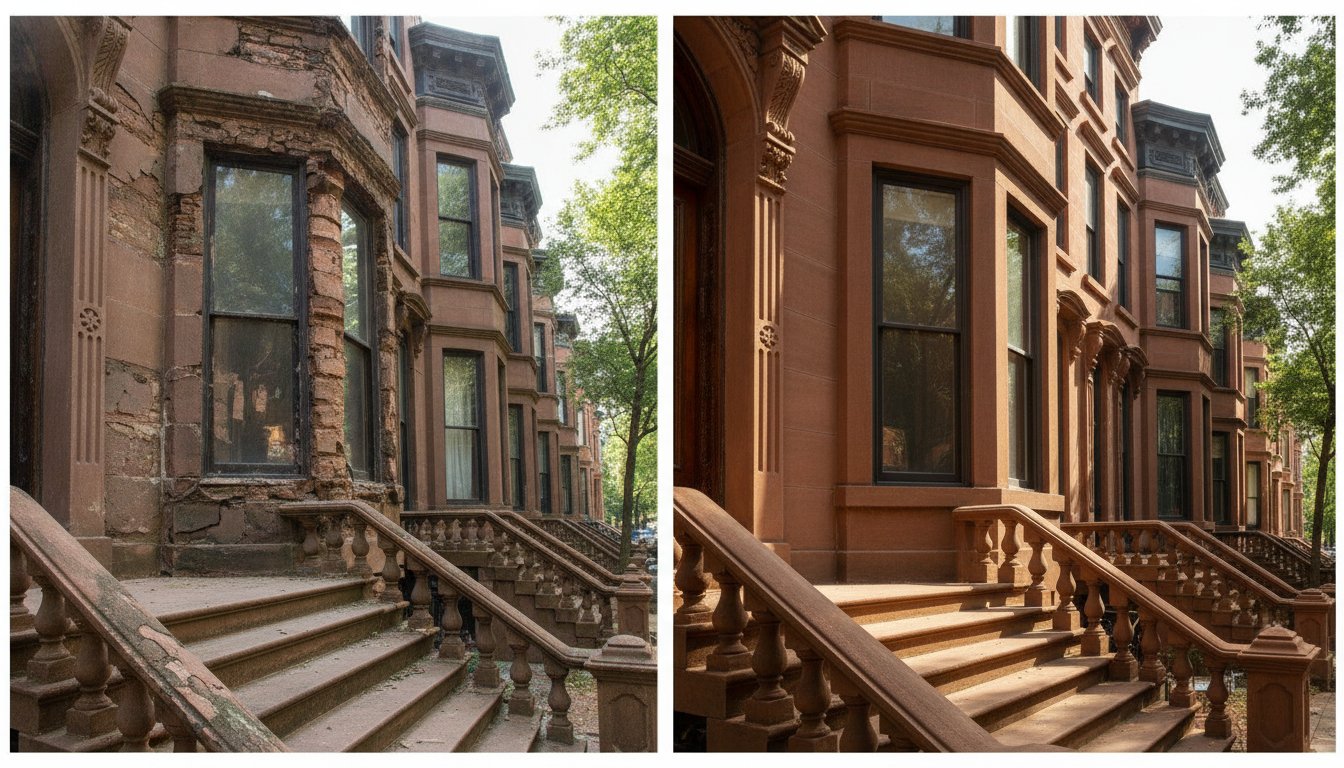
A single hairline crack in your facade is rarely just a cosmetic issue. It is often the first warning sign of deep-seated spalling that, if left unaddressed, leads to NYC DOT sidewalk violations and structural decay. You want to preserve the architectural legacy of your home, but the overlapping rules of the Landmarks Preservation Commission (LPC) and the Department of Buildings (DOB) can feel overwhelming. It’s frustrating to watch a historic exterior crumble while you’re stuck trying to decode complex city codes.
This guide clarifies the technical essentials of historic brownstone renovation brooklyn, offering professional masonry insights to help you navigate the restoration process with confidence. You’ll learn how to achieve a structurally sound, historically accurate facade that fully complies with the latest 2026 NYC building regulations. We will walk through the specific steps of masonry repair, explain current permit fee structures, and show you how to increase your property value through authentic restoration.
Key Takeaways
- Learn how the New York freeze-thaw cycle triggers stone spalling and why early detection of water infiltration prevents deep structural decay.
- Master the technical steps for a successful historic brownstone renovation brooklyn, from professional surface preparation to the selection of breathable, period-accurate mortar.
- Understand how to navigate the Landmarks Preservation Commission (LPC) permit process to ensure your restoration meets strict city standards.
- Discover the role of a masonry specialist in resolving NYC DOT sidewalk violations while maintaining the historic integrity of your home’s exterior.
- Gain professional insights on how precise masonry techniques protect your investment and increase your property value through authentic preservation.
Table of Contents
Understanding Historic Brownstone Facade Deterioration in Brooklyn
Brownstone is a porous, sedimentary rock that gained popularity in the 19th century for its rich color and ease of carving. To understand why your facade is failing, you first need to ask: What is brownstone? It is essentially a sandstone with a high iron content, which gives it that iconic chocolate hue but also makes it susceptible to the elements. In the context of a historic brownstone renovation brooklyn, the most common enemy is spalling. This occurs when water infiltrates the stone’s natural bedding planes, causing the layers to flake, peel, and eventually crumble away from the building’s face.
The New York freeze-thaw cycle acts as a catalyst for this destruction. During the winter, moisture trapped inside the masonry expands as it turns to ice. This internal pressure creates microscopic fractures that widen every year. Over time, what began as a small hairline crack evolves into significant stone loss. Identifying these issues early is vital for maintaining structural integrity. For a detailed look at identifying these signs, refer to this guide on repairing brownstone facade damage.
To better understand this concept, watch this helpful video:
It’s important to distinguish between cosmetic wear and genuine structural deterioration. While some surface darkening is normal for aged stone, deep cracks or bulging sections indicate that the facade is no longer shedding water correctly. If the stone feels soft to the touch or pieces fall away with light pressure, the damage has moved beyond the surface. Professional intervention is required to prevent the decay from reaching the underlying brickwork.
The Mechanics of Spalling and Water Infiltration
Spalling often results from subflorescence, where salt crystallization occurs just beneath the stone’s surface and forces the outer layers to delaminate. Many homeowners attempt to fix these areas by applying a patch of standard Portland cement. This is a mistake. Cement is non-porous and traps moisture behind the patch, which accelerates the rot of the original stone and causes even larger sections to fail during the next frost. Understanding the full scope of brownstone facade deterioration repair is essential before attempting any remediation, as the wrong approach can compound existing damage significantly.
Identifying Critical Facade Failure Points
A thorough inspection starts with the projecting elements of the building. Cornices, window lintels, and sills are the most exposed to rain and snow, making them the first points of failure. You should also examine the brick pointing between the stone blocks. When mortar joints fail, they create direct channels for water to enter the building core. Addressing these joints early ensures that a historic brownstone renovation brooklyn remains a targeted repair rather than a full-scale reconstruction. Before beginning any restoration work, reviewing a comprehensive brownstone exterior repair nyc checklist can help you systematically identify every failure point and prioritize repairs effectively.
Technical Standards for Authentic Facade Restoration
Successful historic brownstone renovation brooklyn projects require more than a fresh coat of cement. They demand a disciplined, multi-step process that respects the original 19th-century craftsmanship while utilizing modern technical standards. This methodical approach ensures that the restoration isn’t just a temporary fix but a permanent improvement to the building’s structural integrity.
-
Step 1: Surface Preparation. We begin by removing all loose, shaly material. This involves stripping the facade back to the sound, healthy stone beneath. Skipping this step leads to premature failure as new layers won’t bond to decaying stone.
-
Step 2: Mortar Selection. We use a breathable mortar mix that matches the original 19th-century composition. The NYC Landmarks Preservation Commission mandates these specific mixtures to ensure the stone can shed moisture naturally.
-
Step 3: Layered Application. Specialized brownstone cement is applied in multiple stages. We start with a scratch coat to create a strong mechanical bond, followed by a finish coat that mimics the properties of natural sandstone.
-
Step 4: Tooling and Finishing. The final stage involves precise tooling. We recreate the authentic texture and color of the neighborhood, whether your home features a smooth finish or a combed, stippled appearance.
Rammstein Stoop Restoration: Preserving the Brooklyn Entryway
The stoop is often the most abused part of a facade due to heavy foot traffic and salt exposure. A Rammstein stoop restoration is the gold standard for long-term durability. This process involves reinforcing the stoop core with structural masonry before applying the decorative finish. It creates a stable foundation that prevents the cracking and shifting common in cheaper, surface-level repairs.
Precision Brick Pointing and Masonry Repair
Mortar joints are the first line of defense against water infiltration. We perform brick pointing by "raking out" old, brittle mortar to a depth of at least half an inch without nicking the surrounding historic brick. New mortar is then color-matched to the existing wall for a seamless finish. This precision maintains the historic appearance while sealing the building core against the elements. If you aren’t sure where to start, you can contact Progressive Contracting for a professional masonry assessment of your property.

Navigating NYC Regulations and Selecting a Specialist
Completing a successful historic brownstone renovation brooklyn requires navigating a complex layer of city regulations. It’s not just about aesthetics; it’s about legal compliance. Many general contractors focus on interior remodeling and lack the specialized knowledge required to satisfy the NYC Landmarks Preservation Commission guidelines. You need a partner who understands the chemistry of 19th-century masonry and the specific bureaucratic hurdles of city agencies. Exterior-only specialists provide better results because they focus exclusively on the structural and historical needs of the building’s envelope.
During the selection process, focus on a firm’s specific experience with historic properties. Ask for references from completed projects in your neighborhood and verify their standing with the Department of Buildings. You should confirm they carry comprehensive insurance, including general liability and workers’ compensation, to protect you from site-related risks. A true specialist offers a clear roadmap for your project, from the initial permit filing to the final sign-off. This transparency builds trust and ensures your investment is protected throughout the lifecycle of the restoration. Homeowners preparing for this process will find it useful to consult the ultimate NYC brownstone exterior repair and maintenance checklist to understand the full scope of work before engaging a contractor.
Landmarks Preservation Commission (LPC) Compliance
If your property is in a historic district like Park Slope or Bed-Stuy, any change to the facade requires an LPC permit. This isn’t just a suggestion; it’s a legal mandate. The commission requires "in-kind" repairs, meaning new materials must match the original stone in color, texture, and composition. Using unapproved materials can result in heavy fines and a requirement to redo the work at your own expense. A qualified specialist handles the filing process and ensures all masonry work meets these rigorous preservation standards.
Sidewalk Violation Removal and Concrete Maintenance
Homeowners often discover they have an NYC DOT sidewalk violation when trying to sell or refinance their property. These notices occur when cracks or uneven flags pose a tripping hazard. We recommend coordinating sidewalk repair with your facade restoration for a cohesive look and efficient mobilization. Addressing these violations promptly prevents the city from placing a lien on your property. Our team specializes in sidewalk violation removal, ensuring your entire exterior meets city safety codes while enhancing your property’s curb appeal.
Protecting Your Historic Investment for the Future
Maintaining a historic property in New York requires a precise balance of technical masonry skill and regulatory awareness. You now understand that addressing stone spalling early and using breathable, period-accurate materials are the only ways to prevent long-term structural failure. Ignoring a crumbling facade doesn’t just hurt your curb appeal; it risks costly sidewalk violations and potential safety hazards that can devalue your home. A disciplined approach to restoration ensures your building remains a stable and beautiful part of the community for another century.
A successful historic brownstone renovation brooklyn project depends on a partner who knows the specific requirements of the Park Slope and Bed-Stuy historic districts. We bring over a decade of experience to every project, specializing in Rammstein stoop restoration and the efficient removal of NYC sidewalk violations. Our team focuses on transparent communication and meticulous craftsmanship to navigate the complexities of LPC and DOB requirements on your behalf.
Don’t wait for a minor crack to become a major structural liability. Take the first step toward a sound and compliant exterior by speaking with a specialist who respects the tradition of your home. Request a Professional Facade Assessment from Progressive Contracting to ensure your restoration is handled with the expertise it deserves. Your brownstone is a piece of New York history, and we are here to help you preserve it.
Frequently Asked Questions
Do I need a permit for brownstone facade repair in Brooklyn?
You generally need a permit from the Landmarks Preservation Commission (LPC) if your property is located within a historic district or is an individual landmark. For simple, in-kind repairs like repointing or brownstone repair, you will likely apply for a Permit for Minor Work (PMW). There is no LPC filing fee for a PMW. If your project requires a Department of Buildings (DOB) permit, you must obtain a Certificate of No Effect or a Certificate of Appropriateness before the DOB will review your application.
How long does a typical historic brownstone renovation take?
A full historic brownstone renovation brooklyn, including the time required for LPC review and DOB permit approval, typically takes 12 to 24 months to complete. While the physical masonry work on the facade may only take several weeks, the pre-construction phase often adds several months to the timeline. We recommend planning for a long lead time to ensure all regulatory approvals are in place before the scaffolding goes up.
Can I use regular cement to fix cracks in my brownstone stoop?
You should never use standard Portland cement for brownstone repairs because it is too hard and non-porous for historic masonry. Regular cement traps moisture behind the patch, which causes the original stone to rot and eventually pop off during the freeze-thaw cycle. Professional restoration requires a specialized, breathable mortar mix that matches the density and water-vapor permeability of the 19th-century stone to ensure a lasting bond.
What is the best time of year for exterior masonry work in NYC?
The ideal window for exterior masonry work in New York City is between late April and early November. Masonry materials, including brownstone cement and lime-based mortars, require temperatures to stay above 40 degrees Fahrenheit to cure properly. If the water in the mix freezes before the mortar has set, the material will become brittle and fail. Scheduling your project during the warmer months ensures the structural integrity and longevity of the restoration.