
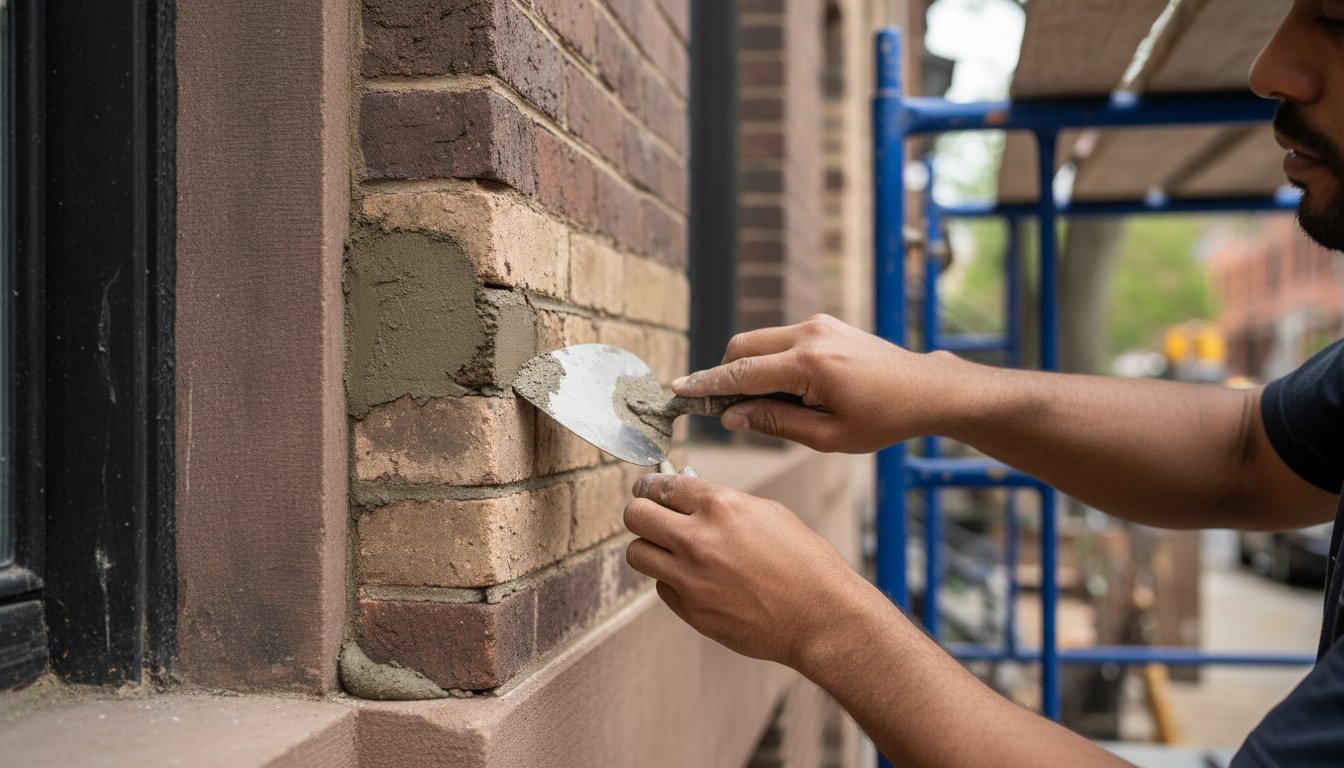
You’re walking past your Manhattan property when you notice a slight, outward bulge in the upper brickwork that wasn’t there last season. It’s a stressful discovery that often leads to fears of structural failure and the daunting prospect of meeting strict NYC Department of Buildings regulations. You likely worry that the only solution is a prohibitively expensive full facade reconstruction. This guide explains how a specialized masonry contractor can identify the root causes of failing walls and implement professional stabilization techniques that ensure structural integrity without unnecessary demolition. We’ll cover identifying early warning signs, understanding NYC code compliance, and the precision methods used to restore historic masonry. If you have concerns about your building’s facade, reach Progressive Contracting NY Corp at 347-341-3808 or 718-350-7388, or email ProgressiveContractingNY@yahoo.com.
Identifying Masonry Wall Instability in Manhattan Buildings
Masonry wall stabilization is the technical process of reinforcing a building’s exterior wythes by anchoring them back to the internal structural frame. To understand the complexity of these repairs, it helps to look at what is masonry in the context of Brooklyn’s historic architecture. Buildings across Brooklyn face unique stressors, primarily water infiltration, thermal expansion, and the natural degradation of aging mortar joints. When moisture enters the wall system, it undergoes freeze-thaw cycles that physically push the brick or stone away from the backup wall.
This movement creates the “bulge” phenomenon, where a section of the wall bows outward. Over decades, these small shifts accumulate until the wall’s structural integrity is compromised. An experienced masonry contractor views a bulge not just as an aesthetic flaw, but as a sign that the outer facade is detaching from its anchors. Without intervention, these walls risk sudden failure under high wind loads or continued saturation.
Visual Red Flags: When to Call a Masonry Specialist
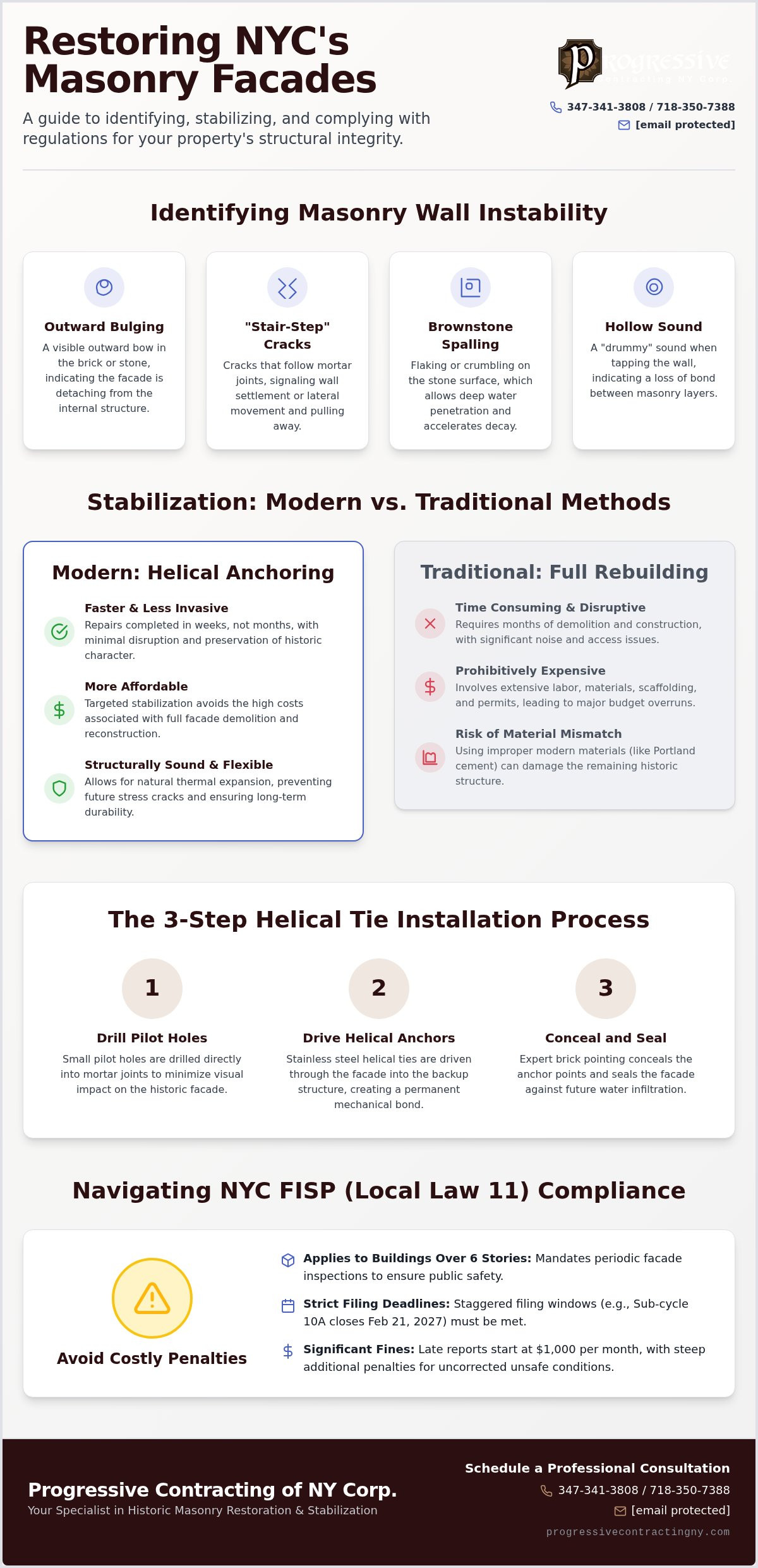
Property owners in areas like Brooklyn should regularly inspect their facades for “stair-step” cracking in the mortar or deep horizontal cracks across the stone. These patterns often signal that the wall is settling or pulling away. It’s also vital to recognize the early stages of brownstone spalling, a common issue in Brooklyn’s historic brownstones. When the surface layer of the stone begins to flake or crumble, it allows water to penetrate deeper into the masonry unit, accelerating the path toward instability.
You can perform a basic check by gently tapping on the masonry; a hollow or “drummy” sound indicates a loss of bond between the layers. Working with a qualified masonry contractor ensures that these subtle signs are caught before they become emergency violations. If you identify any of these red flags, immediate stabilization is required to meet NYC safety standards, protecting your Brooklyn property. For professional guidance, reach Progressive Contracting NY Corp at 347-341-3808 or 718-350-7388. You can also send project details to ProgressiveContractingNY@yahoo.com.
Stabilization Techniques: Helical Anchors vs. Wall Rebuilding
Modern stabilization methods have replaced the invasive exterior plates and star bolts that once defined NYC facade repairs. A specialized masonry contractor now uses internal anchoring to secure the building’s outer wythes without altering its historic character. This precision approach is significantly faster and more affordable than a full facade reconstruction. While tearing down and rebuilding a wall can take months, localized stabilization often resolves structural issues in a matter of weeks. This efficiency is vital for property owners working to comply with the NYC Façade Inspection & Safety Program (FISP) on a tight schedule.
Success in Manhattan’s historic districts requires a breathable approach. Using rigid, non-flexible materials often leads to further masonry stress and cracking. We utilize anchors and mortars that allow for natural thermal expansion, ensuring the repair lasts as long as the original structure. This balance of strength and flexibility prevents the recurrence of the displacement issues described in earlier sections.
The Step-by-Step Process of Installing Helical Ties
The installation begins with drilling small pilot holes directly into the mortar joints to minimize any visual impact. We then drive stainless steel helical anchors through the facade and into the backup structure to create a permanent mechanical bond. The final phase involves expert brick pointing to conceal the anchor points and seal the facade against water. For a professional review of your building, schedule a consultation with an expert masonry contractor. Contact Progressive Contracting NY Corp at 347-341-3808 or 718-350-7388, or email ProgressiveContractingNY@yahoo.com.
NYC Compliance and Choosing a Manhattan Masonry Contractor
Manhattan property owners must navigate the Façade Inspection Safety Program (FISP), widely known as Local Law 11. Cycle 10 is currently in effect, and the Department of Buildings requires periodic inspections for buildings over six stories. For instance, Sub-cycle 10A, which covers block numbers ending in 4, 5, 6, and 9, has a filing window closing on February 21, 2027. Missing these deadlines or failing to correct unsafe conditions leads to significant penalties. Fines for late initial reports start at $1,000 per month, plus additional penalties for uncorrected conditions. A qualified masonry contractor understands these staggered filing windows and provides the necessary documentation to keep your building in good standing.
Hiring a specialist in historic brownstone and brick is essential for long-term preservation. Generic repairs often use modern Portland cement, which is too rigid for older structures and causes the masonry to crack. We utilize traditional lime-based mortars and advanced helical wall ties to reinforce facades while allowing for natural thermal movement. This surgical approach prevents further water damage and stops the cycle of spalling that leads to full facade failure. We prioritize financial transparency, providing detailed project timelines to ensure you aren’t surprised by the high costs often associated with large-scale reconstruction.
Expert Facade Care with Progressive Contracting NY Corp
Our approach to Manhattan masonry combines time-tested craftsmanship with modern stabilization technology. We act as a reliable guide through the complexities of NYC code compliance and structural repair. Whether you’re dealing with an aging brownstone or a mid-rise brick building, our team provides a steady hand. Reach our experts directly at 347-341-3808 or 718-350-7388 to discuss your building’s facade health. You can also email project details or DOB violation notices to ProgressiveContractingNY@yahoo.com for a professional assessment. We’re here to ensure your property remains safe, stable, and fully compliant.
Securing Your Manhattan Facade for the Future
Proactive maintenance is the best defense against structural failure and costly NYC DOB violations. By identifying early warning signs like bulging brickwork and utilizing modern stabilization techniques, you protect both your building’s historic value and your financial interests. Choosing a seasoned masonry contractor who understands the specific needs of brownstone and brick ensures that your project meets rigorous safety standards while preserving traditional aesthetics. With over a decade of experience in Manhattan and Brooklyn historic districts, we provide direct owner-to-client communication to ensure every detail is handled with precision. Don’t wait for a violation notice to address your facade’s health. Reach our team at 347-341-3808 or 718-350-7388, or email ProgressiveContractingNY@yahoo.com for expert guidance.
We look forward to helping you stabilize and restore your property with a commitment to quality and transparency.
Frequently Asked Questions
What are the first signs that my Manhattan building’s masonry wall is failing?
Beyond the bulging and cracking discussed earlier, look for displacement at the roofline or separation at the building corners. These shifts suggest the building’s masonry envelope is no longer securely tied to the internal frame. Identifying these early signs with a masonry contractor prevents the need for emergency sidewalk sheds and the high monthly rental fees associated with long-term scaffolding.
How much does masonry wall stabilization cost in NYC?
Costs vary based on the height of the building and the specific density of the anchor pattern required to secure the facade. Factors like the type of access needed, such as boom lifts versus traditional scaffolding, also influence the budget. We provide transparent, itemized proposals to help owners understand the financial balance between necessary structural work and long-term building durability.
Will wall stabilization affect the historic appearance of my brownstone facade?
Stabilization is designed to be nearly invisible and is often the preferred method for buildings under Landmarks Preservation Commission (LPC) oversight. Because helical ties are installed through mortar joints and covered with matched pointing, the original stone face remains untouched. This maintains the historic fabric of the neighborhood while providing the modern mechanical connection needed for safety.
Does masonry stabilization satisfy NYC Local Law 11/FISP requirements?
Yes, professional stabilization is a standard remedy for addressing “Unsafe” or “SWARMP” conditions flagged during FISP inspections. Once repairs are complete, a Qualified Exterior Wall Inspector (QEWI) must verify the work to update your building’s status with the Department of Buildings. For assistance with these filings, contact Progressive Contracting NY Corp at 347-341-3808 or 718-350-7388, or email ProgressiveContractingNY@yahoo.com.