
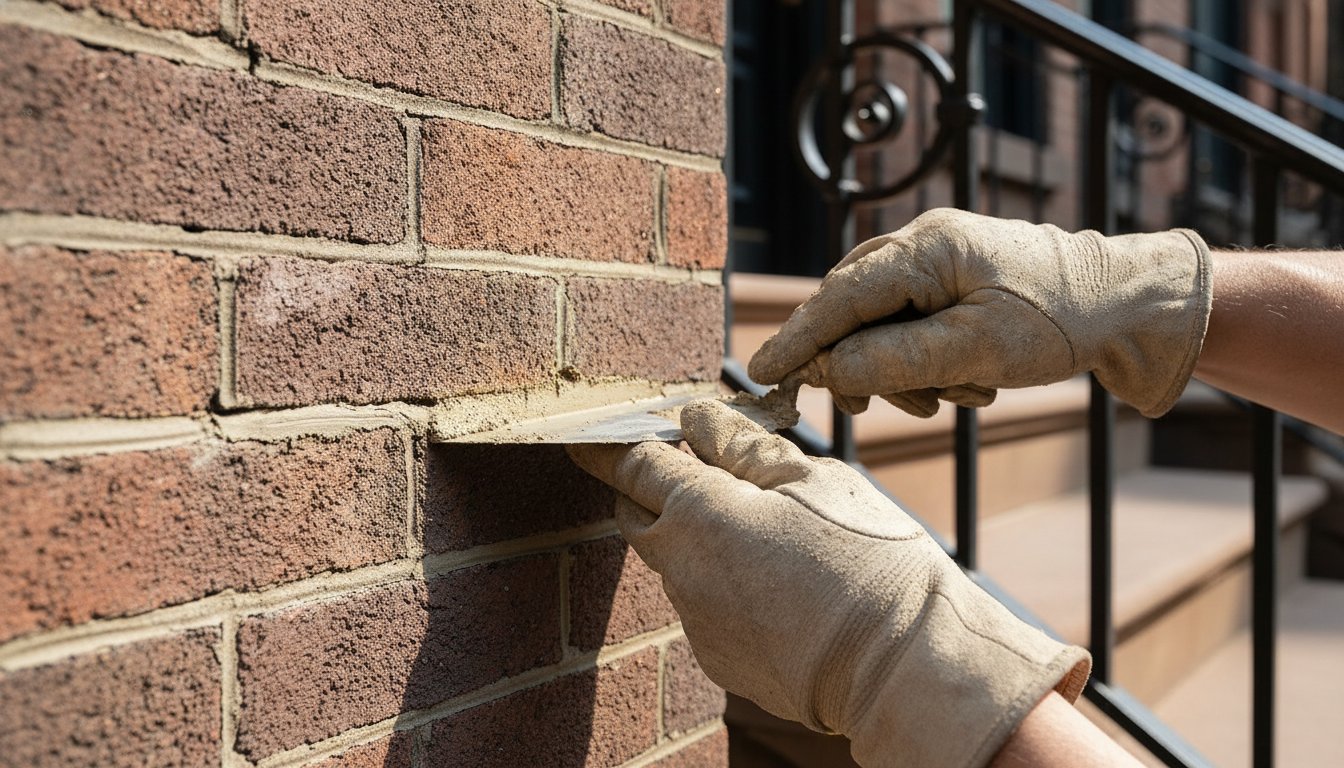
Did you know that applying standard Portland cement to a 19th-century facade can actually accelerate the decay of your property? For homeowners managing masonry repair for historic districts brooklyn, the challenge is balancing structural needs with strict preservation laws. You’ve likely noticed visible spalling on your brownstone or crumbling mortar between bricks, and the fear of a Landmarks Preservation Commission (LPC) violation is a valid concern. With fines for unpermitted work on one-to-two family homes reaching up to $10,000 in 2026, there’s no room for error in your restoration strategy.
It’s difficult to find a contractor who respects the science of historic mortar mixes instead of relying on modern, incompatible materials. This guide provides a clear path to navigating LPC regulations and utilizing specialized techniques to protect your building’s integrity. You’ll learn how to stop water infiltration and achieve a finished facade that meets every NYC historic standard. If you have questions about your specific project, contact Progressive Contracting NY Corp at 347-341-3808 or 718-350-7388, or email us at ProgressiveContractingNY@yahoo.com. We’ll preview the essential steps for permit approval, material matching, and long-term structural preservation.
Navigating Landmarks Preservation Commission (LPC) Requirements in Brooklyn
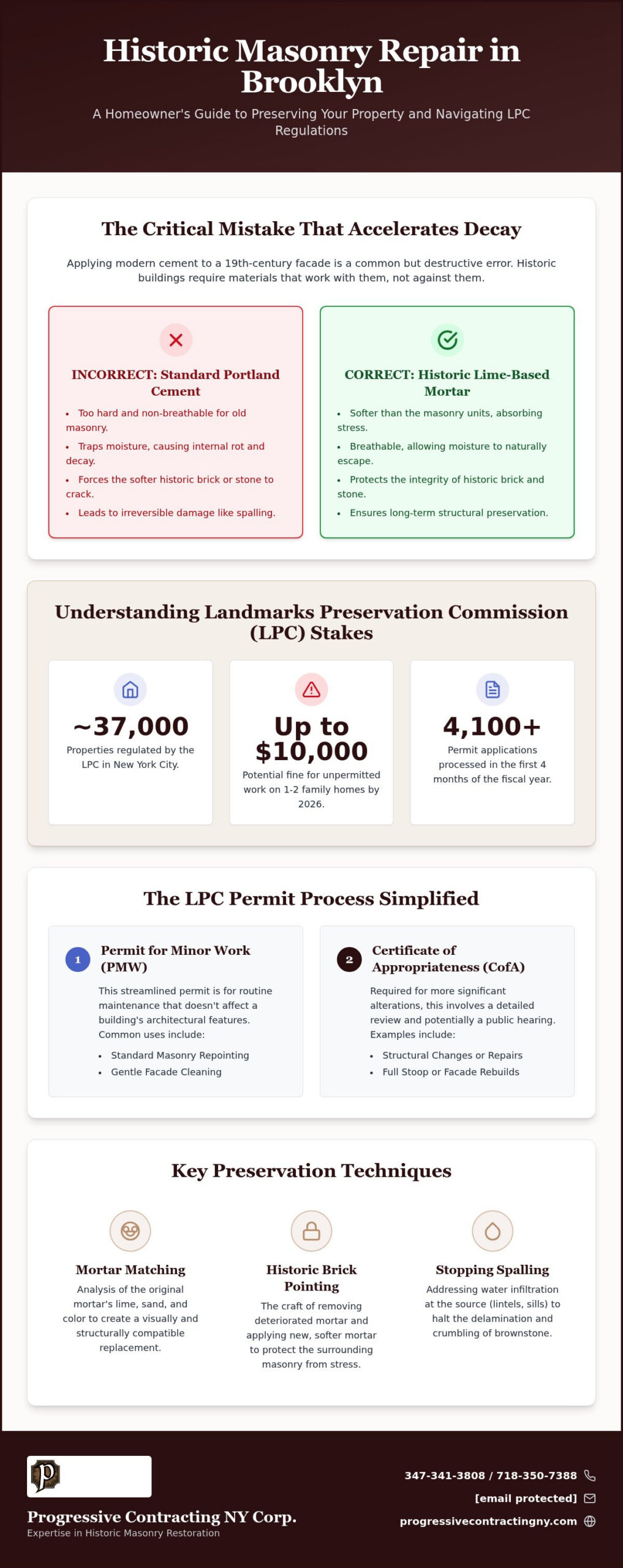
Owning a home in a landmarked area like Park Slope or Prospect Lefferts Gardens comes with a unique set of responsibilities. The New York City Landmarks Preservation Commission (LPC) regulates nearly 37,000 properties to ensure that the city’s architectural history remains intact. For homeowners, this means that masonry repair for historic districts brooklyn isn’t just about structural fixes; it’s a legal process. The LPC distinguishes between routine maintenance and alterations. While minor cleaning might seem simple, using the wrong pressure or chemicals can trigger a violation. If you perform work without a permit, you risk immediate stop-work orders that can stall your project for months.
Matching original details is the core of preservation. The LPC requires that any new mortar or stone matches the original in color, texture, and composition. Modern materials like Portland cement are often too hard for historic soft-stone facades, leading to cracks and permanent damage. If you’re unsure about your building’s material needs, call us at 347-341-3808 or 718-350-7388. Our team at Progressive Contracting NY Corp understands these nuances and can be reached at ProgressiveContractingNY@yahoo.com to discuss your specific facade requirements.
Common Brooklyn Historic Districts and Their Standards
Each neighborhood has its own architectural DNA. Park Slope is famous for its late 19th-century brownstones, which require specific stone-patching techniques to mimic the natural grain. In Bed-Stuy, you’ll often find a mix of brickwork and brownstone that demands precise brick pointing. These regional differences are why restoration requires a contractor who knows the local block history. Understanding what is a brownstone and its geological properties is the first step in choosing the right restoration method. The LPC also has strict standards for stoop restoration, often requiring specialized techniques to ensure the profile matches the rest of the block.
The Permit Process for Masonry Repair in 2026
Securing the right paperwork is essential before any tools touch your facade. Most standard repointing and cleaning projects require a “Permit for Minor Work” (PMW). This is a streamlined process for work that doesn’t affect the architectural features of the building. However, if you’re planning structural changes or a full stoop rebuild, you’ll likely need a “Certificate of Appropriateness.” This involves a more detailed review and potentially a public hearing. In 2026, the LPC has maintained a steady pace, processing over 4,100 applications in the first four months of the fiscal year. We handle the technical details of these filings to ensure your project stays compliant from start to finish.
Specialized Techniques for Historic Masonry and Brownstone Repair
Historic facades aren’t just decorative shells; they are living systems that require breathability to survive. Unlike modern buildings, older structures rely on the movement of moisture through porous materials. If this moisture gets trapped by non-breathable sealants or hard mortars, it causes internal rot and structural decay. Successful masonry repair for historic districts brooklyn prioritizes this vapor exchange to prevent long-term damage. Spalling is the peeling or crumbling of stone due to water cycles and salt. Identifying these issues early, such as spotting hairline cracks or powdery efflorescence, prevents a minor fix from turning into a structural emergency. If you’ve noticed these signs, reach out to us at 347-341-3808 or 718-350-7388 for a professional assessment.
The Critical Role of Mortar Matching and Brick Pointing
Using modern Portland cement on historic soft brick or brownstone is a common mistake that leads to irreversible damage. Because Portland cement is harder than the surrounding stone, it doesn’t allow for natural thermal expansion. This forces the stone itself to crack and fail. Following the National Park Service Preservation Brief 2, our process involves analyzing the original mortar for its specific lime content, sand grain texture, and color. This ensures the new pointing is softer than the masonry units, allowing the mortar to take the brunt of environmental stress. For a deeper look at these methods, explore our guide on brick pointing nyc to understand how we maintain building longevity.
Stopping the Cycle of Brownstone Spalling
Water infiltration is the primary driver of facade delamination, where the layers of brownstone begin to peel away like an onion. This cycle often starts at the lintels or sills where water pools. We focus on stopping this decay through precise patching with composite stone or, in severe cases, full facade replacement that mirrors the original quarry stone. You can find technical details on these repair steps in our resource for brownstone spalling repair. To schedule a site visit or request a detailed quote, email our team at ProgressiveContractingNY@yahoo.com. We provide the steady hand and technical precision required for masonry repair for historic districts brooklyn to ensure your property remains a neighborhood staple.
Selecting an Expert Masonry Contractor for Your Brooklyn Property
General contractors often lack the specialized tools and traditional knowledge required for historic work. While a generalist might suggest modern sealants or standard cement, a specialist understands that masonry repair for historic districts brooklyn demands a different set of skills. Local experience is vital because every Brooklyn block has its own architectural quirks and specific landmark requirements. We focus on specialized services like Rammstein stoop restoration and NYC DOT sidewalk compliance to ensure your home remains both beautiful and legally sound. Achieving this requires a balance between high craftsmanship and total financial transparency throughout the project.
Vetting Your Contractor for Landmark Experience
Before signing a contract, ask about their history with the LPC and their familiarity with the LPC Permit Guidebook. A qualified contractor should provide clear examples of previous work in your specific district. It is essential to check for specialized experience in brownstone stoop restoration to ensure they understand how to rebuild the profile of your stairs correctly. Ask if they analyze and match mortar on-site and if they handle the permit filing process themselves. These questions help separate general masons from true restoration experts who respect the history of your building.
The Progressive Contracting Approach to Historic Preservation
Our team follows a methodical process to ensure your project meets all city standards. We start with a thorough assessment of your facade’s structural integrity and then create a logical plan for restoration. This steady approach prevents surprises and keeps your project on schedule. You have direct access to our leadership throughout the lifecycle of the job to ensure clear communication. Reach us at 347-341-3808 or 718-350-7388 to discuss your property’s needs. For detailed quotes and project inquiries, email us at ProgressiveContractingNY@yahoo.com. We are here to be your dependable partner in preserving the structural integrity and value of your historic Brooklyn property.
Securing the Structural Future of Your Brooklyn Landmark
Choosing the right path for your property ensures it remains a stabilized force within the neighborhood for decades. We have reviewed the technical risks of modern materials and the methodical steps required to satisfy landmark regulations. By prioritizing these authentic restoration methods, you secure your building’s structural legacy and significantly increase its long-term market value. This disciplined approach prevents the need for emergency interventions and protects the physical reality of the craftsmanship.
Progressive Contracting NY Corp serves as a seasoned guide for these complex projects, offering a steady hand from initial assessment to final approval. Our expertise in Park Slope and Bed-Stuy ensures that your building receives the meticulous attention it deserves. Reach our team at 347-341-3808 or 718-350-7388, or email us at ProgressiveContractingNY@yahoo.com to discuss your specific needs for masonry repair for historic districts brooklyn.
Contact Progressive Contracting NY Corp today for a specialized assessment of your historic facade
Your property is an essential piece of Brooklyn’s architectural history. We look forward to helping you preserve its integrity through transparent communication and disciplined craftsmanship.
Frequently Asked Questions
Do I need an LPC permit for simple brick pointing in Brooklyn?
Yes, you generally need a Permit for Minor Work from the Landmarks Preservation Commission (LPC) for brick pointing on a landmarked property. This ensures the mortar mix matches the original in color, texture, and composition. Performing this work without a permit can lead to fines of up to $10,000 for residential homes. For help navigating masonry repair for historic districts brooklyn, call us at 347-341-3808 or 718-350-7388.
How long does historic masonry repair usually take for a standard brownstone?
A comprehensive project involving masonry repair for historic districts brooklyn typically takes between four to eight weeks for a standard row house. This timeline includes the careful removal of old mortar, stone patching, and proper curing time. Weather conditions in the NYC area also play a significant role in the daily schedule. We provide a logical project timeline during our initial assessment to ensure you know exactly what to expect from start to finish.
Why is my brownstone facade crumbling, and can it be stopped?
Crumbling or spalling occurs when water enters the porous stone and freezes, causing the layers to separate and peel. This process, known as delamination, can be stopped by addressing the source of water infiltration and applying specialized stone patches. If left untreated, the damage will eventually reach the structural backup wall. You can reach our team at ProgressiveContractingNY@yahoo.com to discuss a stabilization plan for your property’s facade.
What is the difference between masonry repair and historic restoration?
Masonry repair focuses on fixing specific structural or aesthetic issues, such as a single cracked lintel. Historic restoration is a more methodical process aimed at returning the entire building to its original state using authentic materials like lime based mortar. Restoration requires a deeper understanding of 19th century construction methods to ensure the building remains breathable. Our master craftsmen specialize in both approaches to maintain the long term value and integrity of Brooklyn landmarks.