
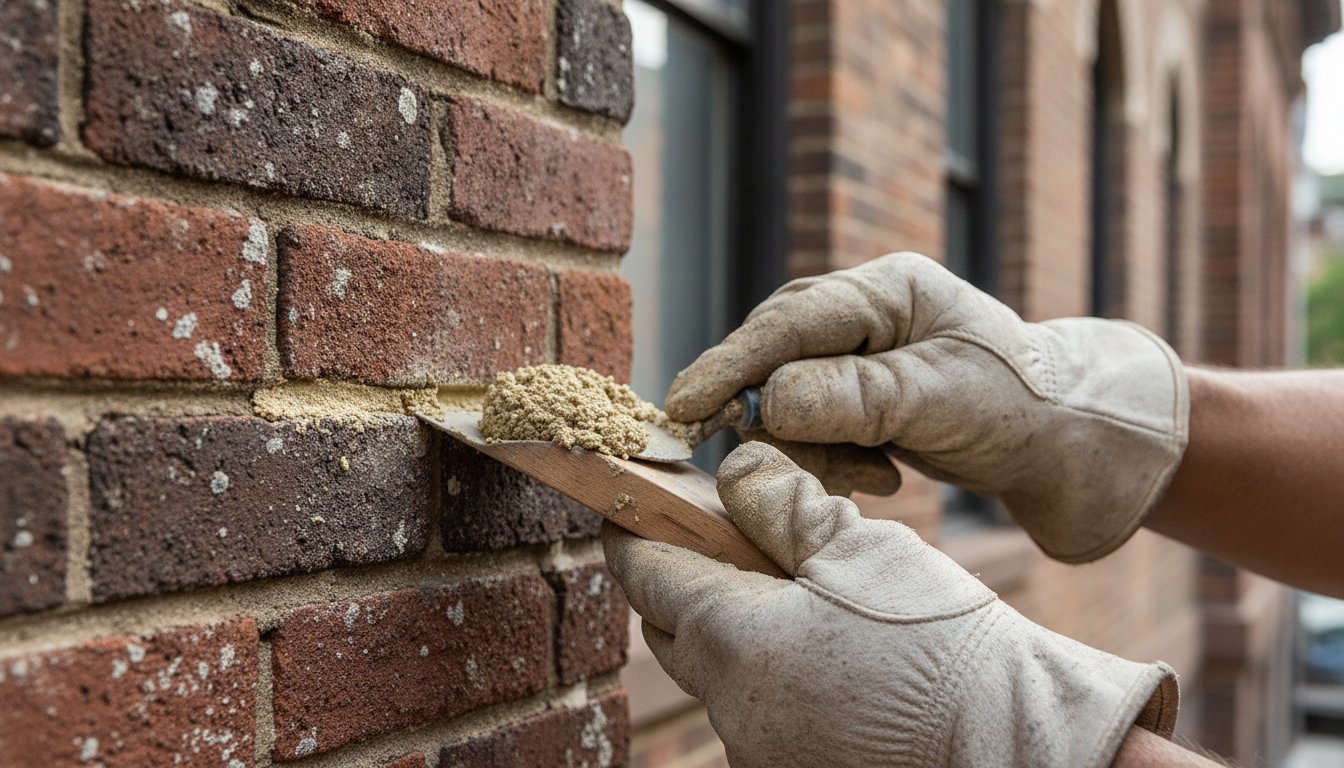
The most dangerous thing you can do to a historic NYC building is use a mortar that is too strong. While it is natural to want a repair that feels indestructible, using modern Portland cement on aged masonry often causes the brick faces to pop off in a process called spalling. Getting the right matching mortar for historic brickwork nyc is not just about aesthetics; it is a structural necessity that keeps your facade breathable and intact. If you have questions about your specific property, you can reach our team at 347-341-3808 or 718-350-7388 to discuss your restoration needs.
We understand the anxiety that comes with Landmarks Preservation Commission (LPC) compliance and the fear of receiving fines for improper work. This article explains how to identify, analyze, and match historic mortar to protect your property’s value and structural integrity for the next 30 years. You will learn about the mandatory August 21, 2023, LPC requirements for mortar analysis and why a sacrificial lime-based mix is the key to a successful restoration. For detailed inquiries or to send photos of your masonry, contact us at ProgressiveContractingNY@yahoo.com.
Why Compatibility Matters: The Hidden Dangers of Modern Mortar
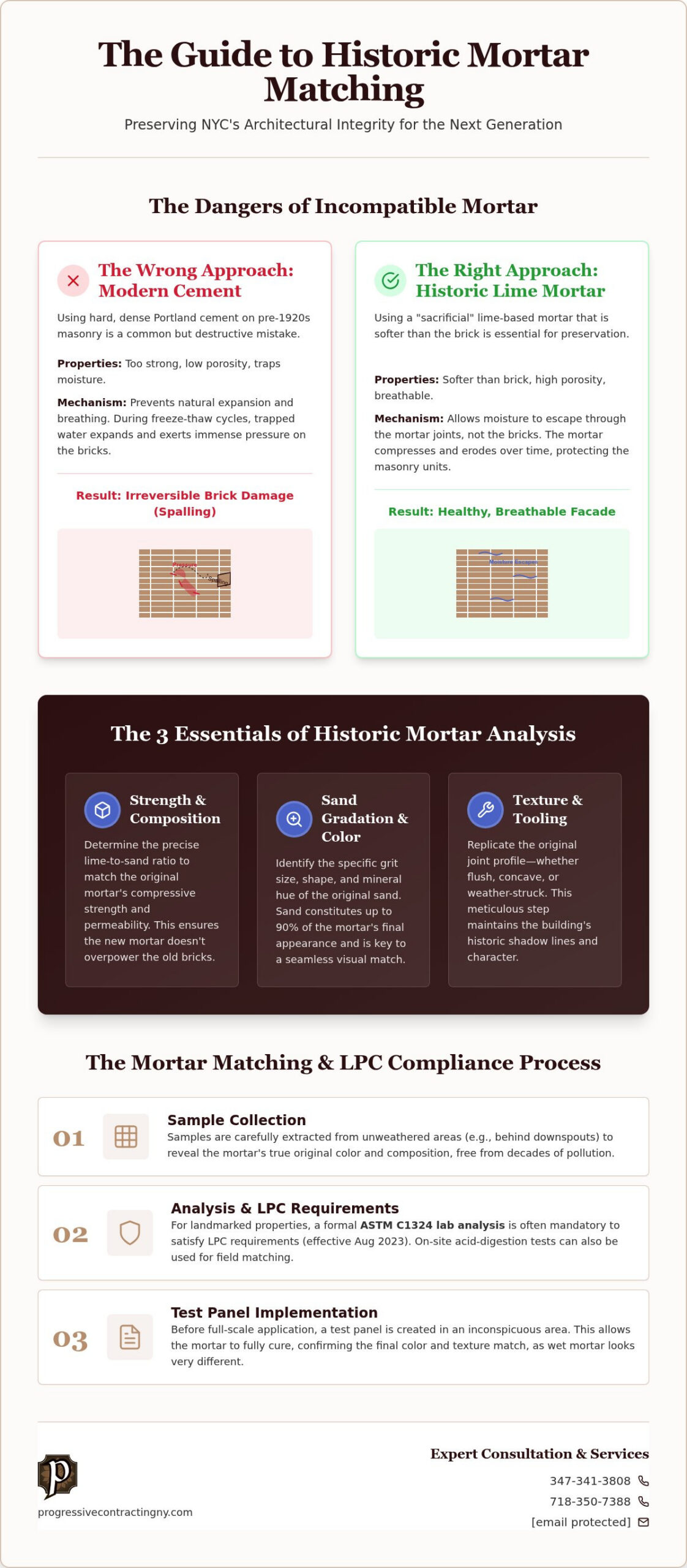
Compatible mortar is not just a visual match. It must align with the original building materials in strength, porosity, and thermal expansion. In historic preservation, we follow the sacrificial rule. This principle dictates that the mortar joint must be physically weaker and more permeable than the brick itself. Historically, historic lime mortars were the standard because they allowed buildings to breathe and move. Modern Portland cement is often too hard and dense for pre-1920s masonry. When these high-strength mixes are used, they trap moisture and prevent natural thermal expansion. Instead of the mortar joint compressing or eroding over time, the pressure transfers to the brick, causing irreversible structural failure.
Understanding Brick Spalling and Mortar Failure
In the harsh New York City climate, vapor permeability is your facade’s best defense. When moisture gets trapped behind impermeable modern mortar, it cannot escape. During winter freeze-thaw cycles, this water expands and forces the outer layer of the brick to detach. This result is known as face-popping or spalling. You can often spot previous improper repairs by looking for hairline cracks where the hard mortar has pulled away from the softer brick. For a deeper look at this issue, you can explore our resources on brownstone spalling repair. If you notice these signs on your property, call us at 347-341-3808 or 718-350-7388 to prevent further decay.
The Long-Term Cost of Incompatible Materials
Choosing matching mortar for historic brickwork nyc requires scientific precision. Generic contractors often use cheap, pre-mixed bags from local hardware stores. These products are usually too rigid for historic NYC properties. While they might look fine initially, they lead to thousands of dollars in future damage as the bricks themselves begin to crumble. A proper restoration ensures your building moves and breathes as it was designed to. You can reach our specialists at ProgressiveContractingNY@yahoo.com to discuss a durable, long-term solution for your property.
The 3 Essentials of Historic Mortar Analysis
Achieving a perfect match requires more than a visual guess. We begin by taking samples from unweathered areas, often found behind downspouts or deep within the joint, to reveal the original color before decades of NYC pollution settled in. This forensic approach is the only way to ensure the matching mortar for historic brickwork nyc looks original and performs correctly. The National Park Service provides extensive technical details on Repointing Mortar Joints, emphasizing that even small deviations in the mix can cause structural stress. If you need an expert assessment of your masonry, contact us at 347-341-3808 or 718-350-7388.
A proper analysis focuses on three core components:
- Strength and Composition: We determine the exact lime-to-sand ratio to match the original compressive strength and permeability.
- Sand Gradation: We identify the specific grit size and mineral hue of local aggregates used during the building’s original construction.
- Texture and Tooling: Our masons replicate the original joint profile, whether it is flush, concave, or weather-struck, to maintain the facade’s historic shadow lines.
The Role of Sand in Aesthetic Matching
Sand determines nearly 90% of the mortar’s final appearance and texture. Historic NYC masonry often utilized local sands with specific mineral tints and varying grit sizes. We source specific aggregates to mimic these original hues, ensuring the repair blends seamlessly with the surrounding wall. Getting these details right prevents the need for costly redos. You can consult with a brownstone specialist to review your project’s specific requirements.
Laboratory vs. Field Analysis
For landmarked properties, a formal ASTM C1324 lab analysis is often necessary to satisfy LPC requirements. This process identifies the proportions of cement, lime, and sand with scientific accuracy. On-site, we also use acid-digestion tests to dissolve the binder and reveal the original sand for immediate field matching. You can learn more about these technical standards in our guide to brick pointing nyc. To schedule a site visit and sample collection, email our specialists at ProgressiveContractingNY@yahoo.com.
Executing a Flawless Mortar Match in Brooklyn and Manhattan
Navigating the NYC Landmarks Preservation Commission (LPC) requires more than just a good eye for color. Since the updated regulations effective August 21, 2023, the LPC demands that replacement mortar matches the original in both physical and aesthetic characteristics. For many individual landmarks, a formal mortar analysis is mandatory. This scientific process ensures the mix is weaker and more permeable than the masonry units, preventing the structural damage discussed in previous sections. Achieving a successful matching mortar for historic brickwork nyc also depends on neighborhood context. The soft red bricks of a Manhattan townhouse require a different binder than the industrial bricks found in DUMBO or the sandstone-heavy facades of Park Slope.
Before committing to an entire facade, we always implement a test panel. Mortar often looks significantly different when wet compared to its fully cured state. We apply a small sample in an inconspicuous area and allow it to dry for several days. This step allows the property owner and LPC inspectors to verify the color, texture, and joint profile under natural light. It is a critical phase that prevents costly mistakes and ensures the final result looks original. Getting this right the first time is the only way to avoid the cycle of constant repairs.
The LPC Approval Process for Brick Pointing
Permit applications for landmarked buildings must include specific mix proportions. Simply stating a color match isn’t enough; you must document the ratios of lime, cement, and sand used. We assist owners in navigating this paperwork to avoid violations and fines. Choosing an experienced masonry contractor ensures these technical details are handled correctly from the start. Progressive Contracting NY Corp prioritizes transparency in our process so you know exactly what is being applied to your home.
Consulting with an NYC Restoration Specialist
A professional site walk-through is the first step toward a lasting repair. We identify underlying issues like water infiltration or structural shifting that generic contractors might overlook. For expert analysis of your property, reach out to Progressive Contracting NY Corp at 347-341-3808 or 718-350-7388. You can also send project photos and inquiries to ProgressiveContractingNY@yahoo.com for a preliminary review of your restoration needs. We provide the steady hand and local expertise required for complex historic projects.
Secure the Future of Your NYC Masonry
Preserving a historic facade requires a balance of scientific analysis and traditional craftsmanship. You now understand that using the correct matching mortar for historic brickwork nyc is the only way to prevent irreversible spalling and ensure LPC compliance. By prioritizing vapor permeability and sacrificial strength, you protect the structural integrity of your building for decades. Progressive Contracting NY Corp specializes in the unique architectural needs of Brooklyn and Manhattan historic districts.
We’re here to provide the steady hand and technical expertise your property deserves. You can reach the master masons at Progressive Contracting NY Corp directly at 347-341-3808 or 718-350-7388 to schedule a professional evaluation. If you aren’t sure where to start, send photos and details to ProgressiveContractingNY@yahoo.com for a preliminary review of your masonry.
Investing in proper restoration today saves you from the high costs of structural failure tomorrow. We look forward to helping you preserve your piece of New York history with precision and care.
Frequently Asked Questions
What happens if I use modern cement mortar on my historic NYC home?
Modern Portland cement is too rigid and impermeable for historic masonry. It traps moisture inside the brick rather than letting it escape through the joints. During NYC freeze-thaw cycles, this trapped water expands and forces the face of the brick to pop off, which is known as spalling. This causes irreversible structural damage to your facade. You can reach our experts at 347-341-3808 to discuss safe, lime-based alternatives.
Does the NYC Landmarks Preservation Commission (LPC) require a specific mortar mix?
Yes, the LPC has strict requirements effective as of August 21, 2023. Replacement mortar must match the original historic mix in its physical and aesthetic properties. The new mortar must be weaker and more permeable than the masonry units to ensure the building remains breathable. For most restoration projects, we must provide specific mix proportions to secure a permit. Contact us at ProgressiveContractingNY@yahoo.com for help with your LPC application.
How much does a historic mortar analysis cost for a Brooklyn brownstone?
A professional laboratory analysis to determine the exact proportions of lime, cement, and sand typically costs about $350 per sample. If you need a specific color match added to that report, it usually costs an additional $150. These scientific tests are essential for achieving a perfect matching mortar for historic brickwork nyc. For a detailed site evaluation in Brooklyn or Manhattan, call our team at 718-350-7388.
Can I just match the color of the mortar with a pigment?
Color matching with pigment alone is insufficient for a professional restoration. Sand gradation determines nearly 90% of the final appearance and texture of the joint. While pigments help fine-tune the hue, using the wrong sand aggregate results in a patch that looks artificial and fails to weather correctly. Our masons focus on sourcing local sands that mimic the original grit and mineral tones of your specific historic district.