
Get info (347)-341-3808,(718)-350-7388
The most expensive repair material isn’t always the most durable choice for a historic NYC facade. Most homeowners believe that replacing a crumbling step with a fresh slab of sandstone is the only way to restore a historic entrance. However, the best material for brownstone stoop repair is often a custom-engineered, vapor-permeable cementitious system that mimics the thermal expansion of the original 19th-century stone. This approach ensures the repair bonds naturally with the existing masonry rather than trapping moisture that leads to further decay.
You want a stoop that reflects the timeless character of your neighborhood, not one that is flaking onto the sidewalk or causing water infiltration in your basement. It is frustrating to deal with previous bad repairs that resulted in mismatched colors or the constant fear of a fine from the Landmarks Preservation Commission. This article provides the technical clarity you need to choose a solution that lasts 20 years or more. We will compare the performance of real stone, brownstone stucco, and pre-cast solutions so you can invest in a restoration that preserves both your home’s value and its structural integrity.
Table of Contents
The Science of Brownstone: Why Material Choice Determines Stoop Longevity
Brownstone is a specific type of sedimentary sandstone that defines much of the historic architecture in Brooklyn and Manhattan. To understand why certain repairs fail, one must first ask, What is Brownstone? It is a porous rock characterized by natural bedding planes that allow the stone to breathe by absorbing and releasing moisture. Choosing the best material for brownstone stoop repair depends entirely on matching this porosity and the stone’s natural rate of thermal expansion.
NYC weather puts immense stress on masonry through extreme temperature shifts and heavy precipitation. If a repair material cannot flex or allow vapor to escape, the bond will inevitably fail. This technical compatibility is the foundation of a restoration that lasts decades rather than just a few seasons. To better understand this concept, watch this helpful video:
The Danger of "Hard" Cements on Soft Stone
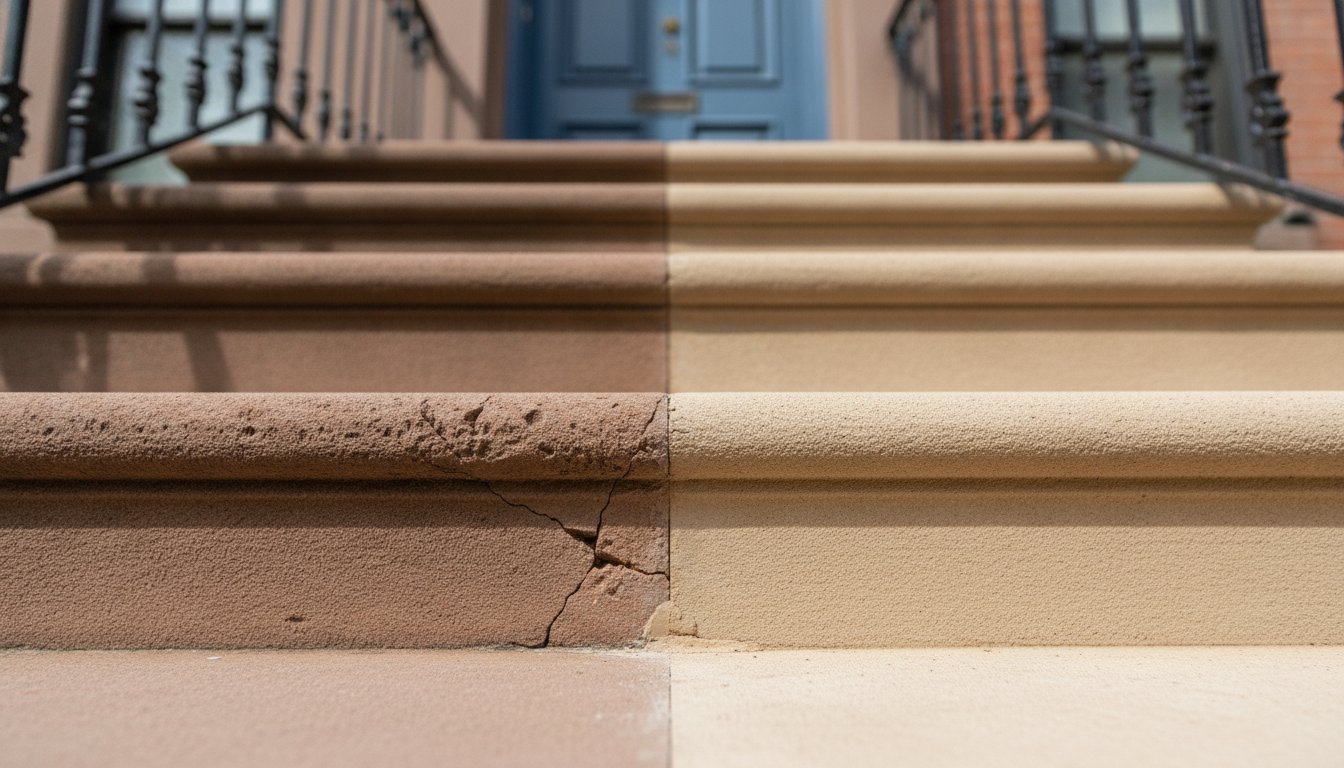
Standard Portland cement is the most common mistake in stoop maintenance. It is far too rigid and creates an impermeable seal over the soft sandstone. This traps water and salts within the stone, leading to sub-florescence and spalling. Because the cement is stronger than the brownstone, the mechanical stress of freezing water pushes the repair off. It often takes a layer of original stone with it, leaving the stoop in worse condition than before the patch was applied.
LPC Compliance: Materials That Meet NYC Standards
The Landmarks Preservation Commission (LPC) regulates over 150 historic districts in NYC. They require that repairs use materials matching the original stone’s color, texture, and chemical composition. This usually involves custom-mixed, lime-based mortars that are softer and more breathable than modern concrete. Working with an experienced Brownstone Contractor ensures your project avoids costly violations. Using the wrong materials can result in significant fines and legal requirements to remove and redo the work at your own expense.
Comparing the Top Materials for Stoop Restoration and Repair
Natural brown sandstone remains the gold standard for authenticity. Most original NYC stoops used stone from the Portland, Connecticut quarries, which are now largely inactive. This scarcity makes sourcing new slabs difficult and significantly increases the project budget. For the majority of NYC homeowners, a custom-mixed cementitious stucco is the best material for brownstone stoop repair. These professional-grade mortars are engineered to replicate the original stone’s appearance while maintaining necessary vapor permeability.
Each material offers a different balance of durability and aesthetic appeal. Choosing the right one depends on whether you are performing a minor patch or a full structural overhaul. Our team often recommends materials based on the specific micro-climate of your street and the level of foot traffic your stoop endures.
Natural Sandstone vs. Restoration Mixes
While natural stone is inherently porous, its internal "bedding planes" can separate over time due to freeze-thaw cycles. Custom restoration mixes use professional stoop restoration techniques to create a uniform, monolithic surface. These mixes are often superior for "patch" repairs because they bond chemically to the original substrate. This prevents the moisture pockets that typically cause natural stone to flake or spall. A brownstone specialist can help you decide if your existing stone is healthy enough for a patch or if it requires a deeper intervention.
Pre-cast Concrete "Brownstone" Steps
Pre-cast units are factory-made slabs designed to look like carved stone. They offer excellent longevity and consistency, making them a popular choice for modern replacements. However, they often fail the "aesthetic test" in historic neighborhoods. Residents in Park Slope and Bed-Stuy frequently find that pre-cast steps lack the unique character of hand-tooled masonry. If your goal is a seamless match with the rest of the block, a site-applied restoration is usually the better path. Understanding these nuances helps you select a qualified masonry team that respects the architectural history of your home.

The Professional Choice: Why Rammstein Stoop Restoration Wins
The Rammstein stoop restoration method represents a shift from temporary patching to long-term structural renewal. It’s a comprehensive system designed to last 20 years or more by addressing the root causes of masonry decay. This method is widely considered the best material for brownstone stoop repair because it creates a monolithic bond with the existing stone. Rather than just applying a surface layer, we use high-performance bonding agents and a dedicated "scratch coat" to ensure the new material becomes a permanent part of the building’s facade. This multi-layered approach prevents the hollow spots where water usually collects and freezes.
Preserving these structures requires an understanding of the authoritative history of the New York row house. This history shows that brownstone was chosen for its beauty, but its sedimentary nature requires specific care during repair. To keep the restoration invisible, professionals mix iron oxide pigments into the mortar. This allows for a precise color match that doesn’t fade under UV exposure. The final phase involves specialized tooling to recreate the natural grain and texture of the original stone, ensuring your stoop looks like it was carved 150 years ago.
The Restoration Process Step-by-Step
The process begins with the surgical removal of "sugar," which is the crumbly, deteriorated stone that has lost its structural integrity. We strip the stoop down to solid masonry before applying the base layers. Curing is the most critical stage. NYC’s humidity and temperature swings require strict control. We manage the hydration of the mortar to prevent rapid drying in the summer or freezing in the winter. This careful management ensures the material reaches its full rated strength and bonds correctly to the substrate.
Why Expertise Matters More Than the Material
The highest quality restoration mix will fail if the substrate isn’t properly prepared. Most "bad repairs" happen because the contractor didn’t remove the damaged stone or used a bonding agent incompatible with sandstone. Success depends on the skill of the mason and their understanding of how these materials interact over decades. Precision in the mix and patience during the application are what separate a five-year patch from a generational restoration. Ready to restore your Brooklyn home? Consult our brownstone specialist for a material assessment.
Restore Your Stoop with Confidence and Precision
Choosing the best material for brownstone stoop repair is a decision that impacts your home’s value and structural health for decades. We’ve explored why vapor-permeable mortars are essential for managing NYC’s freeze-thaw cycles and how natural sandstone compares to modern restoration mixes. A successful project requires more than just high-quality materials; it’s a process that demands a systematic approach to the underlying masonry substrate.
Our team brings specialized expertise to restoration projects across Brooklyn and Manhattan historic districts. We focus on Rammstein stoop restoration to create a permanent bond that resists spalling and water infiltration. Beyond aesthetics, we assist homeowners with NYC sidewalk violation removal and facade compliance to ensure every aspect of the property meets local standards. This disciplined approach provides the peace of mind that comes from working with a seasoned partner who understands the nuances of 19th-century architecture.
Get a Professional Quote for Your Stoop Restoration
Your stoop is the centerpiece of your home’s facade. With the right materials and a methodical restoration process, you can preserve its historic character for the next generation.
Frequently Asked Questions
What is the most durable material for a brownstone stoop in NYC?
The most durable solution for a New York City entrance is a custom-tinted, vapor-permeable restoration mix applied using the Rammstein method. This system is engineered to expand and contract at the same rate as the underlying sandstone, which prevents the bond failure common in other materials. It creates a monolithic structure that resists water penetration while allowing the stone to breathe naturally through its pores.
Can I use regular concrete to fix my brownstone steps?
You should never use standard Portland cement or regular concrete to repair historic steps. These materials are too rigid and lack the necessary vapor permeability, which traps moisture inside the soft brownstone. Over time, this trapped water freezes and expands, causing the original stone to flake and the concrete patch to pop off. This is often the reason why many homeowners seek the best material for brownstone stoop repair after a previous budget fix fails.
How long does a brownstone stucco repair typically last?
A high-quality brownstone restoration can last 20 years or more when performed by a skilled specialist. Longevity depends entirely on the preparation of the substrate and the climate conditions during the curing process. While cheaper cosmetic patches might fail within two to three years, a full multi-layer restoration provides a lasting bond that withstands NYC’s harsh winters and humid summers without cracking or delaminating.
Does the Landmark Preservation Commission require specific materials for stoop repair?
Yes, the Landmark Preservation Commission (LPC) requires that all exterior work in historic districts uses materials that match the original stone’s color, texture, and chemical composition. They specifically mandate breathable, lime-based mortars rather than modern impermeable cements to preserve the building’s integrity. Using unapproved materials can result in heavy fines. Always check your property’s landmark status before selecting the best material for brownstone stoop repair to ensure full compliance with local regulations.