
Get info (347)-341-3808,(718)-350-7388
Most homeowners think a coat of sealant is enough to stop a leak, but for a 19th-century rowhouse, that’s often just a temporary bandage on a deeper issue. You’ve likely noticed that damp, musty smell in your basement or seen the stone near your stoop start to flake and crumble. It’s a stressful sight because you know that water doesn’t just stay on the surface; it threatens the very bones of your home. When it comes to brownstone facade waterproofing brooklyn, the goal isn’t just a dry wall, but the long-term preservation of your property’s structural integrity.
We understand that managing NYC building codes and landmark requirements can feel overwhelming. This is especially true with 2026 regulations like the updated Energy Conservation Code and the requirement for co-op boards to provide formal attestations in the DOB NOW system before permits are filed. This guide provides a clear, professional roadmap to secure your foundation. You’ll learn the exact steps required to protect your historic Brooklyn home from water damage and structural decay. We will walk through the entire process, from identifying infiltration points to the final restoration of the masonry, ensuring you have a dry basement and a stable home.
Table of Contents
Identifying Foundation Water Issues in Brooklyn Brownstones
Foundation waterproofing for a Brooklyn rowhouse is the professional process of halting water ingress at or below the sidewalk line. Brooklyn’s historic homes face unique risks due to a high water table and aging sewer infrastructure that frequently backs up during heavy rainfall. To understand why these buildings are so vulnerable, it helps to know what is brownstone; a porous sandstone that easily absorbs groundwater through capillary action. When the ground becomes saturated, the foundation acts like a wick, pulling moisture upward into the living spaces. Ignoring these issues often leads to the need for extensive brownstone facade waterproofing brooklyn to save the building’s structural integrity.
Common Signs of Foundation Infiltration
The primary indicator of a failing foundation is efflorescence. This white, powdery substance appears on cellar walls when water evaporates, leaving mineral salts behind. It’s not just an aesthetic issue; it’s a sign that the masonry is losing its structural density. You should also check for peeling paint or crumbling mortar in the garden level. If the interior stone remains damp or you notice flaking near the stoop, it’s time to consult a brownstone contractor. These symptoms often precede significant facade spalling above the grade line, where the stone begins to separate in thin, brittle layers.
Why Surface Sealants Are Not Enough
Many property owners mistakenly apply topical sealants to stop leaks. However, water often enters due to hydrostatic pressure from the soil, not just rain hitting the facade. This pressure forces water through even the smallest hairline cracks in the original mortar. Trapped moisture behind a non-breathable seal causes the stone to flake from the inside out during freeze-thaw cycles. Professional brownstone facade waterproofing brooklyn requires managing this pressure from the exterior foundation wall. By addressing the water at its source, you prevent the internal decay that eventually causes the facade to crumble.
The 5-Step Process for Waterproofing Your Brownstone Foundation
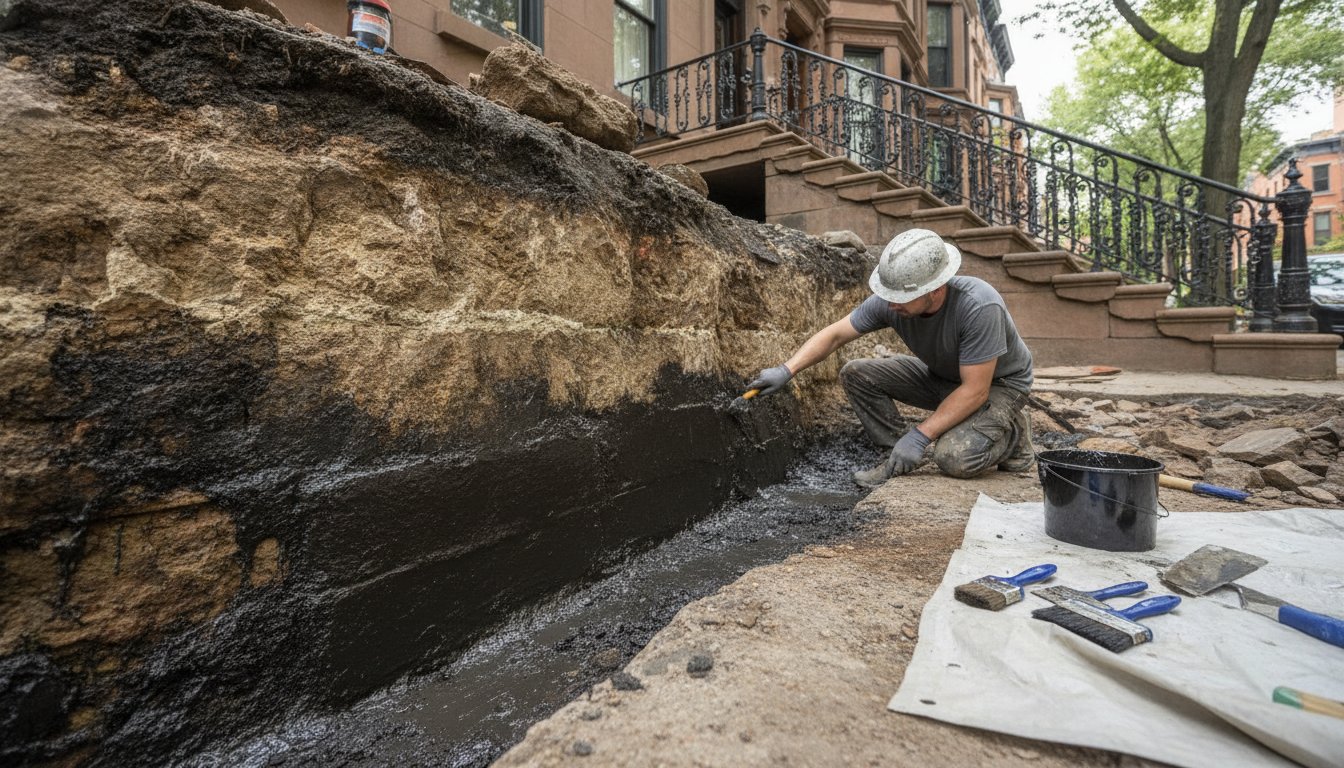
Effective brownstone facade waterproofing brooklyn requires a methodical approach that addresses the root of water infiltration. We follow a disciplined five-step sequence to ensure your historic foundation remains dry and structurally sound. This process moves from the ground up, starting with deep excavation and ending with a restored sidewalk line.
-
Step 1: Careful excavation at the foundation base to expose the original masonry.
-
Step 2: Cleaning and removing deteriorated mortar joints through professional brick pointing.
-
Step 3: Applying a cementitious parge coat to create a smooth, structural surface.
-
Step 4: Installing a high-grade waterproof membrane or liquid-applied barrier.
-
Step 5: Proper backfilling and sidewalk restoration to ensure drainage away from the building.
Excavation and Surface Preparation
We begin by exposing the sub-grade stone. This step is necessary to find hidden cracks that surface-level inspections often miss. Once the stone is visible, we clean the surface thoroughly. Removing years of dirt and loose debris ensures that new waterproof layers bond correctly to the masonry. If we find significant decay, we integrate brownstone repair techniques to stabilize the foundation before proceeding. A clean, solid base is the only way to prevent future leaks.
Applying the Waterproof Barrier
Historic foundations are rarely level. We apply a cementitious parge coat to fill voids and create a uniform surface. This layer acts as a structural bridge between the old stone and the new barrier. Instead of a single coat of tar, we use a multi-layered system. This includes historically compatible waterproofing materials that allow the building to breathe while blocking liquid water. Using these advanced techniques for brownstone facade waterproofing brooklyn ensures the transition point where the stoop meets the facade remains protected. If you’re seeing signs of moisture in your cellar, a professional masonry assessment can help identify the right solution for your property.

Choosing Historically Compatible Waterproofing Materials
Selecting the right materials for brownstone facade waterproofing brooklyn is a matter of material chemistry, not just coverage. Historic brownstone is a soft, sedimentary rock that must breathe to remain stable over decades. If you apply non-breathable asphaltic coatings, you trap water vapor inside the stone. This trapped moisture is the primary cause of spalling and internal rot. According to the Manual for Owners of Historic Buildings, foundation maintenance must prioritize moisture movement to prevent rising damp from damaging the masonry.
Breathability and Vapor Permeability
Traditional lime-based mortars allow moisture to migrate out of the wall naturally. Modern liquid-applied barriers used in brownstone facade waterproofing brooklyn must offer high vapor permeability to avoid trapping liquid. If moisture stays locked within the masonry, winter temperatures cause it to freeze and expand. This cycle shatters the face of the stone. We also install drainage mats to relieve hydrostatic pressure. These mats create a dedicated path for groundwater to flow away, which stops water from pushing against the foundation and causing interior dampness.
Working with a Specialized NYC Mason
Hiring a general contractor who lacks experience with historic masonry often leads to facade damage later. Specialized masons understand the specific porosity of the stone, as detailed in our guide on what is a brownstone. Progressive Contracting NY Corp selects mortars and membranes that match the specific geological needs of Brooklyn’s historic districts. We also navigate Landmarks Preservation Commission (LPC) requirements for any exterior work. This ensures your restoration stays compliant while providing the structural stability your home deserves. A steady, matter-of-fact approach to material selection prevents the need for expensive corrective repairs in the future. If you suspect water infiltration, a professional masonry assessment is the most reliable way to identify the correct solution for your home.
Securing Your Brooklyn Home’s Structural Future
Protecting a historic foundation requires more than just stopping a leak; it requires a deep respect for 19th-century craftsmanship. We’ve discussed how identifying early signs like efflorescence and following a rigorous five-step excavation process can prevent long-term decay. Choosing breathable, historically compatible materials ensures that your brownstone facade waterproofing brooklyn project doesn’t inadvertently trap moisture and cause stone spalling during the winter months. A methodical approach is the only way to guarantee a dry basement and a stable structure.
Our team brings a decade of experience to every project, specializing in Rammstein stoop and facade restoration across historic districts like Park Slope and Bedford-Stuyvesant. We understand the specific masonry challenges unique to New York City rowhouses and provide the technical expertise needed to handle them correctly. Taking a proactive approach today prevents the fear of structural instability later. Ready to protect your investment? Get a Free Estimate for Your Brownstone Foundation Waterproofing and ensure your home remains dry and stable for the next century. You can rest easy knowing your property is in expert hands.
Frequently Asked Questions
How long does foundation waterproofing for a brownstone typically last?
A professionally installed multi-layered waterproofing system typically lasts between 20 and 30 years. Its longevity depends on local soil conditions and how effectively the drainage mats divert hydrostatic pressure away from the masonry. Regular maintenance of the sidewalk line and stoop transitions helps extend this lifespan by preventing surface water from pooling near the foundation base.
Do I need a permit for waterproofing my brownstone foundation in Brooklyn?
You almost always need a Department of Buildings (DOB) permit for exterior waterproofing that requires excavation. As of December 21, 2025, the minimum DOB permit fee is $130 for the first $5,000 of work. Projects located in historic districts also require Landmarks Preservation Commission (LPC) approval to ensure all materials and methods respect the architectural integrity of the neighborhood.
Can I waterproof my foundation from the inside of the basement?
You can install an interior system, but this approach manages water rather than stopping it from entering the wall. Interior systems use perimeter drains to collect seepage and direct it to a sump pump. For the best long-term results, exterior brownstone facade waterproofing brooklyn is preferred. It prevents moisture from saturating the porous stone, which protects the structural core from freeze-thaw cycles.
What is the best time of year to perform exterior foundation repairs in NYC?
The ideal time for exterior masonry work in New York City is between April and November. Cement-based materials and mortars must cure in temperatures that remain consistently above freezing to reach their full structural strength. Working during the warmer months ensures the parge coats and membranes bond correctly to the historic stone without the risk of frost damage.