
Get info (347)-341-3808,(718)-350-7388
A bowing bay window isn’t a death sentence for your facade, but ignoring the need for masonry repair for brownstone bay window structures certainly is. Most homeowners see deep cracks and immediately fear a total structural collapse or a massive reconstruction bill. It’s a stressful position to be in, especially while navigating strict NYC Landmarks Preservation Commission rules and the recent enforcement updates under Local Law 51 of 2025. You need a solution that preserves the historic character of your home without the unnecessary expense of a complete "take down and rebuild" project.
The reality is that specialized masonry techniques often allow for precise restoration rather than a total replacement. By utilizing modern pinning technology and traditional stone-carving methods, it’s possible to stabilize the masonry while keeping the original look intact. This article explains how to identify early signs of structural failure and the specific steps used to save your bay window. You’ll gain a clear understanding of the repair process, helping you avoid a full facade reconstruction while ensuring your home remains safe and compliant.
Table of Contents
Identifying Common Masonry Failures in Brownstone Bay Windows
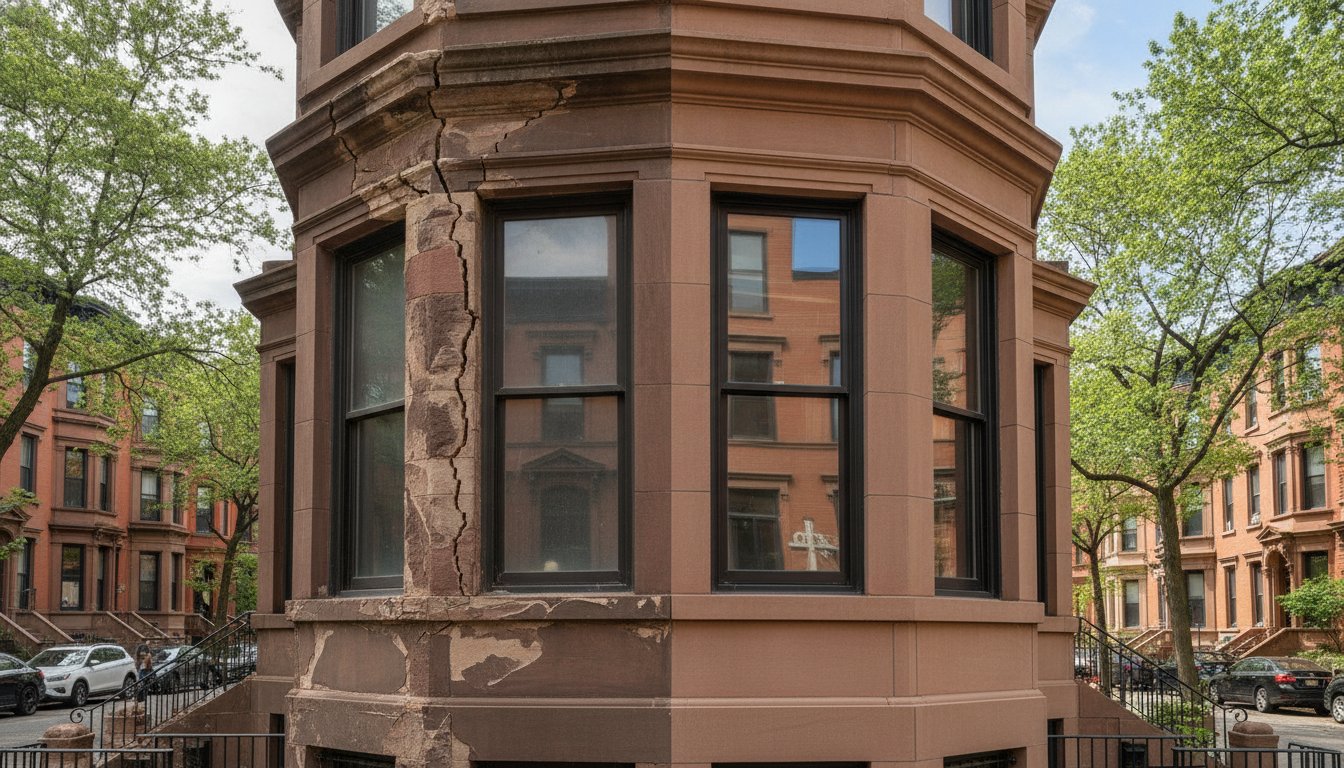
Failure in a bay window isn’t usually a single event. It’s a slow progression where structural shifting meets surface decay. Unlike standard brick walls, brownstone is a layered sedimentary rock. To understand why it fails, we first need to look at What is Brownstone? and its unique geological properties. When water enters these layers, the stone begins to delaminate, especially at the sharp corners of a bay window. This leads to spalling, where the outer face of the stone peels away in sheets.
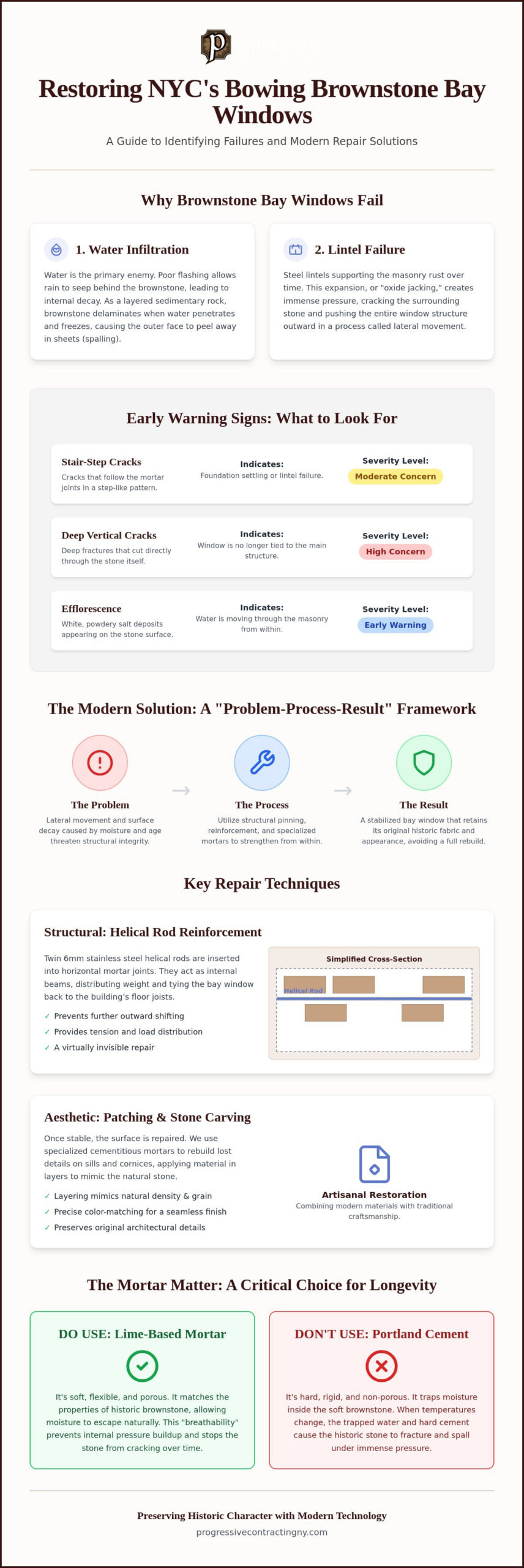
Identifying the difference between a cosmetic issue and a structural threat is the first step in planning a masonry repair for brownstone bay window. You might see "stair-step" cracks following the mortar joints. These often signal foundation settling or lintel failure rather than simple age. Deep vertical cracks that cut through the stone itself are more concerning, as they suggest the window is no longer properly tied to the main house.
To better understand this concept, watch this helpful video:
The Role of Lintel Failure and Structural Bowing
Most bay windows rely on steel lintels to support the weight of the masonry above the glass. Over decades, moisture causes these steel beams to rust. This process, known as oxide jacking, creates immense pressure as the rusting metal expands. This force cracks the surrounding stone and pushes the window outward. We define lateral movement as the outward shifting of the window structure away from the primary facade. Because bay windows lack the same lateral support as flat walls, they are more susceptible to this pulling effect.
Signs of Water Infiltration in Historic Masonry
Water is the primary enemy of historic stone. Poor flashing at the window head allows rain to seep behind the brownstone face, leading to internal rot. You can often spot this early by looking for efflorescence, which appears as white, powdery salt deposits on the stone surface. These salts are left behind when moisture evaporates, signaling that water is moving through the masonry. If left unaddressed, this moisture will freeze and thaw, accelerating the need for a comprehensive masonry repair for brownstone bay window.
Structural Stabilization and Brownstone Repair Techniques
Traditional methods often involved removing every stone, but modern technology offers a more stable path. We use a "Problem-Process-Result" framework to address bowing structures. The problem is usually lateral movement caused by age and moisture. The process involves structural pinning and reinforcement. The result is a stabilized window that retains its original appearance. This approach is fundamental to masonry repair for brownstone bay window projects because it preserves the historic fabric while restoring integrity. When Identifying Masonry Failures, experts look for ways to reinforce the existing stone rather than opting for a total reconstruction.
Breathability is another critical factor in these repairs. 19th-century brownstone is naturally soft and porous. If you use a hard, modern Portland cement, the stone will eventually crack under the pressure of thermal expansion. We utilize specialized mortar mixes that match the original lime-based recipes. These allow moisture to escape, preventing the internal rot and salt deposits discussed in the previous section. This balance of strength and flexibility ensures the repair lasts for decades.
Helical Rods and Bed Joint Reinforcement
We insert twin 6mm stainless steel helical rods into the horizontal bed joints. These rods act as internal beams, distributing the load across the masonry. They effectively tie the bay window back to the building’s floor joists, preventing further outward shifting. This method is a preferred form of brownstone repair in Brooklyn and Manhattan because it is virtually invisible. It provides the necessary tension without altering the facade’s historic profile or requiring a costly take-down.
Aesthetic Patching and Stone Carving
Once the structure is stable, we focus on the surface. We use cementitious repair mortars to rebuild lost details on cornices and window sills. This involves a layering technique where we apply the material in stages to mimic the natural density and grain of the stone. Precise color-matching is the final step. We blend pigments to ensure the patch is indistinguishable from the surrounding area even under direct sunlight. If you want to ensure your home’s architectural details are preserved, reaching out to a brownstone specialist is the most reliable way to start the restoration process.
Planning Your Bay Window Restoration in NYC
Executing a successful masonry repair for brownstone bay window structures in New York City requires more than technical skill. It demands a thorough understanding of local building codes and historic preservation standards. When you begin vetting a masonry contractor in Brooklyn, look for specialists who understand the specific load-bearing requirements of bay windows. These structures are more complex than flat facades. They require precise stabilization to prevent the lateral movement discussed earlier in this guide. Timing is also a factor. We recommend scheduling work during the spring or fall. These seasons provide the moderate temperatures necessary for lime-based mortars to cure without cracking in the summer heat or freezing in the winter cold.
Progressive Contracting NY Corp serves as a steady partner throughout this process. We manage the project from the initial structural assessment through the final stone carving. Our team ensures that every repair meets the high standards required for historic homes in Manhattan and Brooklyn. With the recent enforcement of Local Law 51 of 2025, building owners now face stricter fines for delayed facade repairs. Taking a proactive approach now helps you avoid these penalties while securing the structural integrity of your property.
Navigating LPC and Historic District Regulations
If your home is located in a historic district like Park Slope or Bed-Stuy, the Landmarks Preservation Commission (LPC) has oversight. This commission governs over 37,000 individual landmarks and 150 historic districts across the city. For minor masonry repairs that don’t change the facade’s appearance, we often utilize the "Expedited Certificate of No Effect" process. This can significantly reduce the wait time for permits. Using the wrong mortar density or an incorrect stone color can lead to costly DOB violations or stop-work orders. We prioritize historically accurate materials to ensure your project remains compliant and stress-free.
Long-Term Maintenance for Restored Masonry
Regular maintenance is the most effective way to avoid a full "take down and rebuild" in the future. We recommend annual inspections of all window caulking and masonry joints to catch water entry points before they cause internal rot. A 10-year repointing cycle is standard for maintaining the structural bond between stones. Following established Brownstone Repair Techniques ensures that the new mortar is softer than the stone, which prevents the stone faces from popping off during freeze-thaw cycles. For more detailed advice on protecting your home’s exterior, review our Brownstone Facade Maintenance Tips.
Securing Your Home’s Historic Integrity
A bowing bay window is a serious structural challenge, but it doesn’t always necessitate a total facade reconstruction. By identifying failures early and utilizing advanced stabilization techniques like helical pinning, you can save your home’s original masonry. Modern materials like breathable mortars and precise stone carving preserve the aesthetic value of your property while meeting strict NYC preservation standards. Investing in specialized masonry repair for brownstone bay window structures ensures your home remains safe, compliant, and beautiful for decades to come.
Progressive Contracting NY Corp brings deep expertise to historic districts across Brooklyn and Manhattan. We specialize in LPC-compliant masonry restoration and have a proven track record of successful structural pinning and meticulous brownstone carving. Our team understands both the regulatory hurdles and the physical demands of historic stone. Don’t wait for minor cracks to become costly structural emergencies. Request a Professional Facade Assessment from Progressive Contracting NY Corp today to protect your investment. Your brownstone deserves a steady hand and a commitment to quality craftsmanship.
Frequently Asked Questions
How do I know if my bay window is structurally unsafe?
You can identify structural instability by looking for deep vertical cracks that cut through the stone or large stair-step gaps in the mortar joints. These signs often indicate foundation settling or rusted steel lintels pushing against the masonry. If you notice a visible gap between the bay window and the main facade, it suggests the structure is shifting outward and requires immediate attention to prevent further movement.
Do I need a permit for masonry repair on my NYC brownstone?
Yes, most masonry repair for brownstone bay window projects in NYC require permits from the Department of Buildings and the Landmarks Preservation Commission. If your home is in a historic district, you must obtain a Certificate of Appropriateness or a Certificate of No Effect before work begins. These permits ensure that the repair techniques and mortar colors used preserve the building’s historical character and structural integrity.
What is the difference between brownstone patching and a full rebuild?
Brownstone patching involves repairing the existing stone surface with specialized cementitious mortars and stabilizing the structure with internal helical pinning. This method preserves the original masonry and avoids the high costs of a total reconstruction. A full rebuild requires a complete take down of the window structure and the installation of new stone, which is only necessary when the internal core has completely failed.
How long does a typical bay window masonry repair take?
A standard restoration typically takes between two and four weeks to complete, depending on the extent of the structural damage. This timeline includes the installation of scaffolding, structural pinning, and the multi-layer application of repair mortars. We schedule these projects during moderate weather to allow the lime-based materials to cure properly, ensuring a durable finish that matches the original facade.